

Choose a garden spade by matching its solid blade to the digging job, then checking the foot tread and trying the complete tool for fit. A smaller border spade is worth comparing with a full-size digging model when you work in limited bare patches. Buy for a job you can describe, such as making an agreed planting hole, rather than a vague plan to dig more.
Start with the spade you already own, if you have one. What actually gets in the way? A blade that will not fit, a slippery upper edge under your boot and a handle that feels too short are different problems. Take that observation to the shop.
Check whether the job needs a solid blade
A spade cuts into and lifts soil with a continuous blade. A fork enters it with separate tines. Compare their intended uses before choosing: our digging-fork guide covers the latter. A tool for shifting loose material may have a much more scooped blade, so look past inconsistent product names and read what the maker says it is for.
Keep the tool purchase separate from deciding to cultivate a bed. The RHS advises minimal cultivation, avoiding digging around established plants and leaving waterlogged or frozen soil alone. A new spade creates no reason to disturb sound planting.
For a plant relocation, settle the plant and timing questions first. Our small-shrub moving guide explains that separate task. A narrow blade cannot make an oversized root ball manageable.
Compare blade dimensions and the foot tread
Measure the bare working patch and read both blade width and length. A smaller blade removes less soil per cut and can be easier to position, but the job still needs room for the tool and your feet. Make a cardboard outline of an online candidate if scale is hard to judge.
Burgon & Ball's border spade is a smaller, lighter alternative to its digging spade and has wide treads above the blade. This is a comparison within one range; the word "border" has no universal dimensions. Check each model's measurements.
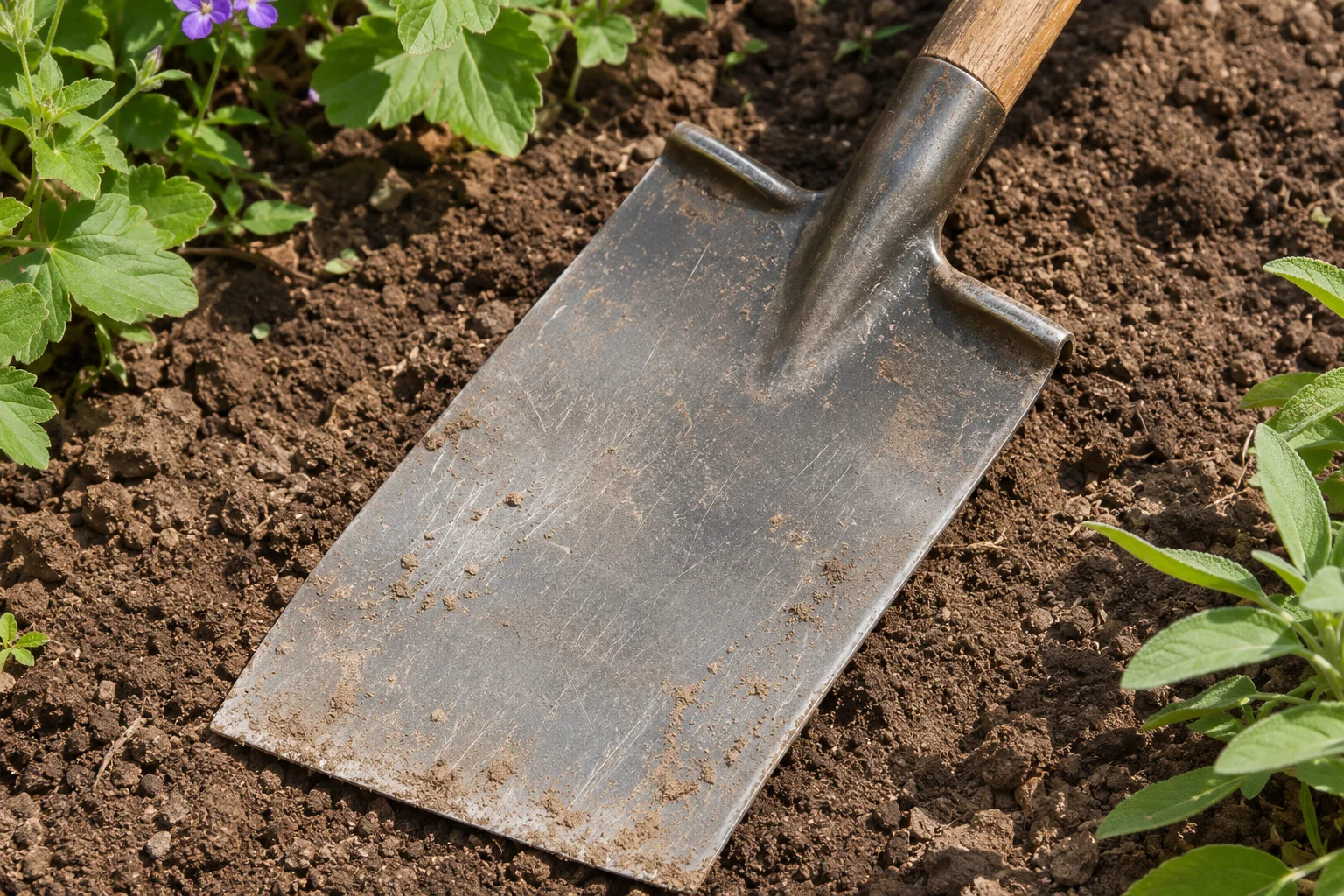
Look closely at the shoulder where your boot presses. Compare a narrow upper edge with a broad folded tread. In a permitted demonstration, check how your usual gardening boot meets it while the tool is safely supported. Do not stand on a loose display spade. A comfortable grip will not compensate for a poor foot contact.
Try the shaft length and grip together
Hold the tool with your usual gloves, first at the top grip and then with your lower hand on the shaft. Ask to compare different lengths. You should be able to reach both positions without immediately folding yourself over the tool.
Thrive's buying advice recommends trying weight, grip size, balance and handle length. Lift the empty spade only as the seller permits. Notice whether the blade pulls your hands forward, and whether the grip gives your fingers enough room.
Adjustable shafts need a second check. GARDENA's ErgoLine spade illustrates a telescopic design with a D handle and profiled footrest. Ask how the exact candidate locks, try the adjustment and read its instructions. Compare it at the length you would actually use.
Inspect the connection before ordering
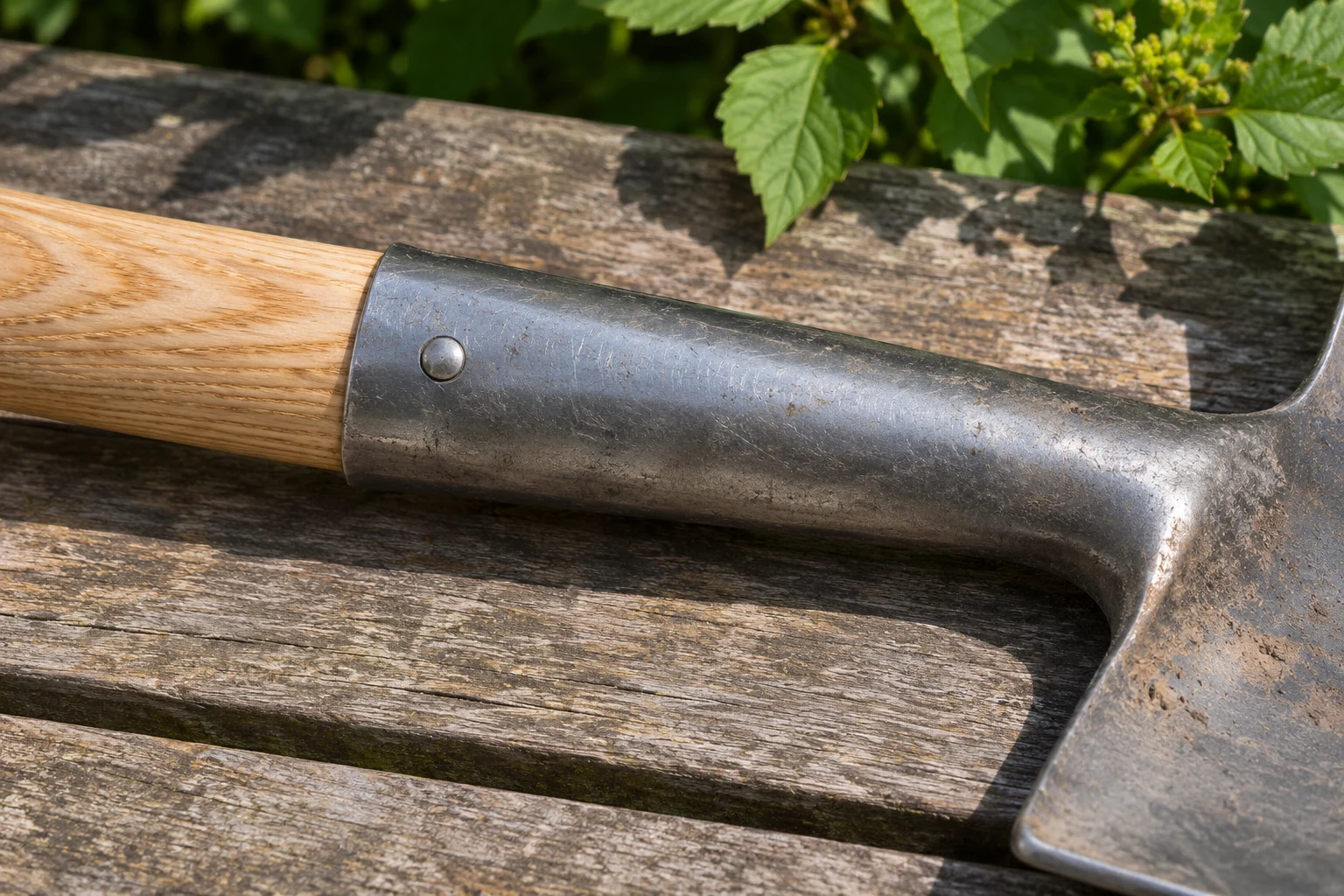
Follow the shaft down into the head. Look for cracked wood, a distorted socket or movement where the parts should be fixed. Ask the seller to explain anything uncertain, especially on a used tool. A photograph of the polished front blade can hide this entire connection.
University of Georgia Extension identifies the head-to-handle joint as a common failure point and describes socket fittings secured with bolts or rivets. Ask whether a damaged handle can be replaced and which part fits this exact model.
Read the intended-use and care notes before paying. A strength-test figure is no instruction to wrench out a stump. Settle how you will clean, dry and store the chosen tool; our tool-cleaning routine covers that work after use.
If the surrounding planting is changing too, Gardenly's styles can help explore its appearance from a photo. Keep the spade choice with the real ground and the tool you can hold.
