

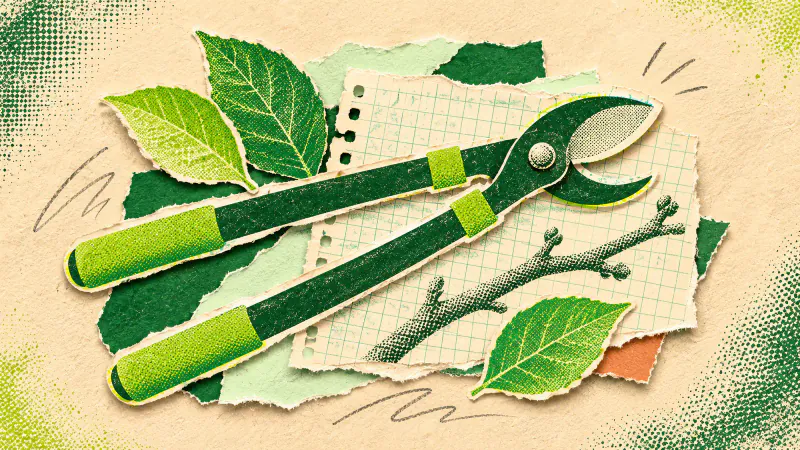
Choose garden loppers around the branches you already need to manage. Check the exact model's cutting limit, then make sure you have room to spread both handles and close them comfortably. Extra reach is useful only when you can still position and control the head.
A crowded shrub can leave plenty of space for the cutting head and almost none for your arms. Before shopping, look at the working gap from where you will actually stand. This guide covers ordinary manual loppers for accessible small branches, with both feet on the ground.
Record the job before comparing tools
Note the plant, the approximate thickness of the stems and whether the material is living or dry. Photograph the gap around it. Confirm that the plant needs pruning and check its timing separately. The RHS tree-pruning guide starts with identifying the tree and researching the suitable time to prune; buying a tool settles neither question.
Small stems that your existing hand pruners cut comfortably may need no new equipment. Our hand pruning-shear guide covers that choice. Loppers add two long handles, which change both the effort and the space needed to operate them.
Write down the awkward part of the job. Perhaps the branch is low inside a shrub, or the nearest comfortable standing place is farther away. Keep larger tree work and branches you cannot approach safely out of this shopping list. Ask for appropriate local help with those.
Check the cutting head and its stated limit
Look closely at the head. A bypass blade passes beside its counterblade, while an anvil blade closes onto a supporting surface. For fresh shrub growth, compare bypass models intended for that material. Read the manufacturer's description of the particular tool rather than judging by the shape alone.
Maryland Extension's pruning-tool advice explains that longer lopper handles provide leverage and warns against over-straining the tool. Check the diameter rating for your exact model. A branch fitting between open blades does not establish that the tool can cut it properly.
Ask the retailer to demonstrate the permitted action. If your usual jobs sit beyond the stated limit, discuss a suitable pruning saw or professional help. Avoid making a purchase that depends on forcing the handles or twisting the head through the wood.
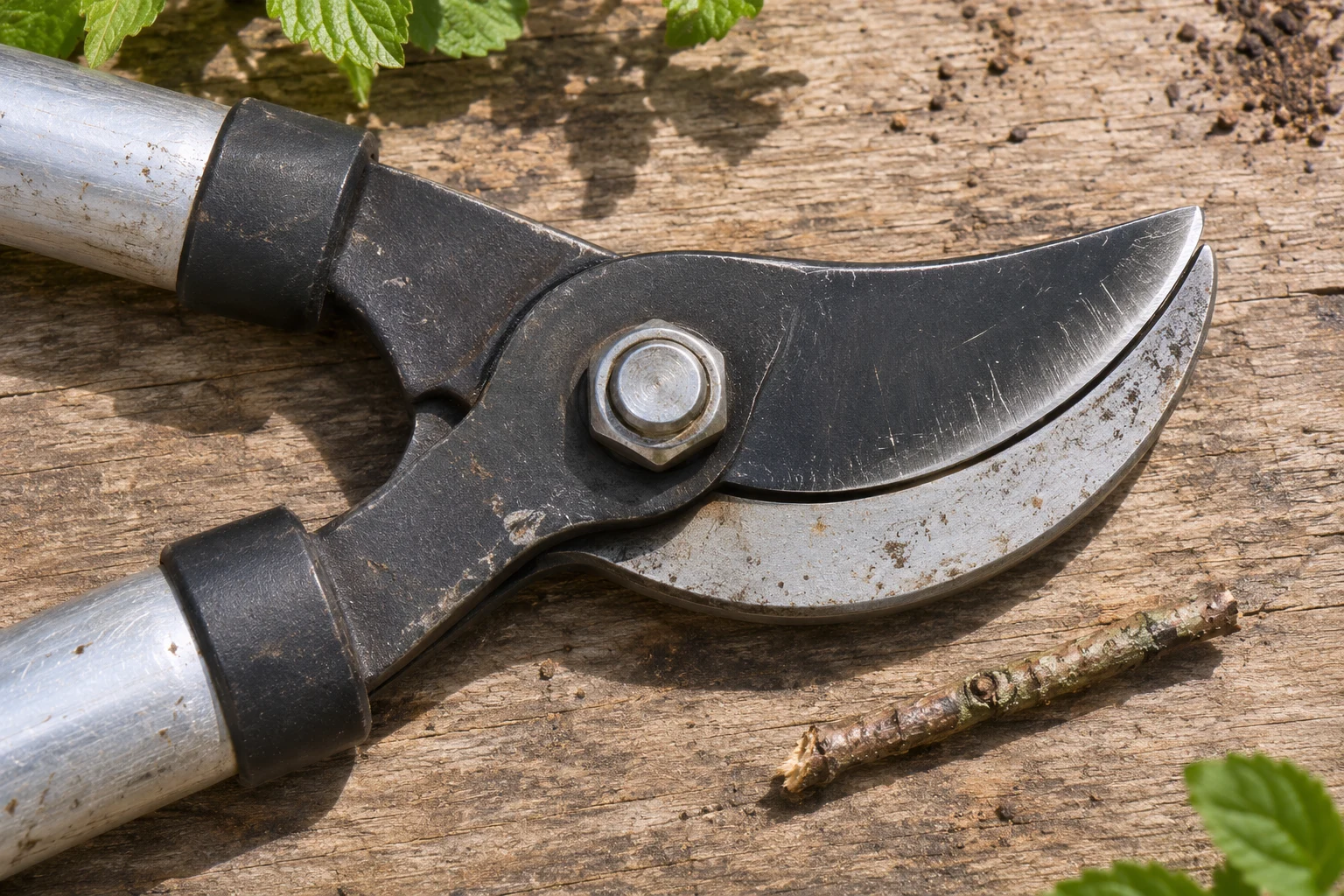
Try the full handle movement
With the retailer's permission, hold the complete tool by both grips and open it slowly in a clear space. Keep the head away from anyone nearby. Check how far your arms must spread before the blades admit a stem like the one on your task list.
Compare that movement with your garden photograph. A wall or neighbouring stem may block one handle before the head reaches its useful opening. Longer handles can make this conflict worse in a narrow gap. Test the posture, including where your elbows finish when the handles close.
Choose a weight you can position without a prolonged stretch. Hold the tool briefly at the height of your ordinary job, then lower it. If the head feels difficult to steady even without cutting, compare a shorter or lighter model. Comfortable reach is personal, so a catalogue length cannot decide it for you.
Extend only as far as you can control
Fixed handles have no length adjustment to set. Telescopic models offer more than one working length, but you need to try the actual adjustment and locking method. Compare the tool retracted and extended, with both handles set as its instructions require.
The Bellota 3440TEL specification describes extendable handles with a clutch fastening system. That is one design to inspect, not a universal mechanism. Check that you can operate the locks while wearing your gardening gloves and understand how to confirm they are secured.
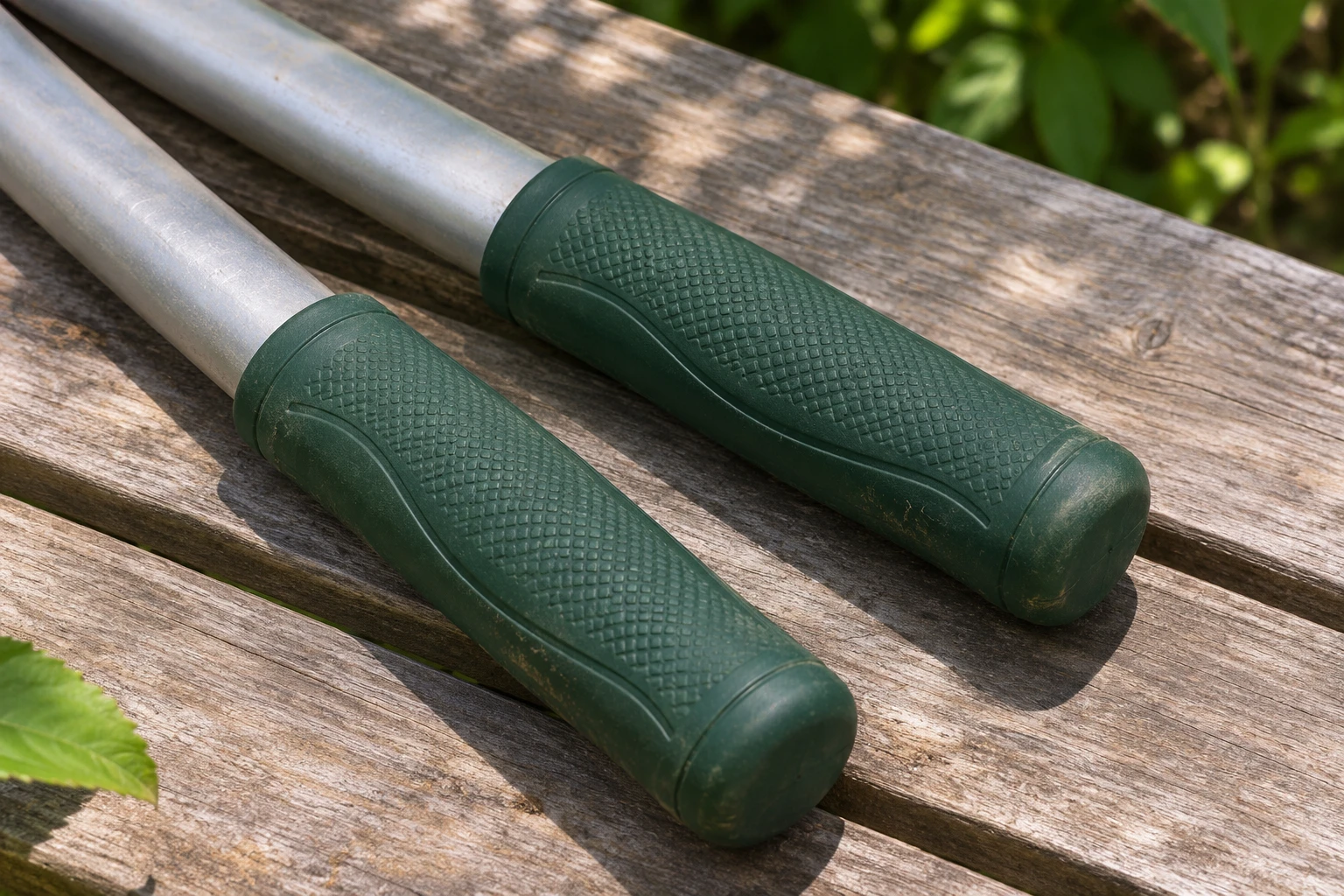
Check the parts and storage before paying
Find the model number and its care instructions. Ask which blade, pivot bolt and handle parts are replaceable, and whether the supplier actually stocks them. Bellota's example lists a spare bolt and blade separately; another model may have different provisions.
The RHS sharpening guide notes that pruning tools become blunt and that not every pair can be dismantled. Follow the tool's own maintenance directions. Check your storage space with the handles closed, and allow room to put a clean, dry tool away without leaving its head in the walking route.
If this purchase is part of a wider border rethink, Gardenly's styles can help explore the surrounding planting's appearance. Keep your real branch measurements and tool notes for the equipment decision.
