

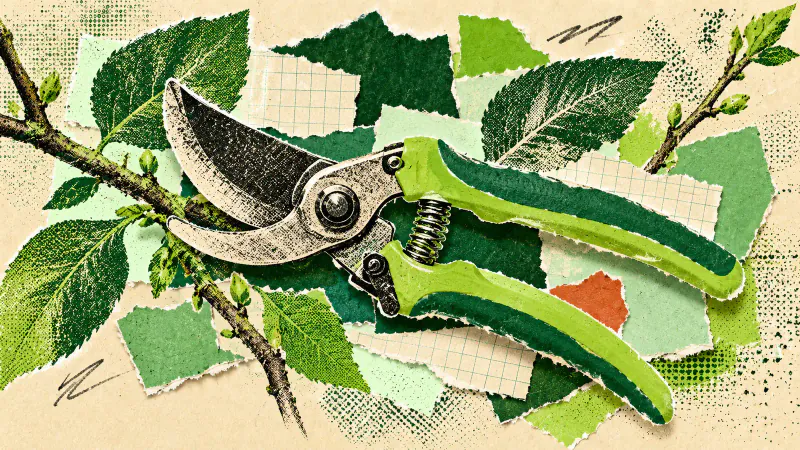
Choose hand pruning shears by the stems you need to cut, the way the blades work and the fit in your working hand. For ordinary live growth, start by comparing bypass models. Check the exact tool's cutting limit, lock and maintenance instructions before buying.
Take a short task list to the shop. Snipping a few small shrub stems is different from cutting a hedge face or tackling a thick branch. A larger number on the packet is little help if you cannot comfortably close the handles.
Match the blades to the material
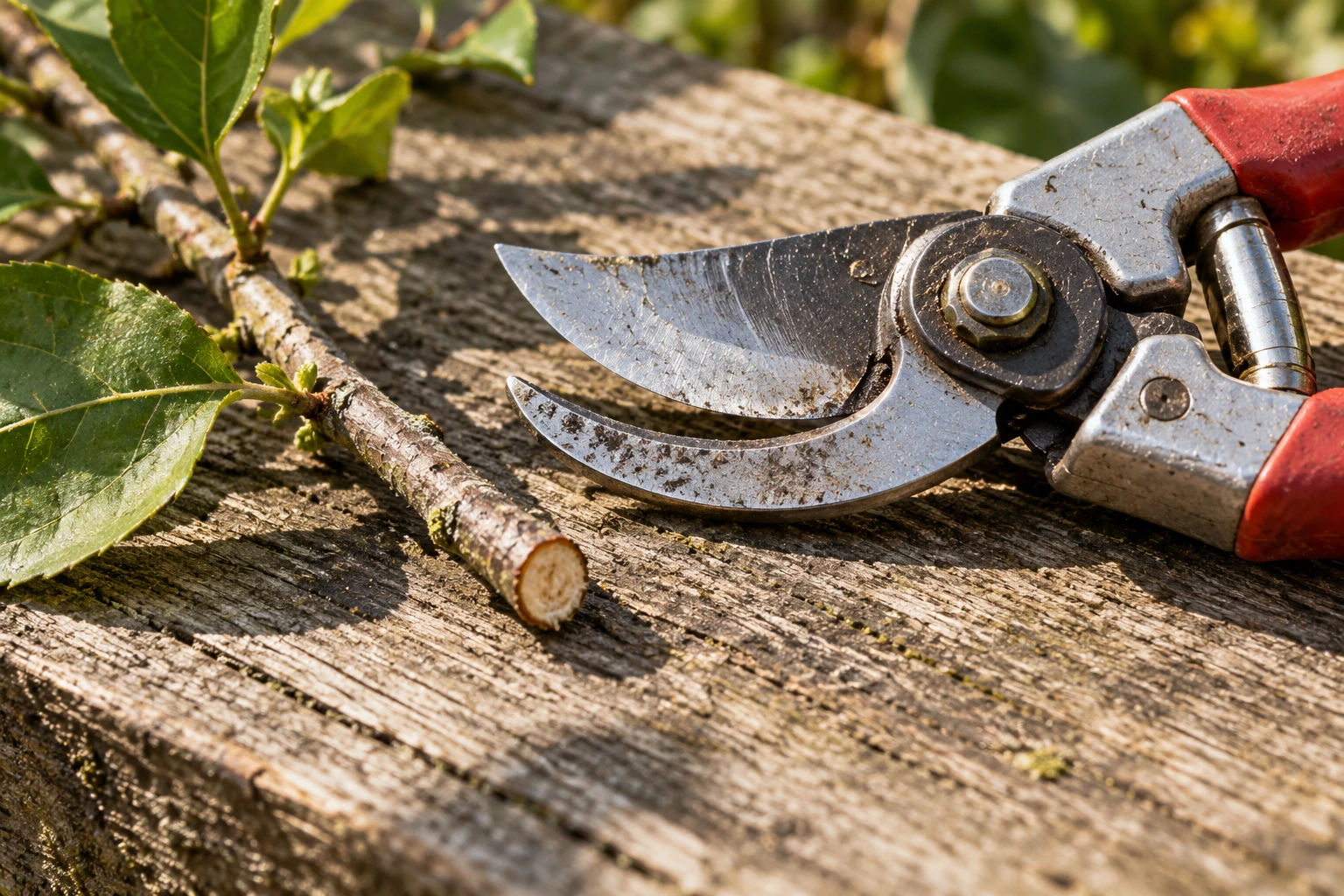
Bypass pruners have a curved cutting blade that passes a counterblade. Anvil pruners close a blade onto a flat supporting surface. GARDENA's explanation of the two mechanisms assigns bypass tools to green growth and anvil tools to hard, dry wood. Look at the actual head so you know which action you are comparing.
For a first pair intended mainly for living shrub stems, a bypass model is a sensible starting point. University of Maryland Extension notes that bypass pruners reduce tissue tearing or crushing compared with anvil tools. A narrow head may also be easier to position among crowded stems, but check the space around your own plants before choosing.
This is a tool choice, not permission to prune every plant now. Identify the plant and look up its pruning requirements separately. The RHS beginner's pruning guide points readers towards different guidance for shrubs, trees and climbers. Buying shears in November does not put the whole border on a November cutting schedule.
Try the opening in your working hand
Ask to handle an unpackaged demonstration tool, following the seller's instructions and keeping fingers clear of the blades. Open and close it slowly without cutting anything. Notice whether your fingers can follow the handles through their travel without losing a secure grip.
FELCO's sizing guide explains why handle spacing matters and distinguishes tools for different hand sizes. Use the chosen manufacturer's method rather than assuming that a size label means the same thing across brands. Check whether the model is intended for your dominant hand.
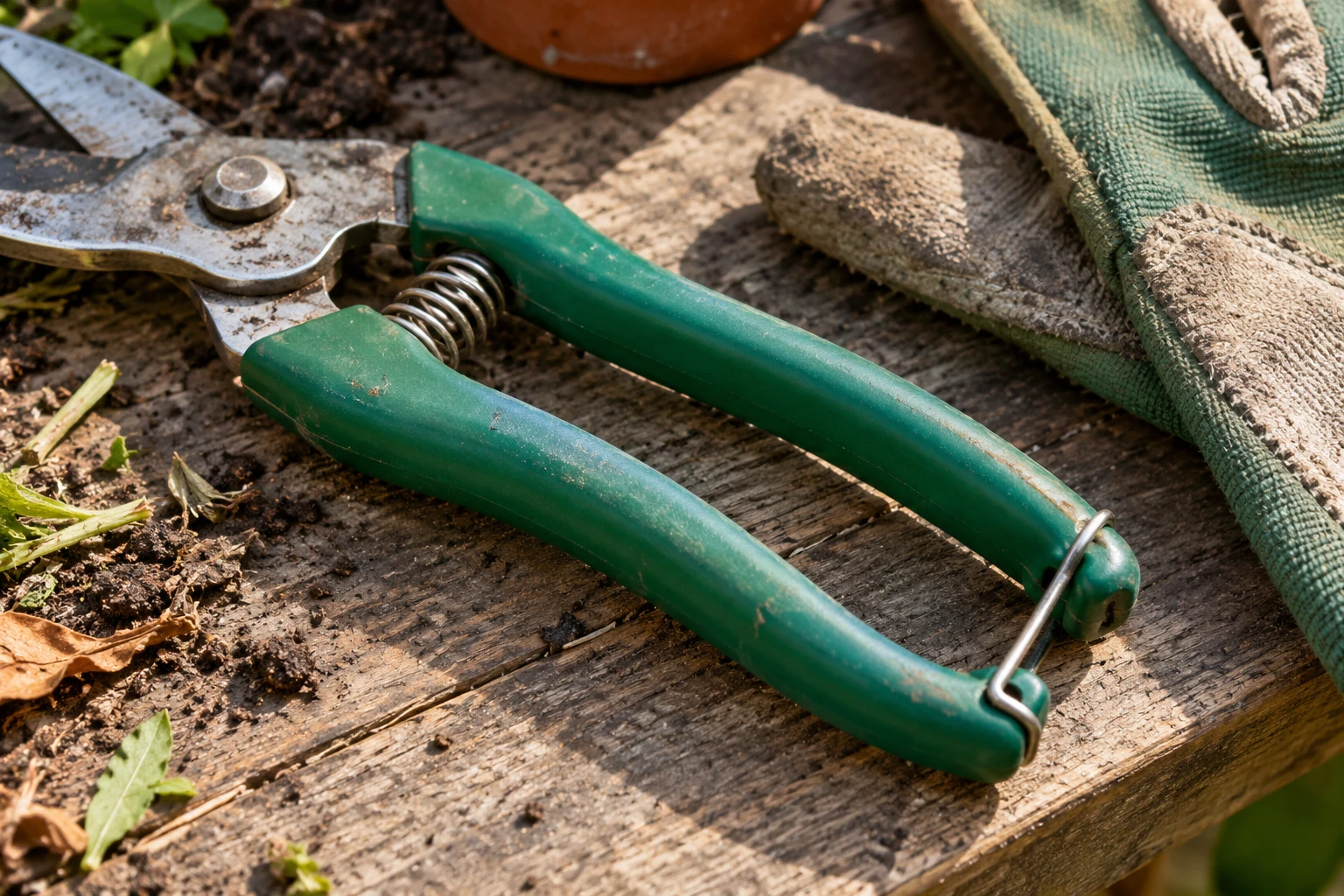
Try the lock too. Can you reach it and understand when it is engaged? Compare the tool's weight while holding it in an ordinary working position. If you usually wear gardening gloves, bring the pair you actually use and ask whether you can try the grip with them. Thick fabric can change what initially felt comfortable.
Treat cutting capacity as a limit
Read the maximum cutting diameter for that exact model and the material it applies to. A listed capacity for green wood does not describe every hard, dry branch. Check the instructions even when two tools look almost identical.
Do not choose a pair on the assumption that extra force will cover anything outside its rating. Maryland Extension warns that oversized branches can damage both the plant and the pruners. If your task list is mostly thick branches, ask about an appropriate lopper or pruning saw instead.
Where a seller permits a cutting trial, use suitable material within the tool's stated limits and follow their directions. Keep the other hand away from the cutting area. A demonstration should answer whether the tool suits an ordinary task, not test how much force you can apply.
Check what happens after the first use
Find the maintenance instructions before ordering. Check how the blade is cleaned, what lubrication is specified and whether replacement blades or springs are available for the model. A spare part is useful only if you can identify and obtain the right one.
FELCO's care guidance covers blade cleaning, sharpening and adjustment for its tools. Follow the instructions for your own model before dismantling or sharpening it. Our garden-tool cleaning routine covers digging tools; pruning equipment needs its separate directions, including appropriate disease-control guidance after contact with infected plants.
For a wider change to the planting's appearance, Gardenly's styles can help you explore a direction from a photo. Choose cutting equipment by inspecting the real tool. Keep its model details and care instructions where you will find them before the next pruning job.
