


Choose gardening gloves around the job you will actually do, then check that you can move your fingers and hold your usual tools comfortably. Read the exact model's intended use before buying. A useful pair for repotting may be a poor choice for handling thorny stems.
Start with the task waiting outside: moving pots, working among established plants or collecting rough cuttings. Write it down before browsing. The floral print can wait until you know whether the fingers fit.
Separate everyday work from thorny handling
Lay out the equipment for one ordinary session. For hand weeding, you need enough finger control to work beside plants you intend to keep. Moving rough material makes you look more closely at coverage and the construction of the palm. These are different demands even when both products are called garden gloves.
The RHS gardening-safety guide advises assessing the task before choosing protective clothing. For thorny work, look for a model specifically intended for that use and read what the manufacturer says it protects. A long cuff covers more of the arm, but its length alone tells you nothing about the material's resistance to a thorn.
Keep unusual jobs separate when shopping. Ordinary garden gloves do not establish suitability for chemicals, sharp waste or powered equipment. Follow the relevant product and equipment instructions for those tasks. Do not test a glove by deliberately pressing a thorn or blade into it.
Try both hands and an ordinary grip
Use the manufacturer's own sizing method. If you are between sizes, compare both where possible. Try the complete pair, since a comfortable left glove does not settle how the right one feels.
Open your fingers, bring thumb and forefinger together, then close your hand gently. Notice where seams sit. Look for spare fabric that bunches in the palm, fingertips that fold over and a cuff that pulls when you bend your wrist. You should be able to remove the gloves without a wrestling match.
HSE's glove-selection guidance, written for workplaces, explains that overly tight or loose gloves can impair grip and comfort. Its advice to balance protection with dexterity also gives you a useful question for a garden-shop fitting.
With permission, hold a clean, unloaded hand tool while wearing the pair. Mimic a small scooping movement. Our trowel guide covers the tool itself; here you are checking whether the glove leaves your fingers room around its handle. Stop if you need to squeeze awkwardly just to keep hold.
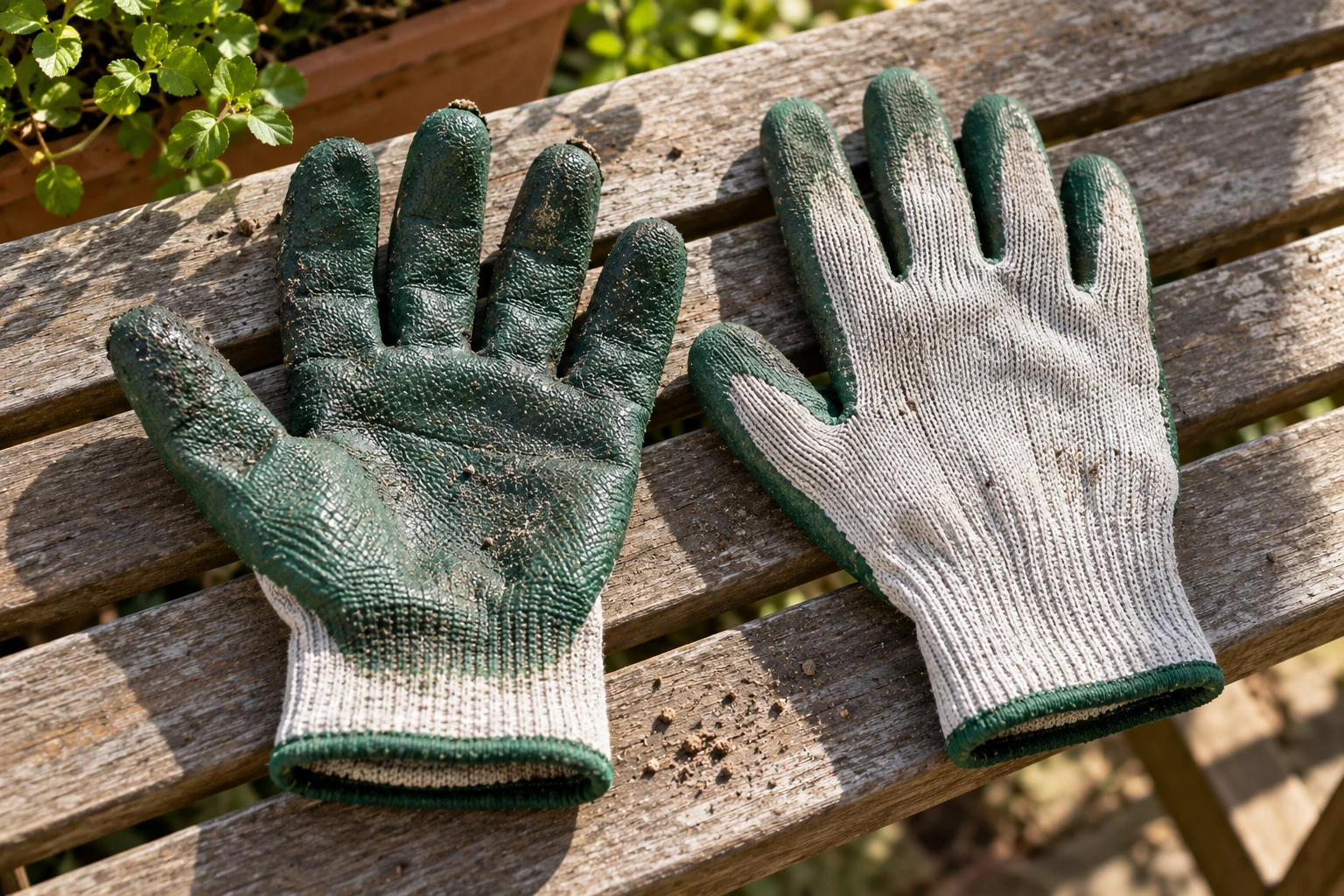
Inspect the palm, fingers and cuff
Turn each glove over. Check where a coating ends, where fabric joins another material and whether both gloves have the same construction. A coated palm with a fabric back is visibly different from a fully enclosed glove. Ask the seller to explain any water-resistance claim for the complete product.
Compare the cuff while wearing your usual gardening sleeve. Can you adjust a fastening easily? Does the sleeve push it into a bulky fold? For ordinary potting work, consider how loose mix could enter the opening when you reach down.
Manufacturers sometimes describe details worth inspecting in person. Burgon & Ball's glove range, for example, includes designs with padded palms, mesh between the fingers and wrist straps intended to keep debris out. Those details are prompts for comparison, not a reason to assume the same fit or construction across every model.
Read the care label before choosing
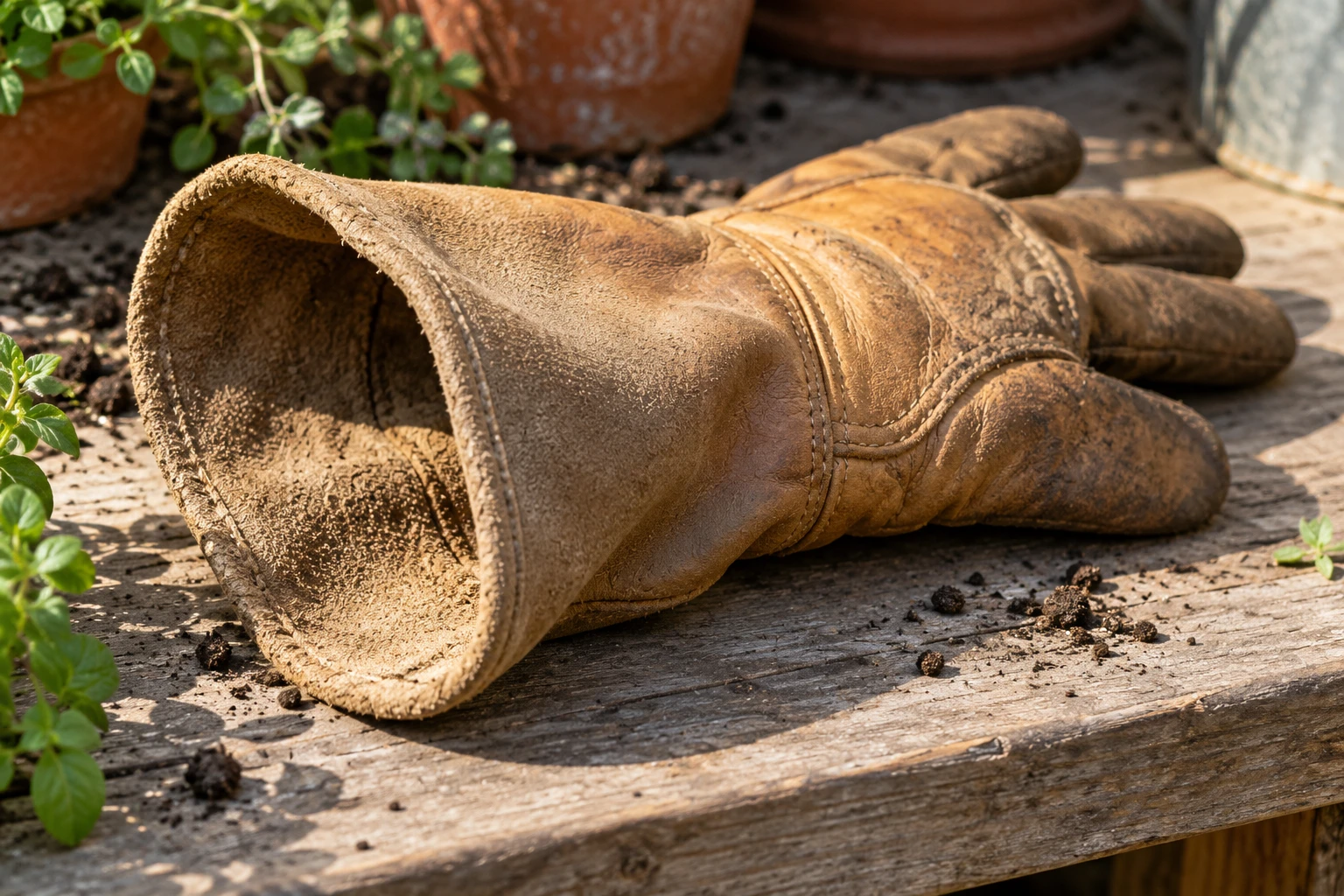
Check the cleaning instructions for the exact pair, including any limits on washing and drying. A washable label on one model does not tell you how to clean leather, lining or a coating on another. Photograph the care information if it is only on the packaging.
Ask where the gloves will dry between sessions and whether that space is available in your usual routine. Look over fingertips, seams and fastenings before reuse; retire a damaged pair according to the maker's guidance.
For a wider change to the planting's appearance, Gardenly's styles can help you explore a direction from a photo. Choose the gloves by handling the actual pair. Take your task note and usual tool grip to the shop, and keep the care instructions with the gloves you bring home.
