


Choose a garden hand trowel by matching its blade to the space you work in, then trying the handle and balance in your own hand. A narrow blade suits small gaps among existing plants. A broader, dished blade is useful when your usual job involves moving loose potting mix. Check the connection between blade and handle before deciding.
Think about the last small job you actually did. Perhaps you needed to reach beside a plant in a pot, or transfer mix into a container. That gives you something concrete to compare in the shop, instead of choosing the trowel with the most features.
Match the blade to the working space
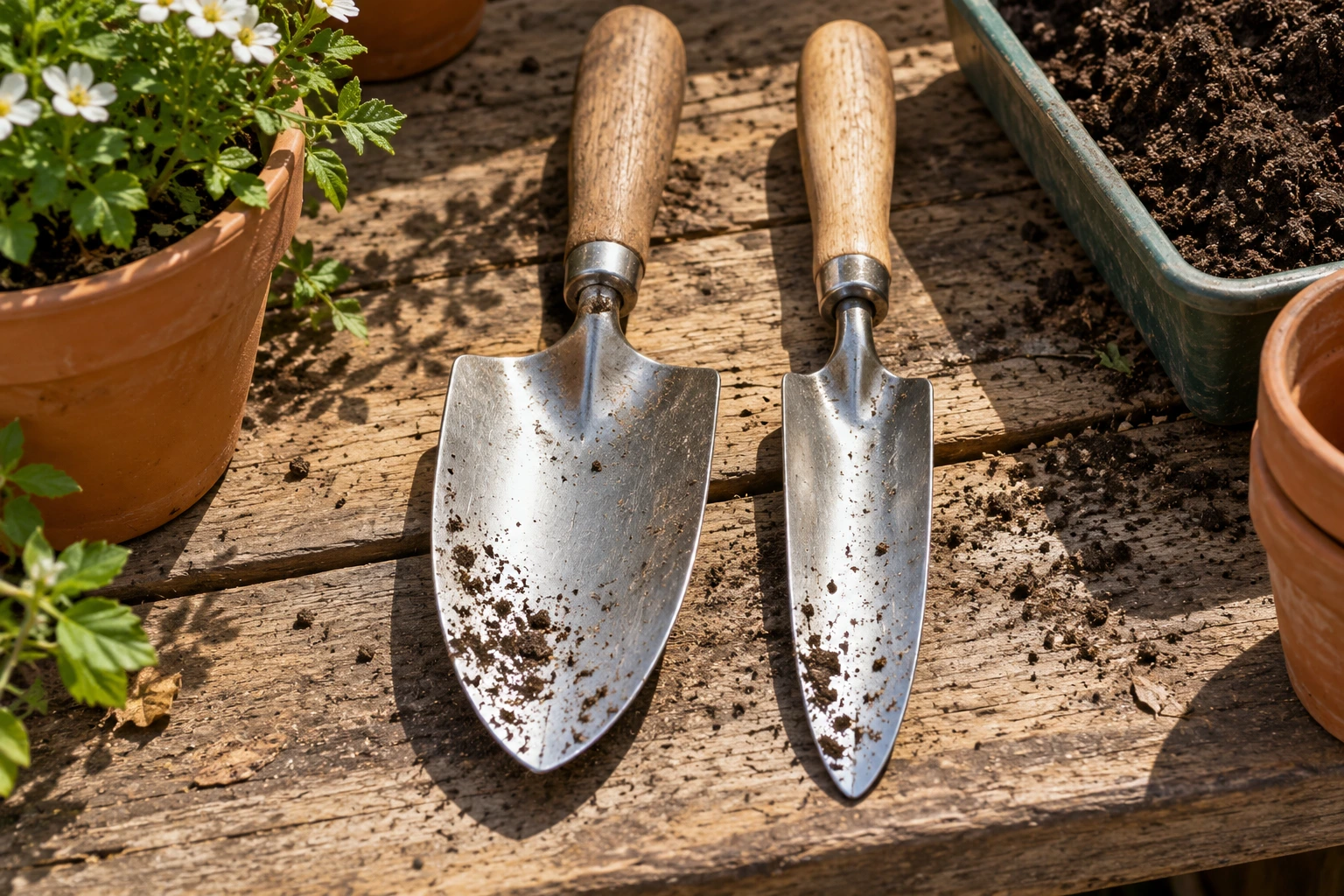
For close work in a planted border, start by looking at a narrow transplanting trowel. Burgon & Ball describes its transplanter as slimmer than its classic trowel and intended for densely planted borders. Compare the blade with the actual gap you need to reach. A narrow tool still needs room to move without pressing against neighbouring stems.
For handling loose growing mix, look at the depth of the dish as well as its width. The maker's classic hand trowel has a wide, deep blade intended to carry more with each scoop. Take an empty pot to compare if the shop allows it. Check whether the blade passes comfortably through the opening and can turn beside the rim.
You may find one ordinary trowel covers your work. If the same tight gap keeps defeating it, that is a reason to consider a narrower one. Our container garden guide covers the separate decisions about pots and growing mix.
Try the grip and balance together
Thrive's tool-buying advice recommends considering weight, grip size and strength, and how balanced a tool feels in your hand. Compare several handles rather than assuming that wood, cushioning or an ergonomic label settles the choice.
Wear your usual gardening gloves for the comparison. Hold each trowel as you would for scooping, then change to your digging grip. Notice whether your fingers have room and whether the handle end presses into your palm. Mimic the movement without loading or forcing the tool.
Ask for the weight if you are comparing online. It is a useful filter, although two tools of similar weight can feel different when held. If you cannot try the model locally, check the return conditions before ordering. Comfortable reach at a table is another decision; our potting bench guide covers that working position.
Look closely where the handle meets the blade
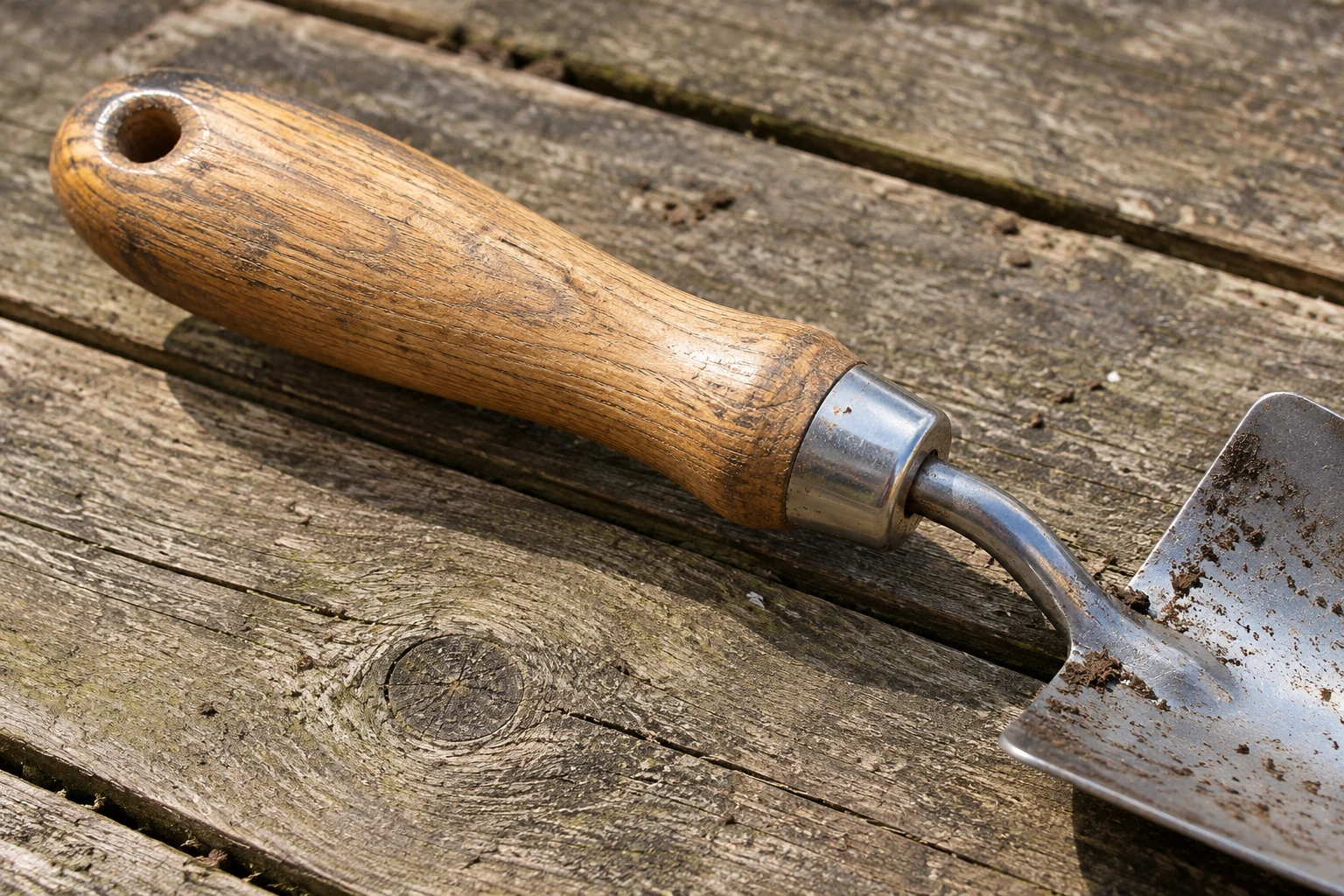
Turn the trowel over and inspect the connection. Look for cracks, a split wooden handle or movement between parts that should be fixed. Ask the seller about anything that looks loose rather than testing it by bending the blade.
University of Georgia Extension identifies the handle-to-head connection as a common failure point in garden tools and stresses a secure trowel head. Ask how the particular model is assembled and whether a replacement handle is available. A polished blade tells you little about the joint hidden behind it.
Read the exact model's limits and care notes
Compare materials through the manufacturer's instructions. Burgon & Ball describes the polished stainless steel on its classic trowel as rust resistant. That does not make every stainless tool identical, or remove the need to read its care guidance.
Carbon steel also needs a model-specific check. Niwaki's Forged Trowel has a carbon-steel head that the maker advises wiping occasionally with an oily rag. Its Moku Trowel is also forged carbon steel, but Niwaki specifies potting and light garden use, excluding heavy or unbroken soil. The metal's name alone cannot tell you what work a tool will tolerate.
For these ordinary small jobs, do not use the trowel as a pry bar to force out a lodged stone or stubborn root. Stop and choose equipment intended for that work. Our tool-cleaning guide covers the routine after use; here, check that you are willing to follow the chosen model's upkeep instructions.
Take one real job to the shop
Bring a note of the narrowest working gap and your usual pot opening, plus your gloves. Compare blade access and grip first, inspect the joint, then read the intended-use and care notes. Leave decorative extras until those checks are settled.
If you are also reconsidering how the planting looks, Gardenly's styles can help explore a visual direction from a photo. Keep the trowel decision with the tool you can hold and the jobs already waiting for it.