

Useful container garden ideas start with the plants' needs: give their roots a suitable pot and growing mix, check that excess water can escape, and keep plants with different care needs in separate containers. You can still make the pots look like a group. They do not all need to share the same soil or watering routine.
This is a guide to choosing ordinary pots that stand on the ground. If you have already gathered a few, turn each one over before buying more. Its opening, base and depth will tell you more about its usefulness than the colour did in the shop.
Choose a pot you can keep using
Decide whether the planting is a seasonal display or something you want to keep for years. For a permanent plant, check how you will eventually remove the rootball. A pot with a narrow neck and a swollen middle can become an awkward trap at repotting time.
Larger containers usually dry more slowly, but buying the biggest pot is not always helpful. A small specimen surrounded by too much damp growing mix can suffer from overpotting. Use the current rootball and the plant's growing requirements to choose the next size. The RHS guide to growing plants in containers explains this distinction.
Consider the material alongside the position. Unglazed terracotta loses moisture more readily than plastic; a metal container can heat up in sunshine. Two matching plants in different pots may therefore need different attention. If you already own a sound pot, work out what suits it before replacing it to match a set.
Check drainage before adding potting mix
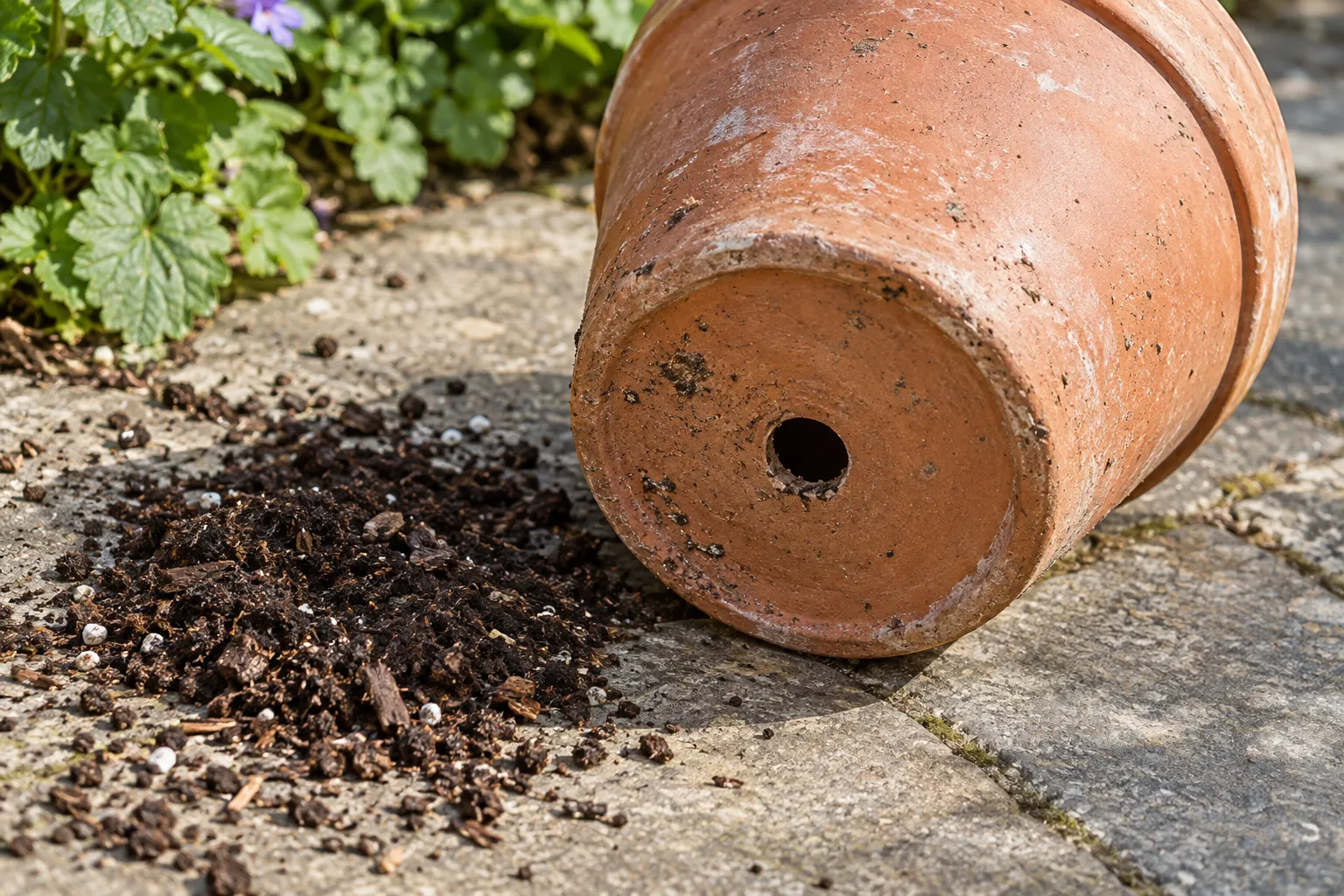
Look for open holes in the base, then check that the standing surface will let water leave them. Put the empty pot in its intended position and inspect underneath. If necessary, use suitable pot feet to keep the outlets clear. A decorative outer pot needs checking too: water trapped inside it still surrounds the inner pot's roots.
There is no need to cover small drainage holes. For unusually large openings, the RHS planting guide suggests placing a stone or piece of broken terracotta over the opening to stop compost falling through. Keep a route for water to escape.
Make this check while the pot is empty. Discovering a blocked base beneath a heavy planted container is a much less appealing afternoon job.
Match the growing mix and plants
Choose a potting mix labelled for the plants you intend to grow. Homemade garden compost and potting compost are different materials; the latter is a growing medium made from a mixture of ingredients. The RHS recommends peat-free options, with the type depending on the planting.
Read the plant labels together before combining anything in one pot. Compare their light requirements and preferred moisture, and check for a specialist growing medium. A plant that needs acidic conditions should not go into a shared pot simply because its flowers match its neighbour.
Separate pots are useful here. You can place plants with complementary foliage beside each other while retaining different growing mixes and individual watering decisions. Write a short note for each container with its plant names and care instructions. Keep it somewhere you will actually look, rather than relying on remembering which green plant needed what.
For a mixed seasonal pot, ask a nursery to check the proposed combination if the labels leave gaps. Bring the pot's dimensions and explain its exposure. That is a more useful starting point than a photograph of a display with unidentified plants.
Leave room to check each pot
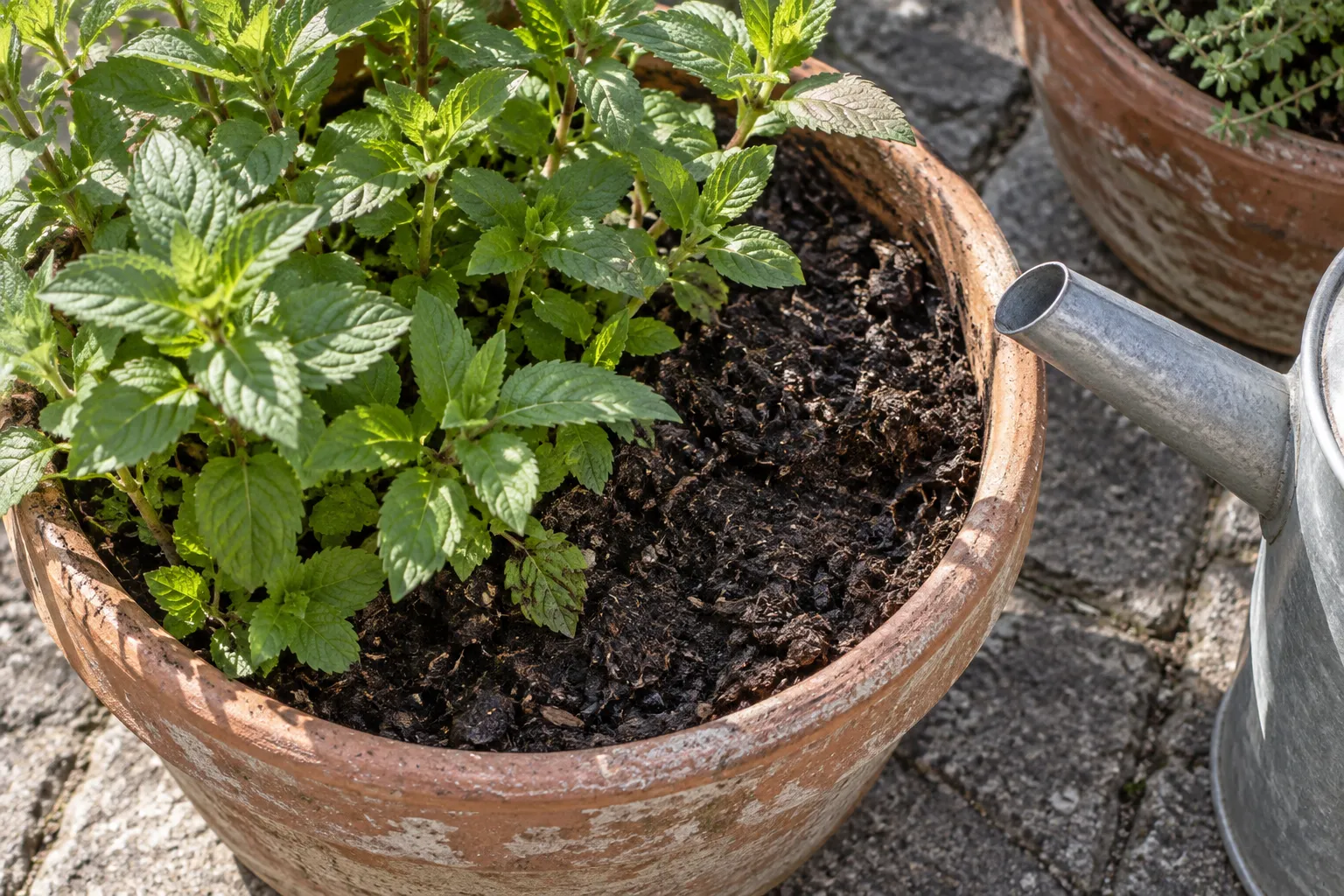
Arrange the containers while they are still manageable, then try reaching the growing mix in every one. You need space for a watering-can spout and enough access to inspect the back pot without dragging its neighbours away. If the patio itself still needs organising, settle that first with the small patio garden guide.
Water according to the pot's condition. The RHS watering guide recommends checking moisture below the surface in each container; there is no fixed schedule that suits them all. Recent light rain is not proof that the roots received enough water.
Once the practical choices work, a photo can help you judge how the group sits against the surrounding planting. Gardenly takes a photo and a selected style to explore a visual direction. Treat the result as a conversation starter about appearance. It cannot tell you which growing mix is in a pot, whether its outlet drains or whether the plants belong together. Keep those decisions with the real containers and their care notes.