

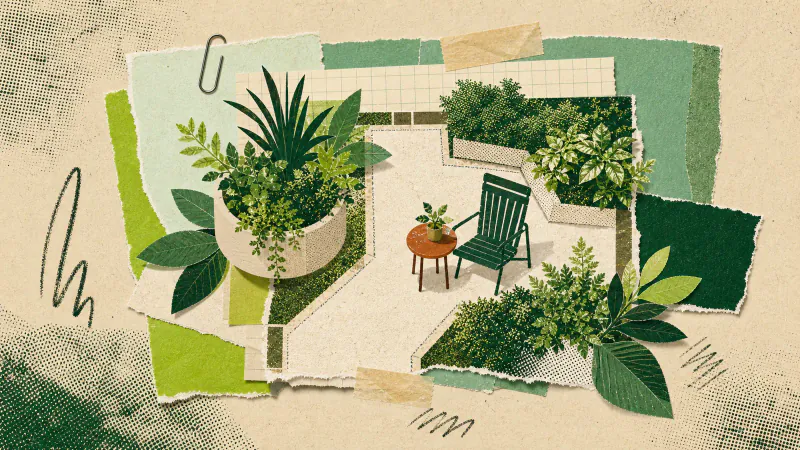
The useful small patio garden ideas are the ones that leave you with a patio. Start by deciding what the space is mainly for, keep the route through it clear, and put most of the planting where it earns its place. A compact patio can feel generous when every chair, pot and bed has a reason to be there.
That does not mean making everything tiny. A scatter of little pots and folding furniture can feel busier than one comfortable seat beside a substantial planter. The goal is not to squeeze a full garden into a smaller rectangle. It is to make one outdoor room that works.
Choose the patio's main job
A small space gets awkward when it is expected to be a dining room, lounge, potting shed, play area and flower garden at once. Pick the use that matters on an ordinary day: coffee for two, dinner outside, or a quiet chair among plants.
Other uses can still fit, but they should bend around that choice. If eating outside matters most, start with the table and the space needed to pull out a chair. If you want somewhere to read, place the seat first. Once the main job is clear, you can judge every object by whether it supports that job or merely occupies floor space.
Protect the route before adding plants
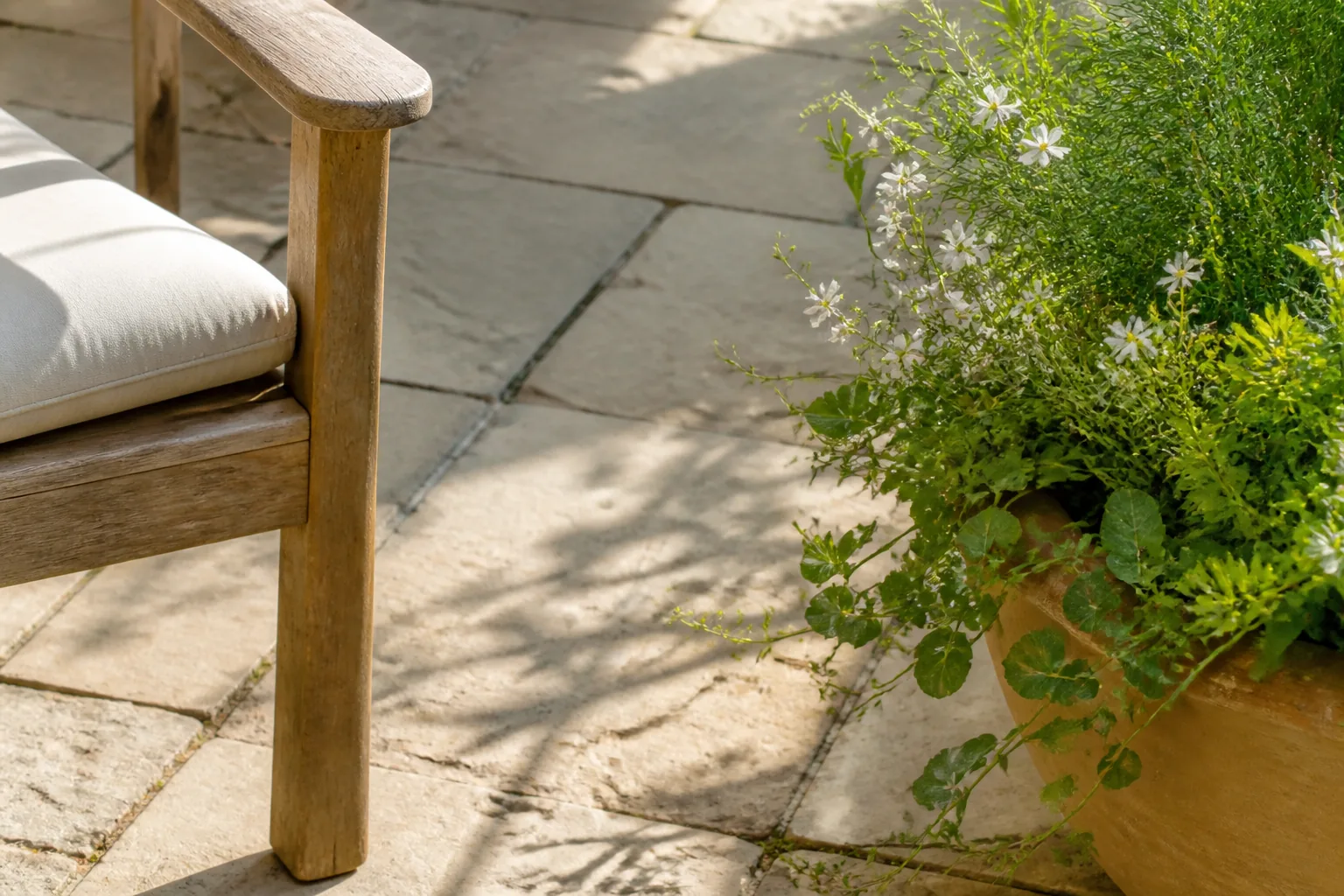
Mark the path from the door to the main seat, gate or storage area. Walk it with a bag in one hand, open the door fully, pull out the chair. Those movements define the part of the patio that should stay empty.
What remains is the real design area. It may be an L-shaped strip rather than the neat rectangle you pictured, and that is fine. Put planters and furniture against those usable edges instead of making people weave between them. An open route also gives the eye somewhere to travel, and on a narrow plot that uninterrupted line is worth more than another decorative pot.
Use fewer, larger planting groups
One pot is easy to buy, so patios collect them by accident. Different shapes, saucers and half-empty gaps soon turn the edge into visual static.
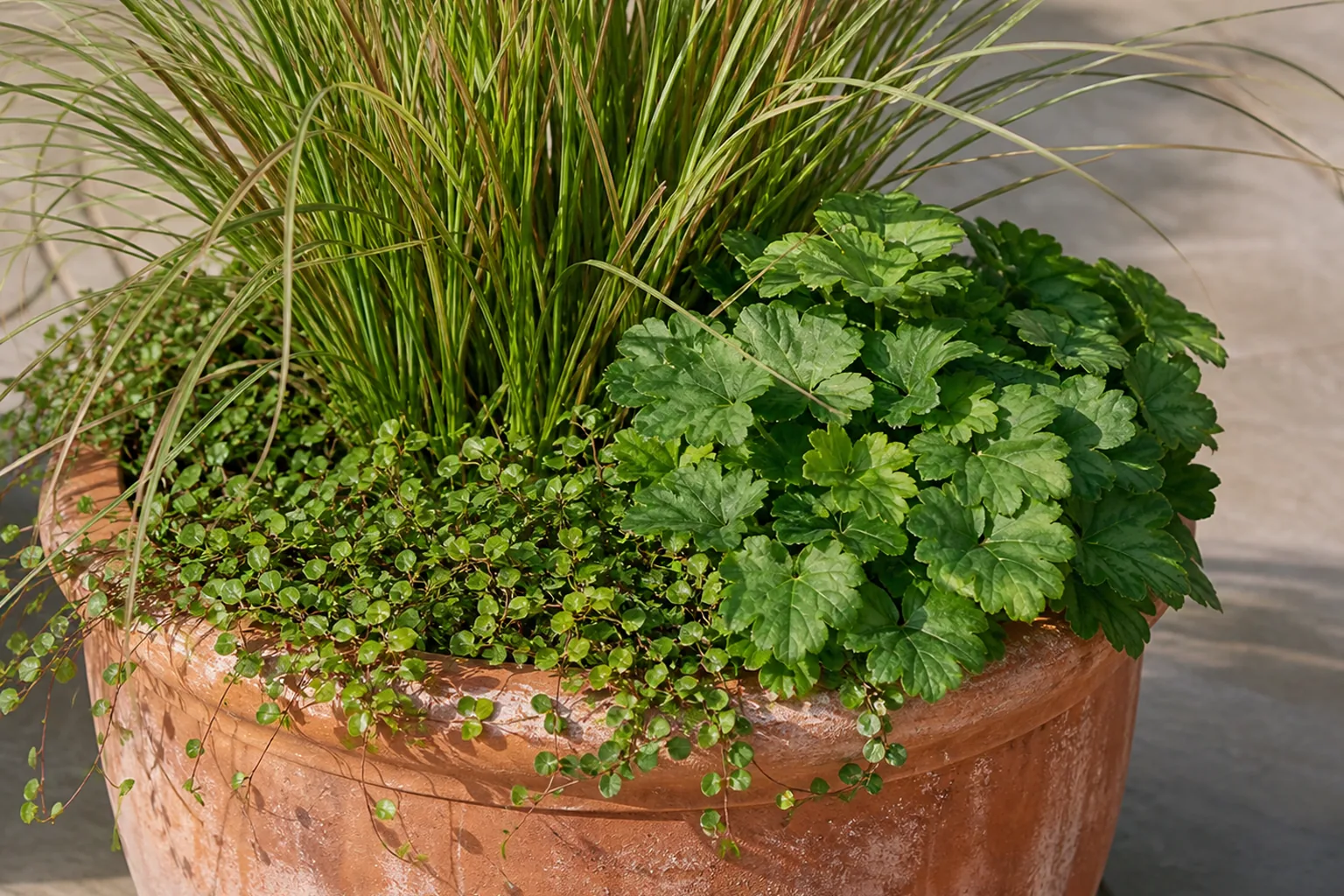
Group plants into one or two deliberate areas instead. A larger planter can hold plants at several heights, while a long trough can make a loose border along a wall or railing. Repeating a material or pot colour helps separate plants read as one garden rather than leftover containers.
Leave yourself access for watering and care; a beautiful pot wedged behind a bench becomes an irritating pot the first time it needs attention. If a container is heavy, decide where it belongs before filling it.
Borrow the walls carefully
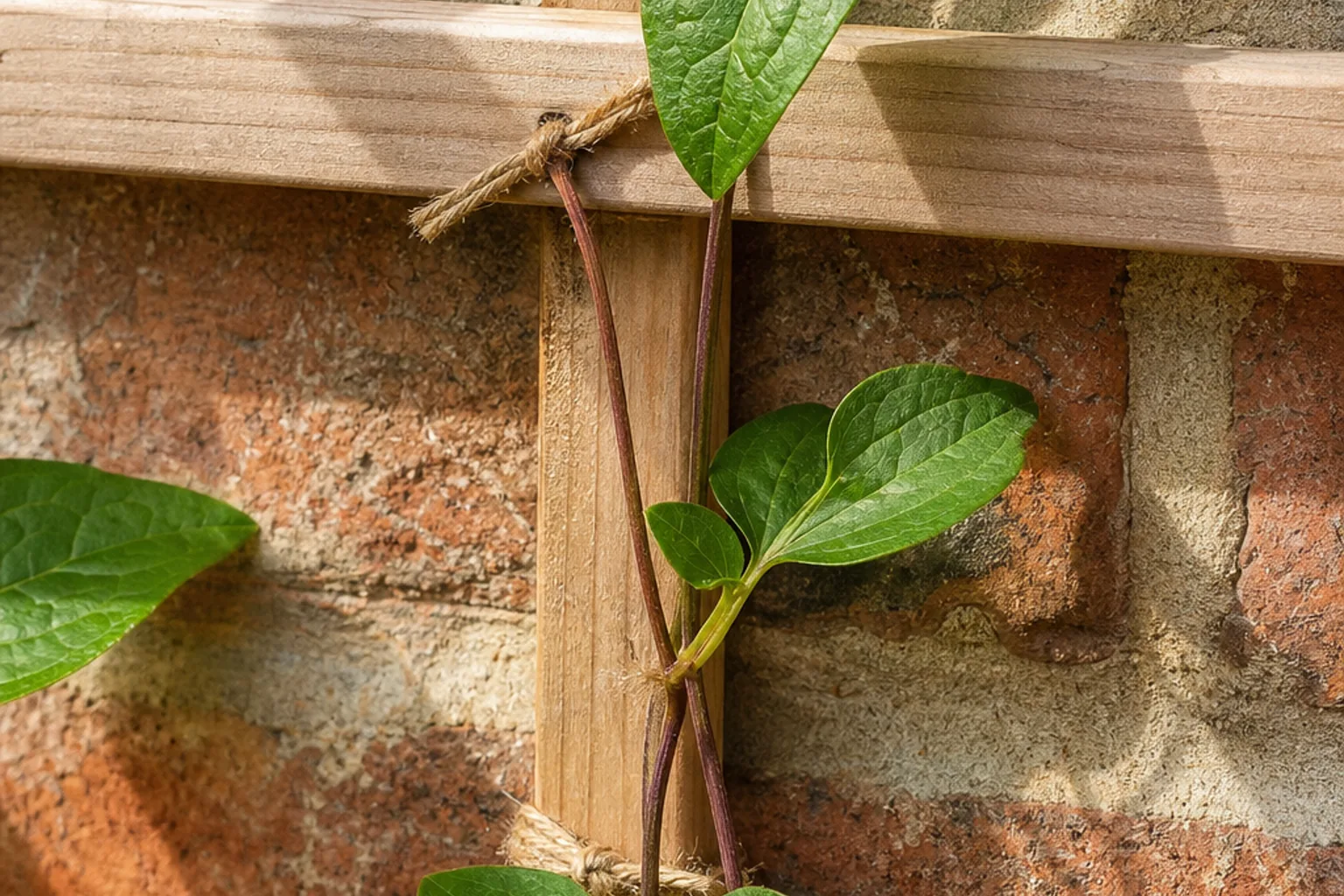
Vertical planting can free the floor, but a wall is not an unlimited extra garden. One climber, a restrained trellis or a short run of wall-mounted pots can soften a hard boundary. Covering every surface with shelves and hanging containers replaces floor clutter with eye-level clutter.
Pay attention to what you are fixing things to, how water drains, and whether the wall belongs to you. Freestanding support is the safer answer when drilling is not sensible, and it is easier to change when the plants grow.
Make the boundary do some work
Patio boundaries are prominent because they sit close to you. Rather than hiding every fence or wall, treat it as the backdrop. A dark surface can make green leaves stand out; a pale one can bounce light into a shaded corner. The useful choice depends on the light you actually have.
Planting does not need to run around all four sides. Concentrating it beside the main seat or at the far end creates a stronger view and preserves breathing room elsewhere. If you want a style reference, the restraint described in our Japanese backyard garden ideas is more helpful here than collecting every Japanese garden feature.
Storage deserves the same planning. If cushions, tools and watering cans are part of patio life, account for them while choosing furniture: a bench with storage or one narrow cabinet may use less usable space than several small boxes added later.
Preview one clear direction
A sketch helps with dimensions. A visual preview answers a different question: does this amount of planting feel calm, cramped or bare in your actual space?
Gardenly can place a chosen style over one photo of a backyard, front garden or planted patio. The image model is instructed to leave the house, walls, paths, paving, camera position and lighting unchanged while it redraws planting, beds, lawn and garden furniture. That is an instruction rather than a guarantee, so treat the result as a picture to discuss and refine, not a plan to build from.
For a patio, photograph the view you use most and keep some existing paving and boundaries in frame. A completely bare balcony gives the render less to work with, because Gardenly's styles ask for lawn and planting. Browse the Gardenly style gallery, choose one direction and compare the render with the original shown beside it. You are checking whether the balance of open floor, furniture and planting feels right before you lift a heavy pot.
The final gap does not need filling. Leave somewhere to put down a cup, turn a chair or add a plant later. If the patio is comfortable to sit in and simple to move through, it is already doing more than a crowded miniature show garden.