


Japanese backyard garden ideas need restraint more than they need a shopping list. Use fewer materials, make the path slow you down, give the planting clear shapes and choose one or two features worth looking at. Those ideas work in an ordinary backyard without turning it into a miniature theme park.
Start with the yard you have. Keep the fence, patio and practical route to the shed, then simplify what happens between them. A convincing Japanese-inspired garden usually comes from a coherent layout, not from covering every corner with recognisable objects.
Start with structure, not decoration
Before choosing plants, decide what should stay quiet and where the eye should land. Perhaps it is a well-shaped shrub seen from the kitchen, a group of stones beside the path, or a water bowl near a bench.
The Royal Horticultural Society's guide to Japanese-style gardens points to naturalistic elements, organic shapes, restrained planting and paths that control how you move through the space. It also makes a point that gets lost in image searches: you do not need every traditional element. Pick what suits the size of the garden and the money you want to spend.
In a normal backyard, two or three materials are plenty. Repeating existing paving or timber can make the new work feel deliberate. Add five different types of decorative stone and the garden starts to resemble the landscaping aisle on delivery day.
Use stone and water with purpose
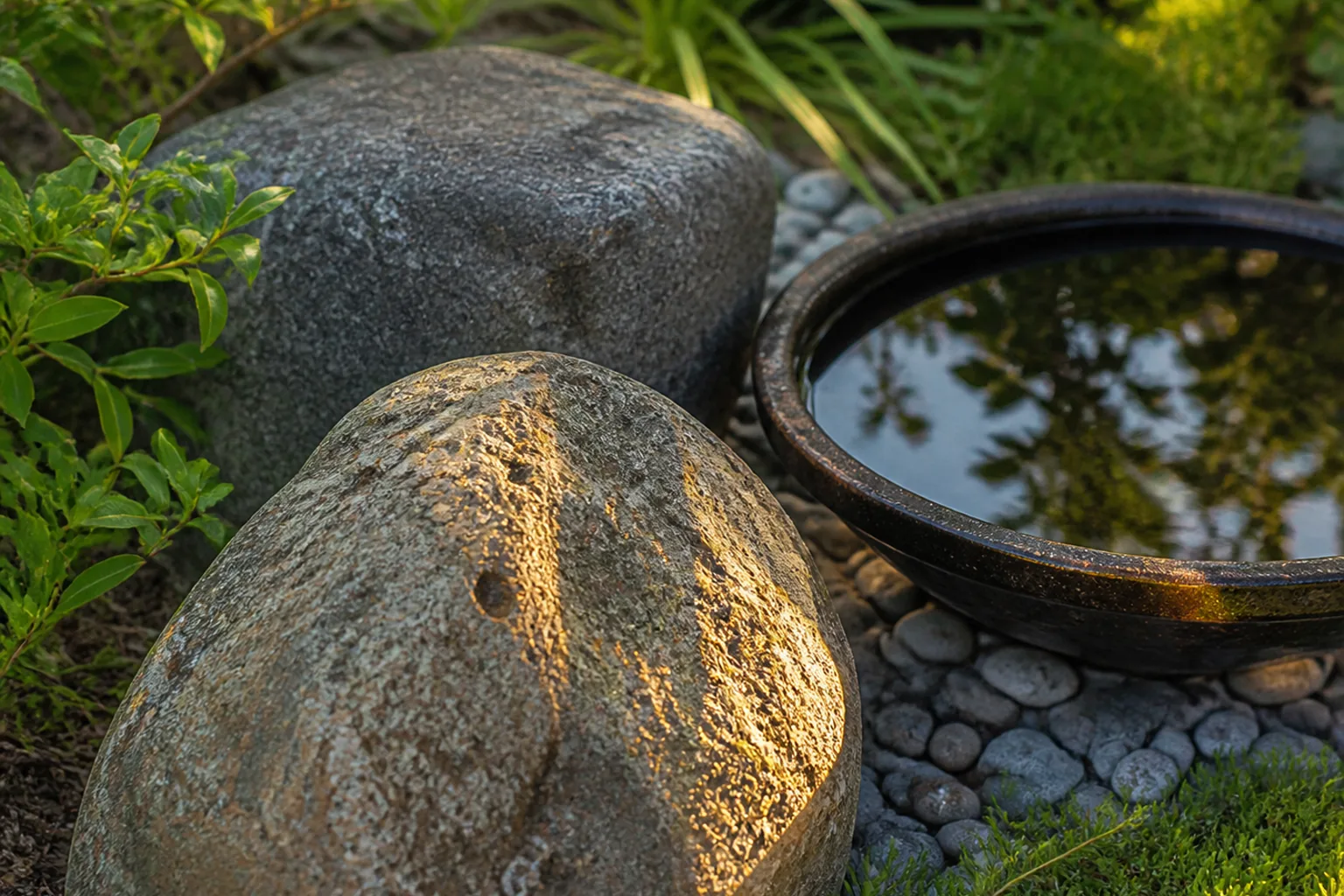
Stone works best when it feels placed for a reason. A small group can mark a turn, hold the edge of a bed or give low planting something solid to gather around. Burying part of each stone tends to make the arrangement look settled rather than recently unloaded.
Water does not have to mean digging a pond. A simple bowl can catch light and bring a still surface into a planted corner. If standing water is impractical, gravel and pebbles can suggest a dry stream; the RHS notes that dry waterfalls and streams use stone in place of water, so the idea is not a consolation prize.
Make the route slightly less direct
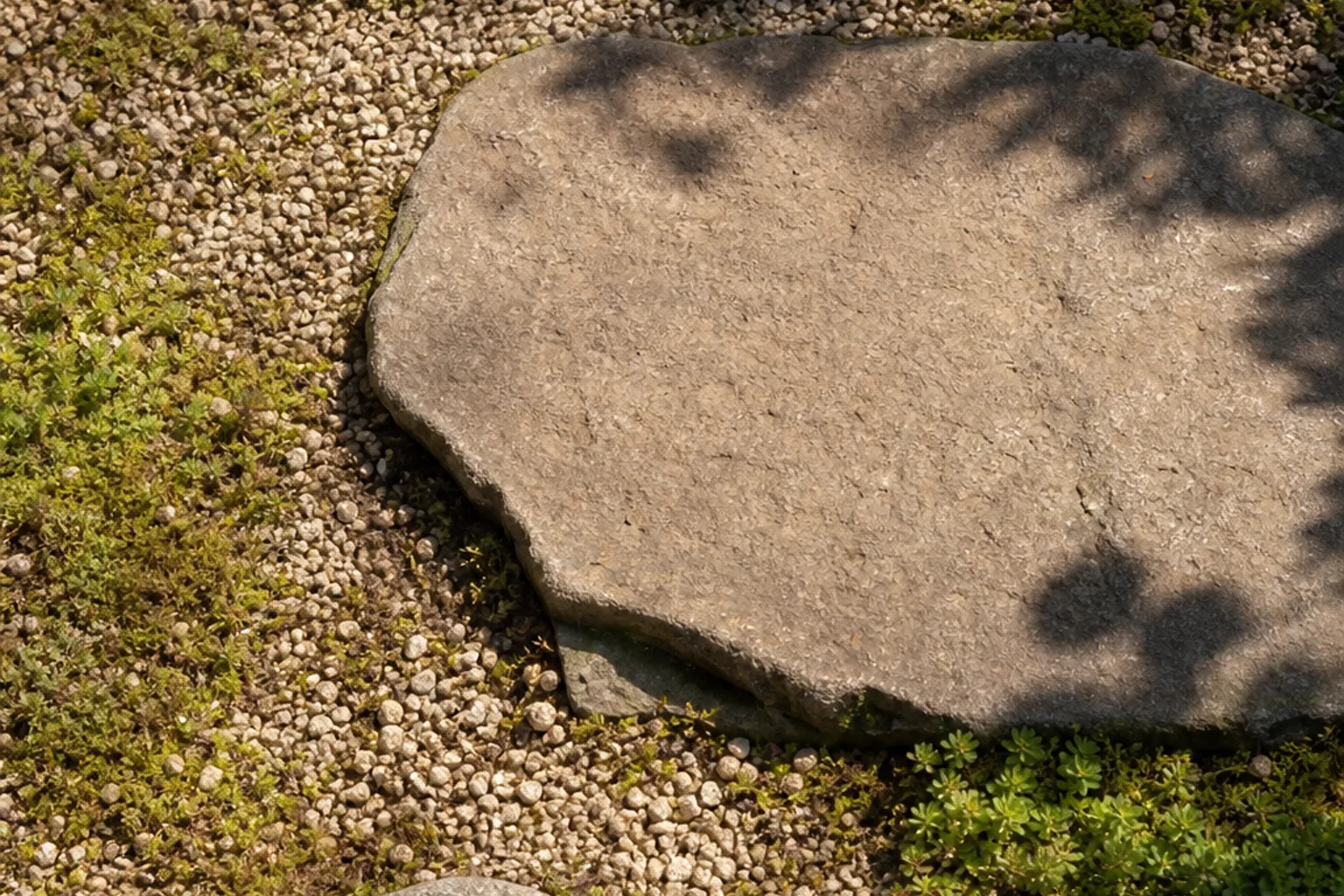
A straight line from the back door to the lawn is efficient, but it reveals the whole garden at once. A gently offset path or a few well-spaced stepping stones can make a small yard unfold in stages.
This does not require a theatrical bridge. Let a shrub partly screen the next section, turn the path around a stone group, or place the seat where the best view appears after the turn. If you carry bins through it every week, leave enough room for the bins. Serenity has limits.
Keep the planting palette restrained
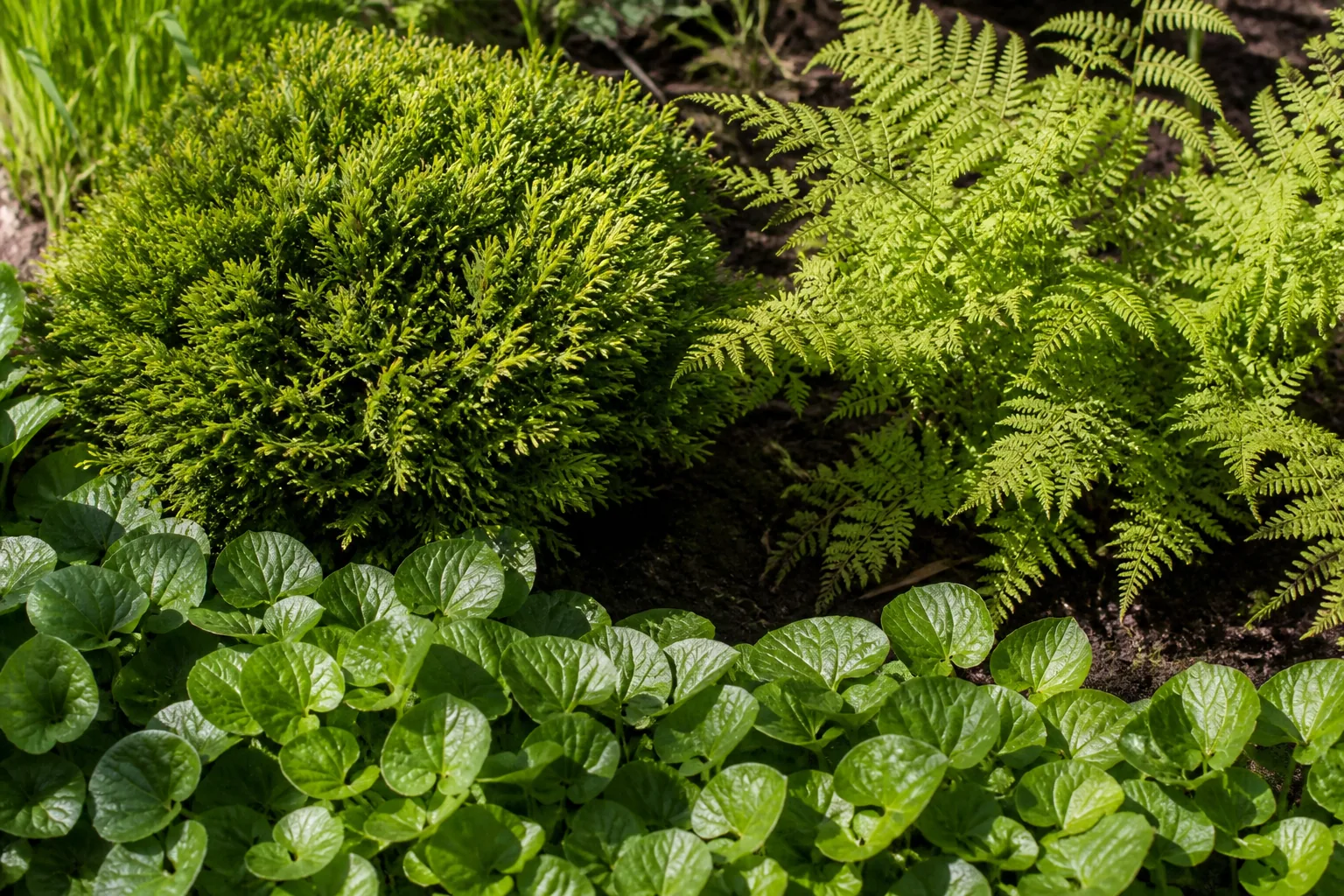
Japanese-inspired planting reads through foliage and form before flower colour. Pick a small set of leaf shapes and repeat them. One airy plant beside a broad-leaved one usually says more than a row of unrelated specimens bought because each looked good on its label. Choose them for your own soil, light and climate rather than importing a list from a garden photographed somewhere else. The composition creates the style; every plant does not have to be Japanese.
Evergreen structure keeps the composition legible, while deciduous plants bring change through the year. Leave open ground around the strongest shapes. Empty space is doing work here.
Maintenance matters too. Clipped forms, clean gravel and carefully separated groundcover do not stay that way by themselves. If regular pruning or raking sounds like punishment, use looser shrubs and a planted ground layer instead. A garden that only looks right on the day it is finished is a fairly expensive photograph.
Preview the style on your own backyard
Gardenly includes a style called Japanese Design, described in its catalogue as "Wabi-sabi beauty with bamboo accents." The useful part is not seeing another polished reference garden. It is seeing that direction applied to a photo of your own fence, house and paving.
Choose a view you use often and follow the photo guide before generating a design. Gardenly asks the image model to redraw the planting, beds, lawn and garden furniture while leaving the house, hardscape, camera angle and light as they were. That is an instruction, not a guarantee, so check the result against the original photo rather than treating every detail as a promise.
The render does not know your soil, local climate or which plants a nursery can supply, and it produces no planting list or construction drawing. It helps with a narrower decision: does this overall direction belong in your yard?
Turn the picture into a practical brief
When a preview feels right, resist the urge to copy every invented leaf. Pull out the decisions you can actually use:
- Which existing surfaces remain?
- Where is the main view from the house?
- What is the focal feature?
- Which shapes repeat in the planting?
- Where does the path slow or change direction?
- What will need regular pruning, raking or cleaning?
Take the answers, the original photo and the render to a landscaper or nursery, and ask what should change for drainage, access, mature plant size and local conditions. You can browse the full Gardenly style gallery to compare Japanese Design with Zen and other quieter directions. Keep the version that makes your own backyard feel clearer, not the one with the most props.