


Mediterranean garden ideas work best when warm materials, useful shade and resilient planting support the way you use the space. Start with where you walk and sit. Add the terracotta colour and textured foliage afterwards.
A holiday courtyard is a poor shopping list. What you need is a clear, sun-warmed character that still suits your garden, climate and daily routine. A painted urn cannot rescue an awkward route, and a row of thirsty plants will not become practical because the labels sound Mediterranean.
Give terracotta one clear job
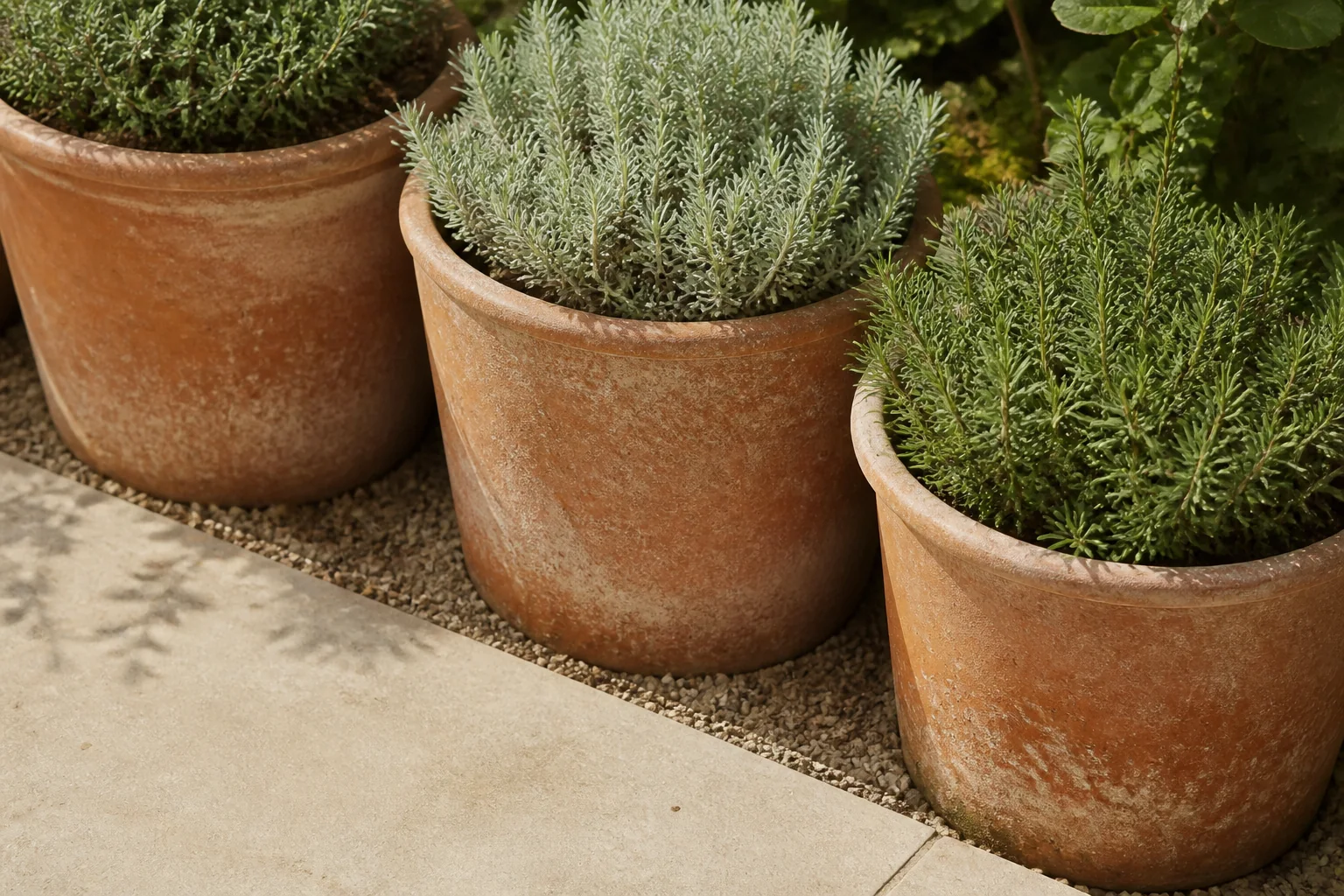
Gardenly describes its Mediterranean style as "sun-drenched with terracotta warmth." That warmth can come from pots, brick edging, clay pavers or one plastered wall. It does not need to come from all four.
Choose one main warm material and let quieter surfaces support it. A group of terracotta pots can mark the edge of a seating area. A narrow brick detail can define a gravel path. If the existing paving is sound, keep it and bring the colour in through movable objects instead of replacing a large surface for the sake of a style.
Repeat the same material in two or three places. This makes the choice look intentional and stops the garden becoming a display of unrelated finishes. Before buying anything, put down cardboard or tape in the proposed sizes. It is easy to underestimate how much floor and turning space a large pot takes.
Plan shade around the seat
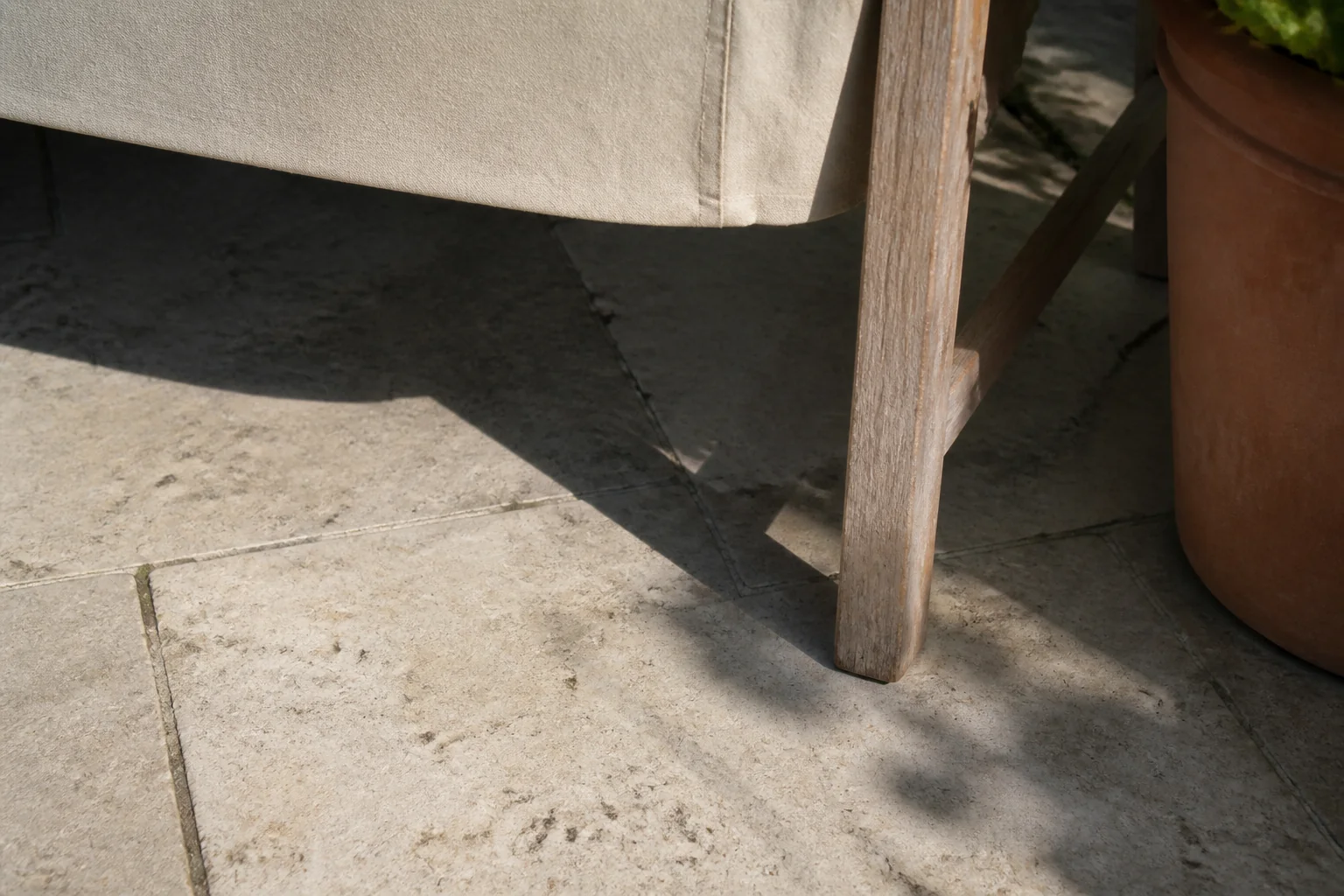
Shade should help a real activity. Decide where you want to eat, read or sit in the late afternoon, then check where the sun reaches that spot during the hours you will use it. A parasol, light pergola or climber on an existing support can make the seat useful without darkening the whole garden.
Keep the path to the chair direct and wide enough for everyday movement. A deep border or pot that narrows the route will be irritating long after its first good photograph. In a compact space, the practical layout in our small patio garden ideas guide is a useful starting point.
Use fabric and loose furniture for colour that you can change. Ochre, faded red, chalky white and muted blue can establish the mood without requiring permanent construction. One or two tones are enough.
Choose texture for your climate
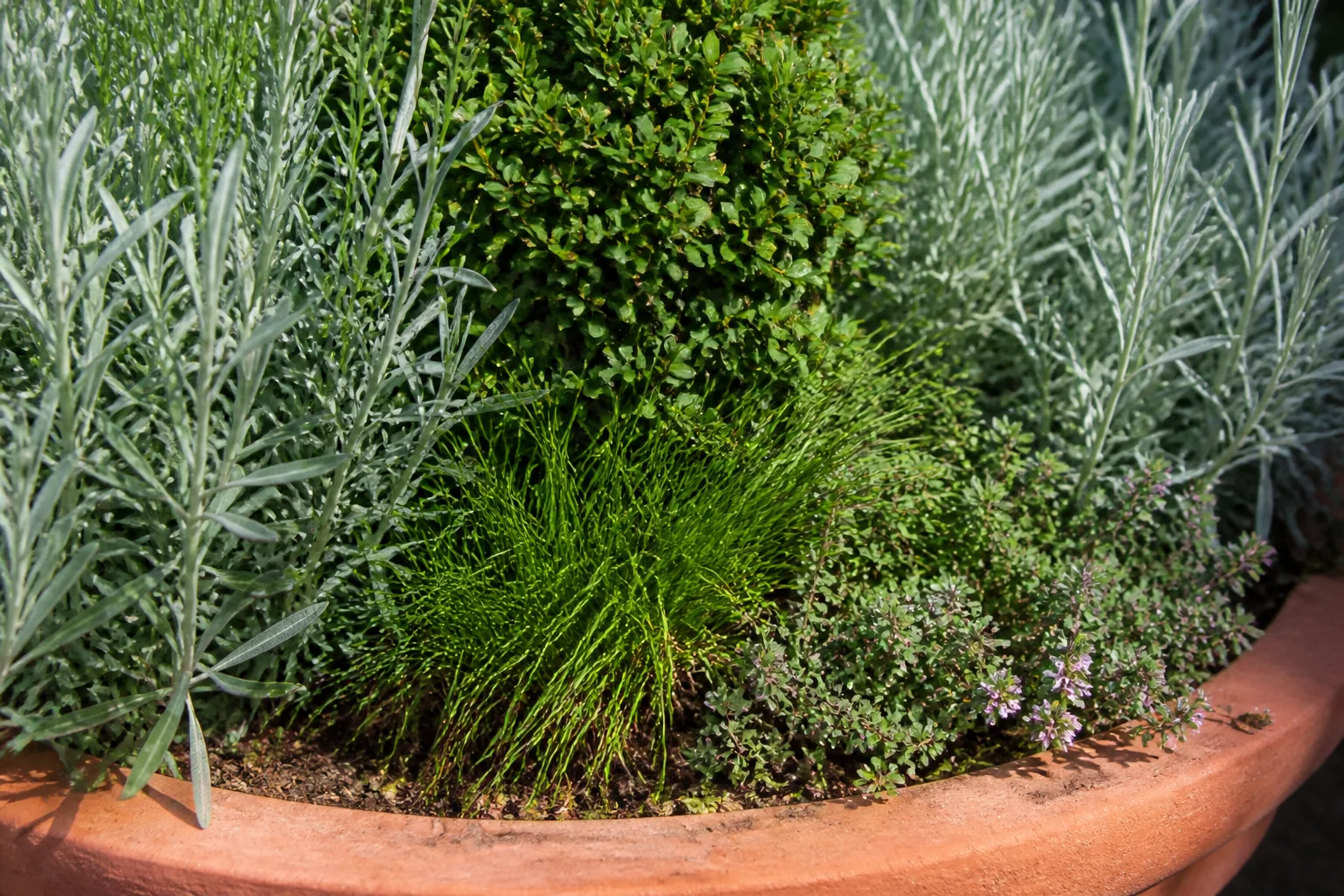
Silvery leaves, clipped evergreen shapes, herbs and fine grasses can suggest a Mediterranean planting character. The exact plants must suit your soil, winter temperatures, rainfall and available light. An olive tree is not a sensible default everywhere, however convincing it looks in a reference image.
Build the combination by role. Use one structural plant to hold the composition, a repeated middle layer for rhythm and lower plants to soften the edge. Grouping a few compatible plants reads more clearly than scattering one of everything around the plot. Leave enough room for mature growth and access for pruning or watering.
If dry summers are normal where you live, choose locally suitable plants that tolerate those conditions once established. If summers are wet or winters are severe, ask a local nursery or garden professional which species can provide the same colour and texture without struggling. The visual idea can travel; the plant list often cannot.
Keep the details quiet
The Mediterranean look is easy to overcook. You do not need an outdoor kitchen, tiled fountain, citrus collection and wrought-iron set in the same frame. Pick the detail that supports the garden's main use. A simple water bowl can be a focal point. A small herb pot beside the table can be both useful and fragrant. Everything else should earn its floor space.
Hide the practical clutter early. Give hoses, tools, spare pots and cushions a storage place before adding decoration. Keep a clear edge between gravel, planting and paving so the material changes remain legible. Good editing gives the warm colours and rough textures room to register.
Preview the balance on your own garden
Reference pictures can show materials and planting combinations, but they cannot show how much open ground your plot needs. Photograph the garden from the position you use most often and mark the route, seat and features that must stay.
You can then browse the Gardenly style gallery and test the Mediterranean style on that photo. The image model is instructed to keep the house, hardscape, camera position and lighting unchanged while it redraws the garden. That is an instruction, not a guarantee, and the result is a visual direction rather than a measured plan.
Compare the render with the original. Look for decisions you can name: less lawn, a warmer edge, denser planting near the seat or fewer scattered pots. Keep those decisions, check them against the real site and take the image to a landscaper or nursery as a brief. The useful result is not a ready-made Mediterranean garden. It is a clearer idea of what belongs in yours.