

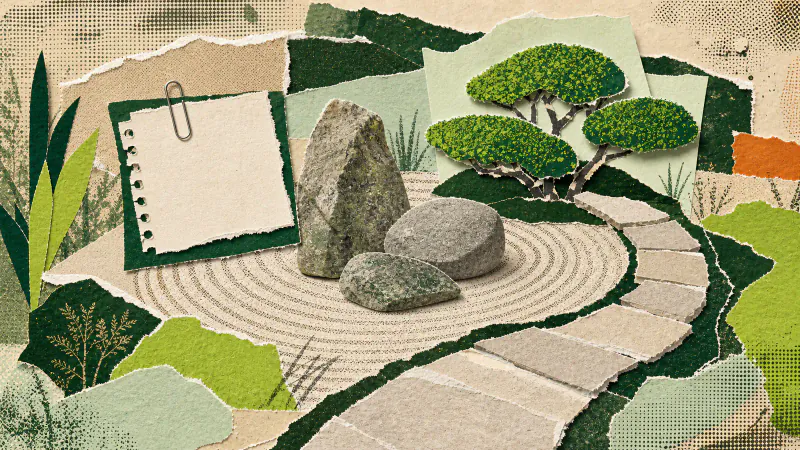
The most useful zen garden backyard ideas begin with editing, not shopping. Keep the route you already use, choose one place to sit and give the strongest plant or stone enough room to be noticed. Gravel can help, but the calm comes from the space between things.
That makes an ordinary backyard a good starting point. The fence, patio and shed do not need to disappear. A convincing result is less about copying a temple garden and more about deciding which shapes matter, which materials repeat and what can quietly recede.
Start with the view, then protect the route
Choose the view you encounter every day. It may be from the kitchen door, a dining-room window or the chair you use in the evening. Design for that view before worrying about how the garden looks from every possible corner.
From there, identify one focal point. A low tree, a rounded shrub, three stones or a shallow water bowl can all work. Give it clear ground around it. If the chair, pots, shed, stones and every plant compete for attention, none of them will feel deliberate.
Now draw the practical route through the picture. You should still be able to carry tools to the shed, pull out the chair and move a bin without weaving around decorative obstacles. A calm garden that is awkward to use has missed the point.
Let empty ground do some work
Open ground is not unfinished ground. In a small yard it can make the route obvious, separate two planted areas and let a single form register from the house. It also gives the eye somewhere to rest.
Decide what each open area is for. One may be the walking route. Another may provide room to pull out a chair. A third might simply remain visually quiet around a stone group. When open ground has a purpose, it stops feeling like space waiting to be filled.
Resist the urge to solve every gap with another pot. A few objects with room around them usually make a small garden feel larger than a collection arranged along every fence.
Give gravel one clear job
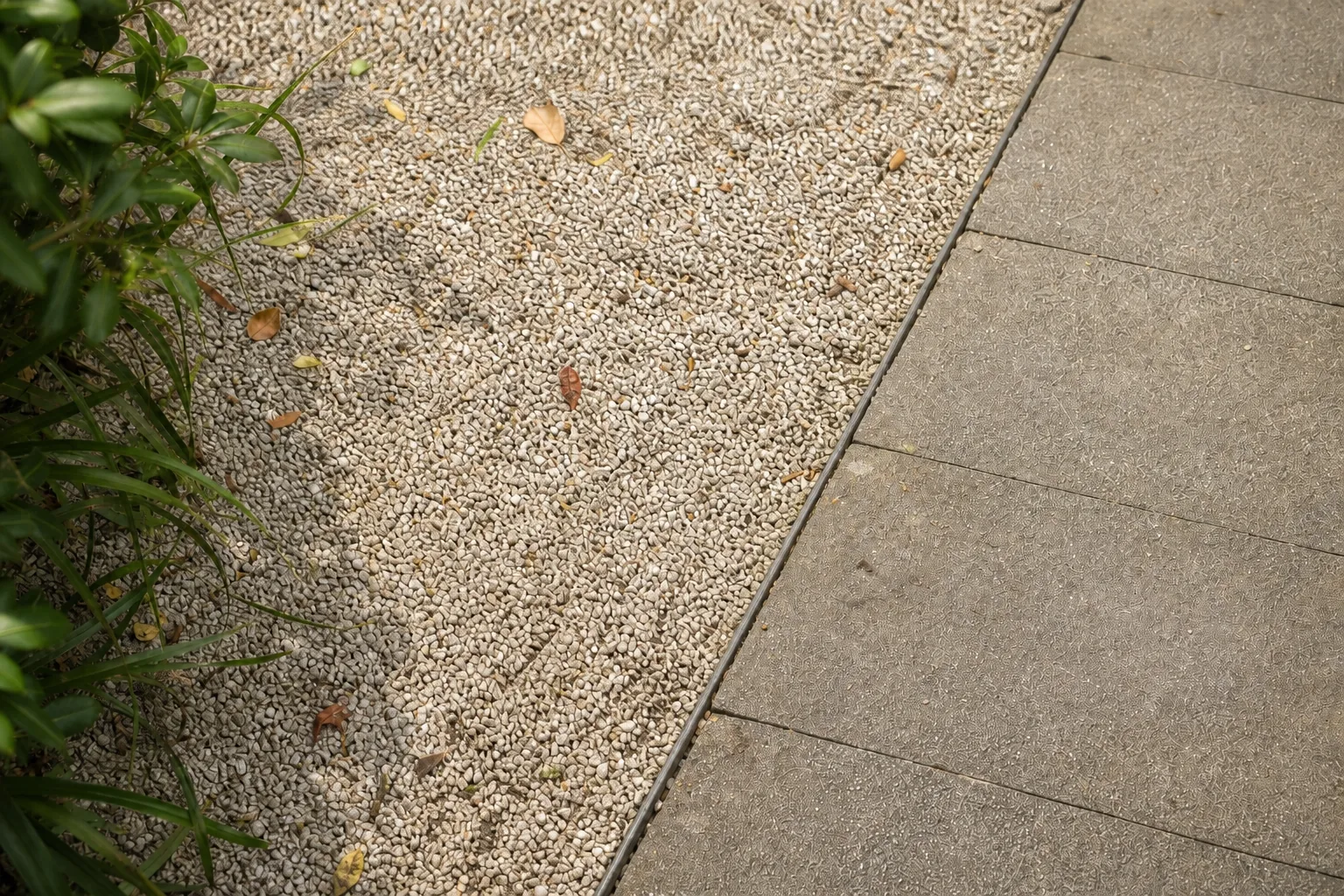
Gravel is often treated as shorthand for a Zen garden, but it should earn its place. Use it to define a dry area, connect a path or create a quiet strip between paving and planting. Pick one colour that already relates to the house and hardscape.
Loose material also needs a firm edge. Without one, gravel migrates into beds and across paving. Think about leaves, weeds, drainage and occasional raking before covering a large area. The serene gravel field beneath a messy tree may become a weekly sorting exercise.
Where wheels, unsteady footing or poor drainage make loose gravel impractical, keep a firm path beside a smaller bed or use the existing paving as the calm ground plane. Gravel is optional. A clear layout is not.
Group stones, then stop
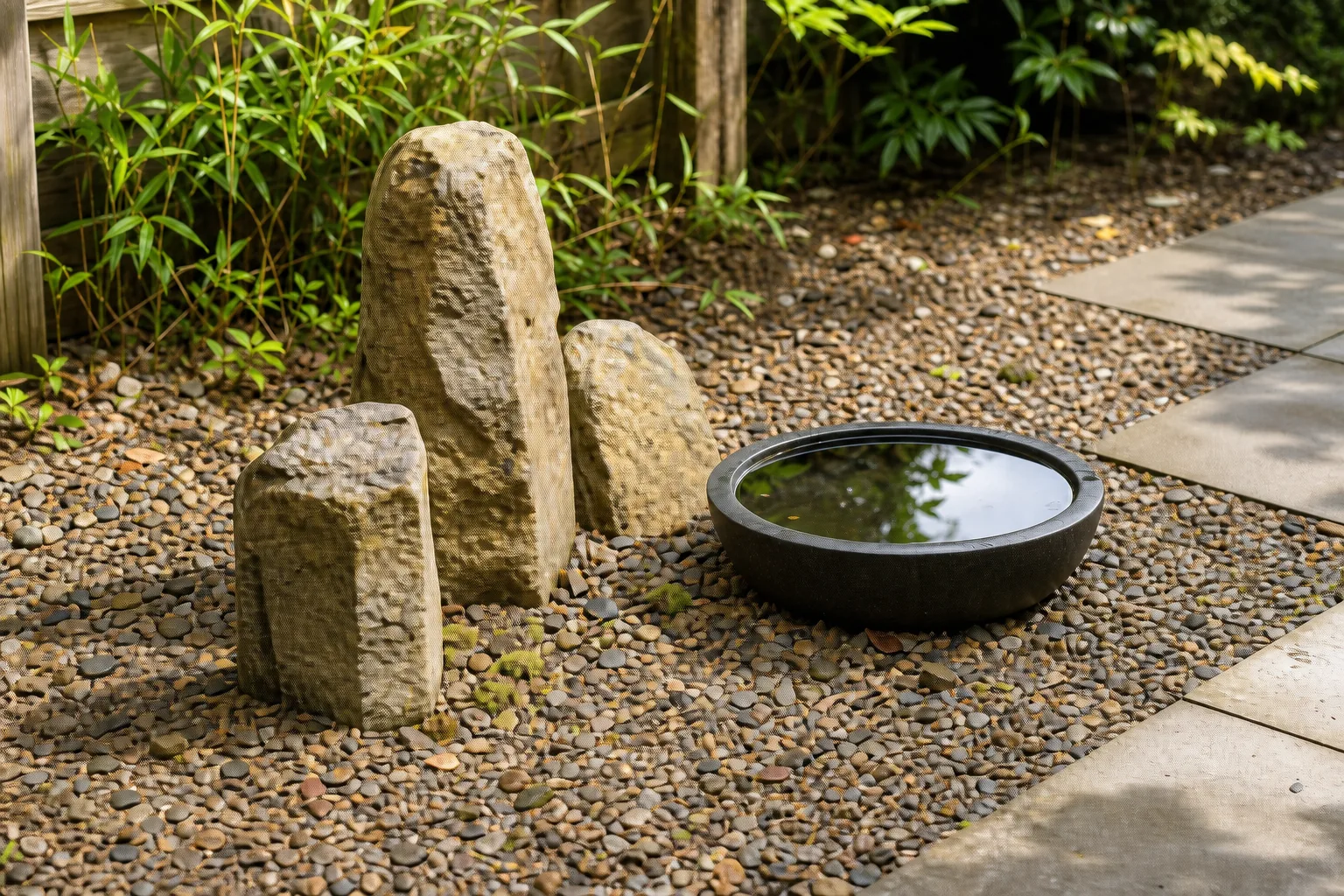
Three stones with related colours and different heights will usually look more settled than a row of matching rocks. Cluster them near a turn in the path or at the edge of planting. Sink the larger pieces partly into the ground so they appear to belong there.
Test the arrangement before committing. Cardboard shapes or upturned pots are not glamorous, but they let you judge scale from inside the house. That matters more than how the group looks while you are standing directly above it.
Water can play the same quiet role, but a pond is not compulsory. A shallow bowl gives you reflection without taking over the plan. If standing water is unsuitable for the household or climate, leave it out; the composition does not depend on it.
Keep the planting palette short
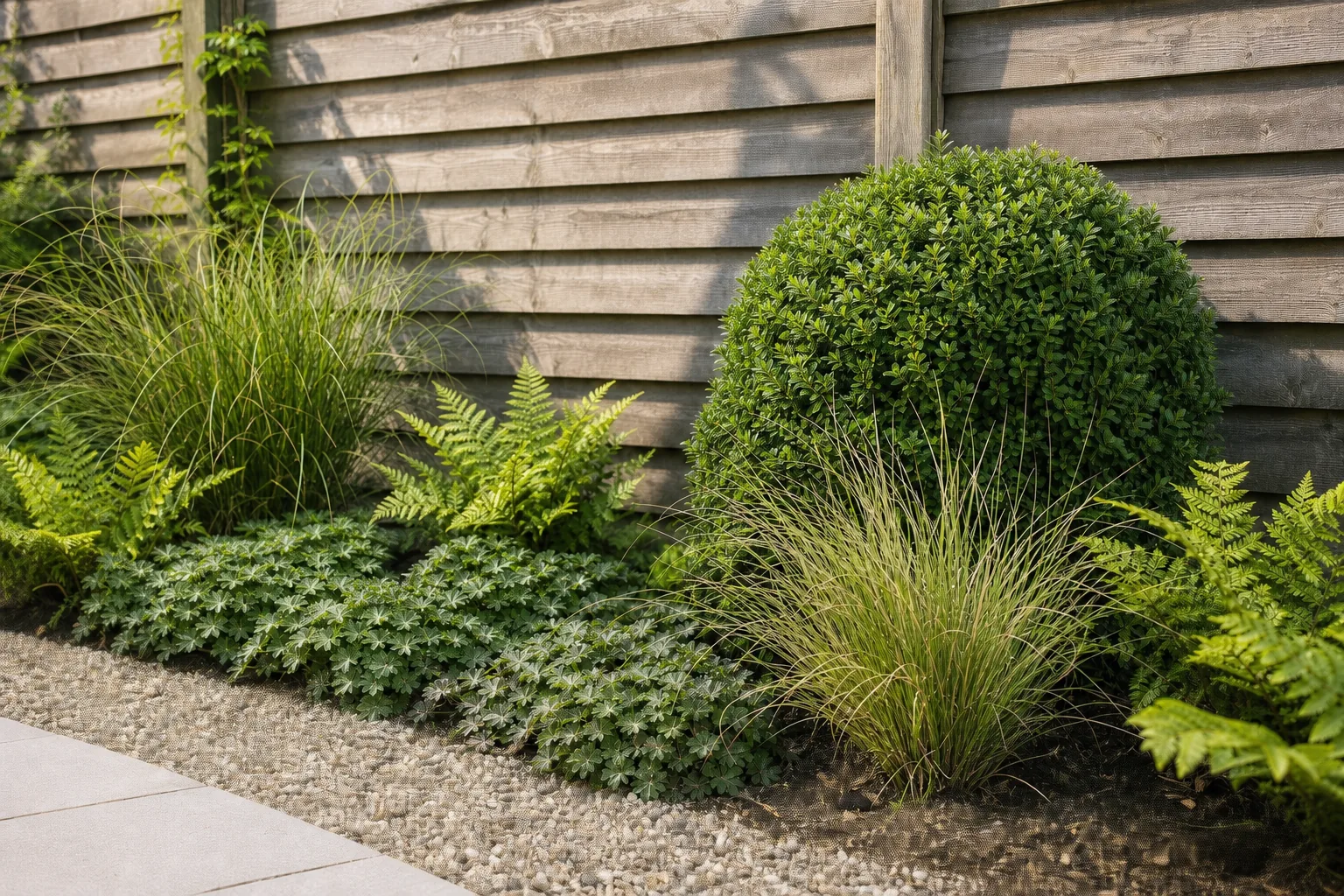
Choose a small number of plant forms and repeat them. Pair one clipped or naturally rounded evergreen with something looser: a grass, fern or low groundcover. Leave visible breathing room around the strongest shape instead of filling every patch of soil.
Foliage, texture and silhouette matter more here than a long succession of flower colours. That does not mean the planting must be severe. The contrast between a solid evergreen form and moving grass or fern fronds can provide all the variation the garden needs.
Select each plant for the actual soil, light, climate and amount of maintenance you want. Crisp gravel and tightly clipped shrubs both create work. If frequent raking and pruning sound tiresome, use looser planting and a living ground layer. Calm should apply to the owner as well as the view.
This is where Zen differs from a broader Japanese-inspired garden. The aim is not to collect recognisable cultural details. It is to reduce the plan until each route, stone and planted shape has a reason to be there. For a more layered direction, see these Japanese backyard garden ideas.
Preview the balance before you build
Gardenly includes a Zen style, described in its catalogue as “Peaceful harmony and serenity.” Apply it to a photo taken from your main viewpoint to explore how much ground remains open, where the focal group sits and which materials repeat.
The app asks the image model to redraw planting, beds, lawn and garden furniture while keeping the house, hardscape, camera angle and lighting in place. That is an instruction, not a guarantee. Compare the result with the original and treat it as a visual brief rather than a planting plan or construction drawing.
Pull only a few decisions from the preview: the route that stays clear, the amount of open ground, the position of the focal group and the short material palette. Then check drainage, access and plant choices with a landscaper or nursery. You can compare Zen with the other directions in the Gardenly style gallery, but keep the version with the clearest structure, not the one that adds the most things.