

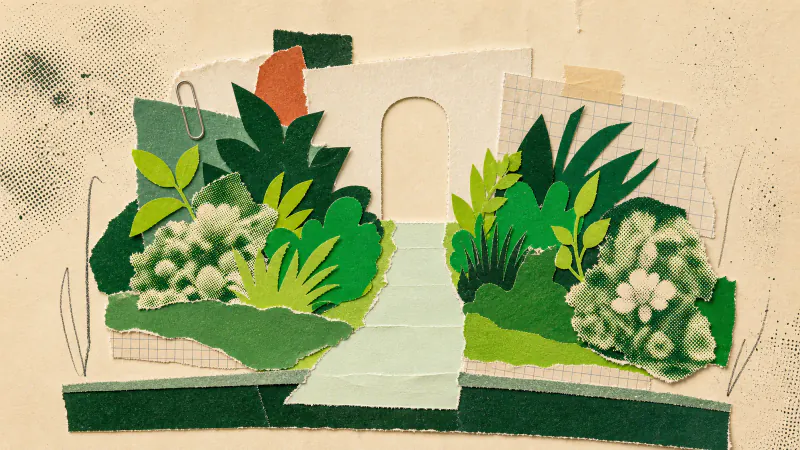
The best small front yard garden ideas make the walk to your door feel obvious and the view from the street feel cared for. Start with the route, decide what you want to see from inside, then use planting to frame those two things. A small front garden does not need to perform like a backyard. Its main job is arrival.
That shift makes planning easier. You can stop trying to squeeze in a dining area or a collection of decorative features. The front garden needs to handle daily comings and goings and give the house a planted foreground. That is plenty for a small patch of ground.
Start at the pavement, not the flower bed
Walk from the pavement or driveway to the front door as a visitor would. Notice where the route becomes unclear, where a gate catches, and whether a bin, bicycle or parked car forces an awkward turn. The path should solve those ordinary movements before it makes an elegant curve on paper.
Keep the main route easy to read. Planting can soften its edges, but should not make guests guess which strip of paving leads to the door. If the route is narrow, leave enough room for shopping bags and for two people to pass without brushing wet leaves. Check that doors and gates can open fully before deciding where a bed begins.
Design the view in both directions
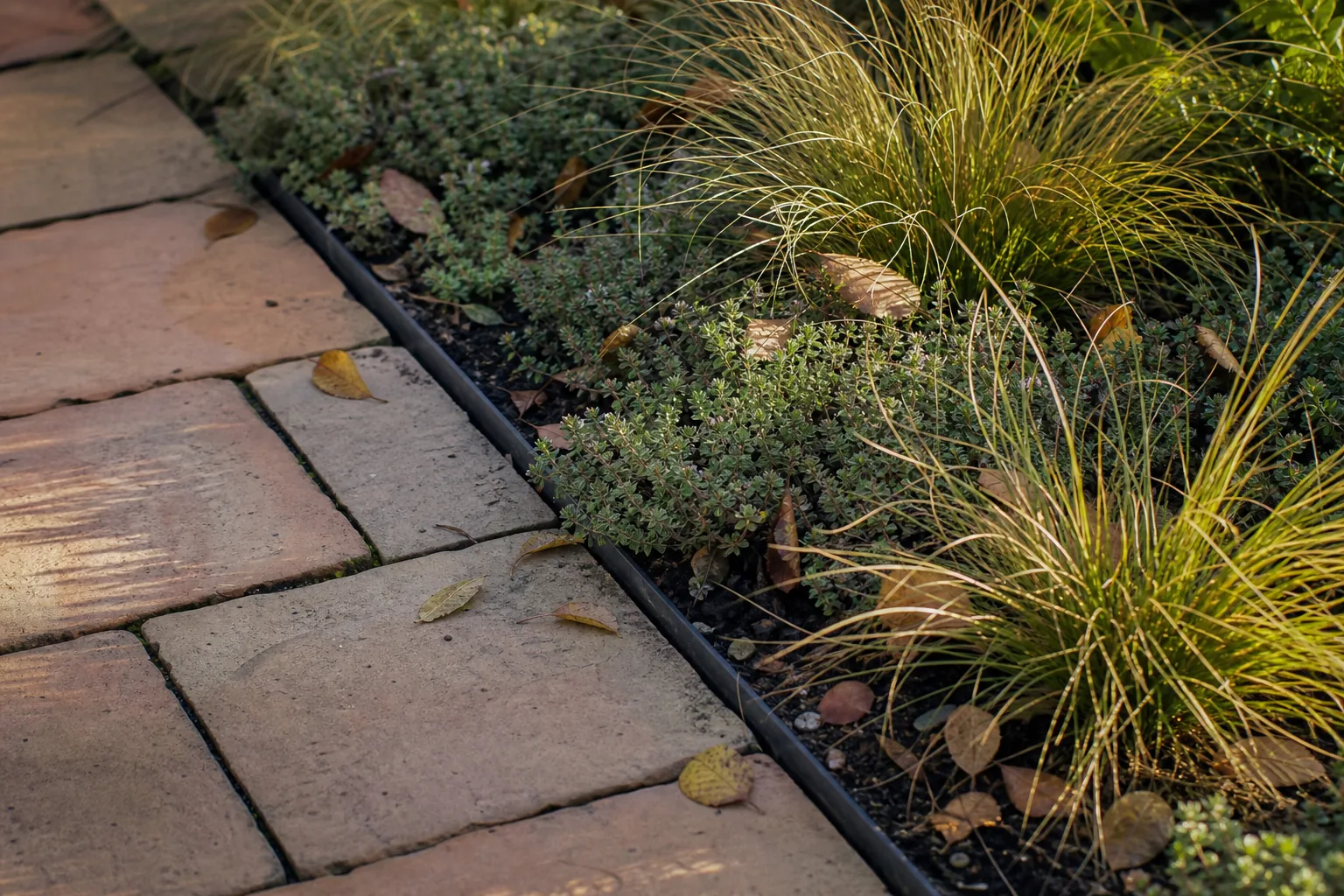
Front gardens get looked at from the street, but you also see them through your own windows. Stand in the room that faces the garden and note what sits in the centre of that view. It may be better to place one generous planting group there than to spread small plants evenly along every boundary.
Then step back outside. Look at the front door, windows and house number from the usual approach. Planting can frame the entrance without hiding it. Keep sightlines practical around a driveway or pavement, and check local rules before adding anything tall close to a boundary. A front hedge that looks modest when planted can become a daily trimming problem if its eventual size was never part of the plan.
Use fewer shapes at a useful scale
Tiny front yards often collect tiny things: three little pots, a narrow edging strip and several small ornaments. Each purchase seems harmless, but together they turn the space into a shelf.
Choose a few shapes large enough to register from the street. One broad bed may do more than several thin borders. A repeated plant or pot material can tie separate areas together. Leave some open ground around the main route so the planting has a clear outline rather than spilling into every remaining gap.
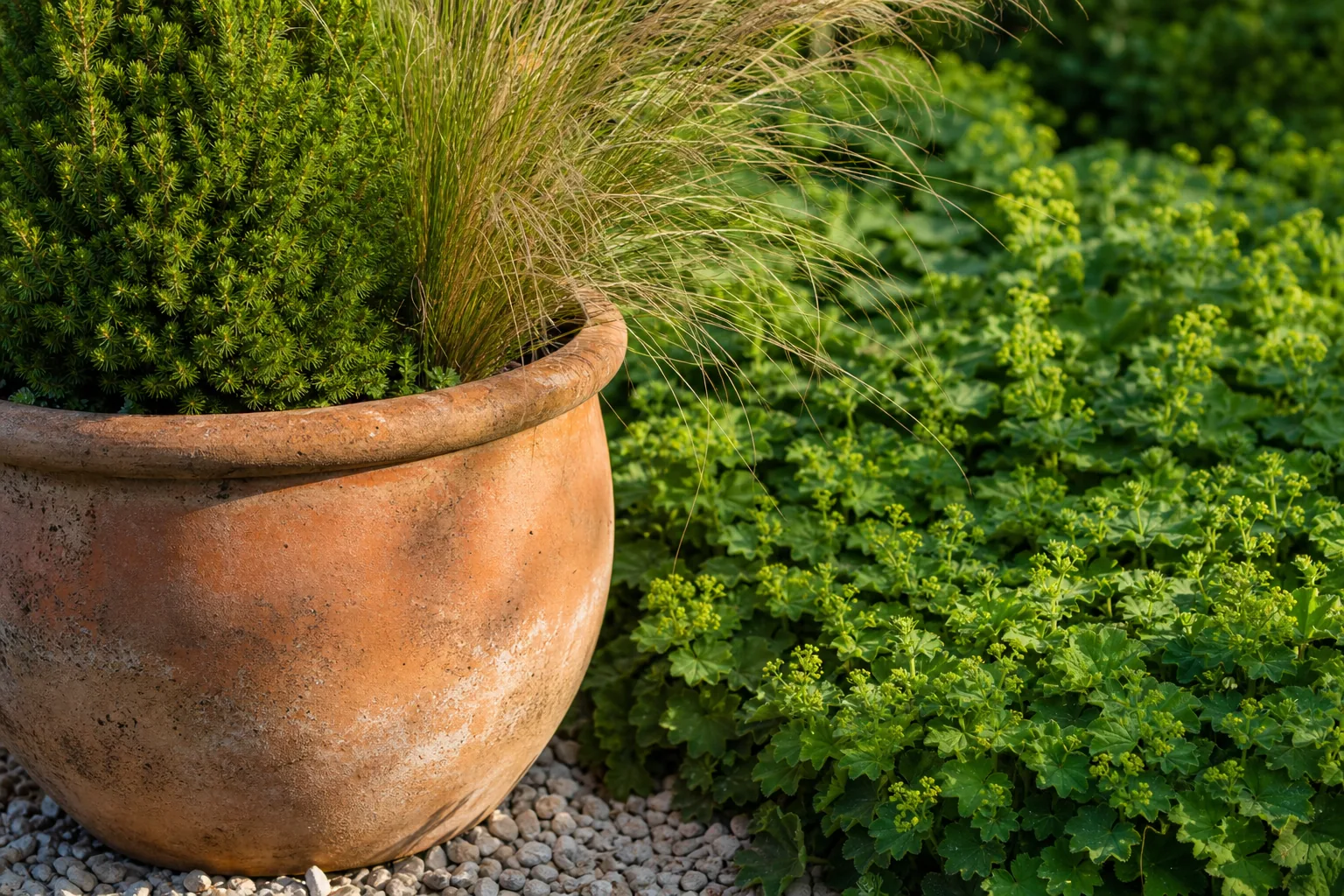
Plan the maintenance at the same time. Put plants where you can reach them and allow for their mature size. A local nursery can help you choose for the light, soil and climate. If bins or bicycles need to cross the garden, test that movement on the plan instead of hoping the planting will politely make room later.
Screen the useful clutter without building a wall
Meters, bins and bicycle storage rarely disappear from a front garden. Give them a deliberate place first. A short screen or planting group can reduce how prominent they look, but make sure access stays simple for collection, maintenance and daily use.
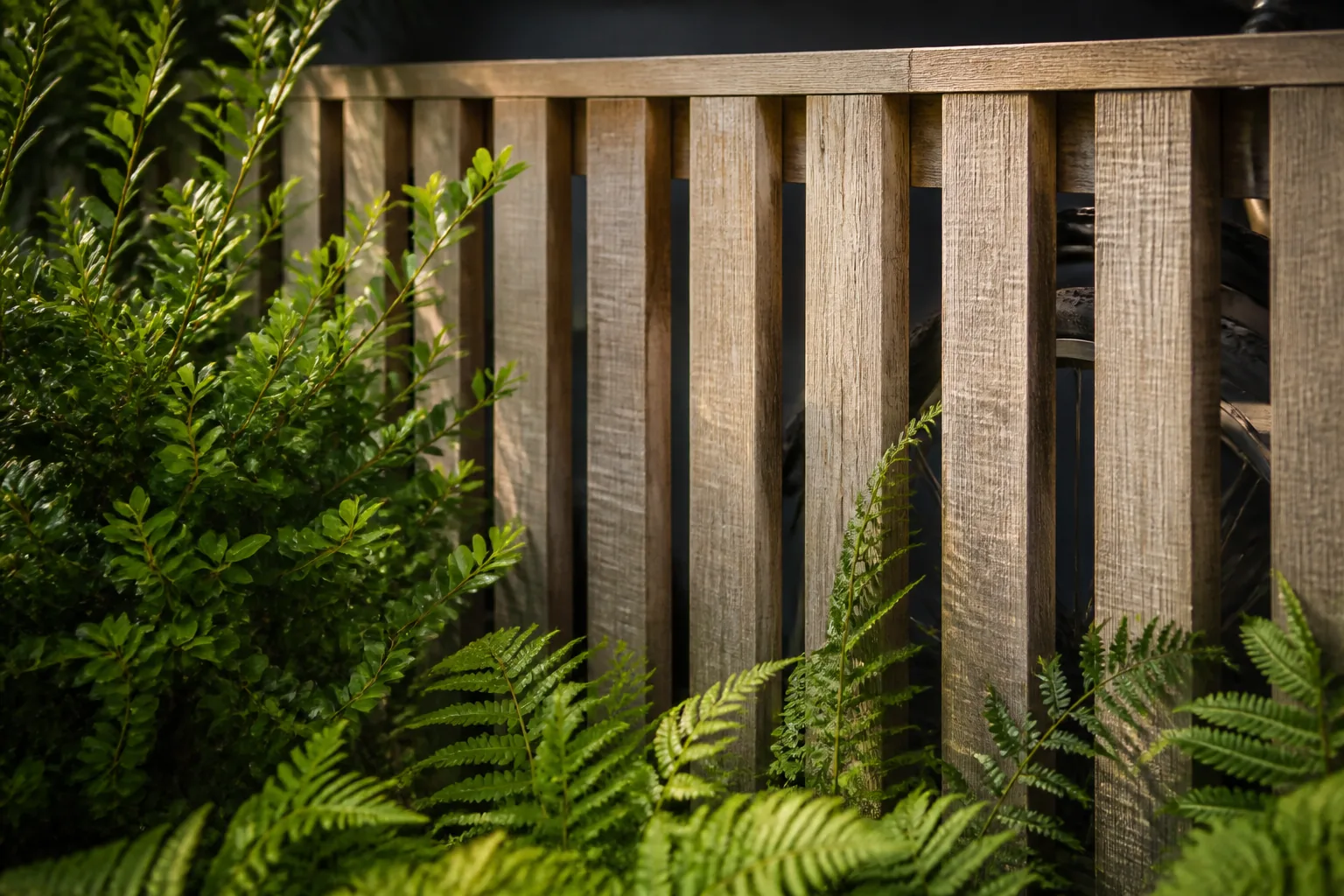
Avoid solving every view with a tall barrier. The front of the house still needs to feel connected to the entrance, and neighbours or local rules may limit what you can build near the street. Partial screening is often enough: hide the untidy lower half while keeping the route and doorway visible.
Preview the arrival on your own photo
A measured sketch is the place to settle path widths, access and mature plant sizes. A visual preview helps with a different choice: whether the front garden feels open, planted, formal or loose when seen with your actual house.
Gardenly can apply a selected style to one photo of a front garden. The image model is instructed to leave the house, walls, paths, paving, camera position and lighting unchanged while it redraws planting, beds, lawn and garden furniture. That is an instruction, not a guarantee, so use the result as a picture to discuss with a landscaper rather than a plan to build from.
Take the photo from the pavement or normal approach, since that is the view this design needs to solve. Our guide to photographing your yard for an AI backyard generator explains how to keep the important boundaries in frame. Then browse the Gardenly style gallery and compare one or two directions. Look past the individual plants. Check whether the entrance is clear, the route still works and the planting has enough presence without covering the house.
The useful version of a small front garden is not a miniature backyard. It is a short, pleasant journey from the street to the door, with enough planting to make that journey feel intentional.