


The search for "small garden ideas no grass" usually starts with a space too tight for a useful lawn. Do not replace that lawn with a tiny paved rectangle. Let the main path widen into the place where you sit, keep the ground simple and put most of the green into deep planting along one or two edges.
Start with what must fit on an ordinary day. You need a route from the door, enough room for the way you actually sit outside, and access to anything that cannot move, such as a gate or drain.
Let the route become the seating area
Separate paths and patios consume space quickly. In a small garden, one stable surface can run from the door and widen where a chair or small table belongs. You still get a clear route, but you do not spend another strip of ground to reach a separate square of paving.
Test the arrangement with the real movements. Open the door fully, pull a chair back, carry a bag to the gate, and reach the plants for care. Keep that working strip clear. A diagonal path or a curved edge is useful only when it solves a real constraint; on a narrow plot, it can leave two thin scraps that are too awkward to plant well.
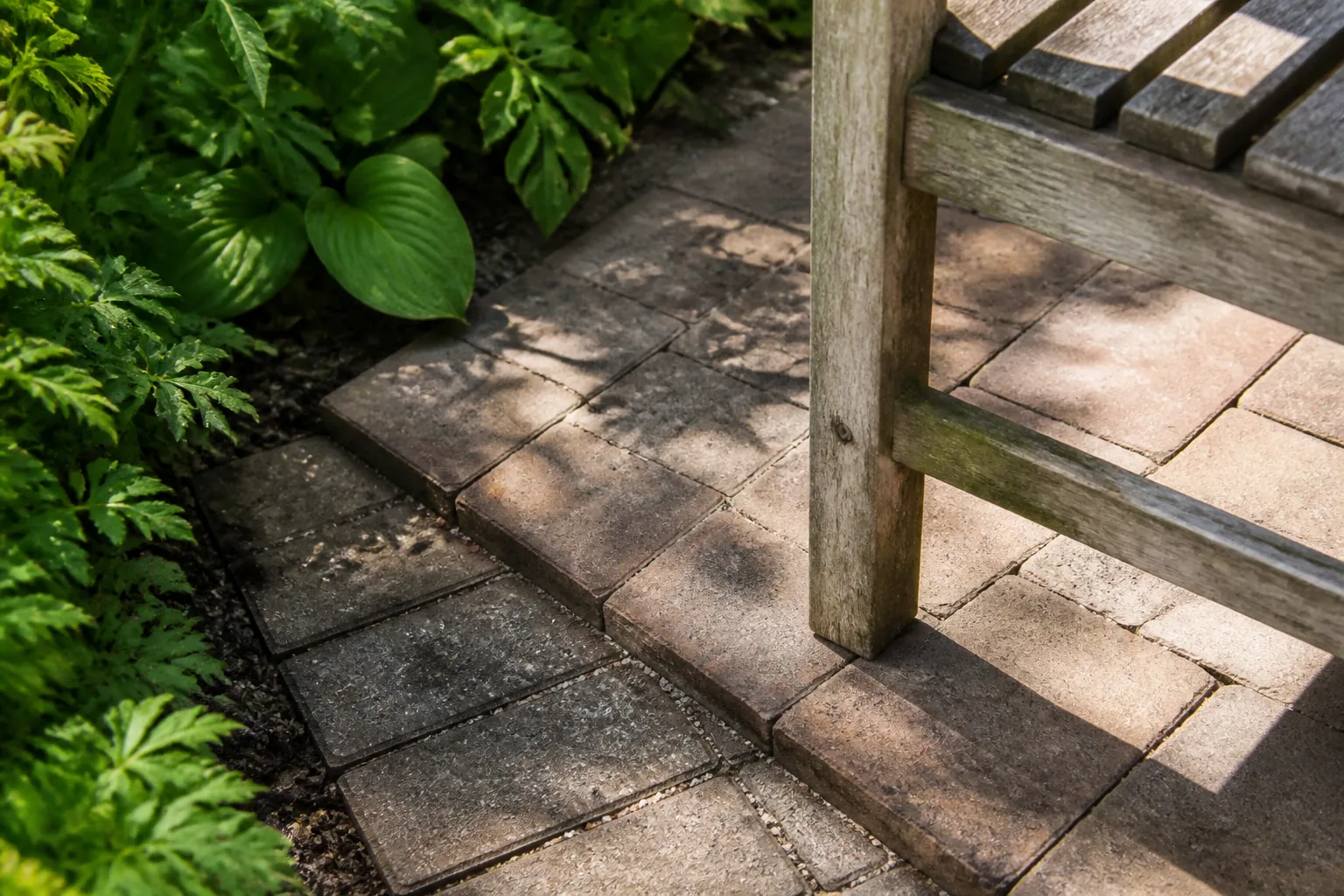
This is different from shrinking every object. One comfortable seat beside a substantial bed can feel calmer than several folding pieces surrounded by little pots. For a closer look at protecting the main use of a paved space, see our small patio garden ideas.
Use one calm surface system
A lawn is one broad shape. When it goes, five small materials can make the garden feel even smaller. Choose one main surface for the route and seat, then use planting or a single edge detail to mark the change of use. Repetition makes the ground read as one plan rather than a collection of samples.
The right surface depends on access, slope, drainage, maintenance and local requirements. Check where rainwater can go before making the whole area hard. Permeable joints, gravel or planted ground may help in some places, but none is a universal answer. A landscaper can check the levels and base construction; a photograph cannot.
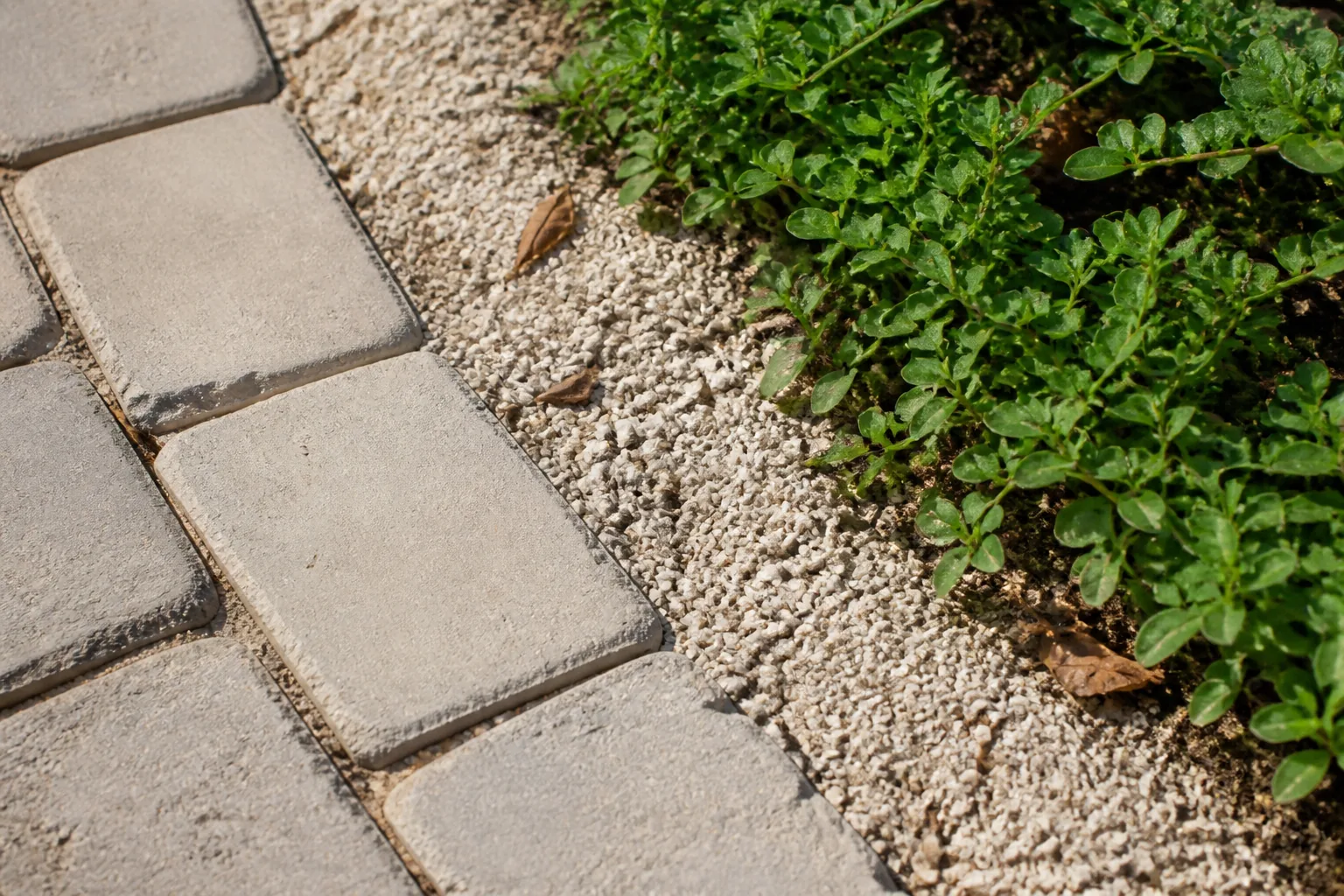
Keep useful paving that is already sound if it fits the plan. Removing it only to lay a similar surface is an expensive way to end up where you started. The broader guide to a no-grass backyard explains how to divide an old lawn by use before choosing materials.
Put the green into deep edge layers
Thin borders save very little usable floor and often leave plants pressed against a fence. It is usually better to plant one deeper section along the longest edge or at the far end. The clear central route then feels intentional, while the planted area has enough depth for more than one height.
Build the layer from the site conditions, not from a shopping list. Start with plants that suit the light, soil, climate and amount of care you can give. Check mature width as well as height. A compact ground layer can soften the edge, a middle layer can provide most of the mass, and a climber or upright plant can use the boundary without filling the path. Ask a local nursery or landscaper when the conditions or mature sizes are unclear.
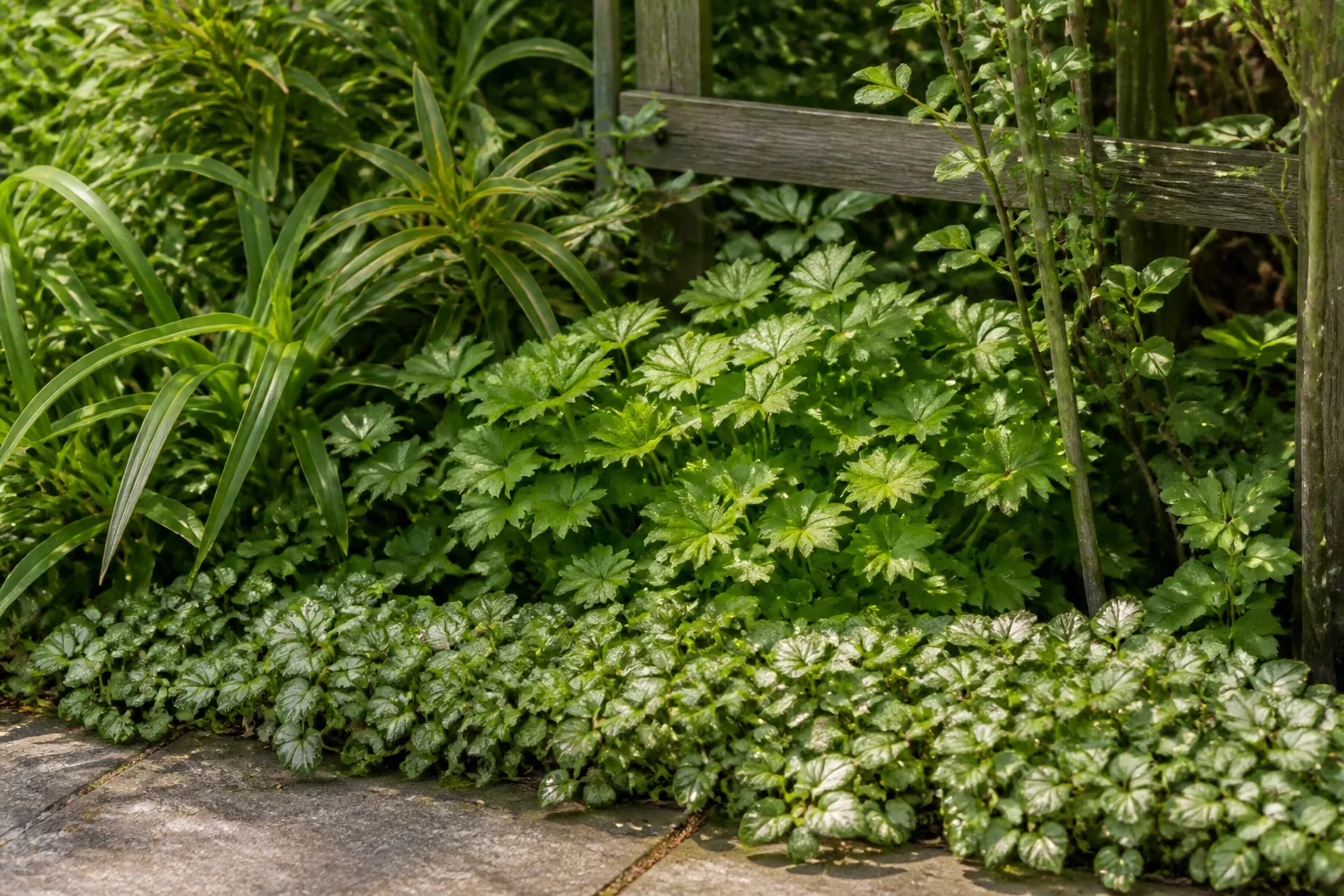
Repeat a few forms instead of adding one of everything. On a short boundary, three related groups are easier to read than ten isolated specimens. Leave access for pruning and watering, and keep vigorous roots or stems away from surfaces they could damage.
Preview the balance, then measure it
A measured sketch is what settles widths, levels and access. A visual preview helps one step earlier, when you are comparing how much of the small plot should read as open surface and how much should read as planting.
Gardenly can place a selected style over one photo of a backyard, front garden or planted patio. Its image model is instructed to leave the house, fences, walls, paths, paving, camera position and lighting unchanged while it redraws planting, beds, lawn and garden furniture. That is an instruction, not a guarantee, and the result is not a drainage plan or planting schedule.
Browse the Gardenly style gallery, photograph the view you use most and compare one or two directions. The styles ask for lawn and planting, so a render may put grass into the image. Ignore that literal detail and compare the useful parts: whether the route still reads clearly, whether the green has enough depth and whether the seat has breathing room. Then take the preferred picture back to a measured plan before anyone starts work.
In a compact garden, open floor gives you room to use the place. You can open a door, move a chair and see the planting as one generous shape. Keep that room and the garden can lose its grass without losing its green character.