

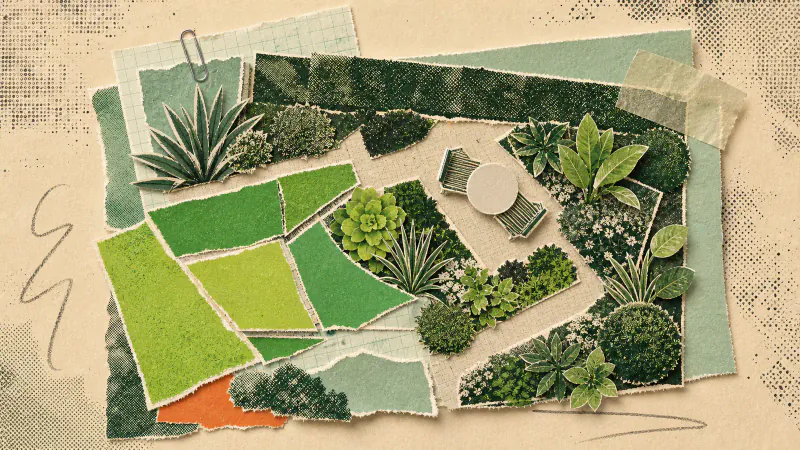
The most useful no grass backyard ideas replace the lawn with a plan, not a blanket of paving. Decide where you need to walk and sit, give planting a few generous areas, and choose ground surfaces to suit those jobs. The yard can lose its lawn without losing softness, shade or the sense that it is a garden.
Start with the reason the grass is going. A muddy lawn needs a different answer from one that bakes dry or simply takes too much work. Once the problem is clear, you can avoid copying the lawn's least useful feature: one large surface doing the same thing everywhere.
Divide the old lawn by use
Look at the lawn as empty floor and mark what already happens on it: where chairs end up, where the sun reaches when you sit outside, which view matters from inside the house.
Draw the main route first, from the back door to the gate or shed, and keep it direct. Put the seating where it works on an ordinary day, not in the corner that makes the plan look balanced. What remains can become planting instead of another strip of hard surface. Make this rough plan before choosing materials: it is easy to fall for a paving pattern and then discover it has decided the whole yard for you.
Keep one clear route through the yard
The main path should be wide and stable enough for the way you use it, whether that means carrying shopping, moving a bin or reaching a shed with a bicycle. Secondary routes can be looser: stepping stones or a narrow path may be enough to reach a border for maintenance. If every edge is connected by full-width paving, the paths begin to swallow the planting they were meant to serve. Check where water goes before settling on a surface, too. That answer depends on the ground, slope and local requirements, so discuss it with a landscaper rather than guess from a photograph.
Use planting in large, readable groups
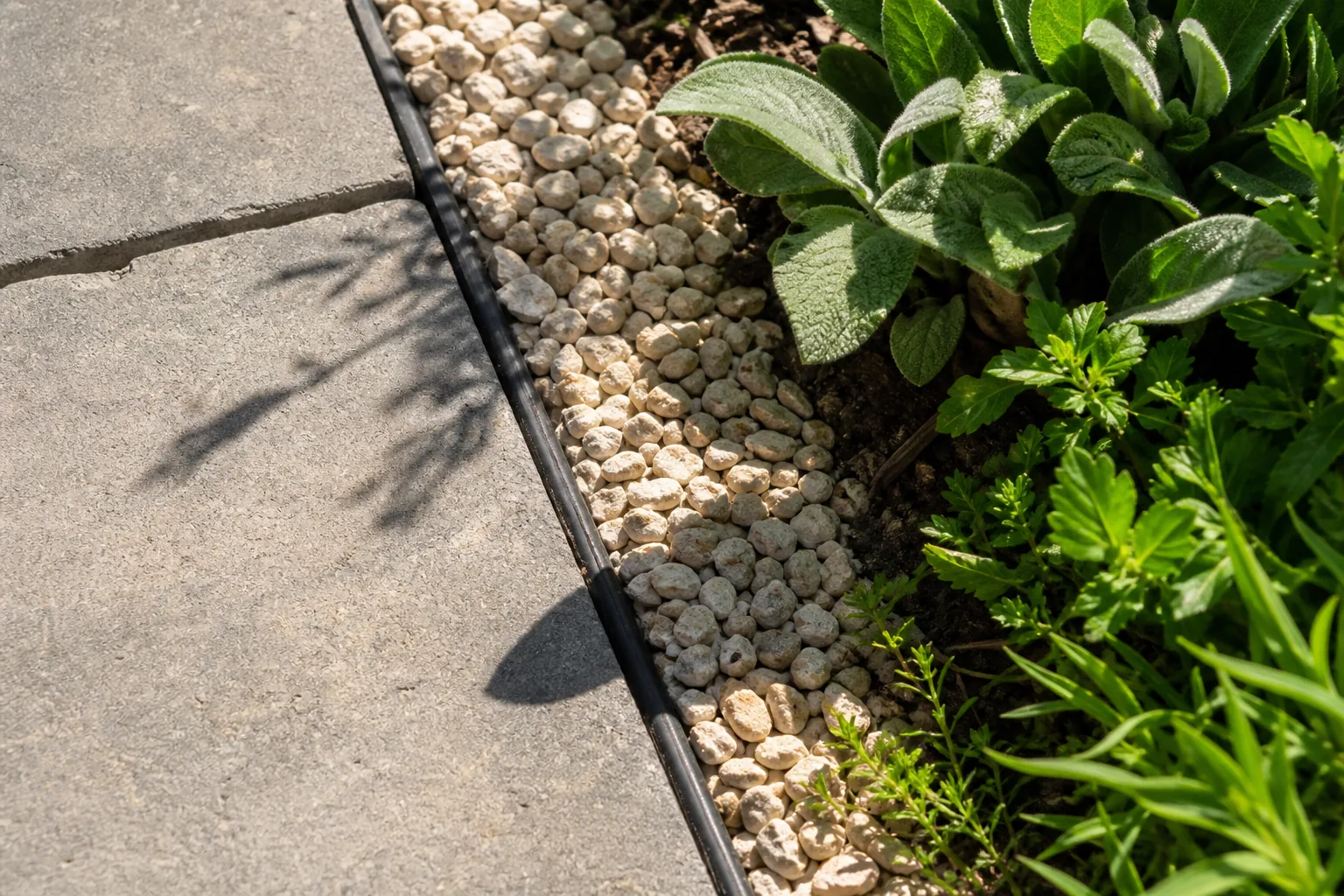
Removing grass does not mean shrinking the green part of the yard. Deep beds around the boundaries, one planted island or a broad area of ground cover can take up much of the old lawn while giving the space more shape.
Group plants by the conditions in each part of the yard, since a sunny exposed patch and a damp shaded corner will not support the same choices. Check mature sizes before buying, and ask a local nursery when you are unsure what suits the soil and climate. Avoid tracing the old rectangle with a thin border: narrow beds leave you with almost the same layout as before, only with more hard surface in the middle.
Give the seating area an edge
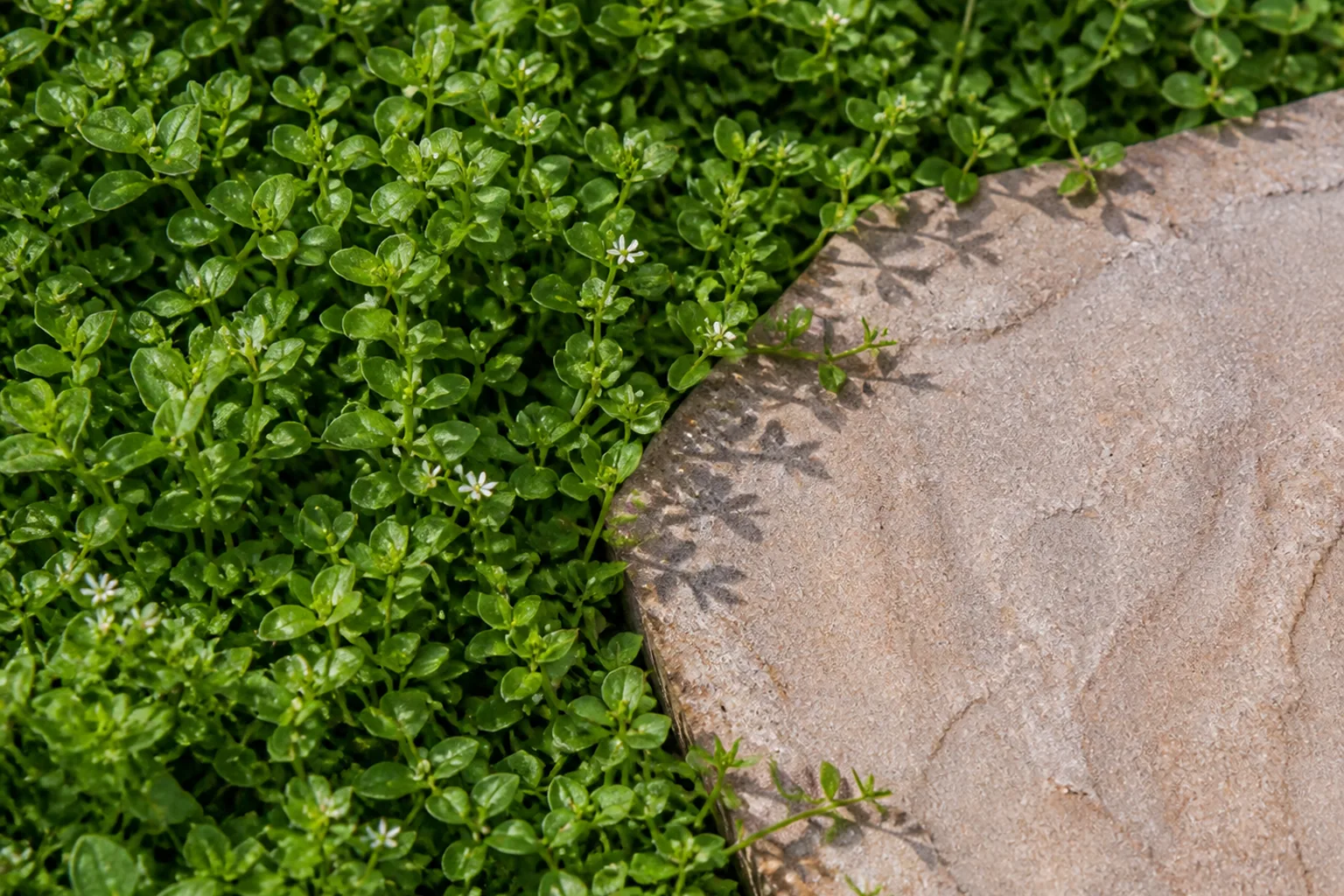
Without a lawn, a table and chairs can look as if they are floating in one continuous paved yard. Give the seating area a boundary: a planted bed alongside it, a tree that is already there, or a change in surface. It does not need to form a complete box, since planting along one side and behind the seats can be enough to make the area feel settled while keeping the best view open.
If the yard is compact, the same principle applies on a smaller scale, and our small patio garden ideas explain how to protect the main use and walking route first.
Mix surfaces, and keep one calm centre
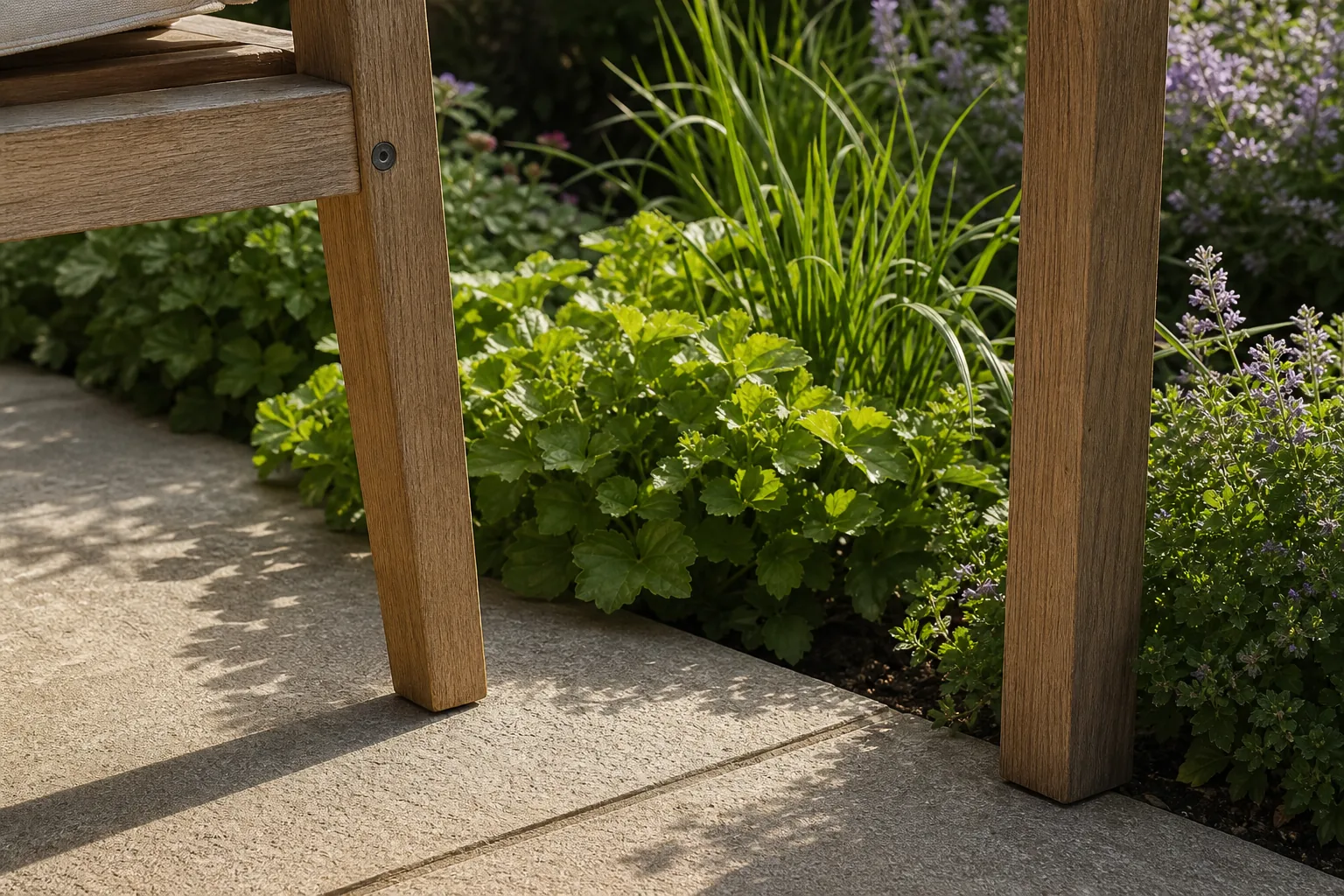
Several materials can break up a large yard, but each one needs a job. Use a stable surface where furniture stands and on the route you walk most; a softer or looser material may suit a quiet corner. Too many little changes create a sample board underfoot, so repeat one main surface and let planting do more of the visual work.
A lawn also provides one broad, quiet shape, and without it the yard can become beds, pots and furniture with nowhere for the eye to rest. A simple seating area, a wide planted patch or an uncluttered path can become that calm centre. It does not have to be empty; it needs to read as one area rather than ten separate purchases.
Preview the balance on your own backyard
A measured plan settles dimensions, levels and access. A visual preview is useful earlier, when you are deciding whether the yard should feel planted, open, structured or loose.
Gardenly can place a selected garden style over one photo of a backyard, front garden or planted patio. The image model is instructed to keep the house, fences, walls, paths, paving, camera position and lighting unchanged while it redraws planting, beds, lawn and furniture. That is an instruction, not a guarantee, and the render is no drainage plan or planting schedule.
Browse the Gardenly style gallery, choose one direction and photograph the yard from the view you use most. Then look past the individual plants: check the proportion of hard surface to planting, whether the route still reads clearly and whether the seating has breathing room. Because Gardenly's styles ask for lawn and planting, a render may put grass back into the image; treat that as something to edit out of the brief.
A no-grass backyard works when every part of the old lawn has a better job. If the final drawing looks like paving with plants pushed to the edges, give some of that middle ground back to the garden before anyone starts digging.