

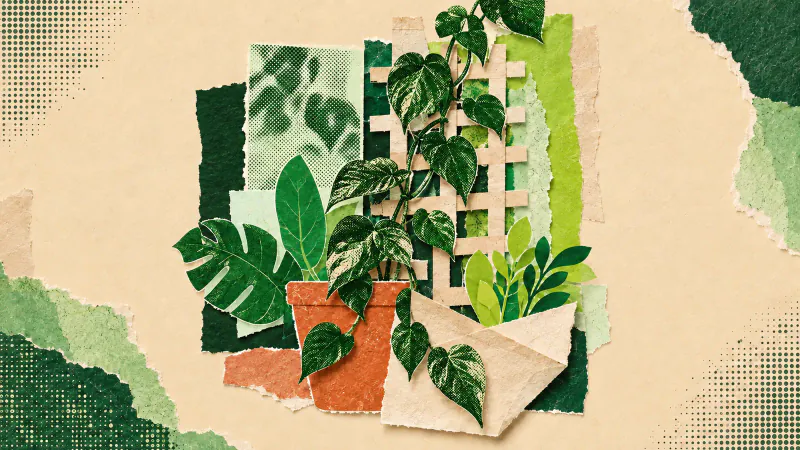
The most useful vertical garden ideas start with where the roots will live. A climber planted in the ground can send foliage up a support. Pots on a freestanding stand bring separate plants to different heights. Wall pockets hold the growing medium on the wall itself, so each pocket needs enough root space and regular attention.
Choose between them by checking your available soil, the light at plant height and how you will reach every container with water. A photograph of a leafy wall rarely shows that last part. If the upper row needs a stepladder every time you check the compost, start lower.
Grow a climber from the ground
Where you have suitable soil at the foot of a support, a climbing plant gives you vertical greenery without a wall full of individual pots. The foliage rises while the roots stay in the ground. The RHS guide to green walls distinguishes this approach from living wall systems with separate planting cells.
Choose a climber for the available light and its eventual size. Check how it climbs, too: a plant that twines around a support and one that attaches to a surface need different treatment. Ask the nursery about the named variety before buying it, including the pruning it will need once established.
This suits someone who wants one continuous leafy shape and can wait for growth. The visible support will be part of the scene at first, and deciduous plants will leave more of it exposed in winter. Pick something you are happy to look at between the leaves. Have the support and its suitability for the site checked before planting; the plant label cannot settle that question.
Put individual pots on a freestanding stand
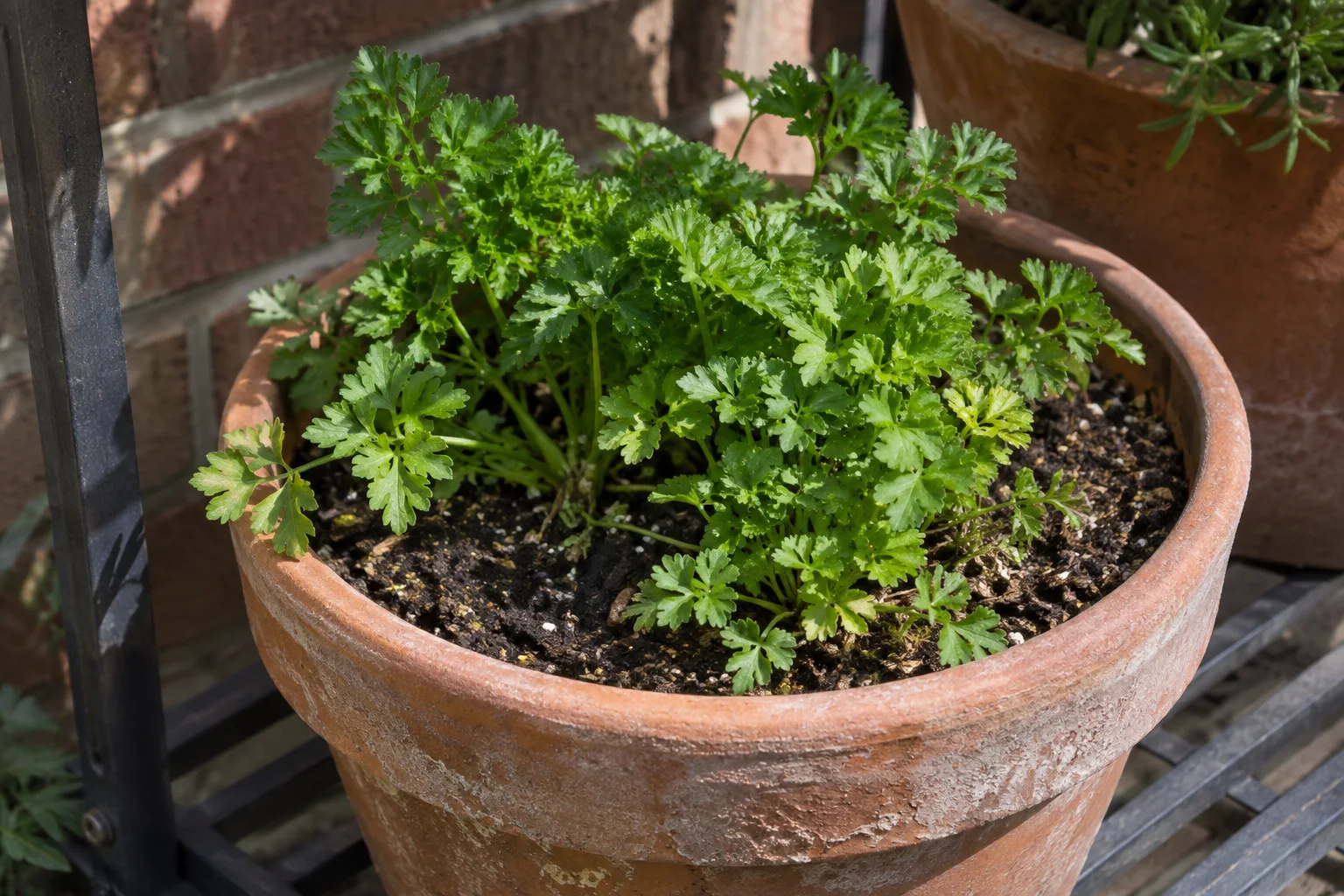
A purpose-made outdoor plant stand lets you try an upright arrangement while keeping each plant in its own container. You can take a pot down to inspect it or replace one struggling plant without disturbing the others. Start with a few pots and leave their rims visible so you can see where to water.
Choose the pot for the plant's mature roots, then choose a stand that accommodates the filled pots. Small shelves can tempt you into containers that are too shallow. University of Maryland Extension's container guidance recommends matching both container volume and depth to the crop. It also explains why drainage holes matter and why a gravel layer does not improve drainage.
A pot stand still needs floor space and appropriate stability outdoors. Follow its instructions for placement and capacity, including the weight of wet growing medium. Before filling every level, check whether the upper pots shade the lower ones.
Start a wall pocket system with a small section
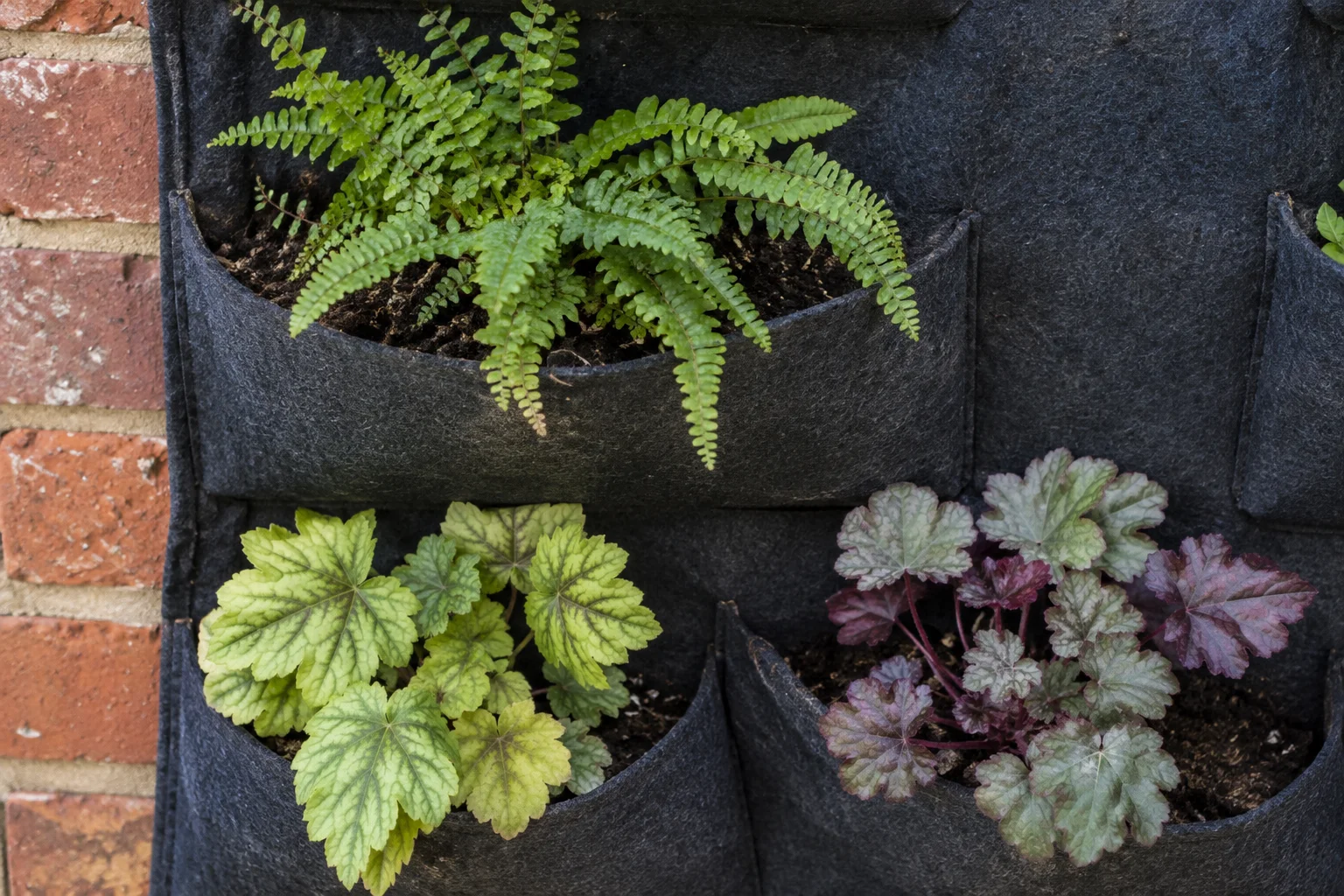
Wall pockets suit a patchwork of smaller plants rather than one climbing specimen. Look beyond the number of pockets on the packaging. Check the usable root space, which plants the maker recommends, and whether you can remove or replace a plant without dismantling the arrangement.
The RHS notes that engineered living walls often need irrigation and may require professional installation and maintenance. Keep mounting and water protection within the system supplier's advice. A decorative panel is still carrying wet growing medium against a building or boundary.
Start with a section you can comfortably tend. Check individual pockets instead of assuming that watering the top has supplied them all. Leave enough room at the opening to inspect the growing medium, even if that means the new planting looks sparse for a while.
Match the planting to the light and watering routine
Observe the chosen position through the day. The top of a stand may receive sunshine while the bottom stays behind foliage. Group plants with similar light and moisture needs, as the RHS recommends, and check local hardiness before treating any plant as a permanent outdoor choice.
Water access deserves the same attention as appearance. Maryland Extension notes that some containers need daily watering in hot, dry weather. Keep a watering can within comfortable reach of each pot, and decide who will check the plants while you are away. A smaller arrangement you can tend is a reasonable finished garden.
Compare the look before choosing the hardware
For the wider setting, the small patio garden ideas guide covers how containers fit around a usable terrace. Keep the vertical planting decision focused on the plants and their care.
Gardenly's style previews can help compare the overall planting mood on a photo of an existing garden. You choose one photo and one style; the result cannot prescribe a wall system, suitable fixings or a reliable plant list. Take a visual direction you like to a nursery or installer, together with your notes on light, root space and watering access.