

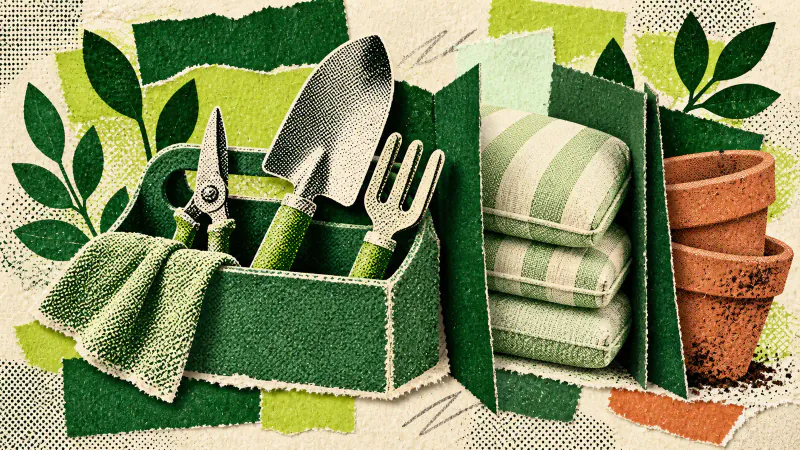
Useful garden storage ideas start with the trip back from a job. Give the things you use together a place you can reach without unpacking something else. Keep soil-bearing tools and pots away from clean cushions, and leave enough room to put each item back with both feet on the floor. A cabinet full to the edges may hold everything and still be awkward every evening.
You can try this with the shelves, boxes and hooks you already have. Start with the item that most often stays outside because returning it is a nuisance.
Follow one job from start to finish
Take watering the pots as an example. Where do you pick up the can? Where does it land when you finish? If its assigned shelf is behind a stack of spare planters, it will probably keep landing by the door.
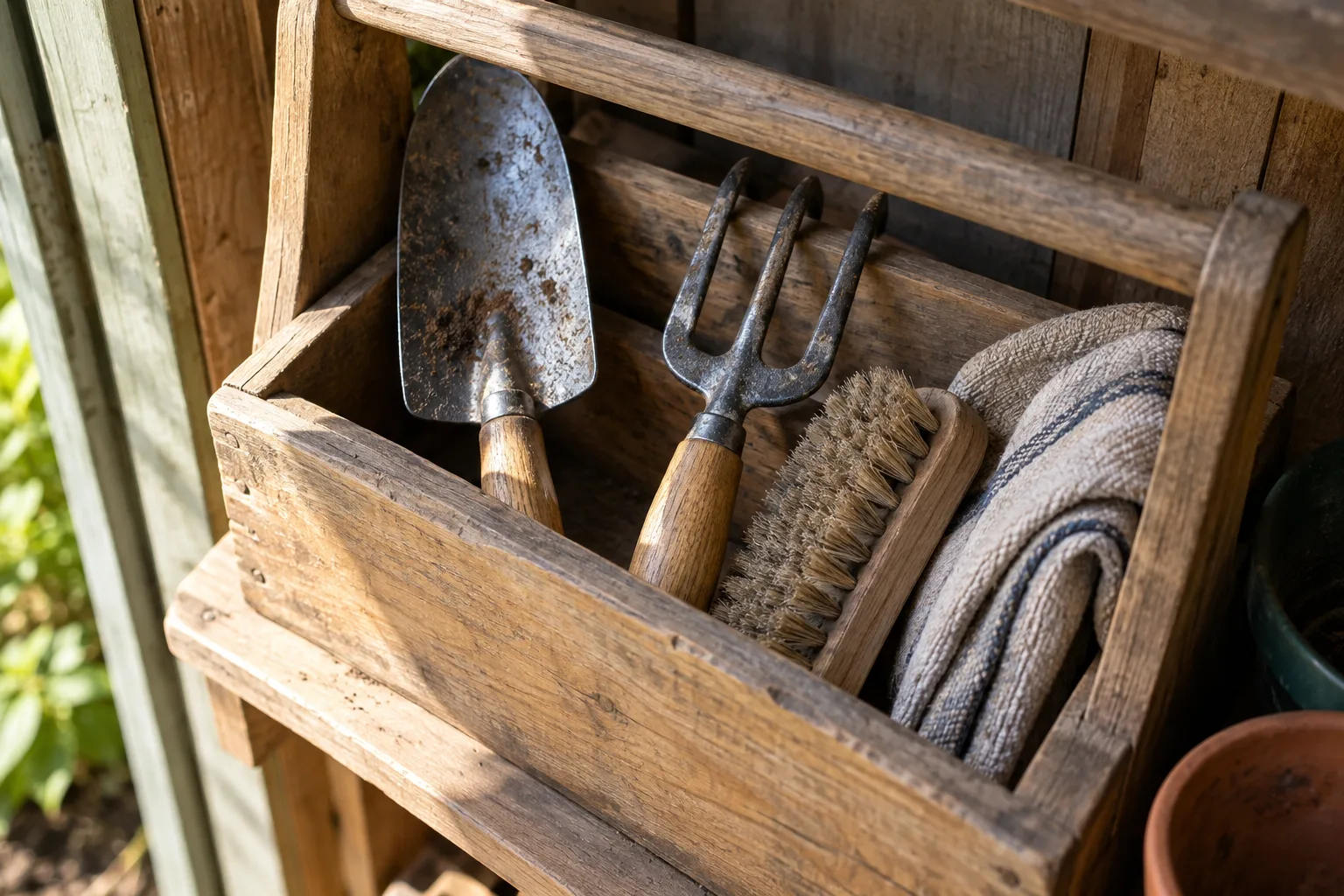
Group small items by the task they serve. A portable caddy can hold the hand tools you carry to the border. Keep the supplies you use for tying plants together in their own small container, where you can see what is left. Avoid filling every container just because there is space.
Put frequently used things within comfortable reach. Seasonal items can take less convenient shelves, provided you can still retrieve them safely. If you are still deciding where storage belongs in the garden, the corner garden ideas guide covers choosing a useful role for that space. Here, the work is inside the storage you have chosen.
Give tools somewhere to be cleaned
Keep a stiff brush and an old towel beside the tool storage. The RHS guidance on cleaning hand tools recommends removing soil and drying washed tools; it also suggests keeping these cleaning items nearby. A convenient cleaning spot makes the return trip less fiddly.
Use a shallow tray beneath small tools if it helps contain stray soil. Give long tools separate supports so taking out a rake does not release the spade beside it. Choose fixings and supports suitable for the wall and the weight, following their instructions.
Try lifting each tool out before fixing the arrangement permanently. Handles need clearance above them; a neat row can be frustrating if you have to tilt every tool around a shelf. Keep sharp edges contained and out of casual reach.
Reserve a clean, dry place for cushions
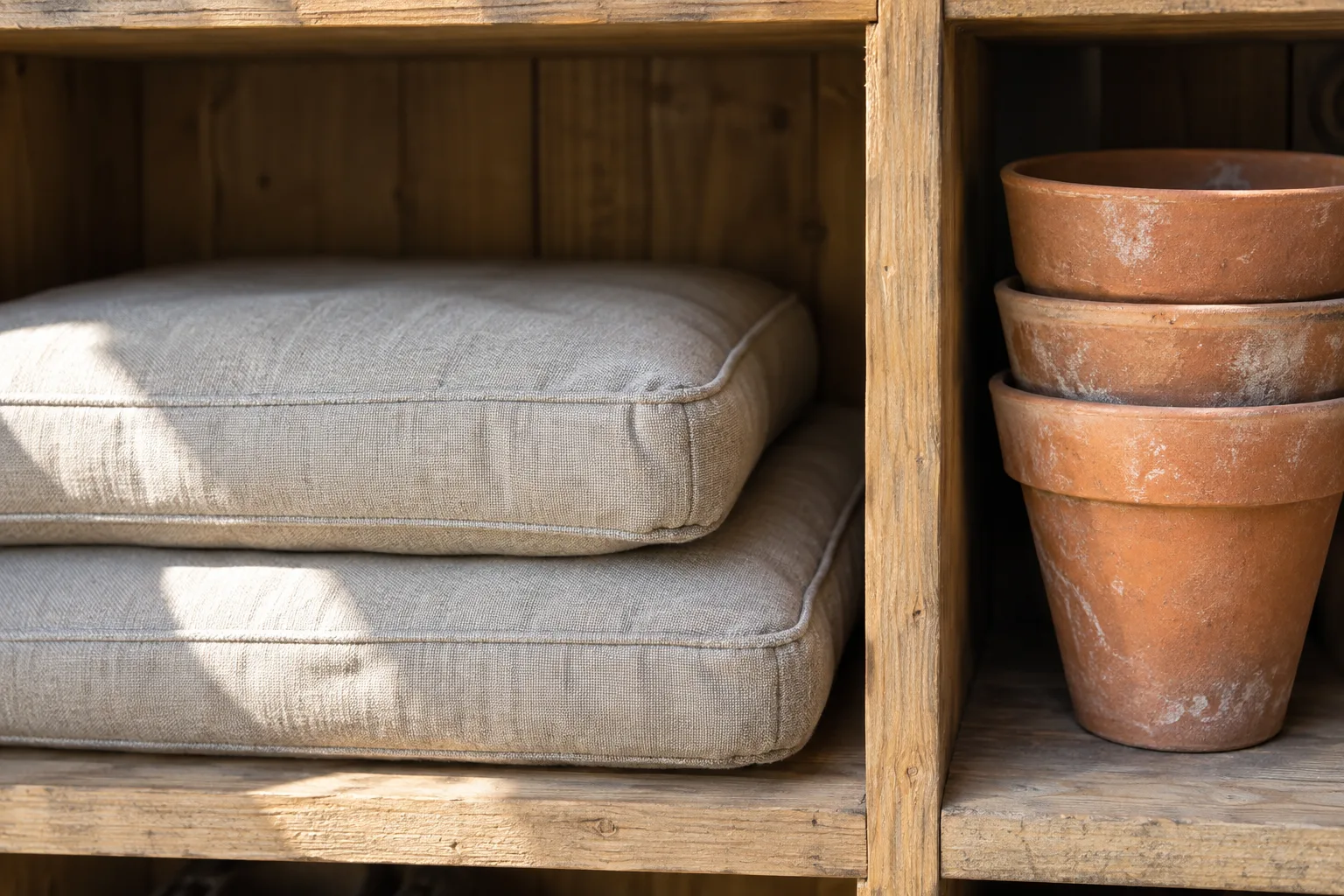
Cushions need their own compartment or suitable protective storage, away from loose soil and tools. Leave room to lift them out without dragging the fabric across rough shelf edges. A divider is useful when pots and textiles share a cabinet.
Check the instructions for both your cushions and their storage. In its outdoor cushion box guidance, IKEA says cushions should be completely dry before being put away. That box has ventilation openings to let condensation dry out, and its instructions call for indoor storage during the off-season. An outdoor label alone does not tell you how to store something through winter.
Leave damp cushions out to dry in a suitable place before packing them away. If your usual box is also the only place you can dry them, plan a separate temporary spot. Otherwise the next shower turns putting them away into a hurried compromise.
Make spare pots easy to sort
Separate pots you actually reuse from cracked pieces and sizes that never fit your planting. Keep short, stable stacks of compatible empty pots, with heavier items low down. Follow the shelf's load limit; spare compost and ceramic pots add weight quickly.
A shallow tray for saucers saves searching through a mixed pile. Keep the pots used most often at the front. When a stack grows so tall that retrieving one needs two trips, divide it between shelves or reduce it.
Test the return trip for a week
Use the arrangement during ordinary garden jobs before buying more organizers. Watch what accumulates beside the door and what you keep moving to reach something else. Move that item's storage closer, lower or into a shallower container.
Gardenly can help explore the visible garden around a storage area from a photo. Use the image as a design conversation starter; check shelf capacity and retrieval space with the actual objects and measurements.
Finish by putting away the awkward item you started with. If it still needs several things moved first, change its shelf. That small adjustment is worth more than an extra matching box.