

The most useful corner garden ideas give a leftover space one clear job. Choose a place to sit, a planted point to look towards or somewhere to keep the things you use outside. Then test the approach and the room needed to use it. A corner that looks empty may already contain the space you need to turn a wheelbarrow or open a cupboard.
This is a small decision within an existing garden. Keep the main route and the areas that already work. You are finding a use for the awkward bit that remains.
Decide whether you will visit the corner or look at it
Watch the corner from your usual seat and from indoors. Is it part of the view every day, or mostly somewhere you pass on the way to the shed? A leafy group can finish a view without asking anyone to walk into it. A reading chair needs a reason to make the trip.
Try the seat there at the time you would actually use it. Check what you can see, whether the light suits you and where you would put a book or cup. Ten pleasant minutes tell you more than a chair in an inspiration photo.
If the space already collects a hose, empty pots or outdoor cushions, storage may be the more useful job. Choose that openly instead of trying to conceal a growing pile behind decorative objects.
Leave room to arrive and get up again
Measure the usable ground between the boundaries, then mark the proposed footprint with chalk or a hose. Include the space in front, not only the rectangle beneath the object. Walk up carrying whatever belongs there: a watering can, a cushion or the longest tool you plan to store.
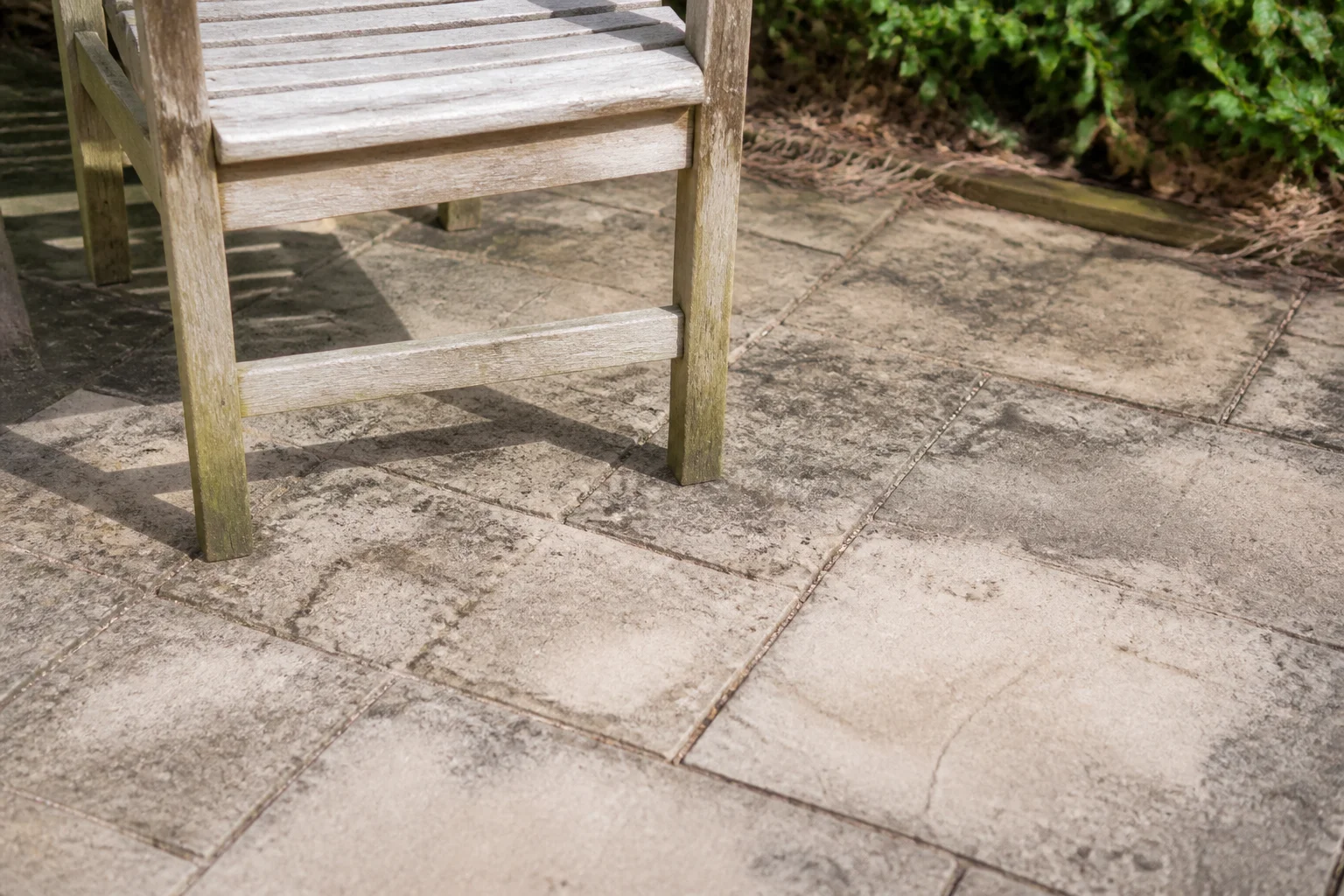
For a seat, use a chair you already own as a rough test. Sit down, move your feet and get up without stepping into the planting. Check that all the feet rest securely on the surface. A neat triangular gap can look generous until a person tries to occupy it.
Keep the approach open where it meets the main path. If that route is still unresolved, settle it first using our guide to garden path ideas. A corner seat should not turn the daily walk into a detour.
Plant the view, but keep the back reachable
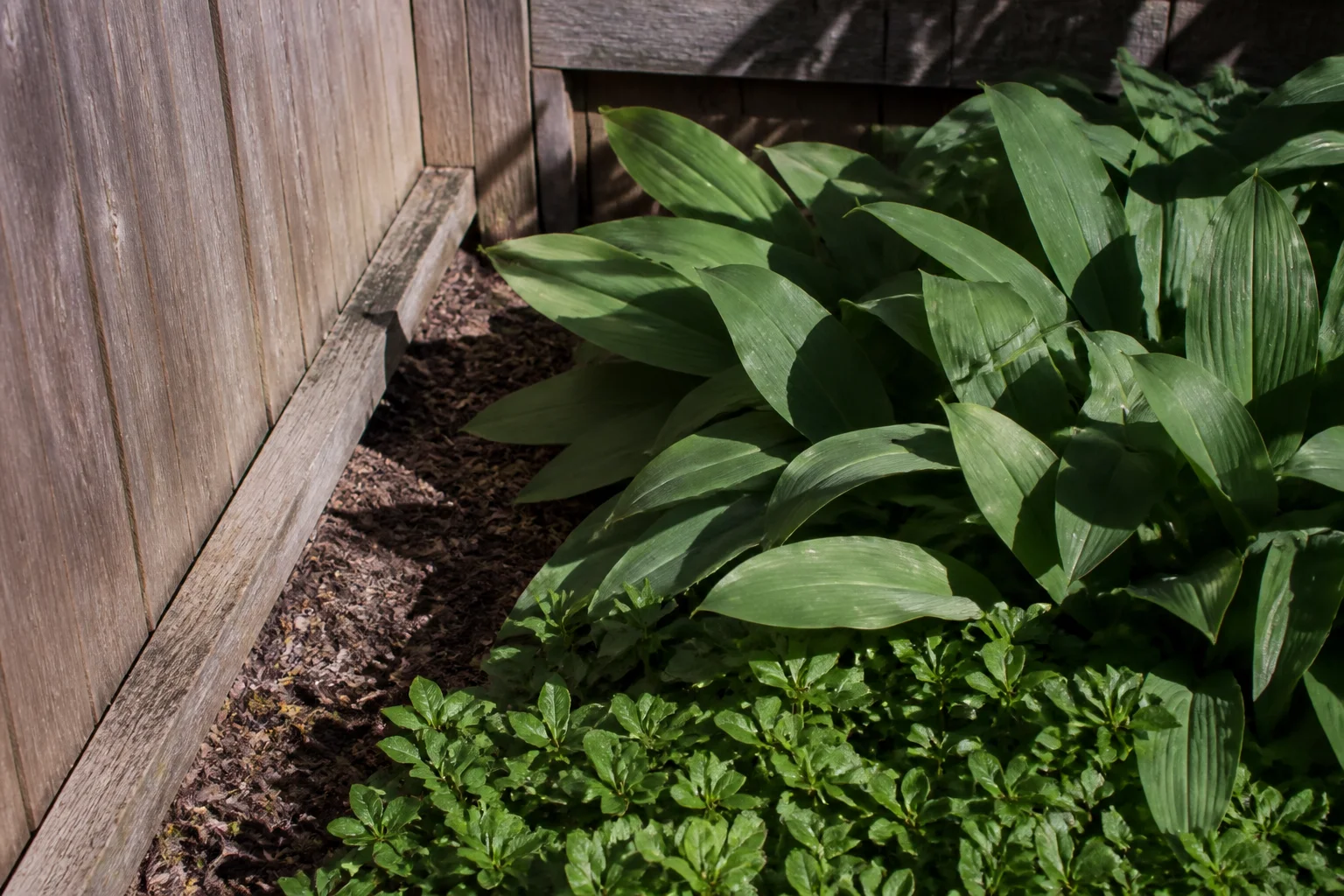
For a corner seen from the house, try one substantial planting group before adding several small pots. Repeat a leaf shape or plant form already present elsewhere so the corner belongs to the garden. You do not need a new theme for it.
Record the light and ground conditions at the corner itself. Choose plants for those conditions and their mature size, with advice from a local nursery if needed. The narrow point where two boundaries meet is a poor place to squeeze in a plant that will need frequent attention.
Work out how you will reach the soil, remove fallen leaves and maintain the fence behind it. Leave an accessible strip or reachable gaps where needed. Do the watering test before planting: can you reach the back without dragging a hose through the stems?
Give storage its full working footprint
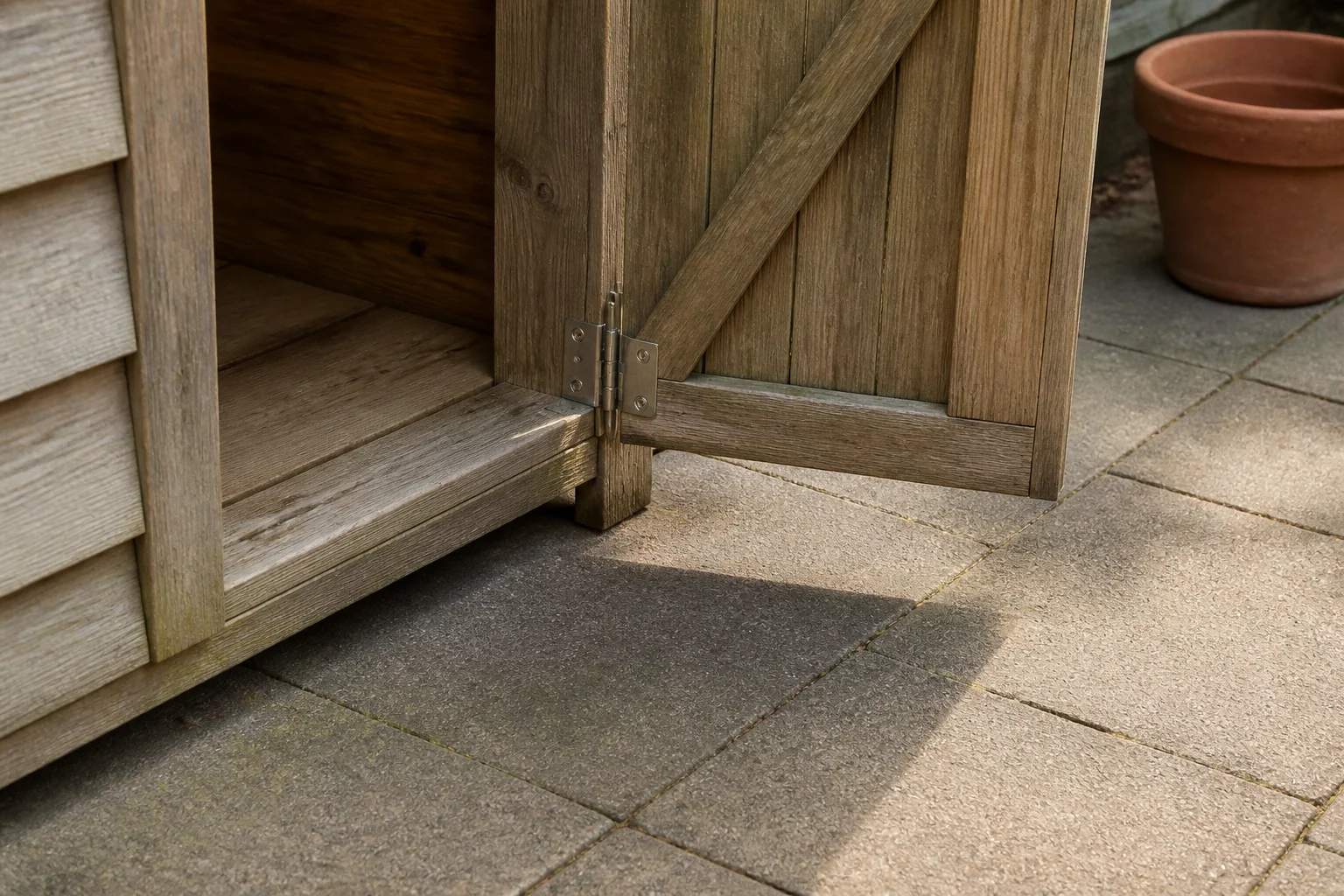
A cupboard needs space for its open door and the person using it. Mark both on the ground. For a possible purchase, use the supplier's dimensions to check the open-door position, then hold your largest stored object in that space and turn as you would to remove it.
Check the approach with the door open as well as closed. A box that fits perfectly against the fence can still block the path every time you fetch something. Lift-up lids need their own clearance too.
Keep access to nearby taps, drains and fence fixings. Check the storage product's requirements for its base, ventilation and weather exposure before choosing its position. If the available space cannot accommodate those needs, reduce the storage or put it elsewhere. Plants can soften the edge later, once the cupboard works.
Preview the planting around the chosen use
Photograph enough of the garden to show the corner's relationship to the existing route. In Gardenly, choose one style and add that photo to see a visual direction for the planting and garden furniture. The app uses a fixed style instruction; it is not a tool for drawing a measured cupboard or placing each object yourself.
The image model is instructed to preserve buildings, fences, paths, camera position and lighting. That is an instruction, not a guarantee. Compare the result with the original, especially where two boundary lines meet. A shifted fence can make an impossible corner look comfortable.
Use the image to discuss broad planting shapes or the balance around a seat. Keep your measurements and physical tests beside it. Before buying, return to the marked corner, open the door or sit down once more, and check that the space still does the job you chose.