


Choose a garden sieve by the texture you need from an already finished batch of compost, then check whether you can comfortably hold the frame and catch what falls through. For a few trayfuls, a manageable hand sieve is a sensible starting point. The largest frame or finest mesh is not automatically the most useful.
Start with dark, crumbly compost that smells earthy. Screening separates coarse pieces; it does not finish the decomposition process. Our garden composting guide covers making the batch and judging readiness. This guide starts when you want to remove the remaining woody bits from a small quantity.
Compare the openings before the frame size
Look for a stated aperture or hole size, rather than relying on labels such as fine and coarse. Smaller openings retain more material. Decide what you actually need to remove: a few twig pieces may call for a different screen from one intended to produce a much finer texture.
There is no single aperture to buy for every garden job. Iowa State Extension describes screening finished compost to make its texture more uniform. The intended use still matters, and screening alone does not make homemade compost a complete potting mix.
Interchangeable screens let you compare results without buying two whole frames. For example, Garland's G104 sieve has galvanised wire panels with 6 mm and 12 mm openings. Those are that model's options, rather than a prescription for your compost. Check how a removable panel clips in and whether you can release it without forcing the frame.
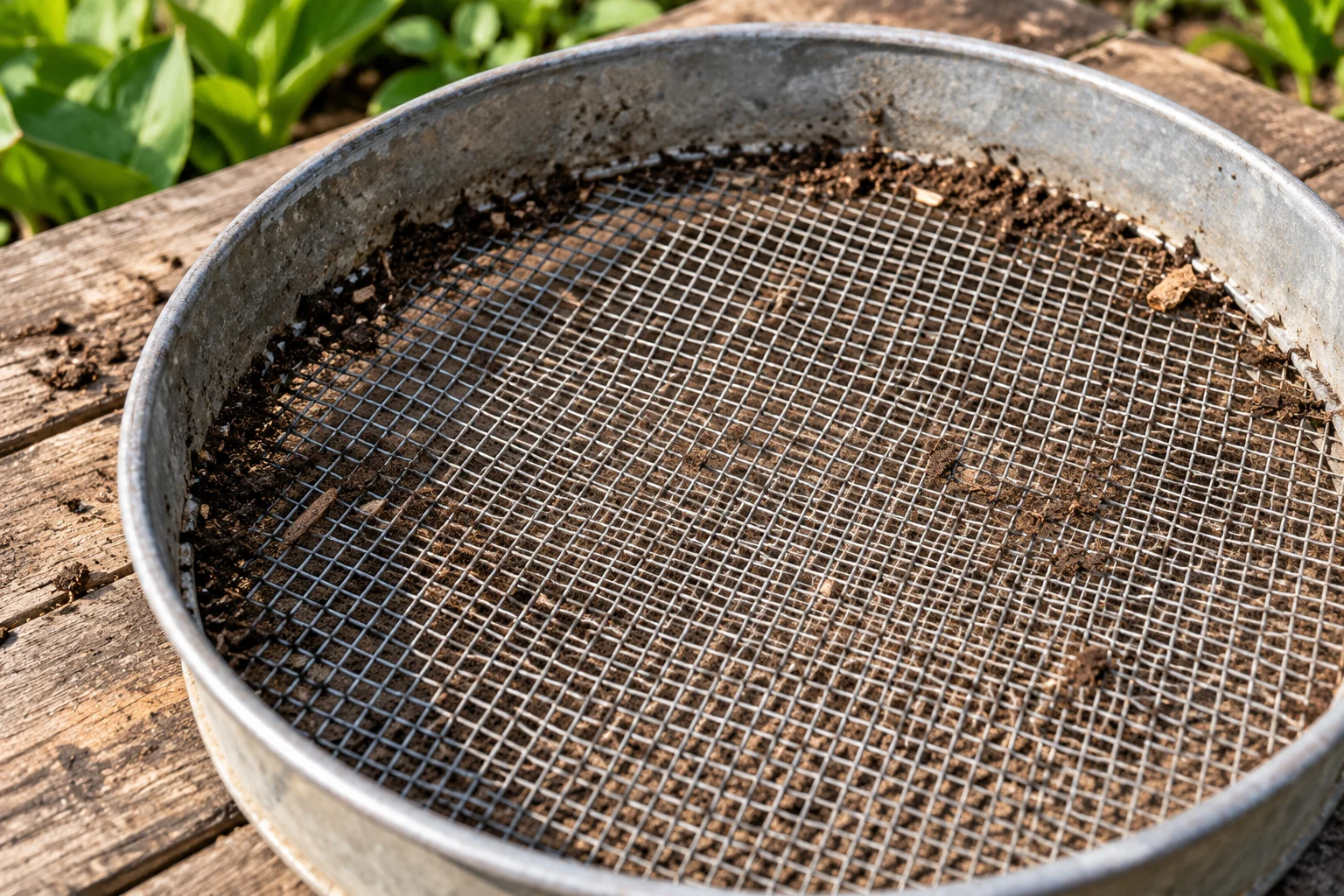
Try the grip and the collection tray together
Hold a candidate sieve with both hands in your usual gardening gloves. Check whether the rim gives your fingers enough purchase without making you pinch tightly. Look for rough joints or exposed wire ends, and inspect where the mesh meets the frame.
Imagine lifting it with compost inside, moving it over the tray and tipping out the residue. An empty sieve that already feels awkward is a poor choice for repeated batches. Choose a size you can control through that whole movement, rather than judging it only on the shelf.
Measure the tray's open collecting area and compare it with the sieve's working footprint. Leave room for the short movements you will make while shaking it. If the seller says it rests on a container, confirm which container sizes it fits and how it stays supported. Do not assume any round sieve can balance safely on a bucket.
Plan one small batch from loading to emptying
Set a collection tray on a stable surface at a comfortable working height. Keep another container within reach for coarse residue. If the working position itself needs attention, our outdoor potting bench guide covers that separate decision.
Begin with a small scoop, leaving space for material to move across the mesh. Use gentle shaking rather than loading the frame to its rim. Stop to empty retained pieces when they crowd the screen. Reduce the next scoop if you struggle to hold or tip the sieve; there is no useful universal batch weight to copy.
Check what remains before returning it to the heap. The RHS composting advice describes returning retained compost material to the bin. Woody plant pieces can go back for further decomposition; remove stones or stray packaging separately. Keep the screened compost in its tray while you clear the next batch.
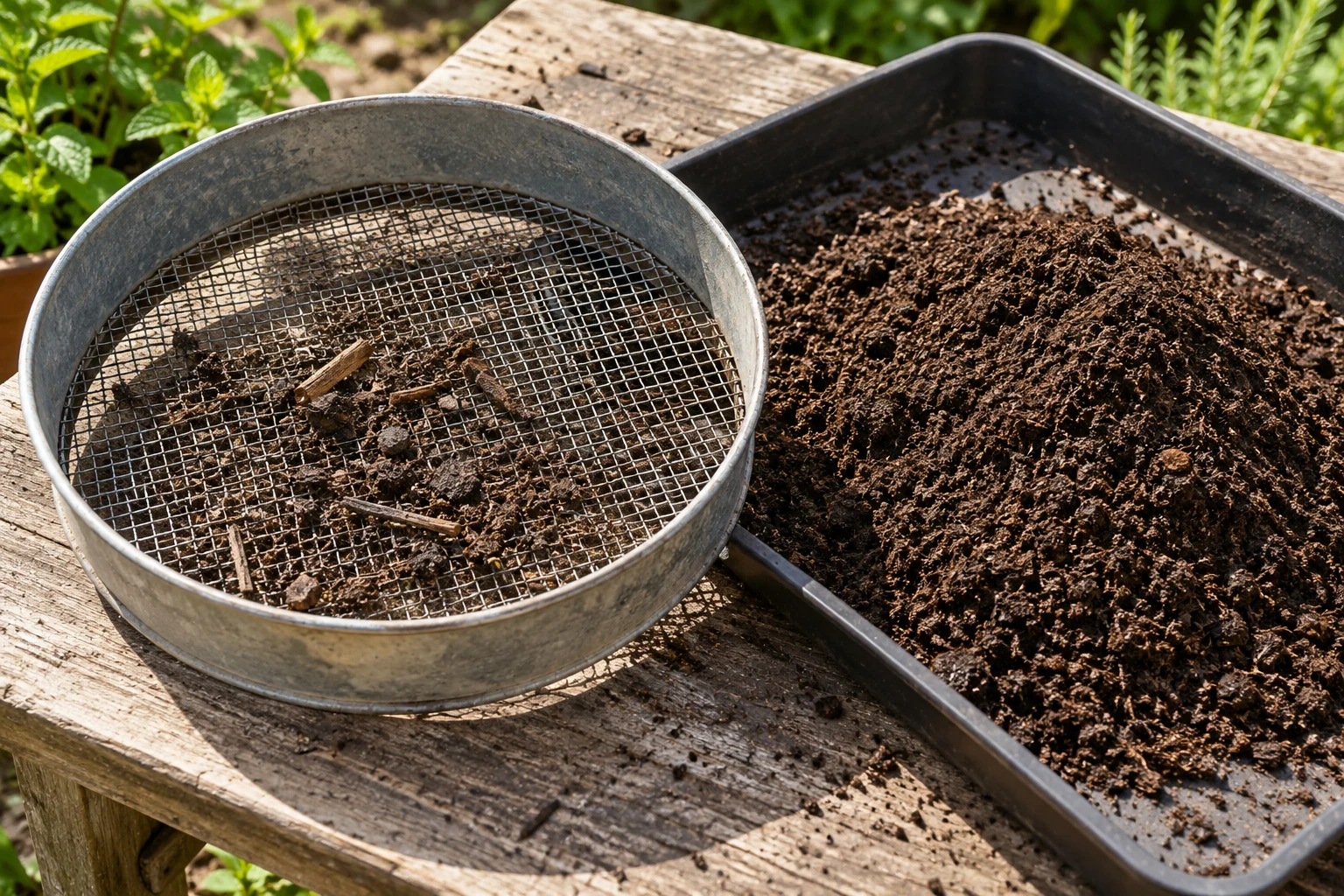
Check cleaning access before buying
Look underneath the sieve and around the mesh joint. Can you reach trapped material, and can removable panels come out for cleaning? A clever adjustment mechanism is less appealing if compost packs into a gap you cannot reach.
Follow the exact model's care instructions. Town & Country's Steel Garden Sieve, for example, permits cleaning with soap and water or a garden hose. That does not establish the right treatment for every wooden, plastic or coated frame. Ask the supplier about compatible brushes and cleaning products if the instructions are unclear.
Dry the sieve after washing before putting it away. The RHS tool-care guide explains why drying matters for metal and wooden parts. Inspect the mesh joint again while it is clean, and resolve loose or damaged parts before the next session.
For later planting inspiration around your working area, browse Gardenly's garden styles. Keep the sieve choice grounded in its actual openings, grip and fit over your tray.