

Choose a garden watering can by checking it against one ordinary watering round. Start with a load you can carry and tip comfortably, then check the spout, removable rose and filling opening. The largest can on the shelf may be awkward under your tap before it reaches a plant.
Think about the jobs you already do: a few pots by the door, a seed tray, or plants beyond the hose. Keep their watering needs as they are. You are choosing a way to deliver that water, rather than deciding how much every plant should receive.
Choose the load before the capacity
A capacity printed on a can tells you how much it holds when full. It doesn't tell you whether you will want to carry it across your garden. Haws' sizing guidance puts the tradeoff plainly: more capacity means fewer refills and more weight. A litre of water weighs roughly a kilogram, before you add the empty can.
You can fill a large can partway, but its body still needs room beside your leg and under the tap. Compare the empty weight as well as the litres. If possible, try lifting and tipping a demonstration can with water in it, with the retailer's permission. An empty one tells you very little about the loaded pour.
Picture the furthest pot you normally water. Include any steps, narrow gate and the return trip. If carrying the water there already feels like a chore, a smaller load with another refill may suit you better. A can also makes a useful companion to a garden hose reel for the odd pot that needs separate attention.
Match the spout and rose to the job
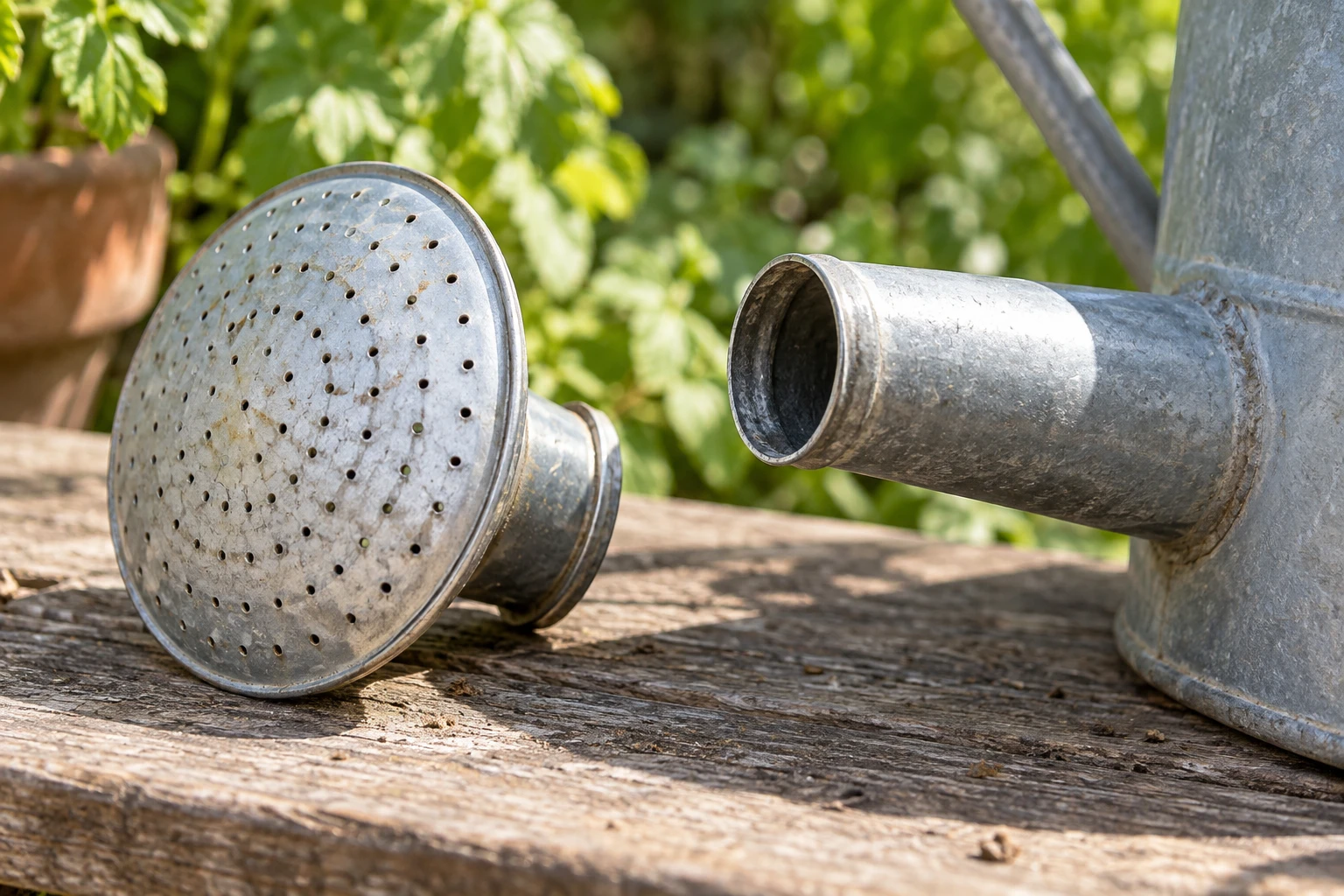
A rose is the perforated attachment at the spout's end. Haws explains the two delivery options: fit the rose for a dispersed spray over tender seedlings, or remove it for a directed stream into pots and borders. Check that the can you are considering actually has a removable fitting.
Look at your smallest pot opening. Can you bring the spout close without catching nearby leaves or holding the whole can over the plant? Then consider your widest tray. A narrow spout and a spray attachment answer different needs; an attractive long spout alone doesn't answer both.
Before buying, look up a replacement rose. Haws' spare-parts guide shows why the connection matters: roses fit specified spout fittings, rather than every can. Keep the model name or label somewhere you can find it again.
Try the handle through a pouring movement
Hold the can as you would carry it, then slowly move it towards a pouring position. Check whether you can change grip without your fingers meeting an edge, and whether there is a place for your other hand if you prefer support. Judge the can in your own grip.
Handle designs vary. For example, Burgon & Ball describes its single-handle cans as allowing the handle to slide through the hand as the can tips. That describes a particular design, rather than proving it will suit everyone. Compare how the movement feels with another handle shape if you can.
Check the opening where you actually fill it
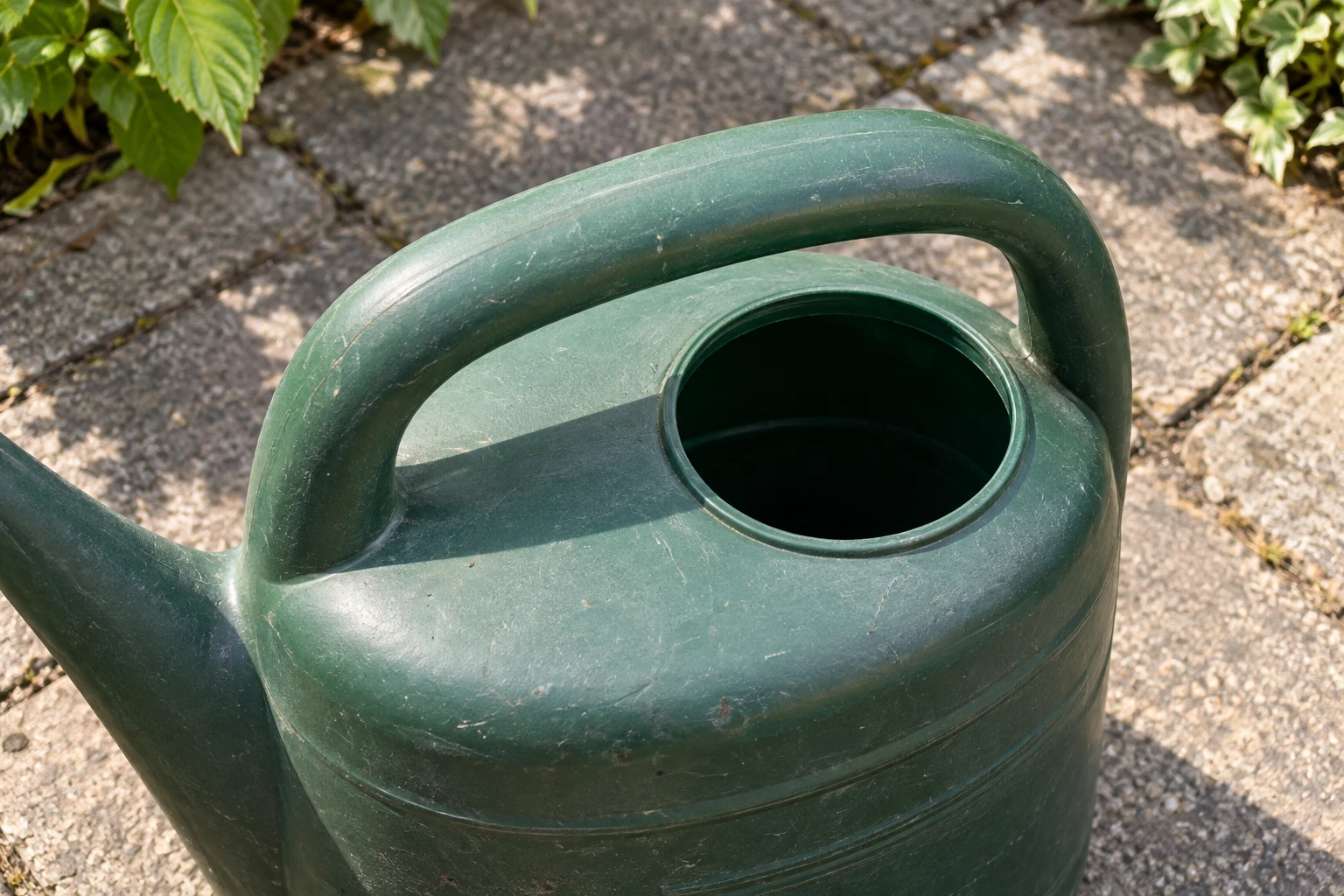
Measure the space beneath your tap, including the height of the can and any handle above the opening. Check that the water can enter without the spout pushing against a wall. A large opening is little help if a fixed handle blocks the tap.
If you fill from a rain barrel, check the clearance beneath its outlet too. Don't assume the same can will fit both filling points. A quick measurement is easier than discovering the problem with a full barrel and an empty can.
Look through the opening while the can is dry. Could you see debris inside and reach it for cleaning? Check how the last water drains out as well as how water goes in.
Give it a storage place before buying
Check the shelf depth with the spout included. Leave a place for the rose when you remove it, rather than balancing it on a pot rim. For its own cans, Haws recommends emptying before frost and storing where rain cannot refill them. Follow the care instructions for the model and material you choose.
Colour can be the last decision. If you are also rethinking how the pots and planting look together, browse Gardenly's garden styles for visual ideas. For the can itself, take your tap clearance and shelf measurements to the shop, then try the pouring movement before choosing.