


Choose a rain barrel by deciding which plants you will water, checking whether you can fill a can comfortably, and confirming what happens when the barrel is full. Include cleaning access in that decision. A handsome barrel hidden behind pots becomes less appealing when you have to move them every time you want water.
This guide covers one ordinary, covered barrel for hand-watering established ornamental plants. Take a few measurements and the manufacturer's instructions to the intended position before buying. Connections, support and overflow must suit the actual site; a photograph cannot settle those details.
Give the stored water a specific job
Write down the plants you expect to water and walk the route to them with your watering can. A small group of flowering pots near the barrel is a more useful starting point than an ambition to supply the entire garden. Keep your normal watering source available for dry periods when the barrel is empty.
University of Minnesota Extension recommends using barrel water on ornamental plants and applying it by hand at the soil. Roof runoff can carry contamination, and clear water is not proof of safety. For this simple arrangement, keep stored water away from food crops and never use it for drinking or washing produce.
Check the roof and gutter materials before collecting their runoff. Milieu Centraal's rain-barrel guide flags potential contamination from materials including treated wood and uncoated metals. If you cannot identify the collection surface, ask someone who can assess it before choosing that downpipe.
Test the tap with the can you own
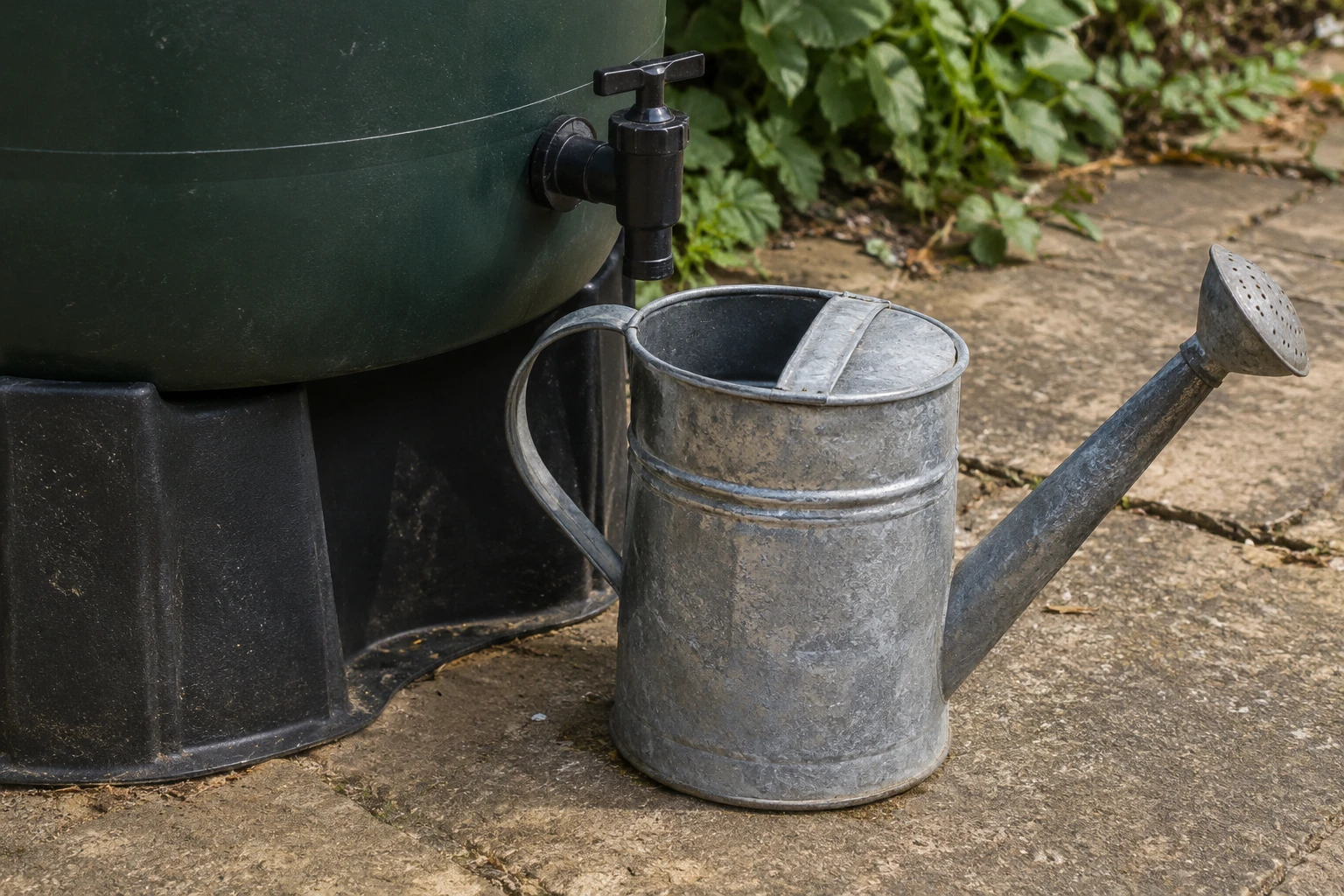
Mark the barrel's footprint and the support specified for it. Set your empty can beside that outline and check the proposed tap height. Will the opening fit underneath? Can you reach the handle and lift the filled can away without twisting around another pot?
Leave yourself standing room too. Check the route with the nearby door open, and keep the barrel clear of everyday movement. Record the available width and depth before comparing round and slim models. Capacity matters, but litres on a label do not tell you whether the barrel will be comfortable to use.
The RHS water-storage guide calls for firm, level support and room for a can beneath the tap. Follow the barrel maker's instructions for a compatible base and installation; do not improvise a tall stack to rescue a poor fit.
Check the lid and the full-barrel plan
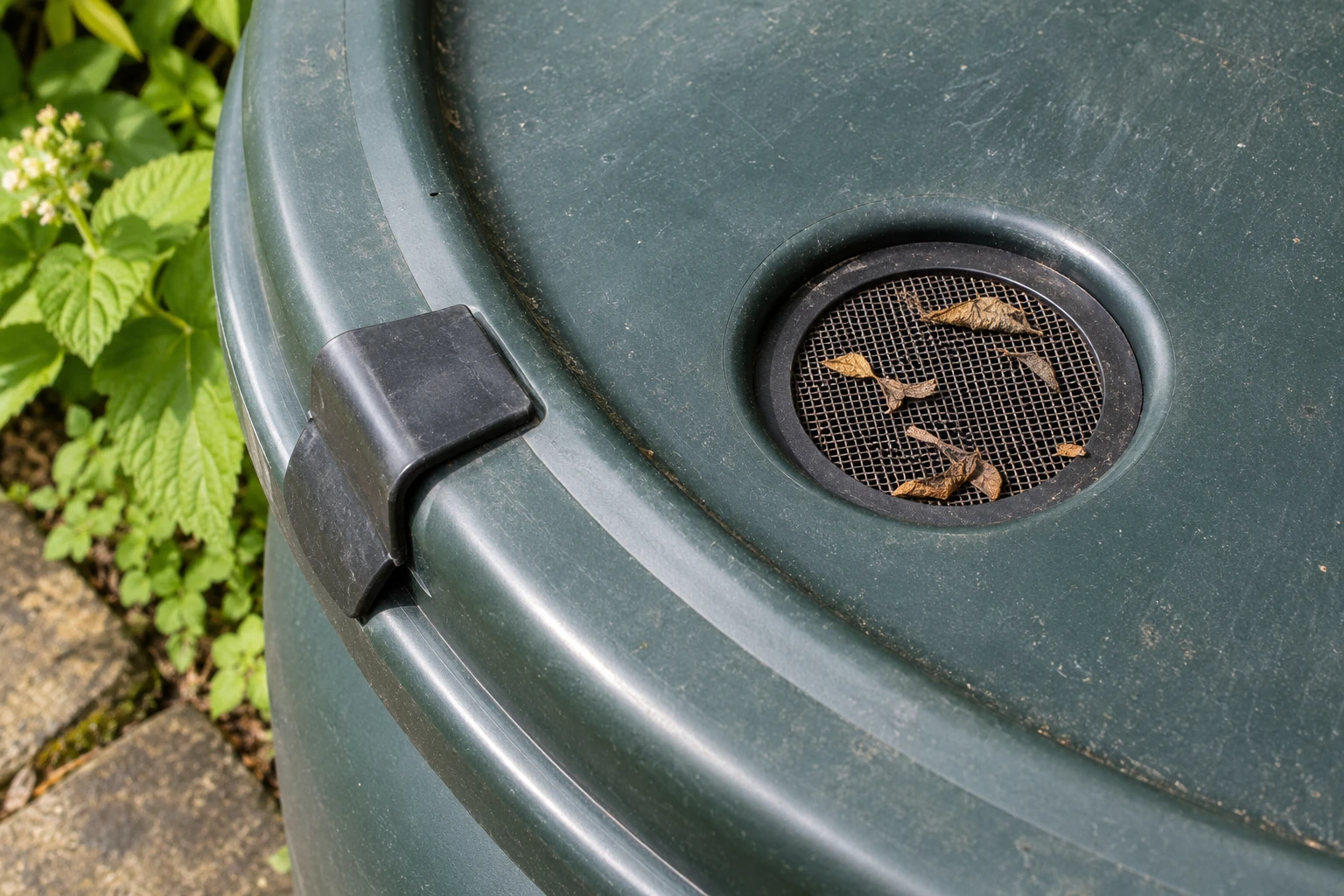
Compare the parts supplied with each model. Look for a secure, close-fitting lid, a way to keep leaves out, and accessible components you can remove for cleaning according to the instructions. Milieu Centraal advises a well-fitting lid against mosquitoes and a screen for leaves. A decorative top should still let you inspect and maintain the working parts.
Ask the installer or supplier to explain the overflow arrangement for your position. Where does water go once storage is full, and what happens when the barrel is disconnected? Keep that answer with the product instructions. If the proposal depends on changing drains or sending water across the garden, get the site checked before proceeding.
A barrel is finite storage. If recurring puddles are the reason you are shopping, first record the problem using the garden drainage guide. Adding a container does not establish the cause or resolve the outlet question.
Make maintenance possible from the start
Before settling on a model, find its cleaning and winter instructions. Work out where removable parts will go and how you will reach the inside when the barrel is empty. Ask about replacement taps and screens while you still have the product details in front of you.
The RHS advises regular use of stored water, annual cleaning, and emptying and cleaning a barrel if its water smells. It also advises keeping stored water away from seedlings. Do not add chemicals to disguise a smell.
In freezing conditions, follow the maker's winter procedure. Minnesota Extension notes that trapped water can freeze and crack a barrel. Plan how roof water will continue to drain properly during winter storage.
Fit the appearance around the working space
Only after those checks, compare colours and shapes against the nearby wall and planting. Keep your marked footprint visible while deciding whether surrounding pots should move. The container garden guide can help with their separate growing and watering needs.
Gardenly can explore the appearance of surrounding planting from a photo and selected style. Use that image for the visual conversation. Keep barrel capacity, water quality, support and pipework in your measured notes and the manufacturer's instructions.