

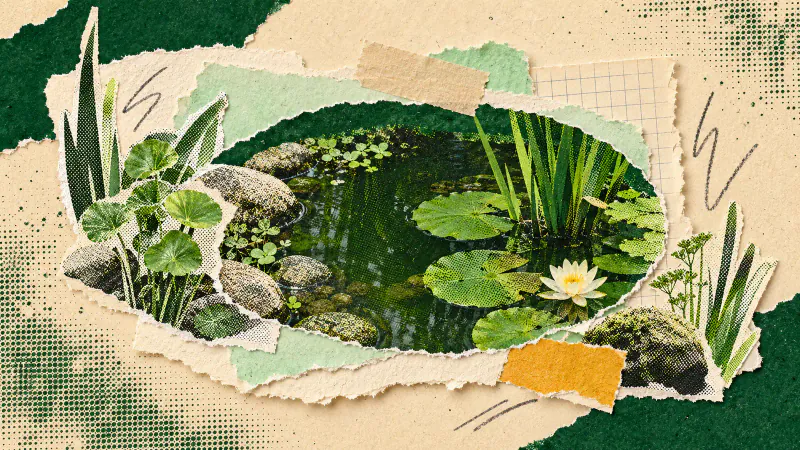
Useful garden pond ideas start with a choice: do you want a small aquatic habitat you can look after, or mainly water for visiting birds? A container pond can suit a compact space; an in-ground pond gives you more freedom to shape the margins. Either needs room beyond the water itself, including access for animals and for you.
For a first wildlife pond, settle its purpose, position and care before choosing the outline. A neat circle in a photograph tells you very little about the work behind it. This is a planning guide for a pond without fish, rather than instructions for excavation or construction.
Choose the kind of water you want
Write one sentence about what you hope to see. Watching aquatic insects among plants suggests a pond. If you simply want to offer birds drinking and bathing water, the shallow dish in our wildlife garden guide may answer that wish with less commitment.
Fish change the project. The RHS wildlife pond guidance explains that fish eat other pondlife. A wildlife pond does not need a filter. Keep fishkeeping off this particular brief rather than adding a few fish later and discovering that their care needs different equipment.
A container gives you a defined vessel to plan around. An in-ground pond lets the water meet a sloping margin more naturally, but involves ground work. Draw both possibilities before buying either a tub or a liner. Include the whole feature and its edges, not just the attractive patch of water.
Test the position on ordinary days
Look at the proposed spot in morning and afternoon light. The RHS guide to making a pond recommends sun or partial shade, level ground and a location free of large roots or other obstructions. A quiet place that you can still see from the house or a seat is worth considering.
Mark a possible outline on a sketch after measuring the garden. Leave the daily route working as it does now. Picture yourself reaching a plant basket with a bucket beside you. If that means standing in a border or blocking the only path, move the outline on paper.
Include children who visit, even if none live at home. Plan how access will be controlled and supervised before choosing a pond. Discuss appropriate barriers or covers with a competent installer; a small or raised pond should not be assumed safe. Ask about buried services before ground work and use a qualified electrician if the eventual design needs electrical equipment.
Give wildlife a way in and out
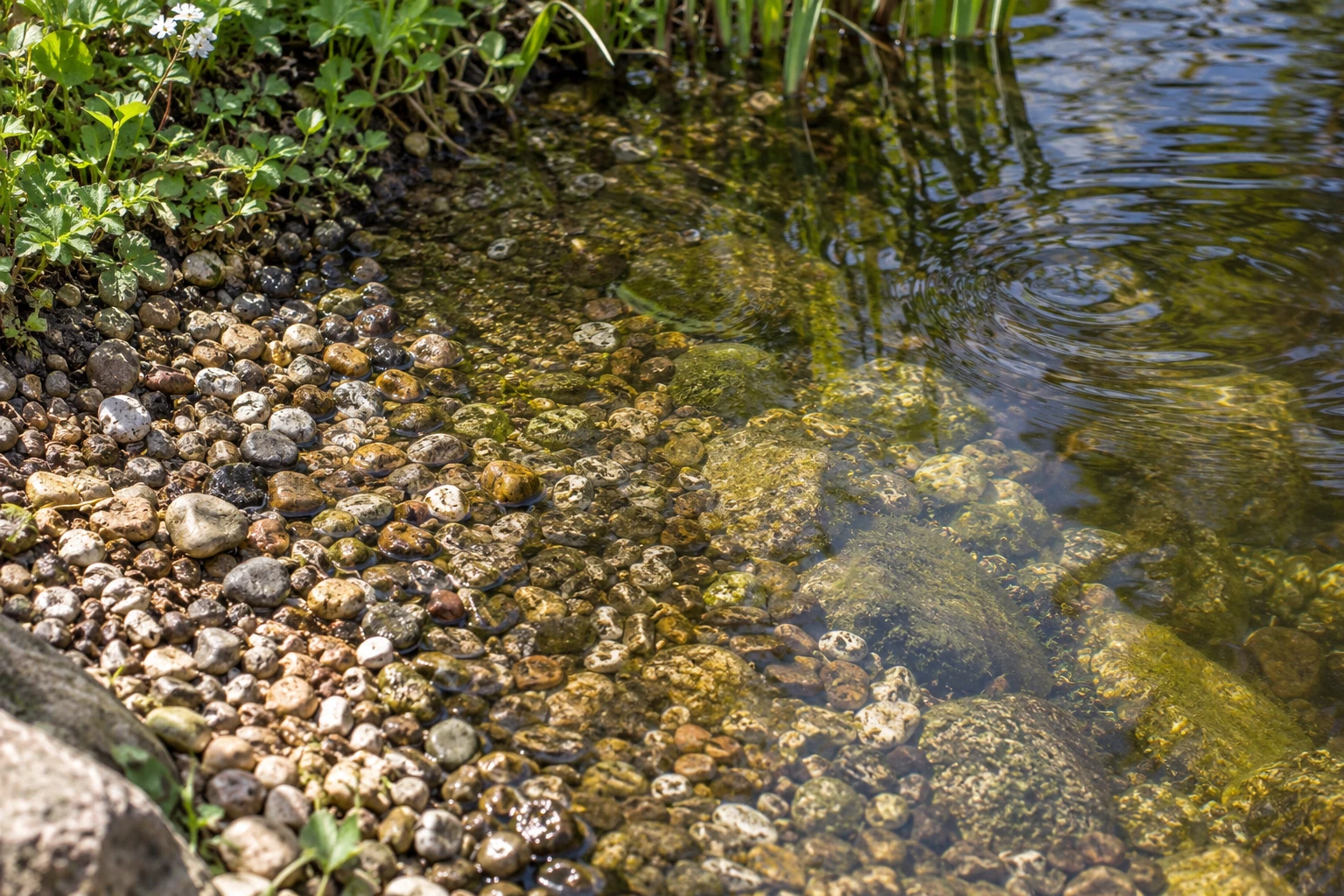
The edge deserves as much space on the sketch as the centre. The RHS advises a shallow sloping edge. Raised containers need both an outside approach and an exit from the water. A ramp inside the pot solves only half that journey.
Allow for those features when comparing containers. A narrow vessel may look compact until you draw the ramps beside it. With an in-ground option, reserve space for the sloping margin before deciding how much open water you want. Ask the installer to specify depth and construction for the chosen site and pond type.
Choose plants you can keep within bounds
Take the proposed pond dimensions to an aquatic nursery. Ask about the mature spread of each plant and the water depth it requires above its roots. Check local invasive-species guidance before buying. A label with a pretty flower is only part of the information you need.
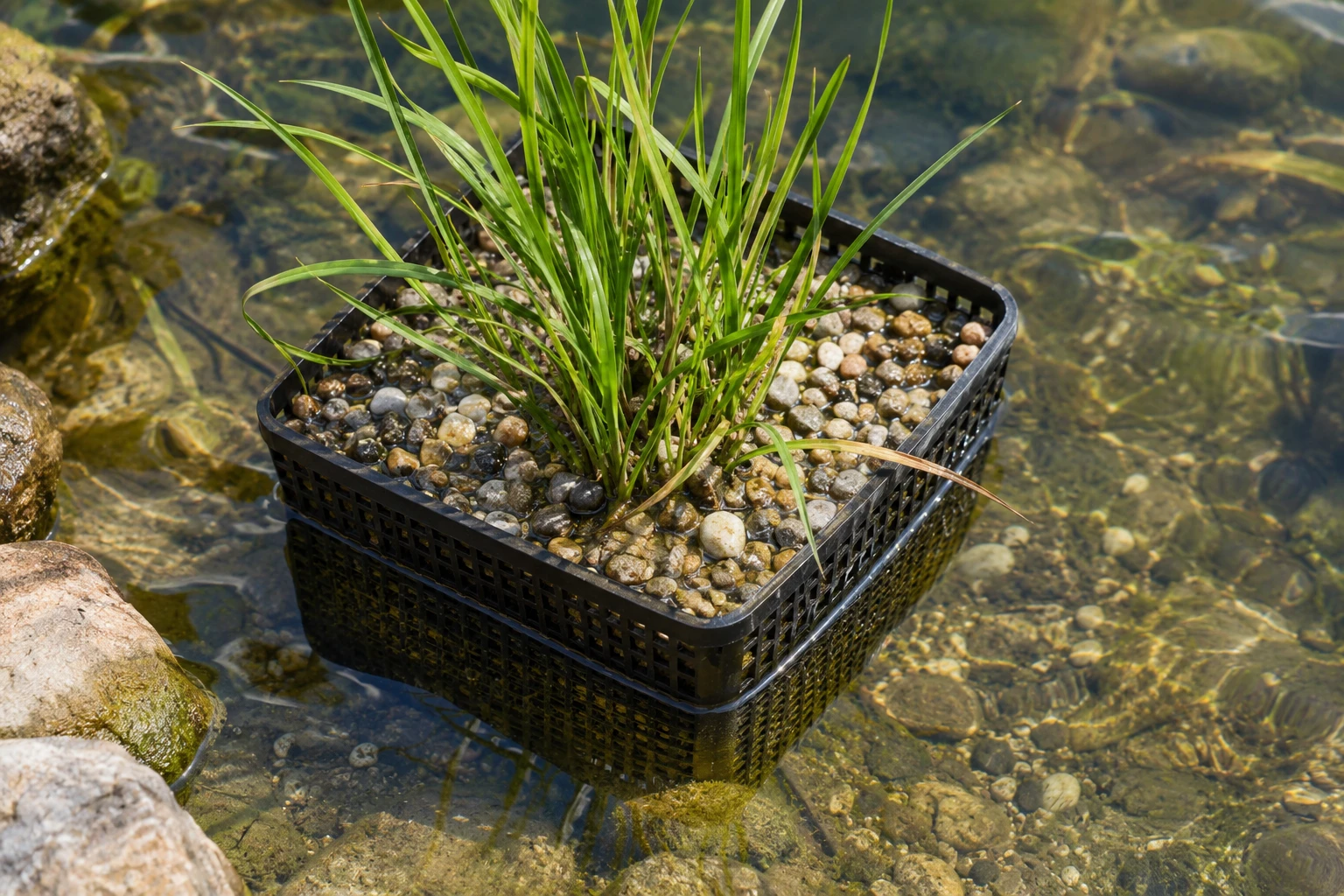
Plan how you will reach each basket when a plant needs attention. Leave enough working space to lift it out and put it down without balancing over the water. The RHS pond-care guide recommends regular checks on plant growth and water conditions, while cautioning that excessive intervention can upset the pond. Complete clear-outs are rarely necessary.
Make a brief you can maintain
Keep a short note beside the sketch: who checks the pond, where maintenance tools will stand, and which questions the installer or nursery must answer. Include checking that wildlife access remains in place. Let animals arrive themselves; moving water, sediment or frogspawn from another pond can introduce disease or invasive species.
For the surrounding planting, Gardenly can help you compare a broad visual direction from a photo. Its image model is instructed to preserve the house and hardscape, but that is not a guarantee. It cannot establish pond depths, safe edges or a working water system. Bring the original photograph and your measured notes to the practical conversation, with any generated pond details clearly set aside.