


Choose a garden trellis for climbing plants by checking how your named plant grips, how large it becomes and whether you can reach it for care. A lattice that looks right beside an empty border may be awkward once stems cover the joints. Start with the plant label and a view of the actual growing position.
This guide assumes you have already chosen a climber and a place for its roots. If you are still deciding between a climber, a pot stand and wall pockets, the vertical garden guide compares those growing systems. Here the decision is the physical support for one plant.
Match the grip to the support
Find the full plant name, including the cultivar where available. Ask the nursery how it climbs; "climber" on a label leaves quite a lot unanswered.
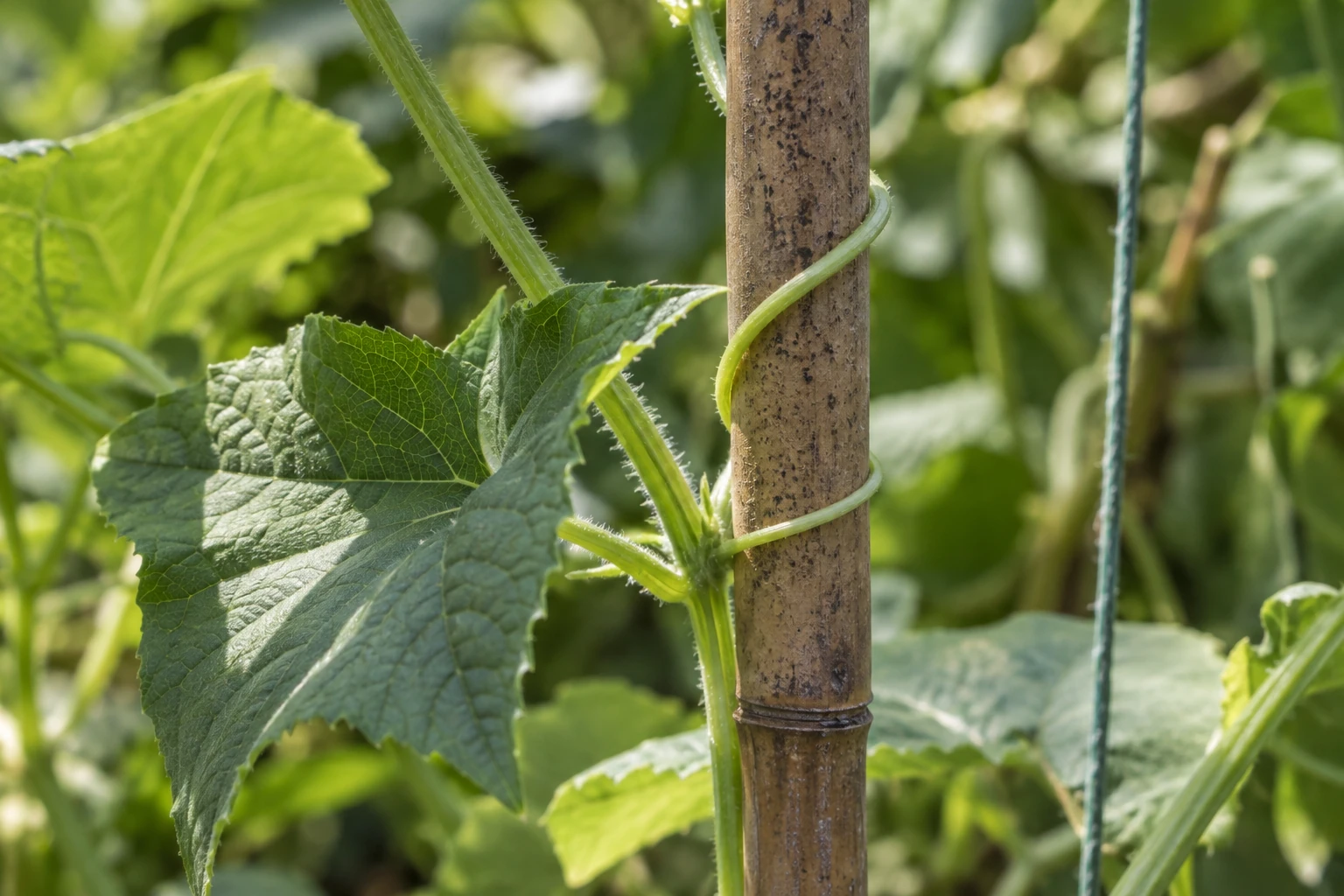
University of Maryland Extension describes four climbing habits: some plants cling directly to a surface, some grasp with tendrils or leaf stalks, others wind their stems around a support, and sprawling plants need tying in. Clematis leaf stalks need a slender piece they can wrap around. Climbing roses need help securing their stems.
Look at a sample of the proposed trellis with that habit in mind. Does the plant need fine gripping points within a larger frame? Will you be able to tie stems to it? For a self-clinging plant, check whether direct contact suits the existing surface before assuming a decorative panel solves the problem.
Plan for the adult plant
The small support supplied with a nursery pot is useful for transport. Choose the permanent support around the plant's eventual height and spread, which the RHS climber guide recommends checking on the label. Write those dimensions beside a sketch of the position so they remain part of the purchase decision.
Discuss the mature plant with the support supplier. A light seasonal climber and a large woody specimen make different demands. Ask what the product is intended to carry, what anchorage it requires and whether it suits the site's exposure. Have the existing wall or fence assessed where necessary. Its presence does not establish that it can carry another load.
Keep this information separate from appearance. A narrow panel can look pleasantly spare in a catalogue photograph and still be the wrong match for your plant. Changing the finish will not fix that mismatch.
Leave room to tend the stems
Stand where you would work, rather than where you would photograph the flowers. Can you reach the stem junctions, remove dead growth and inspect the support without standing in neighbouring planting? Open any nearby gate or storage door as part of the check.
Plan the support before a new plant goes in. The RHS training guide recommends having supports ready before planting and keeping them clear of a solid wall or fence so growth has room. Follow the chosen system's installation guidance for the actual mounting arrangement.
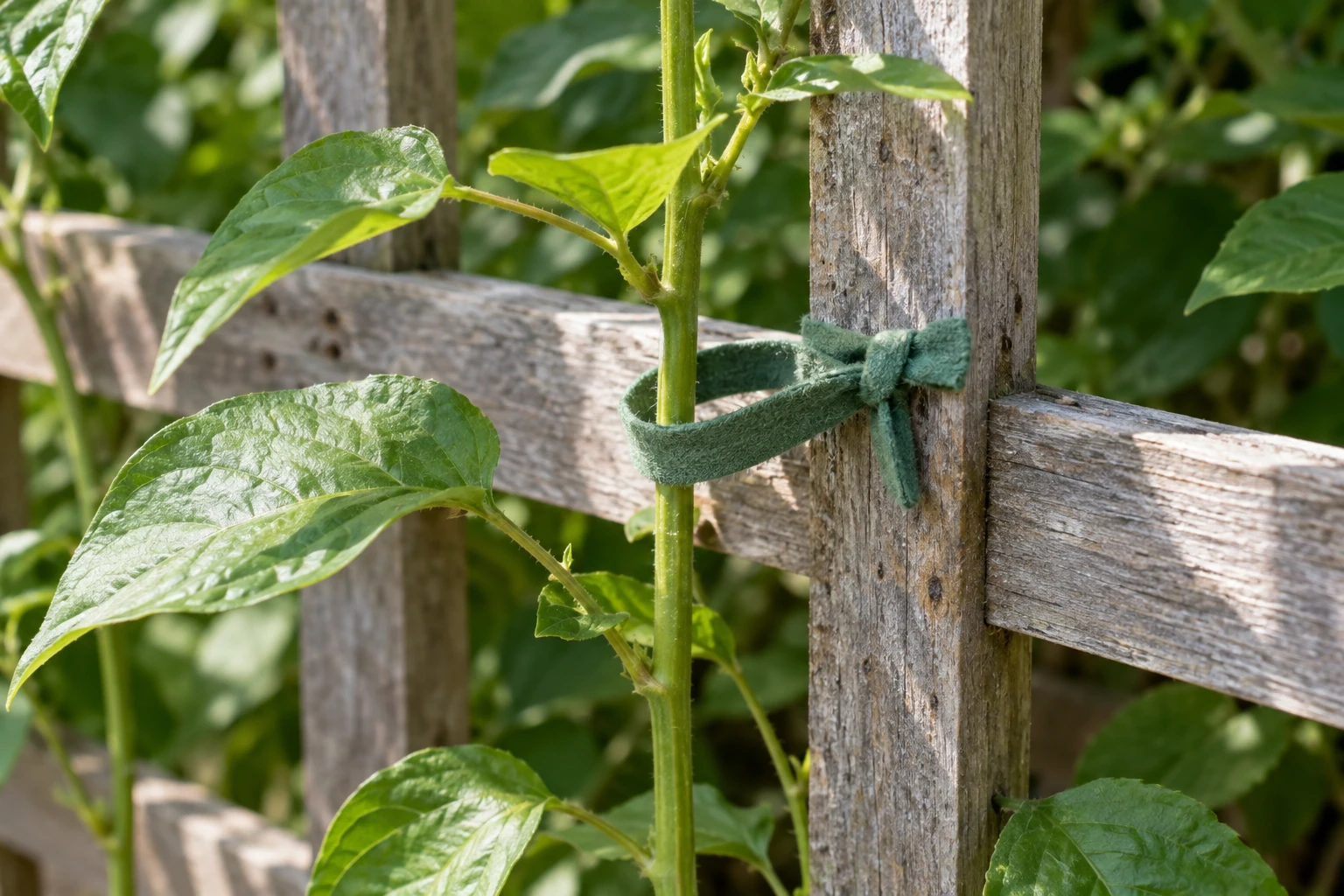
For stems that need tying, choose soft garden ties and leave room for growth. Inspect them as the stems thicken. A tie that looked loose when fitted deserves another look later; it should not disappear into the stem.
Choose a support you can maintain
Ask how you will inspect connections, renew a finish or replace a damaged part once foliage covers the frame. The supplier's care instructions should describe the real material. Photograph the joints while they are visible and keep the product details with your garden notes.
The plant's pruning routine matters too. The RHS clematis guide divides pruning advice according to flowering time; there is no single routine for every clematis. Find the instructions for your plant before deciding that annual tidying will make any support manageable. Consider whether the work happens at a height you can comfortably reach.
Compare the surrounding planting
After these checks, compare how the visible frame sits against nearby foliage and materials, including when a deciduous climber is bare. A real sample outdoors helps you judge colour and texture.
Gardenly's style previews can help explore the broader planting appearance on a photo of your existing garden. A render cannot identify the right support, calculate loads or supply reliable fixing details. Keep the plant name and supplier's advice beside the image, and take the unresolved practical questions to the nursery or installer before ordering.