

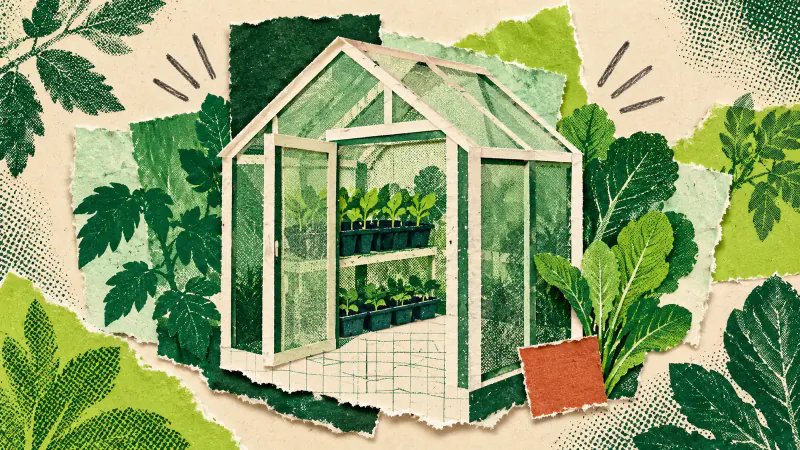
Choose a small greenhouse by working backward from the plants you want to grow. A few trays of spring seedlings need a different space from tall summer tomatoes. Before comparing models, check that your chosen spot gets useful light, the interior has room for you as well as pots, and you can release heat when the sun comes out.
A greenhouse that fits the spare corner may still be awkward to use. Mark its footprint on the ground, include the door opening, and try carrying a full watering can into that space. This is a good time to discover that the advertised growing area includes somewhere you need to stand.
Start with one main growing job
Write down what you expect the greenhouse to hold at its busiest point. Count seed trays, large pots and plants that need support. Use their mature size or final container size, rather than the size they are when you buy them.
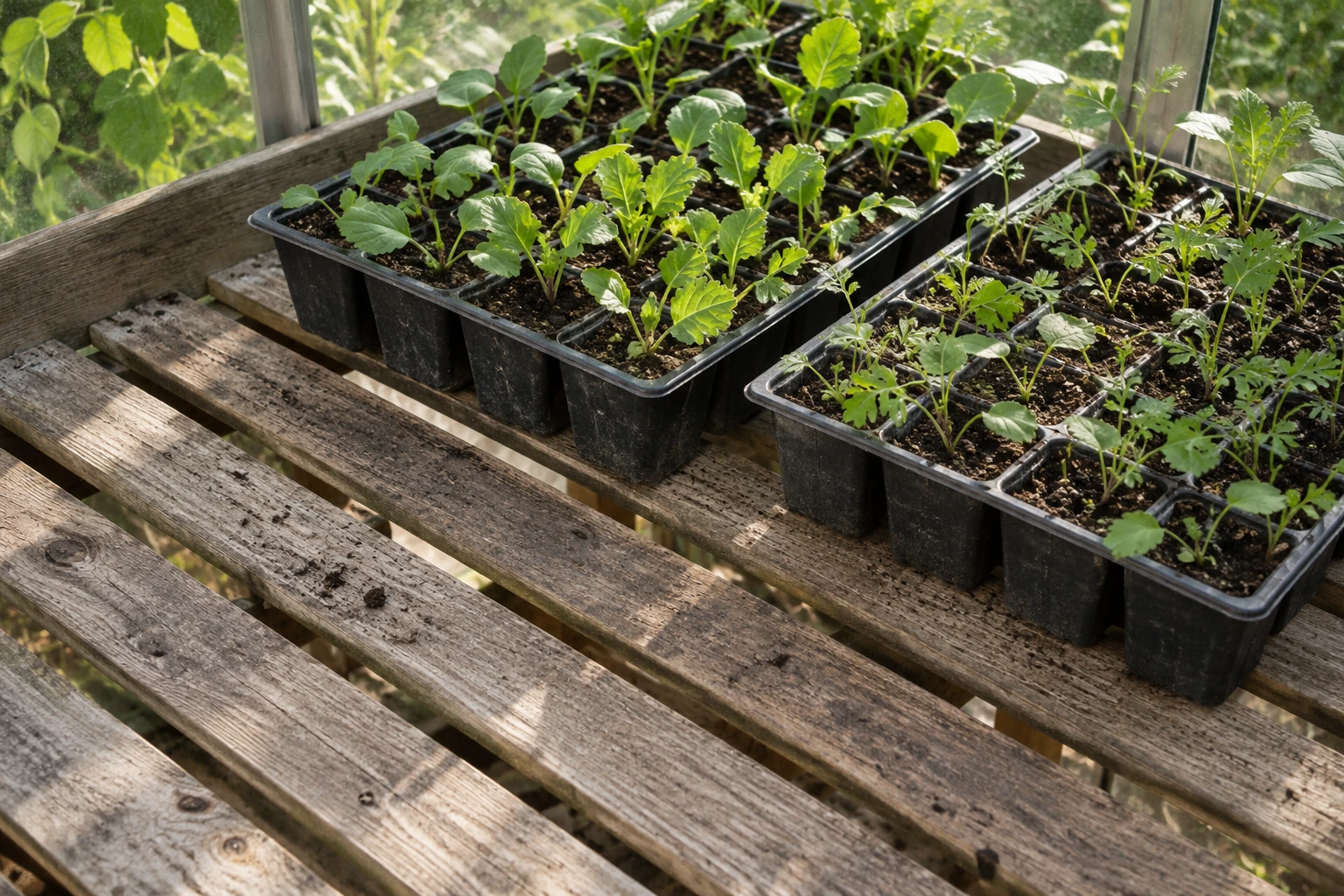
For spring propagation, bench space matters. Summer tomatoes may need the same floor area after the seedlings leave, so removable staging can be useful. The RHS greenhouse vegetable guide recommends planning floor and bench space around the crops you intend to grow.
If you only want protection for a handful of young plants, consider a coldframe or upright mini-greenhouse. The RHS explains the tradeoffs: compact structures save space, but their smaller air volume gives less protection against temperature swings, and stacked shelves shade the plants below. Check how you would ventilate each candidate before choosing it.
Measure the space left after the plants go in
Ask for internal dimensions, bench depth and door clearance. External measurements tell you where the structure fits; they do not tell you whether you can turn around with a tray.
Sketch the busiest month's arrangement on paper. Keep a clear route from the door to the far end, and make sure you can reach the back of each bench without leaning across fragile seedlings. Reserve somewhere to put down a pot while you work. If every surface is full on paper, choose fewer plants or reconsider the model.
Check height at the sides as well as at the ridge. A tall plant placed against a low roof slope may run out of space well before one standing in the middle. Compare the supplier's drawing with the plants and supports on your list.
Check sunlight in the months you will use it
Watch the proposed spot in the morning, around midday and later in the afternoon. Note where buildings, fences and trees cast shade. A sunny patch in summer may lose useful light when the sun sits lower.
University of New Hampshire Extension shows how seasonal sun paths affect greenhouse siting. Its central point is practical: judge shade against your growing schedule. A structure used for early seedlings needs a different light check from one used only through summer.
Keep the wider vegetable plot in mind too. Our vegetable garden layout guide covers allocating growing space around access and sunlight. Avoid committing the greenhouse footprint before you have decided which outdoor beds you still need.
Treat ventilation as part of the purchase
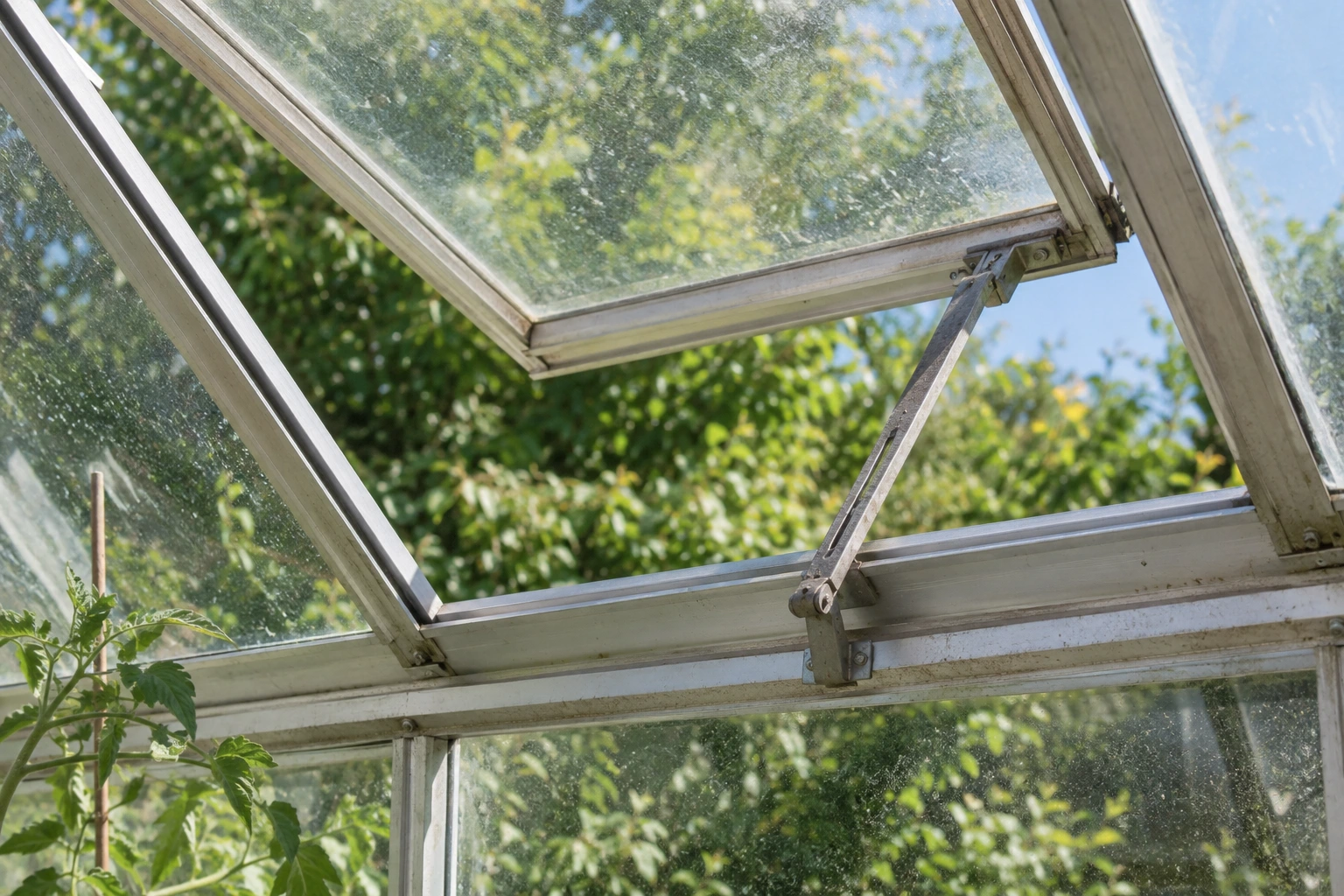
Look for roof vents you can open easily, and check how the door and any side vents contribute to airflow. Ask which vents come with the model and which are extras. Think through what happens on a sunny weekday when you are away.
The RHS ventilation guidance warns that small greenhouses are especially vulnerable to overheating. Automatic vent openers help, but they take time to respond and still need other ventilation alongside them. Plan to monitor the temperature and provide shading when conditions require it. An automatic opener does not remove the need to check the plants.
Try the daily routine before ordering
Walk from the tap to the proposed door. Check where a hose would lie and whether you can reach the outside glazing for cleaning. Read the manufacturer's requirements for the base and anchoring before settling on the position; a convenient patch of ground may need preparation.
For the planting around an established greenhouse, Gardenly can help you compare garden styles on a photo. Treat the image as a visual reference. Use your measurements and the supplier's plans to decide whether a greenhouse fits.
Take your plant list, marked footprint and access notes when you compare models. A useful final test is simple: can you water the furthest pot without moving three others first?