

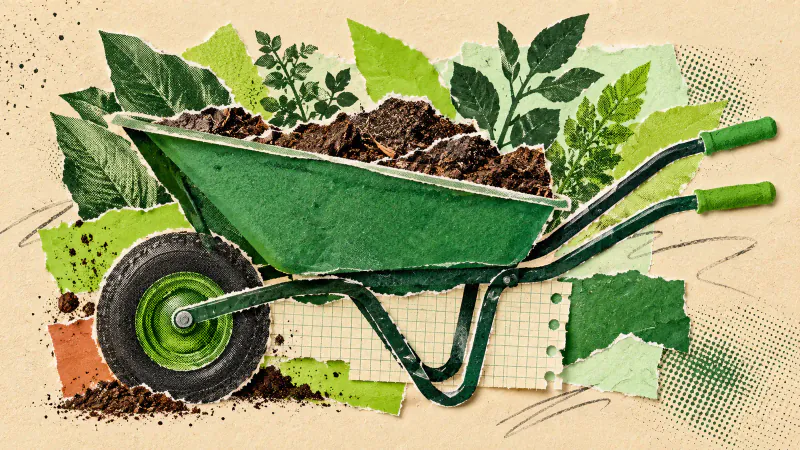
Choose a garden wheelbarrow around the loads you move most often and how comfortably you can control them. Look at the tray's shape, the wheel and the handles together. A generous tub is little help if you struggle to lift it after a few shovelfuls of wet soil.
Assume you have settled where it will travel and where it will live. If access still needs work, start with the garden path guide. Here, the decision is which barrow makes ordinary hauling and emptying less awkward.
Match the tray to what goes inside
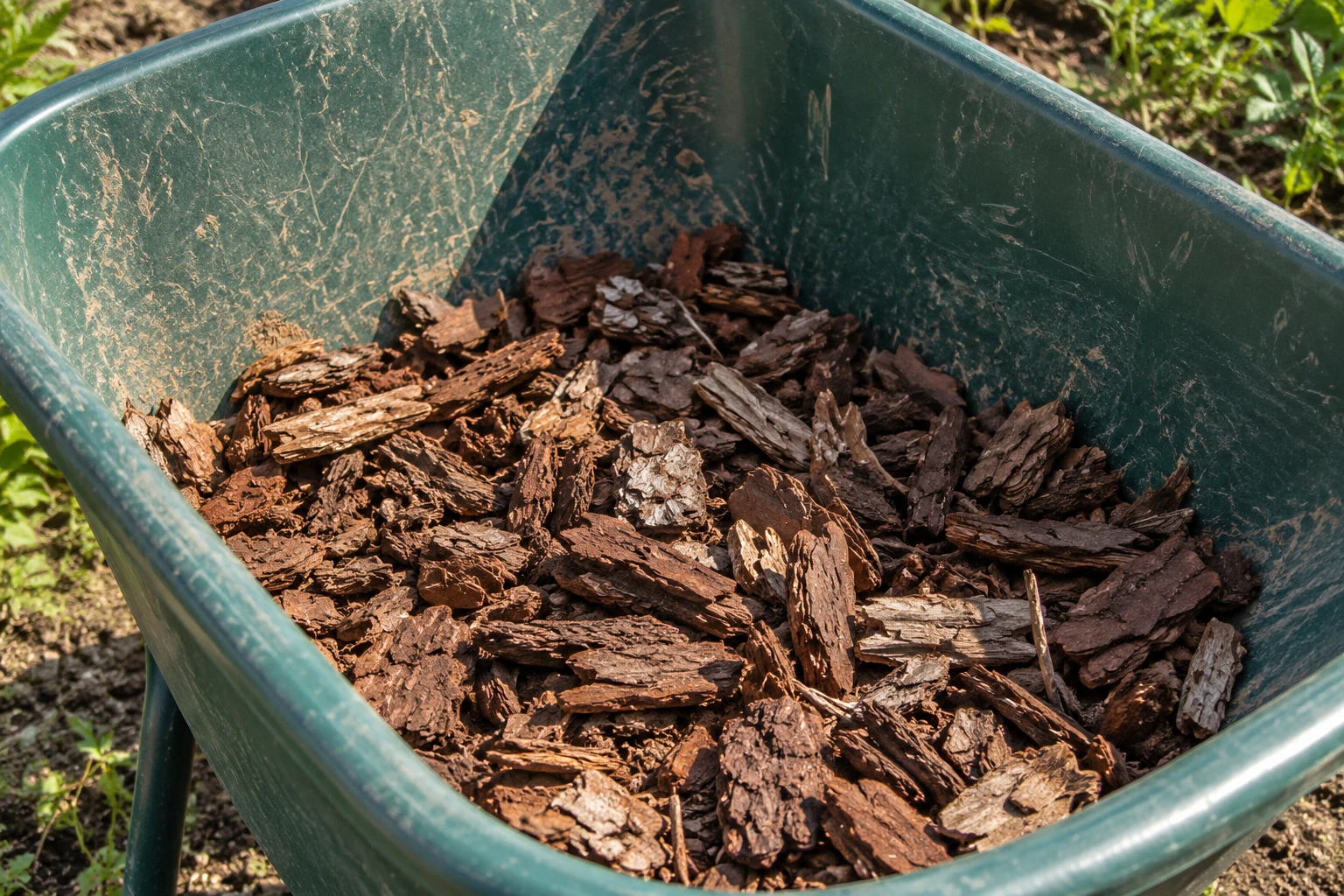
Write down your usual load before browsing: loose bark for the border, soil from a planting hole, or garden waste headed for the compost heap. Compare tray shapes with that job in mind. Can your shovel reach the bottom comfortably? Does the front lip let material slide out where you want it?
A deep tray gives bulky material room, but also leaves more depth to reach into. A broader, shallower tray may be easier for your particular loading job. Check the actual shape instead of choosing by the advertised volume alone.
Polypropylene and steel are both available. Compare the complete barrow's empty weight; the tray material alone does not tell you how heavy the frame and wheel will make it. Check the maker's intended use if you also move sharp rubble or heavy construction material.
For an example of how shape and construction vary, Haemmerlin's PICK UP specification describes a deep, ribbed polypropylene tray with separate supports underneath. Inspect those supports and the tray's attachment points when comparing models.
Choose the wheel before the color
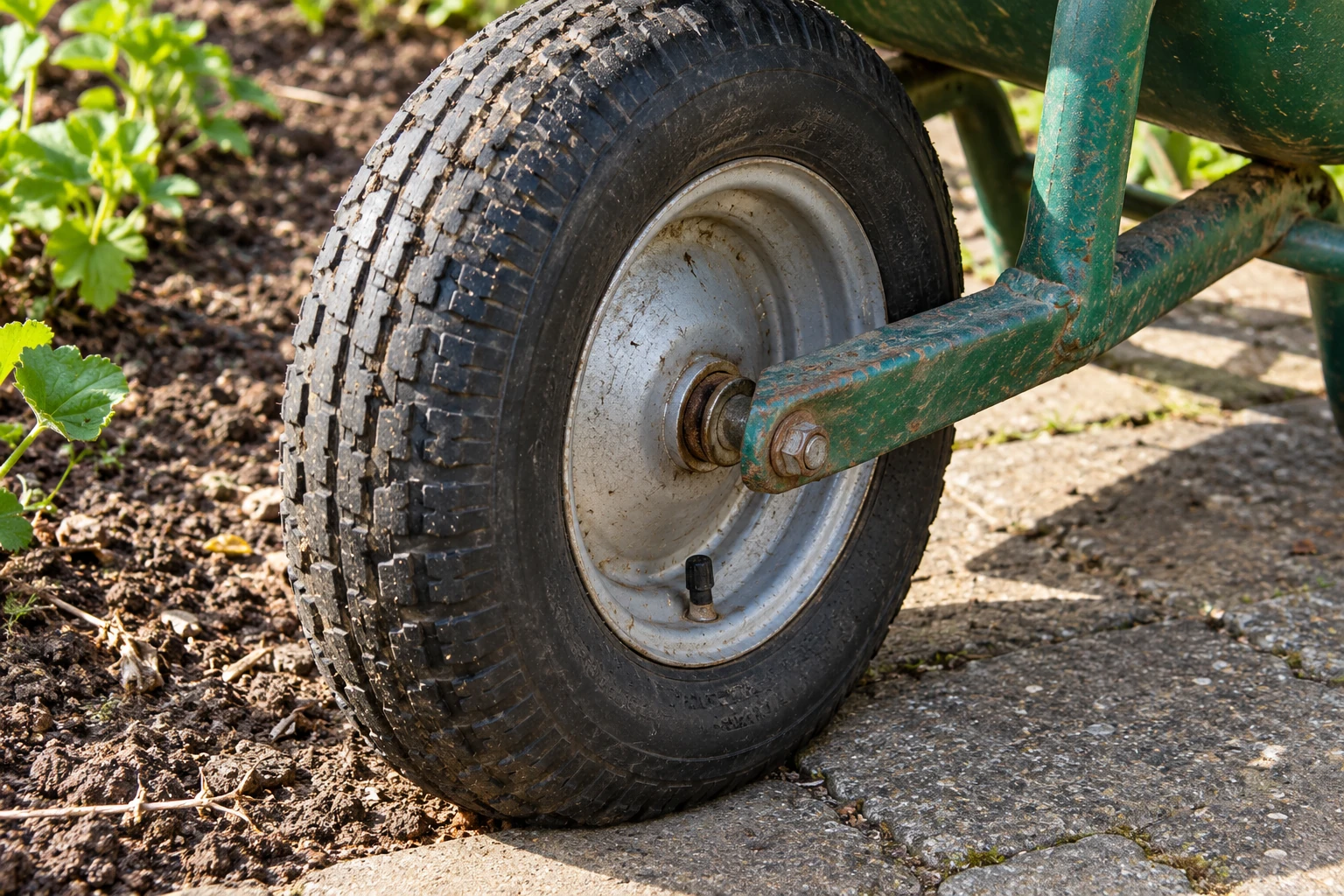
An air-filled tire cushions bumps, but it needs pressure checks and can puncture. Think about the surface you already use and whether checking a tire is a job you will remember before unloading a delivery of mulch.
A puncture-proof wheel removes that particular interruption. Its feel depends on its construction, so try it rather than assuming every solid or foam-filled option rides alike. For instance, Haemmerlin describes its PF 200 as designed to reproduce pneumatic flexibility. That is a claim about one wheel, not every puncture-proof tire.
Try turning a single-wheel barrow and balancing it at a standstill. Compare a two-wheel version if holding the tray level feels tiring. Allow enough room to test a turn, rather than judging stability only while the barrow rests on its legs.
Try the handles and the emptying movement
Wear your usual gardening gloves for a handling check. Lift the empty handles and walk a few steps. Your fingers need room around the grips, and the frame should leave space for your normal stride. Check whether a handle end or support catches your leg when you turn.
Ask the seller to demonstrate how the model tips. Look at the front support or tipping bar and where it touches the ground. The PICK UP specification above lists a tipping stop; other frames arrange this differently. Check the movement on the actual model you are considering.
Start ordinary use with a small, evenly spread load. Add less when material is dense or wet, and reduce it further if starting, steering or emptying becomes a struggle. Leave room to see what you are doing instead of building a tall, wobbling heap.
Read volume and load limits separately
Liters or cubic feet describe the tray's volume. A weight limit answers a different question. The same tray can hold light bark chips or much heavier wet soil, so a full-looking tub says little about its weight.
Find the instructions for the exact model and wheel combination. Even impressive test figures need context: this Haemmerlin product sheet explicitly distinguishes its structural crash test from the maximum recommended load. Neither a capacity label nor a test figure tells you what you personally can handle comfortably.
Check what you can maintain or replace
Before buying, look for replacement wheels, grips and trays by model number. A similar-looking wheel may have a different axle fitting. Keep the assembly sheet and parts reference with your garden-tool paperwork.
AMES' wheelbarrow care guidance recommends rinsing the tray after use and letting it air dry, checking tire pressure, and caring for wooden handles as needed. Follow your model's bearing instructions too. For arranging the surrounding kit, use the garden storage guide.
Gardenly can help explore planting and decorative changes in a garden photo. Choose the hauling equipment by trying the real barrow, with its specifications beside you.