

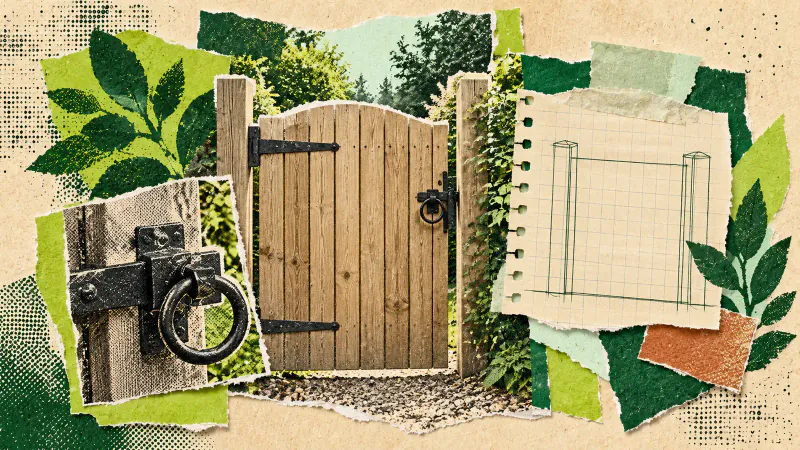
Choose a replacement garden gate around what passes through the existing opening and how you open it. Take the bin, bicycle or wheelbarrow through, record the space the gate needs to swing, and try the proposed latch before choosing the finish. A handsome gate becomes tiresome quickly if every bin day starts with a wrestling match.
This is a buying brief for an ordinary manual pedestrian gate. Keep the opening and route as the starting point; ask a supplier or installer to confirm the gate, supports and fittings together before you order.
Try the busiest journey first
Use the current gate to identify what needs improving. Does a bicycle handlebar catch? Do you have to put down a watering can to reach the latch? Write down the awkward moment rather than simply requesting a wider or lighter gate.
Take your largest regular load through in its normal position. A wheelie bin moves at an angle when tilted, and a bicycle needs room for the person pushing it. Include the turn just beyond the opening. Record any scrape or tight spot without forcing the load through.
If the approach itself needs changing, our garden path guide covers the route. Once that works, you can judge which gate arrangement leaves enough usable passage.
Separate the opening from the gate size
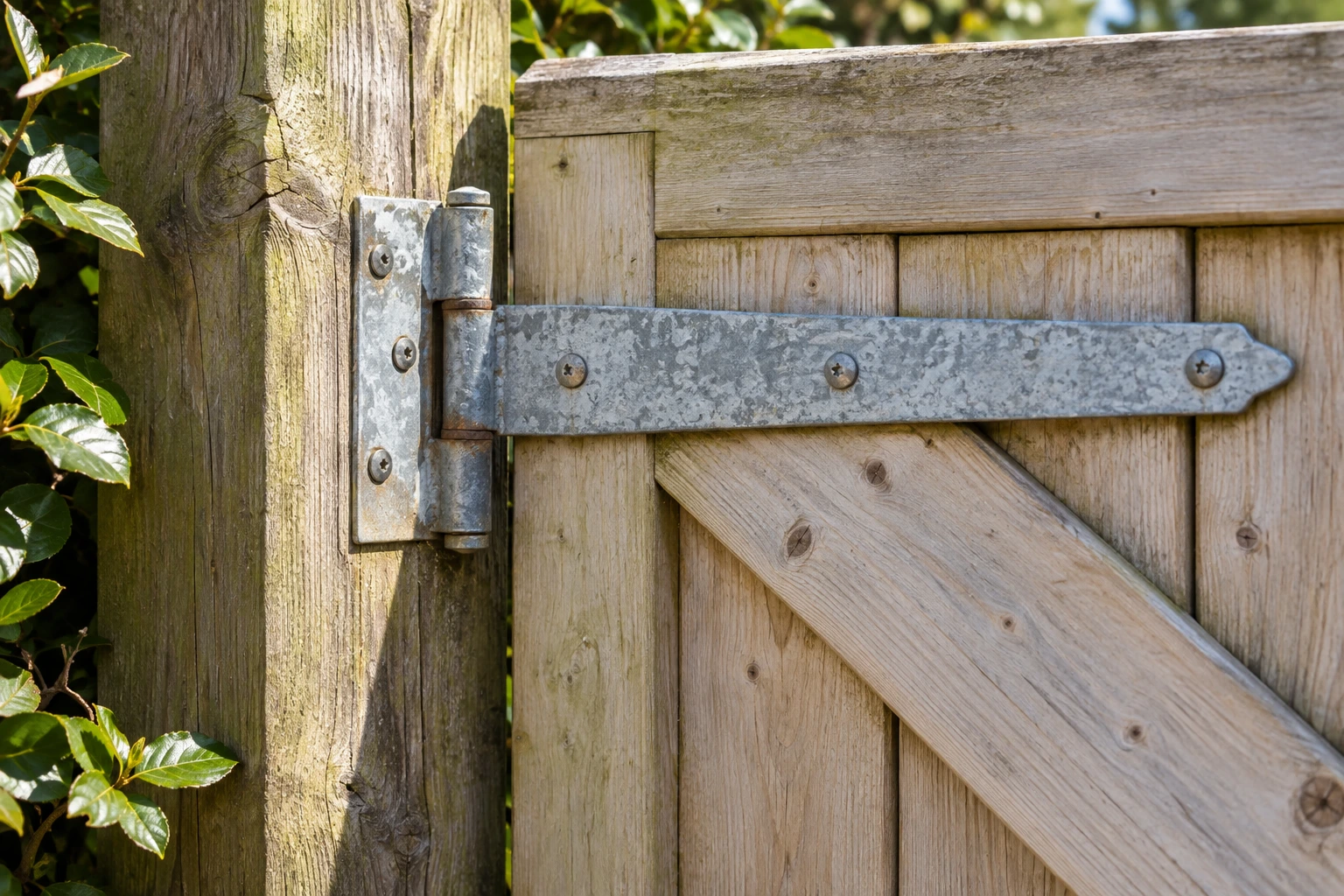
Record the opening between the existing posts or walls at the top, middle and bottom, plus the height you want. Keep every reading. Gate Expectations' measuring guide distinguishes the opening from the finished gate and explains how hanging arrangements affect the clearances.
Give those observations to the supplier before accepting an order size. Ask who makes the deductions for hinges, latch and any proposed posts. Do not subtract a generic allowance yourself and then let the manufacturer subtract it again.
Sketch the hinge side and opening direction, labelling which side you are viewing from. Get the supplier to return a matching diagram. Check where the open leaf would sit beside planting, a step or stored bins, and show any rising ground in photographs. An installer should assess leaning posts, damaged masonry or a gate that drags; a new leaf alone may leave the problem unresolved.
Try the latch with your usual load
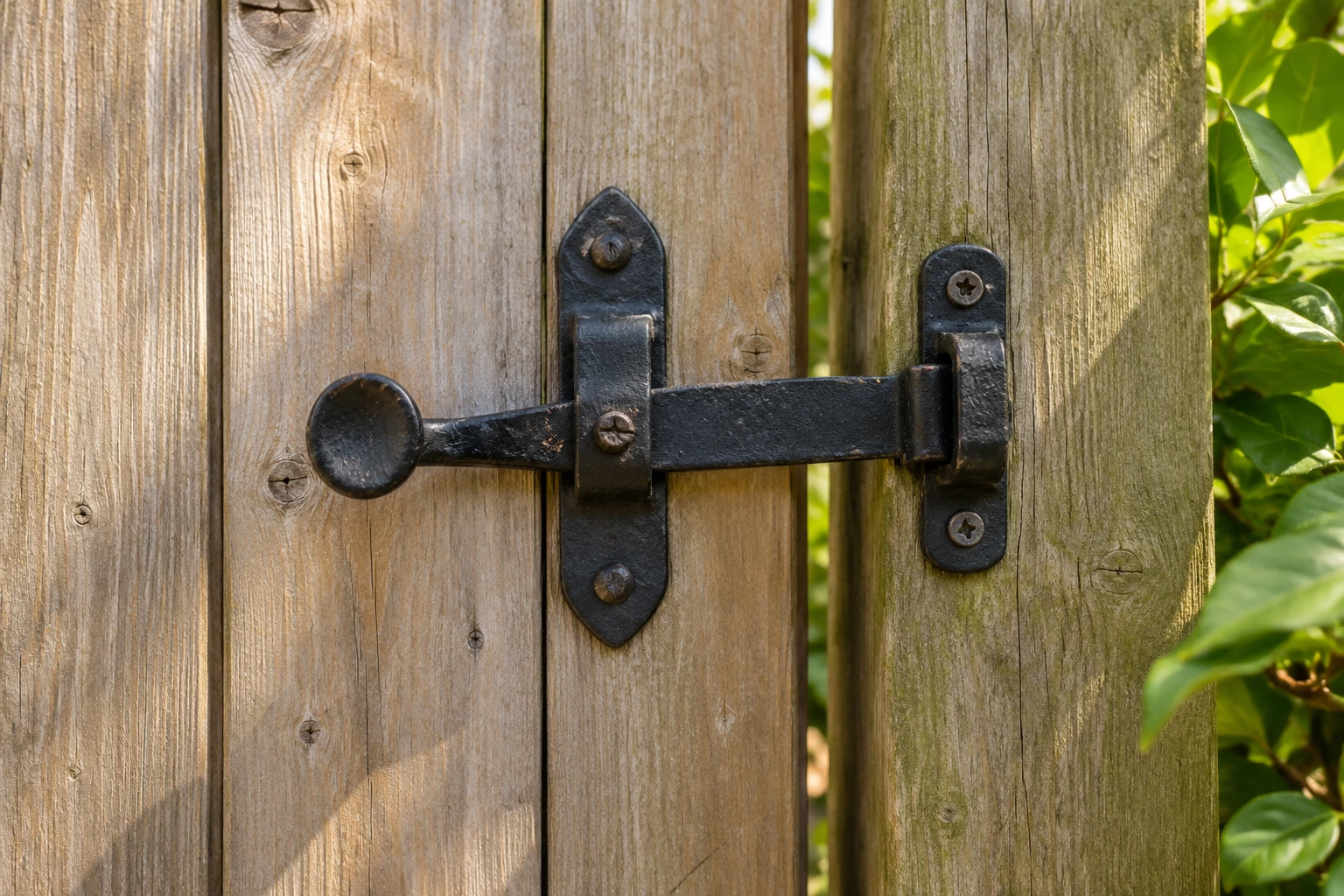
Decide whether you need to operate the gate from both sides, use a key, or have it latch when pushed shut. Describe those actions separately to the supplier. Ask them to demonstrate the proposed fittings on a sample gate if possible.
Charltons' latch guide explains that latch choice goes with the gate and hinges, and that access from either side depends on the fitting. Confirm what the exact model does rather than relying on a name such as "automatic". A latch engaging when a gate closes does not itself tell you how the gate moves back to that position.
Try reaching the handle while standing where the bin or bicycle will leave you. Check that you can close the gate without leaning into adjacent planting. Put any need for a matching closer or a way to hold the gate open in the supplier's brief.
Compare the appearance and the care sheet
Look at solid, slatted or open designs from the places where you usually see the gate. Ask for a material sample and a photograph of the exact design. A small catalogue thumbnail says little about how prominent a tall solid leaf will feel beside your existing fence.
Keep visual openness as a separate preference from practical access. If blocking a particular view is the main aim, the garden privacy guide helps you locate that sightline before changing the gate.
Read the care instructions before choosing. Charltons recommends regular oil treatment for its planed timber gates, while Jacksons describes its treated wooden range as needing no additional treatment. The specified product matters. Ask what cleaning, finish care and hardware inspections your chosen gate requires, and how to obtain replacement fittings.
Keep a visual preview in its place
Gardenly can help explore the planting around an existing entrance through the style gallery. Its image model is instructed to leave fences, walls, paths and other hardscape unchanged. That instruction is not a guarantee, and a render cannot establish a replacement gate's dimensions, swing or hardware compatibility.
Take the original photographs, measurements and supplier's confirmed drawing to the installer. Use a render alongside them only to discuss the surrounding planting and broad appearance.