

Choose an outdoor potting bench around the work you do, rather than the empty corner it happens to fit. Start with a comfortable working position, enough clear surface for your usual pot and a tray, and somewhere to put the finished plant. Then check how you will bring in potting mix, reach water and clean up.
Try one ordinary repotting job at a table you already own before ordering anything. Lay out the real equipment and note what gets in your way. A bench with plenty of shelves can still leave you working on a strip of tabletop between things that should have been put away.
Test the working position with a real pot
Decide whether you prefer to sit or stand. In its potting-on guide, Thrive suggests working with your back in a neutral position, either seated at a comfortable tabletop or standing at a workbench. There is no useful universal height to copy without trying it yourself.
Place an empty pot where you would normally work. Mimic turning it, reaching for a scoop and setting it aside. Include the tray's height in that test. If you sit, check that a lower shelf or crossbar leaves room for your legs and chair. If the table will be against a wall, test your reach to the back without leaning over the pot.
Record the height and depth that feel workable for you. Ask for the candidate bench's actual worktop measurements; decorative backs and side ledges can occupy part of the advertised size.
Give the tray a clear working area
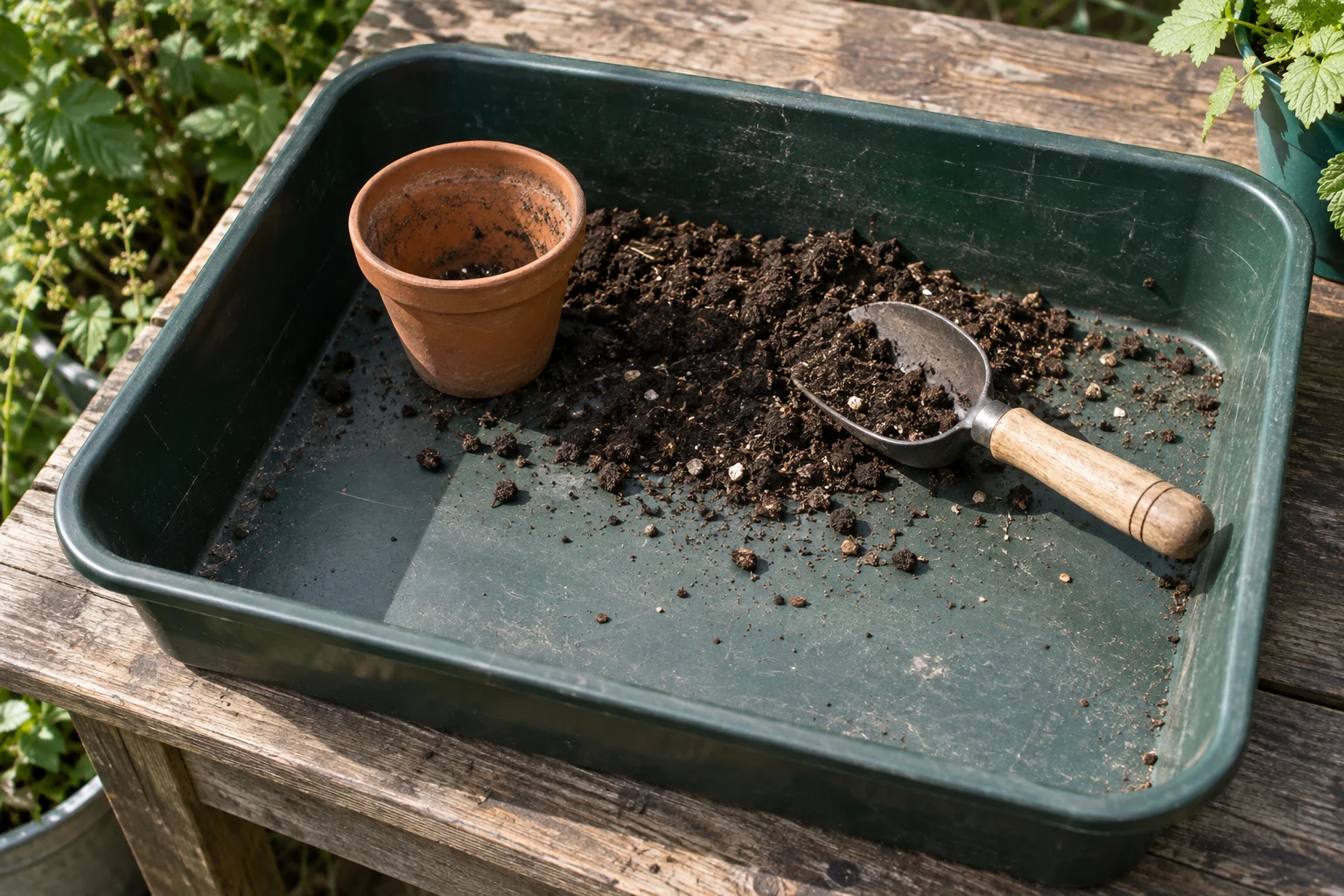
A removable tray lets you contain loose mix without turning the whole tabletop into a soil bin. Thrive's seed-sowing guidance describes a high-sided tidy tray for containing spills, with a washing-up bowl or kitchen tray as possible alternatives.
Try your largest usual pot inside the tray. Can you rotate it and reach around its rim? Leave some clear tabletop beside it for a clean tool or an empty pot. Check that you can lift the tray off when it needs emptying, rather than trapping it beneath a fixed upper shelf.
A slatted top and a solid top need different checks. Look at where loose mix would collect, how you would brush it out and whether the surface can tolerate the cleaning method you intend to use. A built-in basin is only useful if you can remove or empty it easily.
Plan the movement of one pot through the job
Bring out what one session needs: the plant, its new pot, suitable potting mix, a scoop and a watering can. Follow the mix label's handling and storage instructions. Leave the rest in its normal storage rather than making the worktop hold every gardening supply you own.
Check the journey to water with the can you actually use. If you prefer a hose, decide where it will lie while you work and put it away afterward. Reserve a firm nearby place for finished pots so you can clear the bench between plants. Avoid choosing a shelf that requires you to lift a freshly filled container higher than feels manageable.
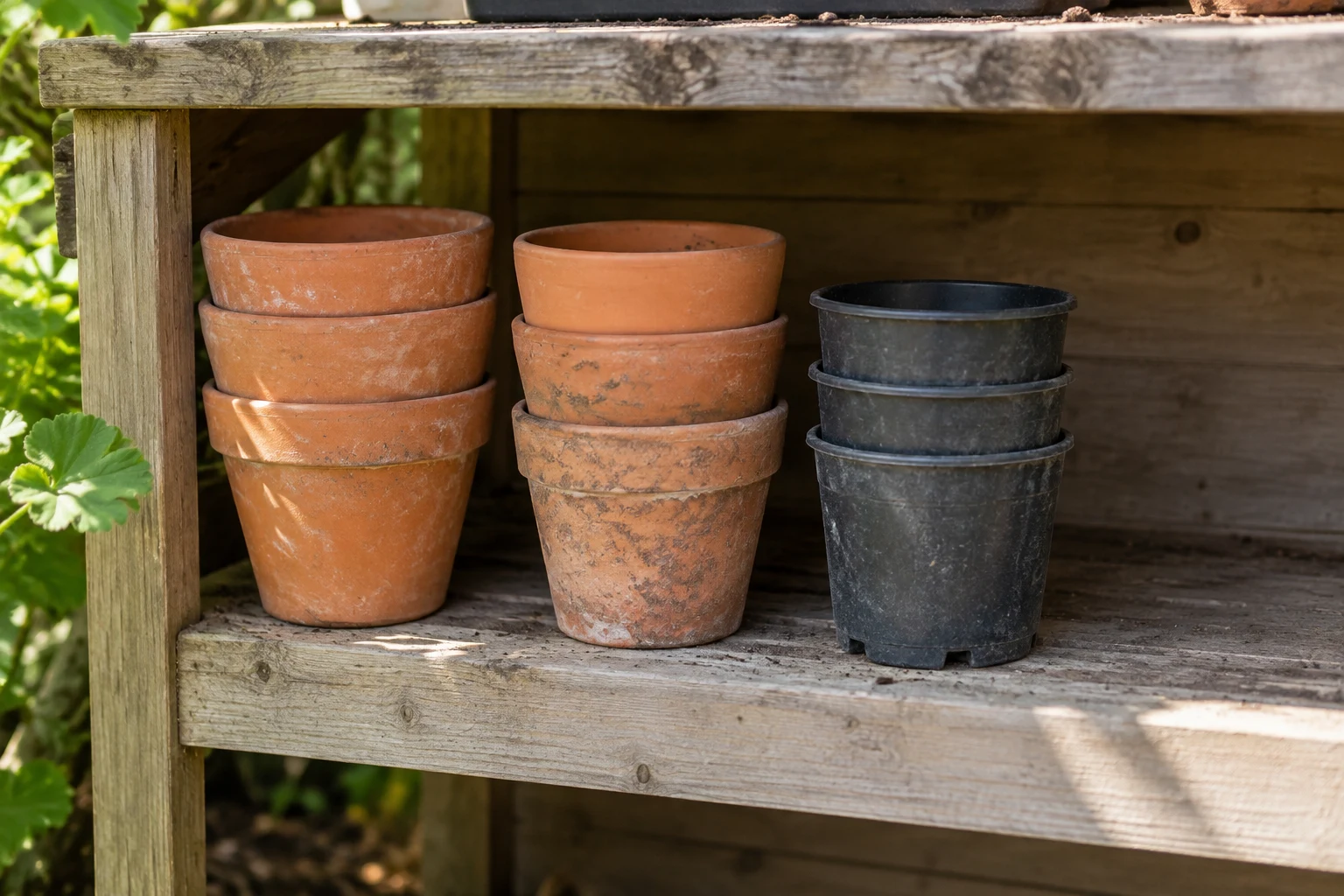
Lower shelves can hold a few empty pots, but check the stated load limit and retrieval space. For the wider collection, our garden storage guide covers sorting and returning supplies. Here, the test is whether the supplies for one job leave enough room to perform it.
Read the outdoor care instructions before buying
Ask whether the exact model is intended to stay outside in your conditions. Read its assembly, surface-care and seasonal-storage instructions, including any requirements for a cover. Check the feet, joints and finish in the same way you would inspect other outdoor furniture.
Care instructions vary even among wooden benches. For example, Zest's potting bench guidance sets specific conditions for treating its pressure-treated timber. Follow the instructions for the model you choose rather than applying a generic treatment routine.
Test cleanup too. Choose a position where you can brush loose mix into a container, empty the tray and clean the surface without washing debris into a drain. Allow access behind and below the bench for inspection and cleaning.
Take a short working brief to the supplier
Write down your preferred position, useful worktop size, tray dimensions, leg space if needed, and where finished pots will go. Add the model's load and care questions. This gives you a better comparison than counting hooks or picking a matching finish first.
For the surrounding garden's appearance, Gardenly can help you explore a style on a photo. Use the image as a visual reference for planting and materials. Keep the bench's dimensions, comfortable reach and weather suitability in your measured notes and the supplier's documentation.