

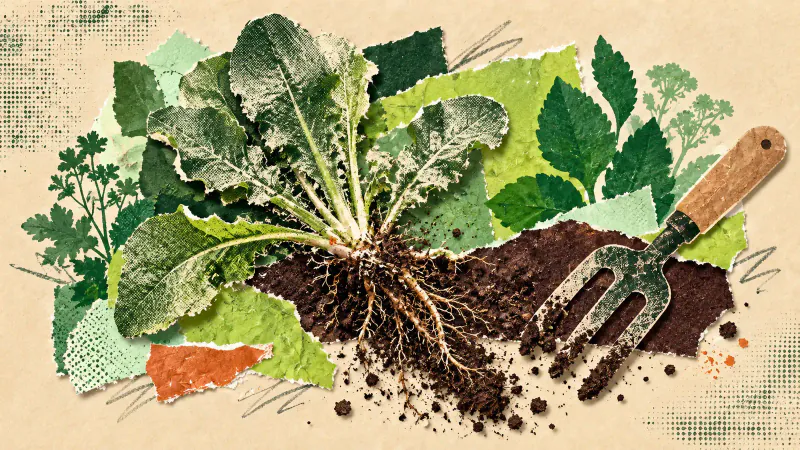
Start hand weeding when the soil is slightly moist. Identify the plants you want to remove, hold each near its base and ease the roots out, loosening stubborn ones with a hand fork. Around established flowers and shrubs, work on individual weeds rather than turning over the whole bed.
The aim is to remove unwanted growth while leaving the planting you chose in place. One pass will not settle every perennial weed problem. Some plants regrow from roots left behind, so checking the same patch again belongs to the job.
Identify the weed before reaching for it
Choose a small section you can reach from the path. Look for the plants you intend to keep before pulling anything. A seedling beside a perennial might be a welcome self-sown flower. Leave unknown or potentially hazardous plants untouched while you identify them and check the relevant handling advice.
Find out whether an unwanted plant is an annual, which completes its life cycle within a year, or a perennial that can return from underground growth. That distinction changes how you tackle it. University of Maryland Extension explains these weed life cycles and why persistent roots need more attention than small annual seedlings.
Gather gloves, a hand fork and a bucket. A kneeling pad can make a low border easier to work beside. Put the bucket within reach so removed weeds do not disappear back among the stems.
Loosen the soil instead of pulling harder
Try a small weed first. Slightly moist soil releases roots more easily than hard, dry ground, according to Maryland's guide. If the ground grips tightly, wait for suitable conditions rather than repeatedly snapping off leaves. Avoid working a bed that is sodden or frozen.
Hold the weed low, where the stems meet the soil. Pull gently and watch whether the surrounding ground lifts too. If it does, stop and use the fork to loosen the soil beside the weed. Ease it up a little at a time instead of levering against a nearby plant.
Check what came out. A handful of leaves with almost no root suggests you have removed only the top. Look in the hole for remaining growth before moving on.
Follow persistent roots without chopping them up
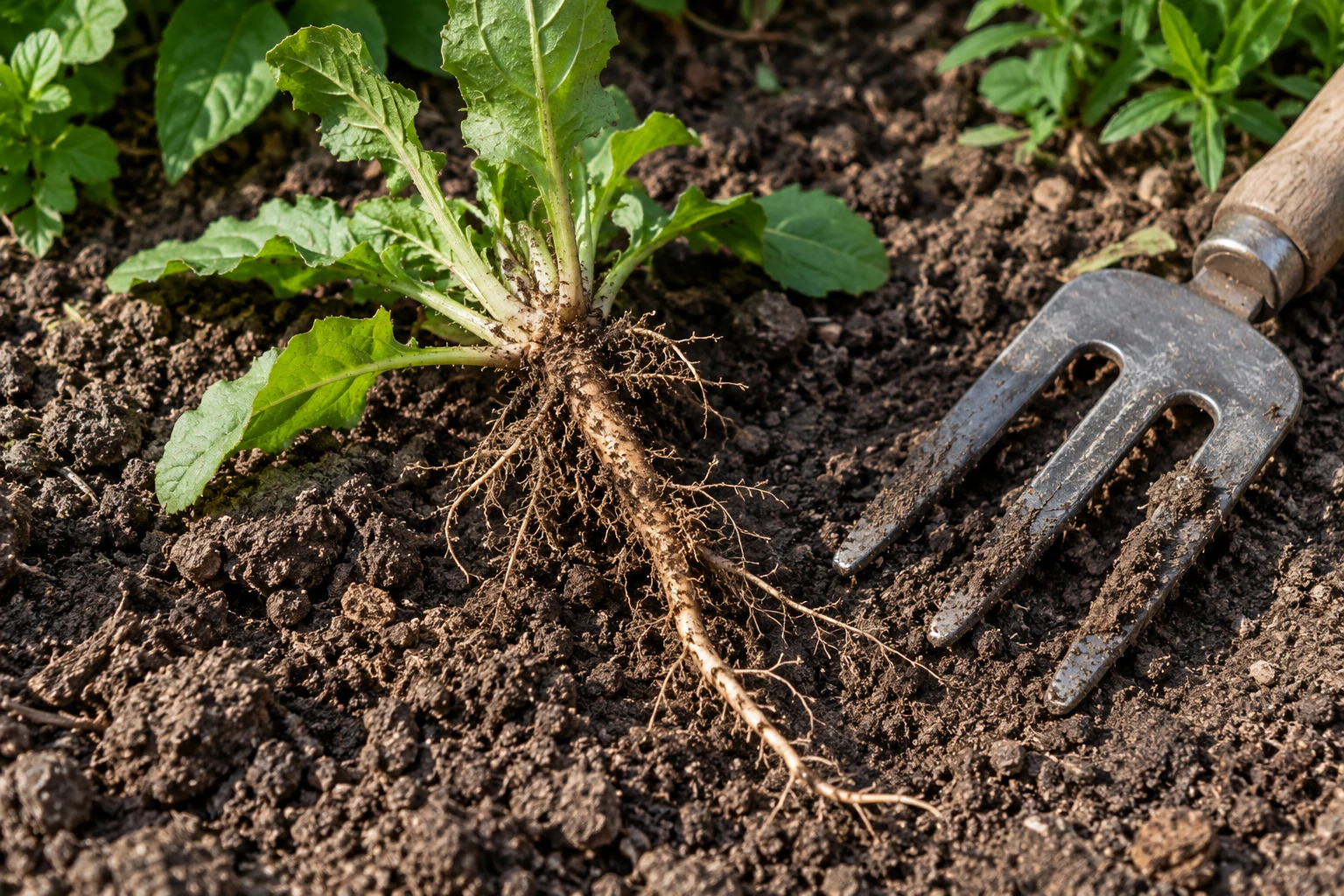
Treat a thick taproot or a spreading underground stem differently from a tiny seedling. The RHS guide to weeding beds recommends easing persistent weeds out with a fork and removing as much root as possible without chopping it into pieces. Some perennial weeds can grow again from those fragments.
Work only as far as you can see and reach safely. Do not chase a root blindly through the base of a shrub. Where weed roots are tangled with an established plant, the RHS recommends repeated removal of the weed's shoots if digging them out would cause disturbance. Plan to return to that spot.
Keep persistent roots together in the bucket. Avoid scattering them onto the cleared patch while shaking soil off other weeds.
Protect the plants already in the border
Use your fingers or the hand fork for the close work between stems. Keep any loosening local to the weed. Broad cultivation can damage the fine roots of ornamental plants and bring buried weed seeds towards the surface.
If a weed will not come out without lifting the plant beside it, stop pulling. Make a note of the spot and identify the weed's growth habit before choosing the next step. Removing one unwanted plant should not mean uprooting a clump you wanted to keep.
Empty the bucket and revisit the same patch
Separate weeds carrying seeds and persistent perennial roots from material suitable for your home compost bin. The RHS notes that ordinary home bins may not destroy troublesome roots. Use the appropriate local disposal route for excluded material; our composting guide covers the basic ingredient choices.
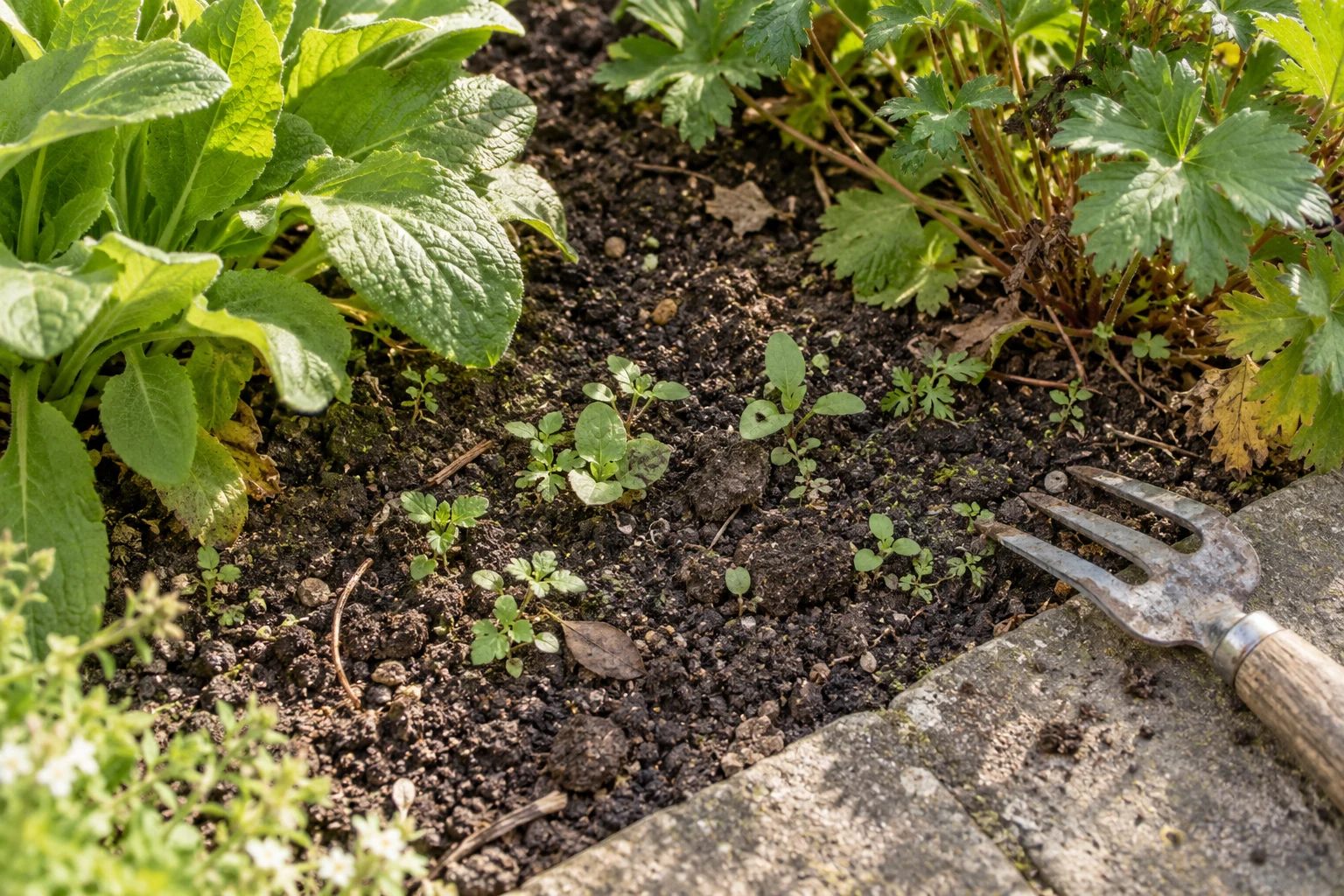
Check the cleared section during subsequent garden visits. Remove new seedlings before they flower and set seed, as University of Minnesota Extension advises. Note recurring shoots so you can distinguish new seedlings from an established root system returning.
Once persistent weeds are under control, our mulching guide covers protecting bare soil around shrubs. If the gaps suggest a bigger planting change, Gardenly's FAQ explains its photo-based design approach. Keep your weed notes alongside any design ideas: a tidy-looking picture does not confirm what remains underground.