

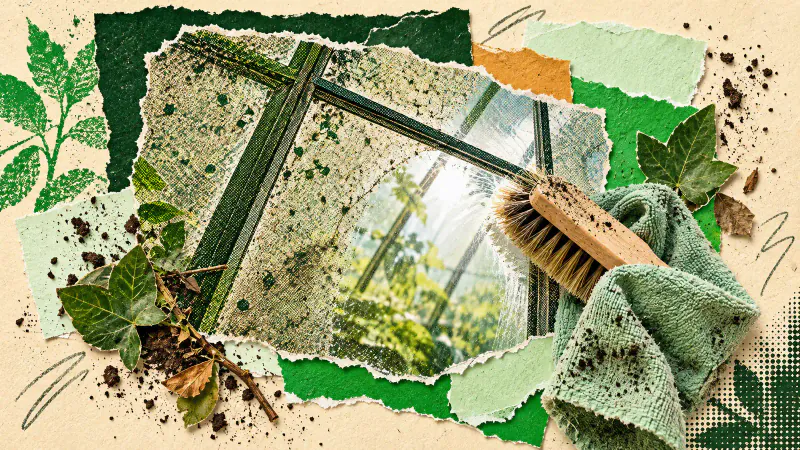
Start greenhouse cleaning by emptying the space, removing loose debris and washing accessible glass gently. Clean the benches and floor before returning equipment, then give wet surfaces time to dry. Work between crops when possible, so you can reach the corners that pots usually hide.
This routine is for an existing domestic glass greenhouse. Read its care instructions first, especially if you have coated glazing or unfamiliar frame finishes. If the structure has cracked glass, loose panels or a door that will not work properly, deal with that repair question before washing around it.
Make room to work safely
Choose a calm, mild day and decide where the plants will stay while you work. Tender plants need a suitable sheltered place; postpone the job if moving them would expose them to unsuitable conditions. Carry out removable benches and loose equipment. Set them somewhere you can clean them without blocking the route back inside.
Keep a bucket for debris separate from your washing water. Put the brush and cloth within reach, rather than balancing them on a narrow glazing bar. Walk around the outside too: a pot or water butt may prevent you reaching a pane comfortably.
Only tackle glazing you can reach safely. The RHS greenhouse cleaning guide warns against putting your weight on glazing or leaning over the roof. Leave awkward high sections for suitable equipment or someone equipped to do the work.
Remove loose dirt before adding water
Pick up plant labels, old ties and fallen leaves. Brush the frame corners and ledges, working downward so dirt lands on a floor you have yet to clean. Look behind the place where the bench stood. A clean central path tells you little about the strip underneath it.
UMass Extension's greenhouse hygiene guidance starts with removing soil and plant debris. Its commercial advice also explains why physical cleaning comes before any disinfection: organic residue reduces disinfectant effectiveness.
Collect the loosened material before washing. If you discover a suspected plant disease, keep that material separate while you seek advice about disposal and treatment. Ordinary cleanup does not diagnose what affected the crop.
Wash accessible panes gently
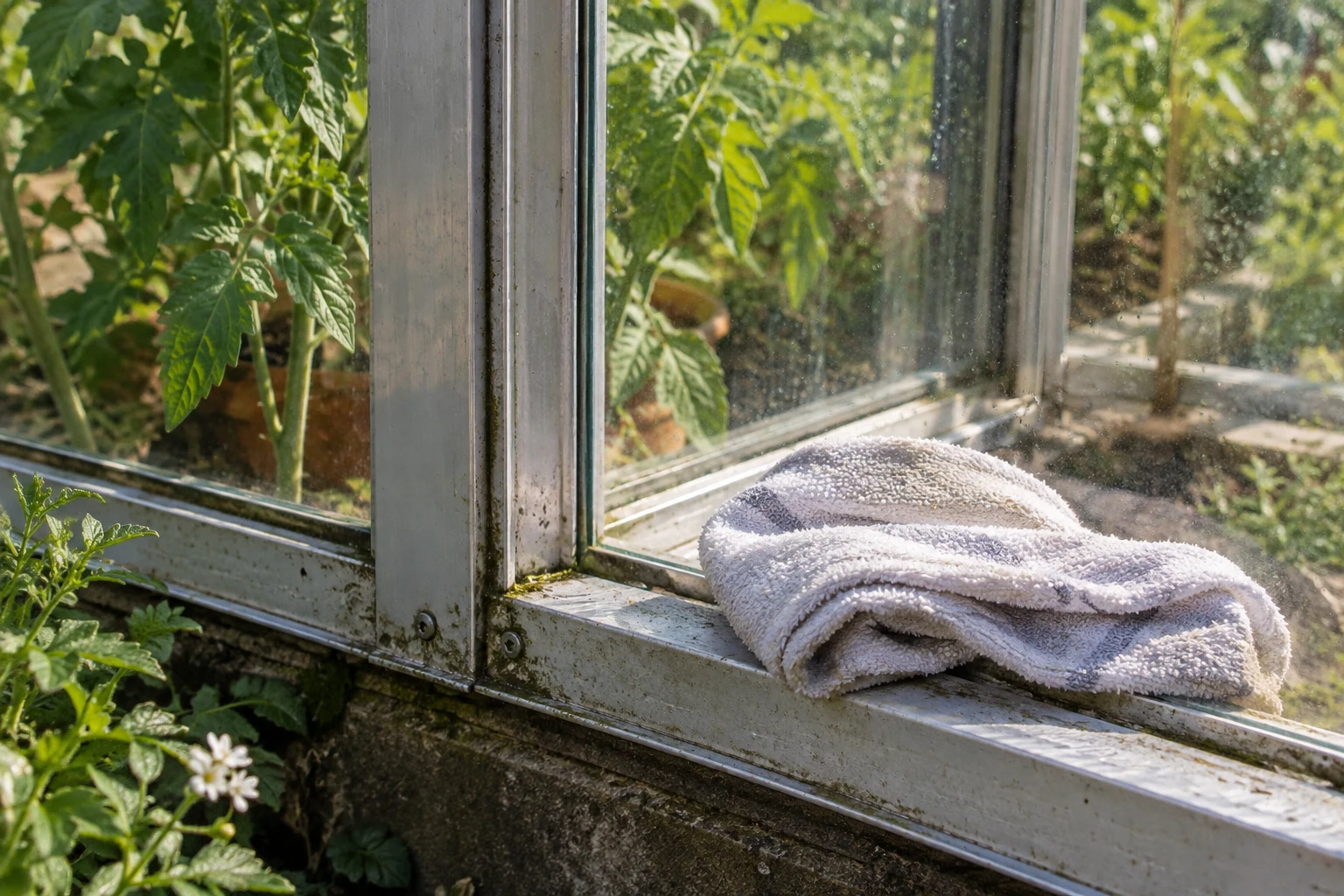
Use warm water and a soft cloth on ordinary glass, cleaning the accessible inner and outer surfaces. Ease loose dirt from pane overlaps gently; do not force a tool between the panes. Avoid abrasive scourers and wire brushes. Ask the manufacturer about persistent marks rather than reaching for a stronger cleaner.
Care instructions differ. Hartley Botanic recommends a soft cloth and mild detergent for its greenhouses, followed by a hose rinse, and specifically advises against a power washer. Follow the instructions for your own model and glazing.
Work through one reachable section at a time. Rinse the cloth when it picks up grit and change dirty washing water. Check the cleaned pane from both sides before moving along; it is easy to keep polishing the outside when the remaining mark is inside.
Clean benches and the walking surface
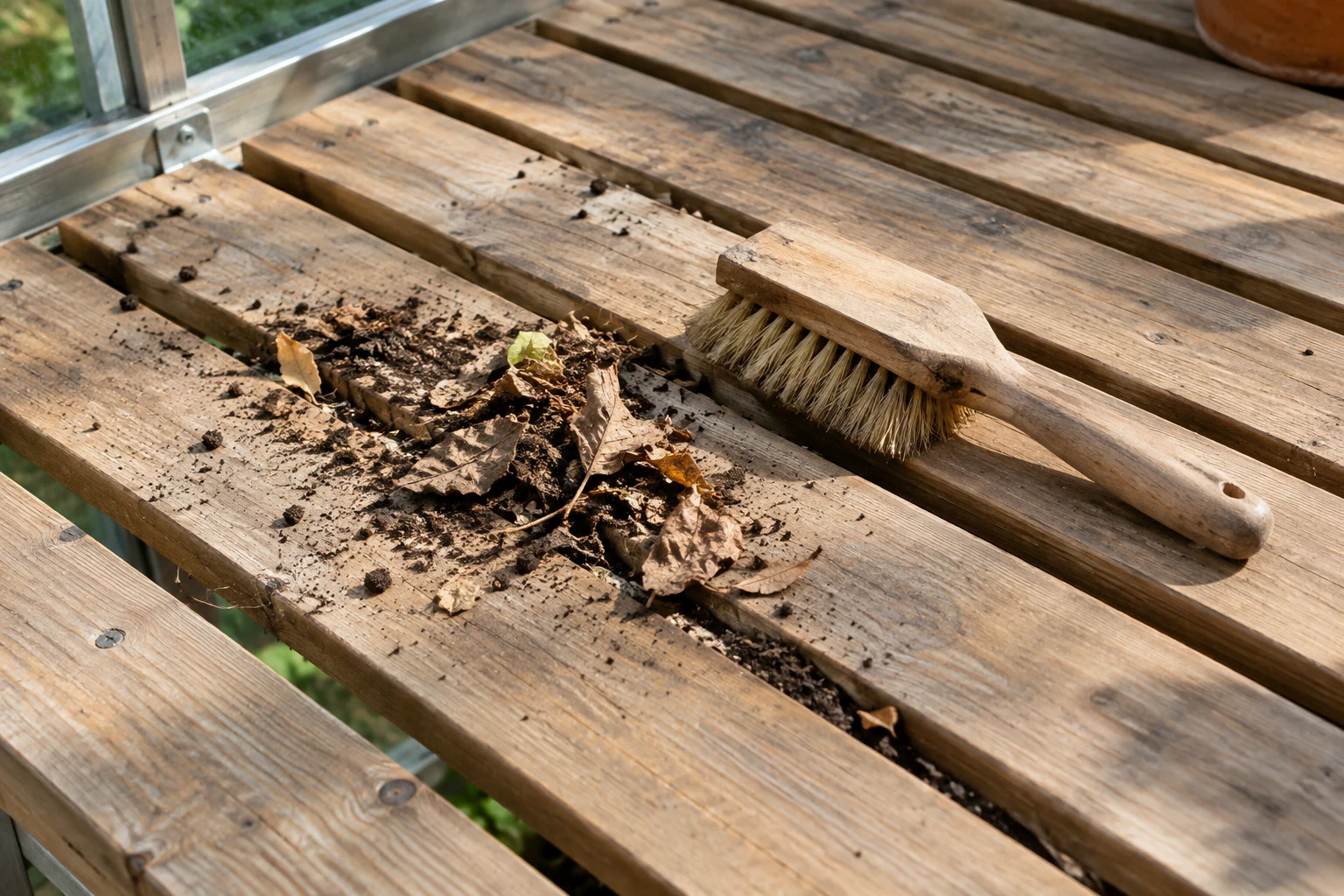
Work along the empty staging, including the underside and gaps between slats. Choose the cleaning method its material allows. Keep washed equipment away from the pile awaiting attention, and check the back of each shelf before carrying it inside.
Scrub a paved or concrete floor with warm water and a suitable brush. A soil or gravel floor needs a different approach; collect debris without treating it as a washable slab. Leave the door and vents open while surfaces dry, when weather and plant requirements allow.
The RHS advice on greenhouse algae explains that green growth can reduce light through glazing and make paths slippery. Better airflow and avoiding persistent puddles help discourage its return. Look for water gathering under a bench rather than simply washing that spot again next week.
Check what needs attention before refilling
While everything is visible, note damaged seals, missing fixings or stiff moving parts. Juliana's greenhouse care guide covers routine checks and material-specific maintenance. Use your model's instructions for repairs and lubrication. Ask the manufacturer about a fault you cannot confidently identify.
If benches repeatedly block access, the small greenhouse guide helps you reconsider usable space. For planting ideas around the structure, Gardenly can preview garden styles on a photo. Use the actual greenhouse and its care instructions to judge its condition.
Return clean equipment when the space is ready. Resolve questions about disease or repairs before bringing plants back in.