

Start saving flower seeds with one named plant already growing in your garden. Check that its seeds suit dry storage, let them ripen on the plant, collect in dry weather, then clean and label the batch before putting it away. The useful result is a packet you can identify and sow at the right time.
This guide covers ornamental flowers with dry seedheads or pods, such as cosmos and zinnias. Late summer and autumn often offer opportunities in temperate Northern Hemisphere gardens, but flowering time, species and local weather decide when your plant is ready. October alone tells you very little about a seed.
Choose a plant and check what its seed needs
Keep the original plant label or seed packet beside your notes. Start with one healthy plant and a small batch. Illinois Extension's flower seed-saving guide includes cosmos and zinnias among approachable choices, while warning that hybrid offspring can differ in color or size. Saving a favorite flower does not guarantee an identical replacement.
Look up the species before collecting. The RHS collecting and storing guide notes that some seeds, including hellebores, are best sown promptly, and some species cannot tolerate drying. Keep those outside this dry-packet routine. An unidentified seedhead needs an identification first.
Decide how many plants you could actually use. If the bed itself needs reshaping, our flower bed ideas guide handles that earlier decision. A crowded drawer of packets is easier to acquire than somewhere suitable to plant their contents.
Watch for ripeness and collect on a dry day
Inspect the selected plant regularly after flowering. For these dry-headed flowers, look for a head that has become brown and dry, then check the species' harvesting guidance. Catch ripe seeds before they disperse. Brown petals alone are not a universal ripeness test.
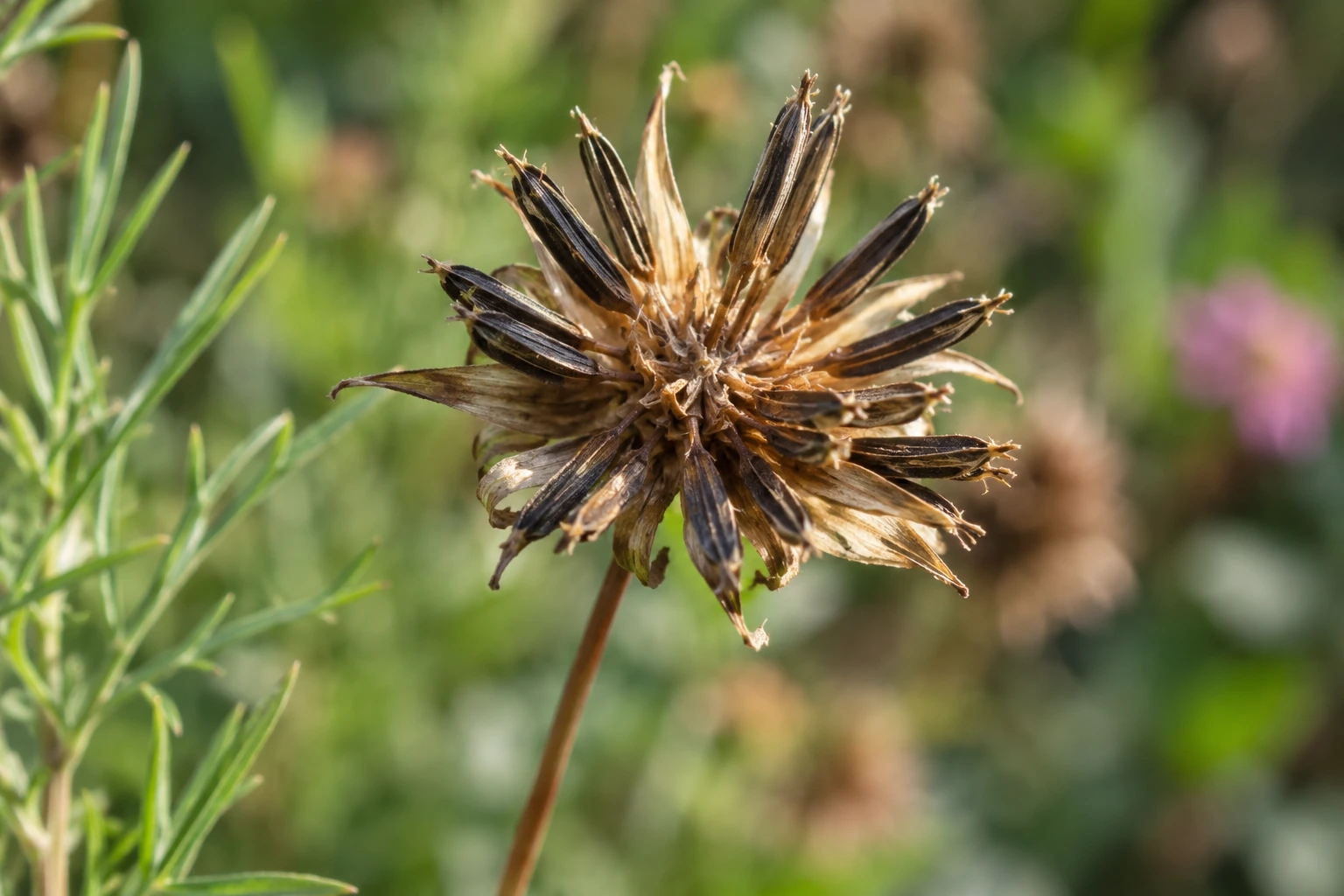
The RHS recommends collecting ripe seed on a dry day. Take a paper bag and snips out with you. Write the plant name on the bag before cutting, hold it beneath the ripe head to catch loose seeds, and clip the head into it. Keep each plant's batch separate.
Harvest only what you intend to sow or share. Leave other suitable standing growth where it earns its place in the garden; our wildlife garden guide discusses seeds and shelter as part of year-round habitat.
Dry the batch and separate the chaff
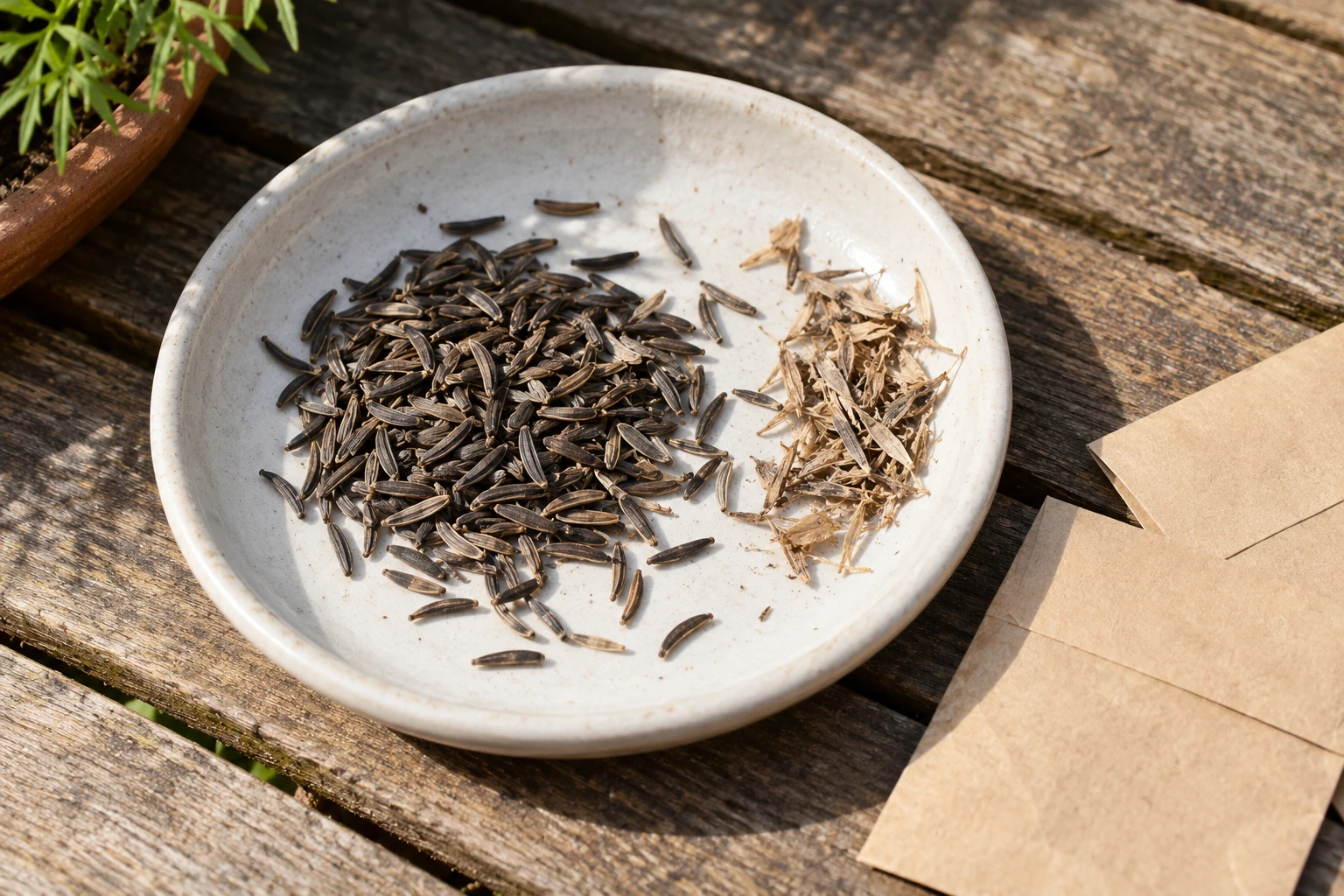
Bring the labelled batch indoors and spread it on a clean paper-lined tray in a dry place with air movement. Keep the label with it when you empty the bag. Use a separate tray for the next plant rather than relying on remembering which seeds are which.
When the heads are dry, loosen the seeds gently over the tray. The RHS seed team's practical leaflet describes picking larger seeds out by hand and using a sieve for finer material. Choose a mesh that separates your particular seeds from the husks; a kitchen sieve is not automatically the right size.
Remove loose petals, stalk pieces and other chaff. Check that the cleaned seeds are fully dry before enclosing them. Give a damp batch more time rather than sealing it because the afternoon's job ought to be finished.
Label the packet and plan its next use
Put the dry seeds in a paper envelope. Record the plant name, collection date and where it grew. Add the original cultivar name if known, but note any uncertainty about the offspring. Keep a separate note of sowing instructions so the packet stays readable.
Illinois Extension's storage advice recommends cool, dry conditions and says seeds must be completely dry before sealing them in a tight container. Place the packets in a clean lidded container with a silica-gel sachet to help control moisture. Avoid a damp shed or a warm sunny shelf.
Check the species' sowing requirements now. The RHS explains that seed lifespan and germination requirements vary. Dry storage does not replace any required cold treatment or establish a sowing date. Put the appropriate task in your calendar, with local conditions in mind.
If you later compare the border's appearance with a Gardenly image, keep these real plant records beside it. Use the image for visual direction; use the labelled packet and species guidance when it is time to sow.