

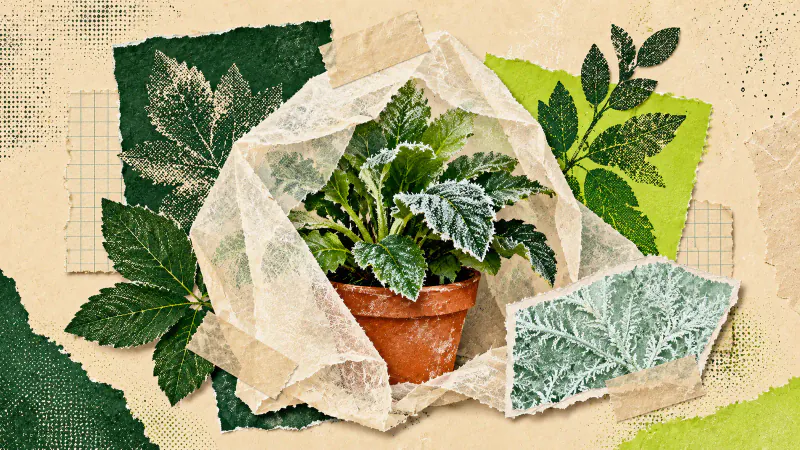
Start protecting plants from frost before the cold night arrives: identify the plants that need help, move suitable pots under cover and prepare temporary fleece for vulnerable plants staying outside. Check the forecast again the next day so protection comes off when conditions allow.
There is no single temperature at which every garden needs wrapping. A plant's hardiness, its position and the length of the cold spell all matter. This routine prepares a few vulnerable plants for an approaching frost; plants that need a winter indoors still need their own overwintering plan.
Check the plant before choosing its protection
Find the name on the label, including the variety where possible, and look up its winter requirements. If you cannot identify it, ask the nursery before deciding that fleece will be enough. Write a short list of what must move and what can stay outside with temporary protection.
The RHS frost guidance notes that newly planted specimens can be more vulnerable than established plants. Cold air also collects in low spots and against barriers. A plant beside the sheltered wall and another at the bottom of the garden may face different conditions.
Use a local forecast, including overnight lows and frost warnings. The National Weather Service explains that frost can form near the ground even when the reported air temperature remains above freezing. Do not wait for a frost-covered lawn to start finding the fleece.
Move tender pots while you can still see the route
Choose the destination first. Check the light and temperature requirements for each plant; a dark shed or an unheated greenhouse is not automatically suitable. Make room before lifting anything, and arrange help for pots too heavy to move safely.
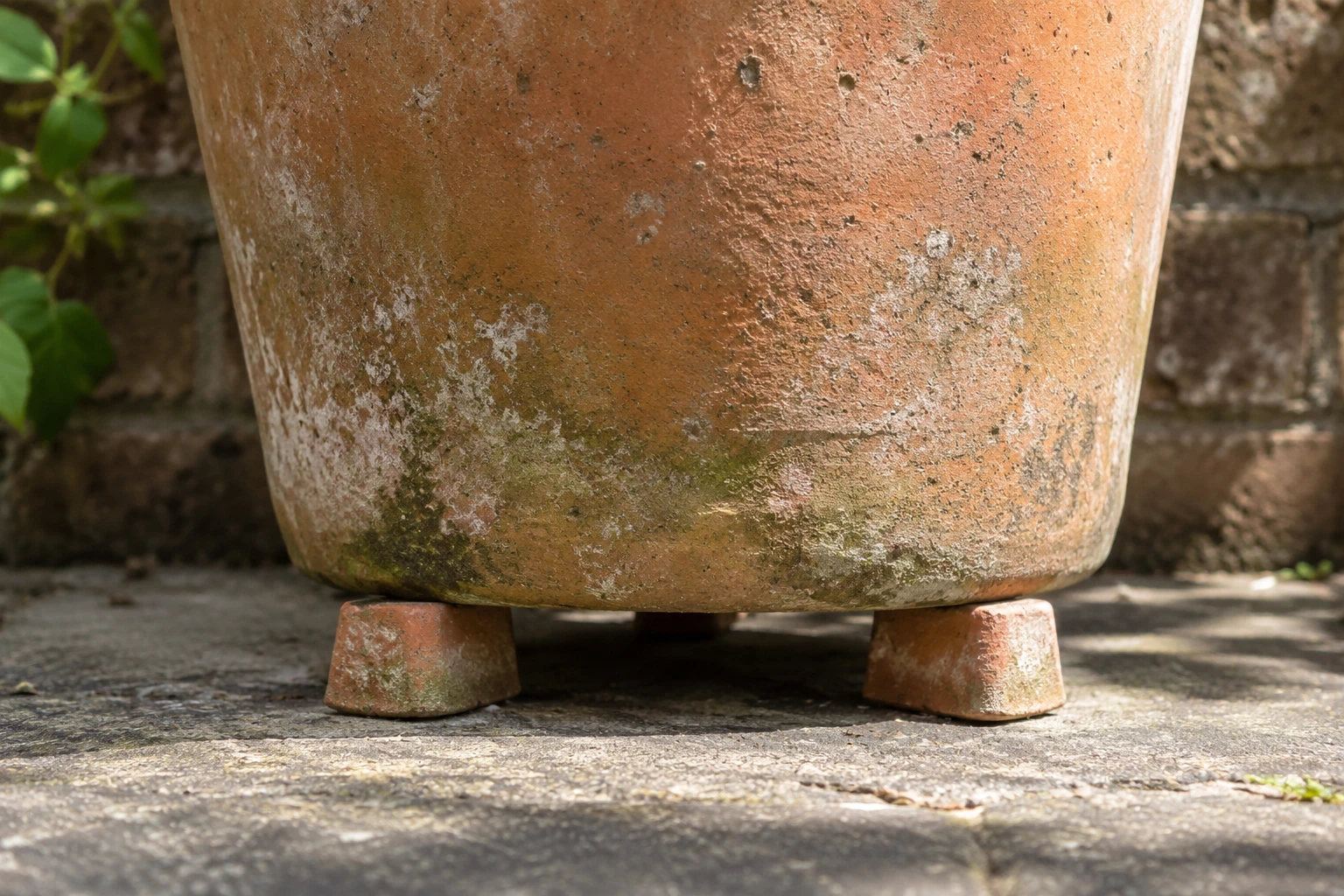
For containers remaining outside, check drainage as well as shelter. The RHS container guide explains that roots in pots are more exposed to cold than roots in the ground. It also recommends removing water-catching saucers for winter and raising pots on feet or bricks to keep drainage holes clear.
Keep supports stable and leave the outlet unobstructed. Pot feet help water escape; they do not turn a tender plant into a hardy one. Look underneath after moving the pot, when a hidden saucer or blocked hole is easiest to miss.
Fit a temporary cover before sunset
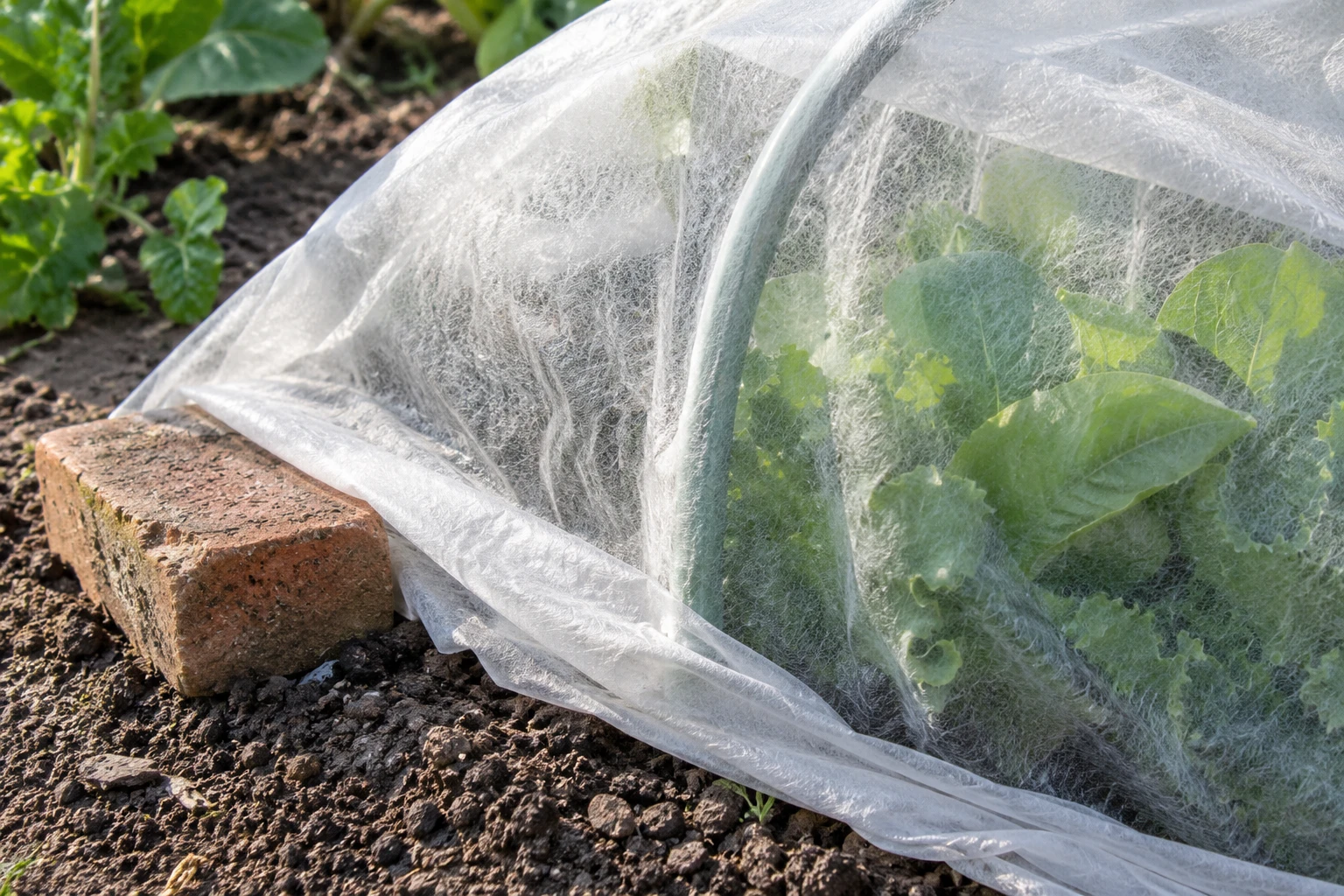
Lay out the fleece in daylight and check its condition. Choose horticultural fleece intended for frost protection and read its instructions. The RHS guide to crop covers distinguishes lightweight material, which lets more light through, from heavier fleece that provides more cold protection. Neither makes outdoor conditions frost-free.
For a small plant or patch, leave enough fabric to cover the growth without pulling it tight. Secure the edges so the material cannot blow away. Where stems are delicate, a suitable support can keep the cover from pressing on them. Check that clips and ties hold the fabric without pinching stems.
Cover before sunset, while there is still warmth to retain around the plant. Plan how you will open or remove it the following day. A temporary cover that needs ten knots undoing is less convenient than one you can lift without damaging the foliage.
Return when the weather changes
Check the forecast each morning and inspect the cover for movement or damage. Once conditions have warmed enough for the plants, remove temporary overnight covers or ventilate them as appropriate. University of Minnesota Extension explains that enclosed covers may need opening during the day to prevent overheating. Prepare to replace protection before another cold night.
Season-long wrapping is a separate job. Follow instructions for the particular plant rather than repeatedly dismantling a winter structure. The RHS wrapping guide advises removing protective covers during extended very mild spells to reduce trapped moisture and rot, then replacing them when needed.
If you need a permanent growing space for tender plants, our small greenhouse guide covers the practical purchase checks. Gardenly's FAQ explains its different role: exploring garden appearance from a photo. A render cannot establish a plant's cold tolerance. Keep the plant names and winter instructions with your garden notes, where you can find them before the next forecast changes.