

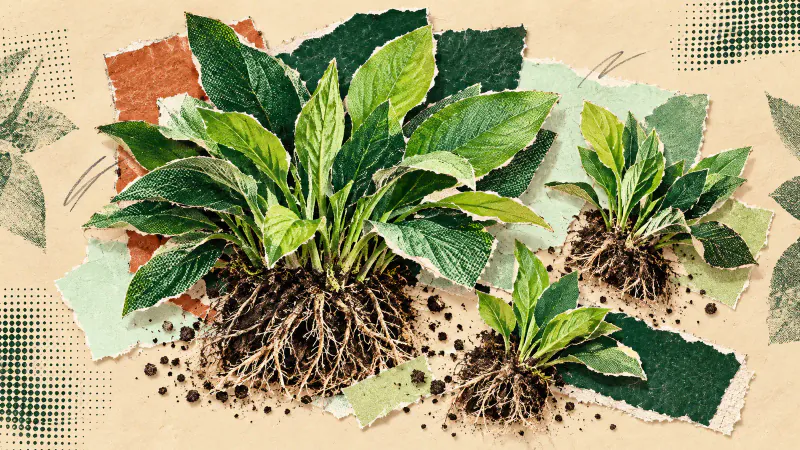
Start dividing perennials by checking that your plant suits division and that the season is right locally. Lift one crowded clump, separate healthy pieces with roots attached, and replant them promptly. The aim is a few useful plants with room to grow, rather than the largest possible pile of fragments.
Choose one established herbaceous perennial for this first job. Keep its label or plant name beside your notes, and decide where the pieces will go before digging. This guide covers splitting an existing plant. If you are still deciding the shape of a new bed, start with our flower bed ideas instead.
Decide whether this clump needs dividing
A plant that has spread across its neighbours or developed a bare middle is worth inspecting. University of Illinois Extension's division guide recommends judging the plant's condition rather than treating division as an automatic calendar task. A compact, healthy clump can stay where it is.
Look up the actual plant before choosing a tool. A perennial is not automatically suitable for this method: University of Minnesota Extension advises avoiding division of deep-rooted Baptisia where possible. If the plant name is uncertain, identify it through a nursery or reliable plant reference first. A generic picture of exposed roots will not settle that question.
Write down what you want to change: reduce the clump beside the path, replace a tired centre, or make a second group elsewhere. That gives you a stopping point once you have enough healthy pieces.
Check the season and the soil
Autumn works for some perennials in temperate gardens, but October is not a universal digging date. The RHS division guide recommends spring or autumn for summer-flowering plants when the ground is workable. It advises waiting until spring in wet autumns and for plants that are slightly tender. Many spring-flowering plants have different timing, including division after flowering in summer.
In cold regions, Minnesota Extension recommends allowing four to six weeks before the ground freezes. Check local conditions and species guidance; a mild forecast for tomorrow does not establish how much rooting time remains. If the suitable window has passed, mark the clump and leave the work for spring.
For a suitable plant in suitable conditions, choose a cool, cloudy day. Water dry soil the day before. Prepare the destination first, so you are not searching for a space while the roots lie exposed.
Lift the clump and separate rooted pieces
Set a fork or spade outside the crown, the point where stems meet roots, and loosen the clump carefully. Work around it before lifting. Shake away enough loose soil to see how the growth joins together.
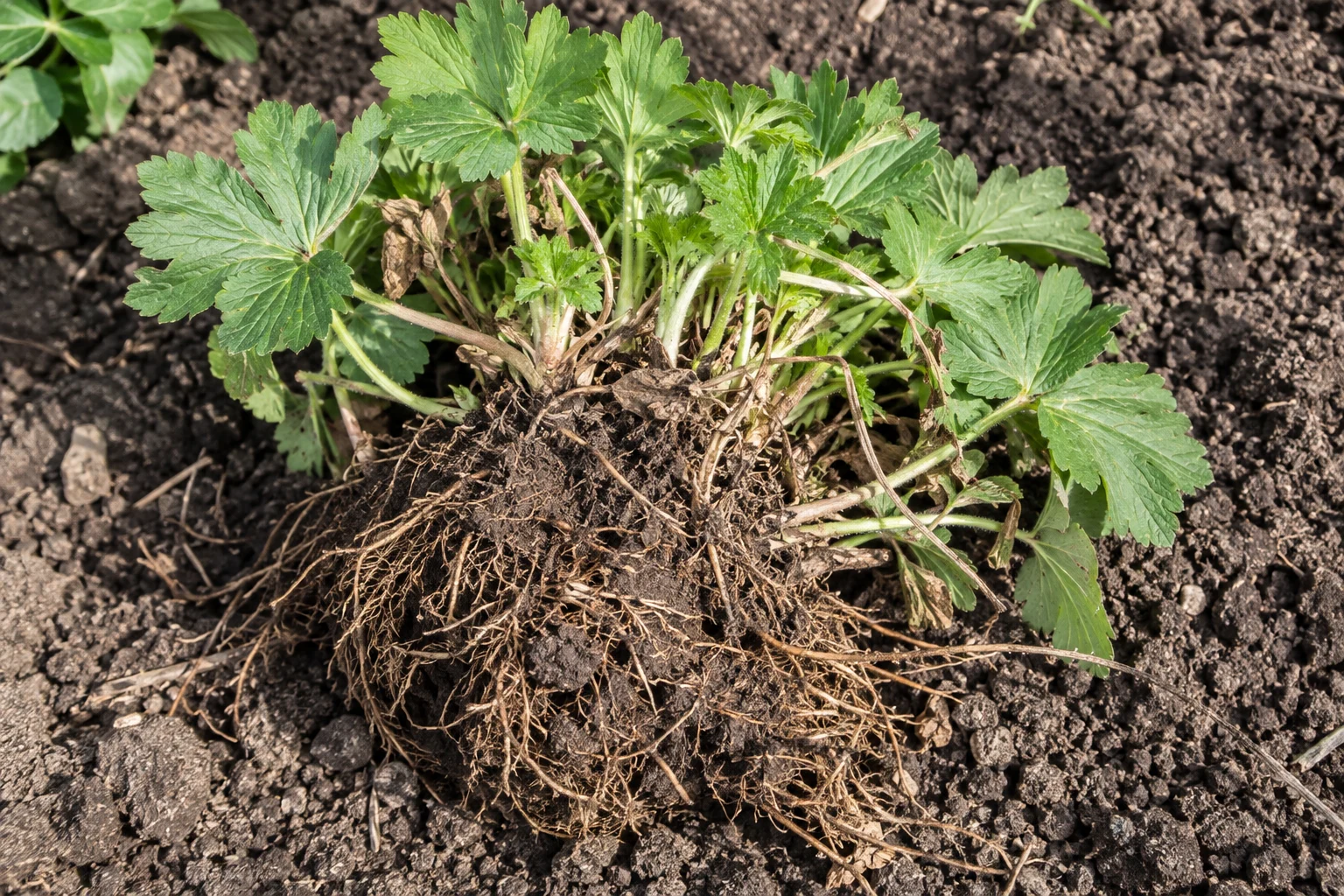
Small clumps may pull apart by hand; denser ones need a sharp spade or knife. Follow the plant's own division guidance. Illinois Extension cautions against leaving a large top with too little root, so resist shaving off tiny pieces just to increase the count.
If the centre is dead, keep the vigorous outer sections and discard the exhausted middle. University of Maryland Extension suggests pieces with three to five shoots for typical divisions. Treat that as a starting point, subject to the species. Lay the pieces out where you can inspect the roots attached to each one.
Replant with room for the mature plant
Spread the divisions between suitable locations instead of cramming every piece back into the original hole. Check the plant's mature spread and growing requirements. Put a label beside each new position; a quick sketch in your notebook will help when the foliage dies back.
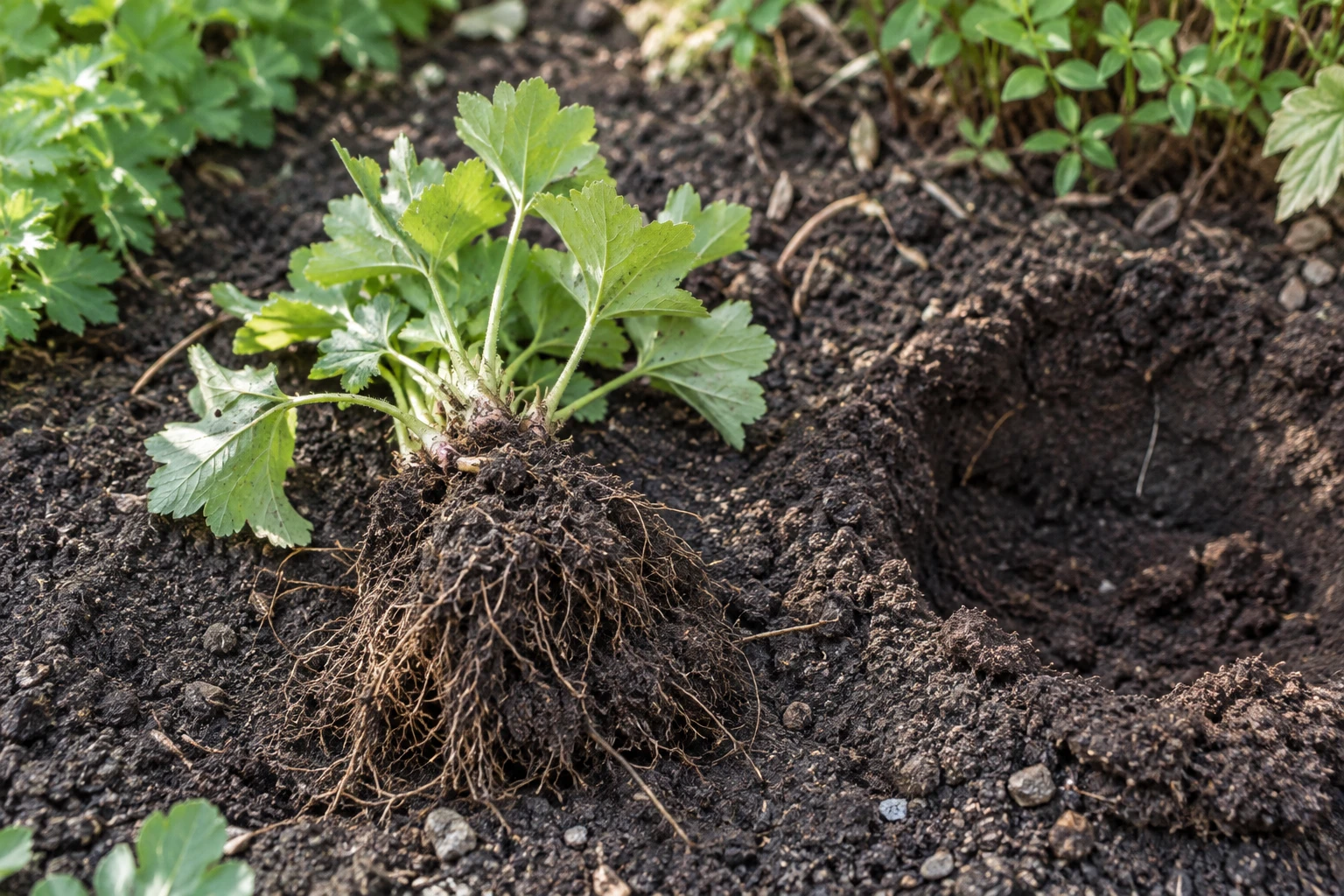
Replant promptly at the depth recommended for the species and water thoroughly. If there is a short delay, keep the roots cool and shaded. The RHS perennial growing guide recommends regular watering while newly planted perennials establish. Check the soil during dry spells and adjust to rainfall rather than watering by habit.
If the new gaps make you reconsider the border's appearance, Gardenly can help explore a visual direction from a garden photograph. Keep the plant names and planting instructions in your notes. Those are what you will use when you return to check each division.