

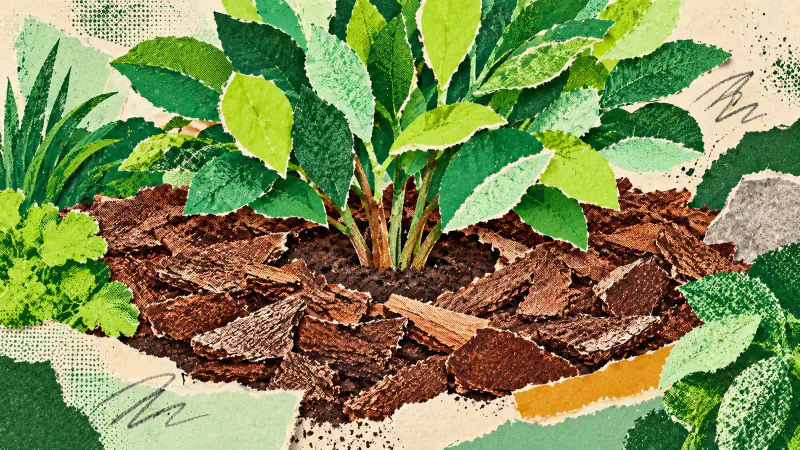
Apply garden mulch to prepared soil around established shrubs, spreading the bark evenly while leaving their woody bases clear. Check how much mulch is already there before opening a fresh bag. A faded surface can still be a perfectly adequate layer.
This is a small maintenance job for an existing planted border. Start with one section you can reach comfortably and ready-to-use bark sold for garden mulching. Keep the plants and bed outline where they are; the task is to cover exposed soil without burying growth or piling material against stems.
Choose bark for the plants already there
Read the bag before buying. Check what the material contains, where the supplier recommends using it and its suggested application depth. Photograph the label if you will need to identify the same material later. Loose bark, fine compost and fresh lawn clippings behave differently, so advice for one is not automatically suitable for another.
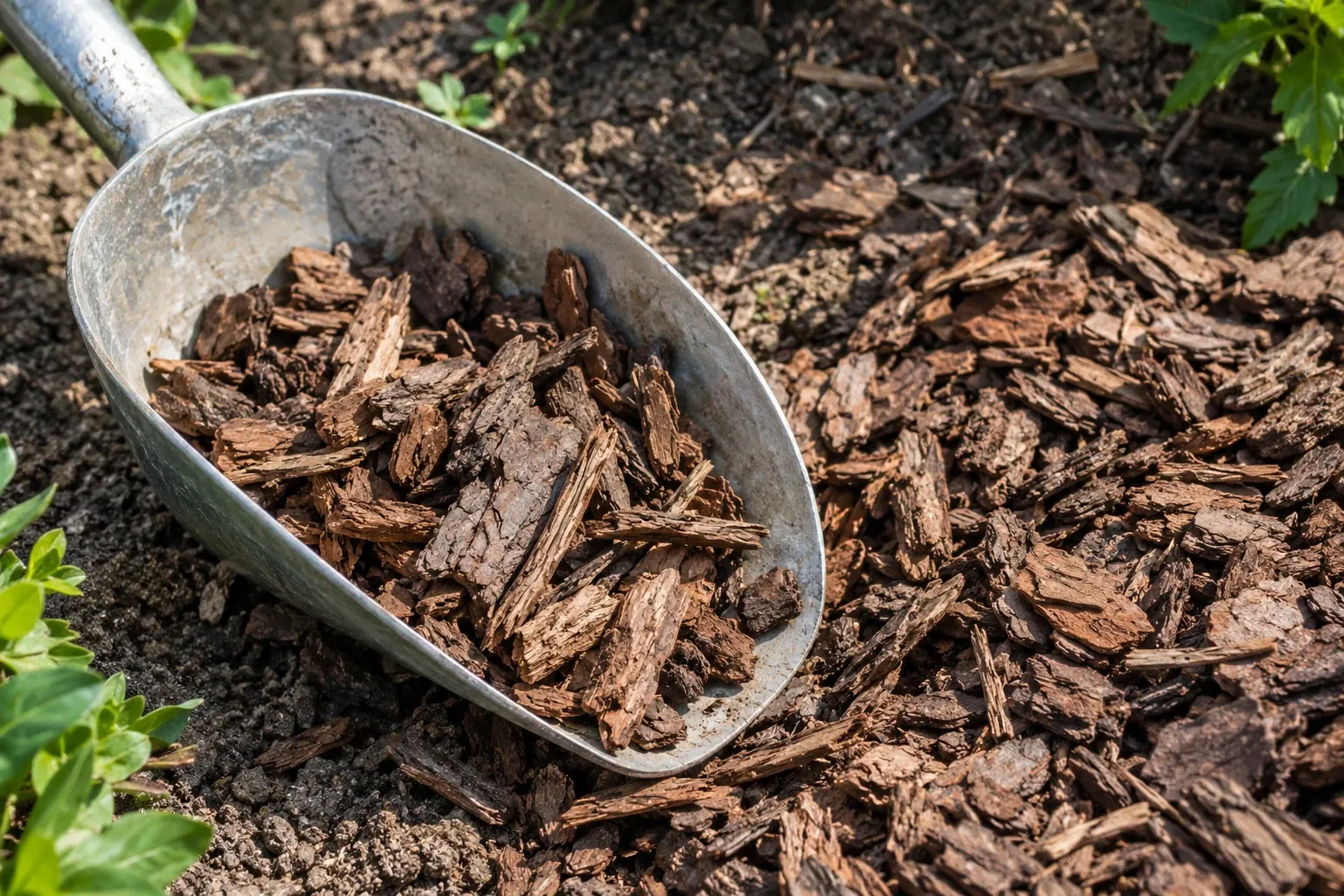
The Morton Arboretum's mulch guide describes how particle size affects compaction and longevity. Very fine material can pack down; large bark pieces can move out of a bed in heavy rain. Look at an actual sample beside your shrubs before ordering enough for the whole border.
If you want to make your own material, our composting guide and leaf mold guide cover those separate processes. Here, the material is ready and the decision is where and how to spread it.
Prepare the soil before covering it
Remove weeds and litter from the section you will mulch. Work carefully around existing roots. If perennial weeds keep returning, deal with them before covering the patch; a tidy brown surface should not hide unfinished weeding.
The RHS mulching advice recommends spreading mulch over moist, unfrozen soil after removing weeds. Autumn can suit this job in temperate gardens, but local soil conditions matter more than the month. Check beneath the surface rather than judging by yesterday's weather. If the soil is dry, water it before continuing. If it is frozen or waterlogged, leave the job until conditions improve.
Pull back a few small patches of existing mulch. Find the soil surface and measure the layer above it in several places, including near the plants. Put those measurements beside your shopping note. Where coverage is already sufficient, you may only need to redistribute material that has gathered in heaps.
Spread an even layer and leave the bases clear
Depth depends on the material and site. For example, University of Maryland Extension recommends bark mulch at one to three inches deep, roughly 2.5 to 7.5 cm. Treat that as the total layer, including what remains from earlier applications. Follow more specific guidance for your shrubs and product.
Bring a small container into the border and spread from it. Work a short stretch at a time so you can still see each plant base. Keep the woody stems and any low foliage uncovered. Once the loose bark is spread, check the depth again instead of judging it only from the path.
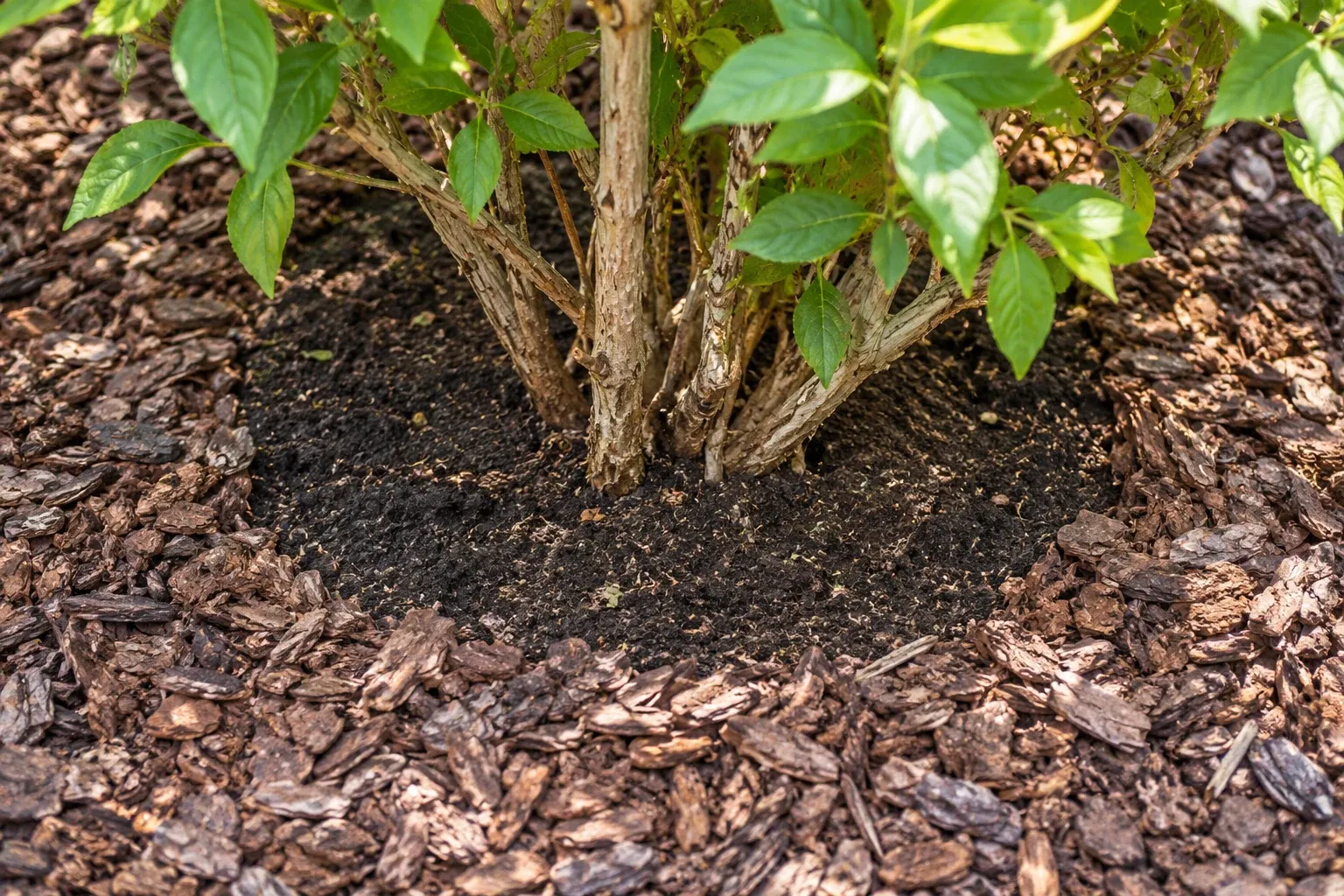
Avoid forming a mound against a trunk. Iowa State University explains that excessive depth can restrict oxygen movement and worsen waterlogging on heavy soils. More material is not an extra margin of care. Sweep escaped pieces back from the path and leave the edge easy to inspect.
Check the soil after rain or watering
Return after the first watering or useful rainfall and look beneath the bark. Maryland's guide to excess mulch warns that light watering can wet only the mulch while the soil remains dry. Check the ground where the roots are, then adjust watering to the plant's needs.
During ordinary weeding visits, clear any bark that has drifted against stems. Check the remaining depth before replenishing it as it decomposes. The next bag can wait if the previous layer is still doing its job.
If this task leads you to reconsider the surrounding planting, Gardenly can help explore its broad appearance from a photograph. Keep the mulch measurements in your garden notes: a generated image cannot tell you how deep the bark is or whether water has reached the soil.