

To make leaf mold, gather fallen leaves, dampen them and keep them in a perforated bag or a wire enclosure while they decay. Expect a slow process: coarse material can become useful mulch after about a year, while a fine, crumbly batch commonly takes two years or longer. Check what you have before deciding how to use it.
This is a useful autumn job in temperate gardens where deciduous trees are shedding. Start with the leaves you need to clear from a path or lawn. You can make a small batch without building a second compost bay, provided you have somewhere to leave it through the seasons.
Keep a separate batch of leaves
Leaf mold, often written as leafmould in British gardening guides, relies largely on fungi working through fallen leaves. The RHS explains the cool, slow process and why leaves and moisture are enough. You do not need to balance buckets of fresh green material against dry ingredients or follow a regular turning routine.
That gives an autumn surplus somewhere to go. Our garden composting guide covers mixed garden waste and vegetable scraps. Keep those ingredients in their usual system while this batch of leaves ages separately. A sack beside the compost bin is easy to confuse with its next meal, so label the batch with its contents and collection month.
Collect where clearing is useful
Begin on the surfaces you already clear. Leave the leaf layer beneath a quiet hedge where it provides cover for animals. Garden Organic advises leaving woodland leaves and hedge litter in place. The wildlife garden guide can help you decide which sheltered pockets to keep undisturbed.
Sort out litter before filling the container. For a straightforward first batch, use ordinary fallen deciduous leaves from your own garden. Keep tough evergreen clippings and pine needles separate; they need different handling or a longer wait. The RHS leafmould guide explains those differences. Shredding tougher leaves can help them break down, but collecting whole leaves is a workable starting point.
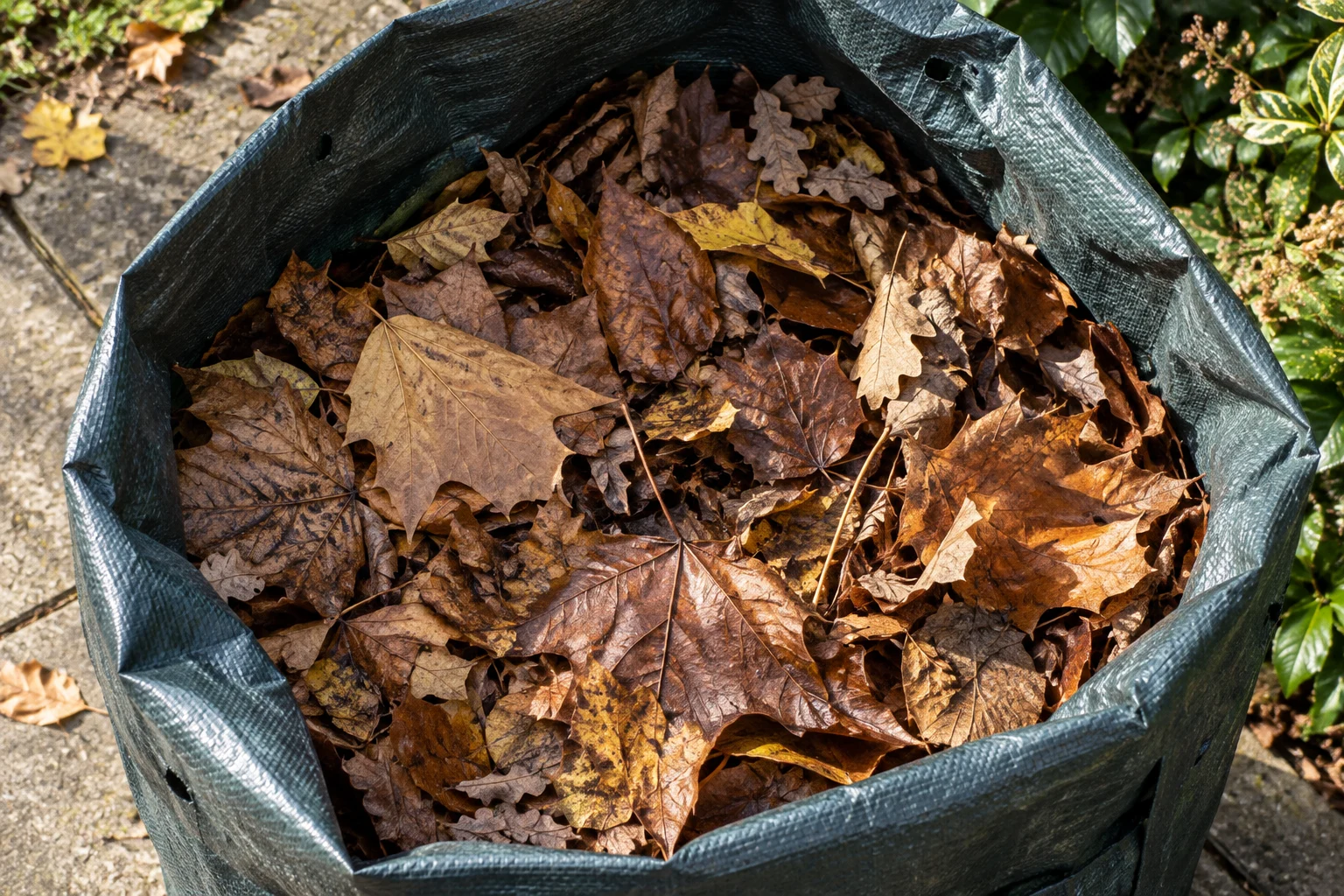
Collect a manageable amount first. A bag that you can barely move when dry will be awkward once wet. Put it in its resting place before adding the last leaves and water.
Contain the leaves and check for drying
Reuse a sound, sturdy garden sack if you have one. Make drainage and air holes, fill it with damp leaves and tie the top loosely. A simple wire enclosure is another option when you have more leaves and a permanent space. Choose somewhere sheltered where wind will not scatter the contents.
West Sussex County Council's leaf composting advice describes moistening the leaves and using holes in the bag for air circulation. Check inside during dry spells and add water if the leaves are drying out. Rain on the outside of a tied sack tells you little about its centre.
Leave room to open the bag and inspect it. Keep next autumn's collection separate from the older batch; otherwise each handful becomes a mixture of ages. One dated bag is easier to judge than a heap that receives fresh leaves indefinitely.
Match the texture to the job
Open an older batch and take out a small sample. If recognisable leaf pieces still dominate, give it more time or use the partly decayed material as a surface mulch where appropriate. Fully aged leaf mold is darker and crumbly, with much less recognisable leaf structure. The calendar helps you remember when to look; it cannot promise that every bag matures together.
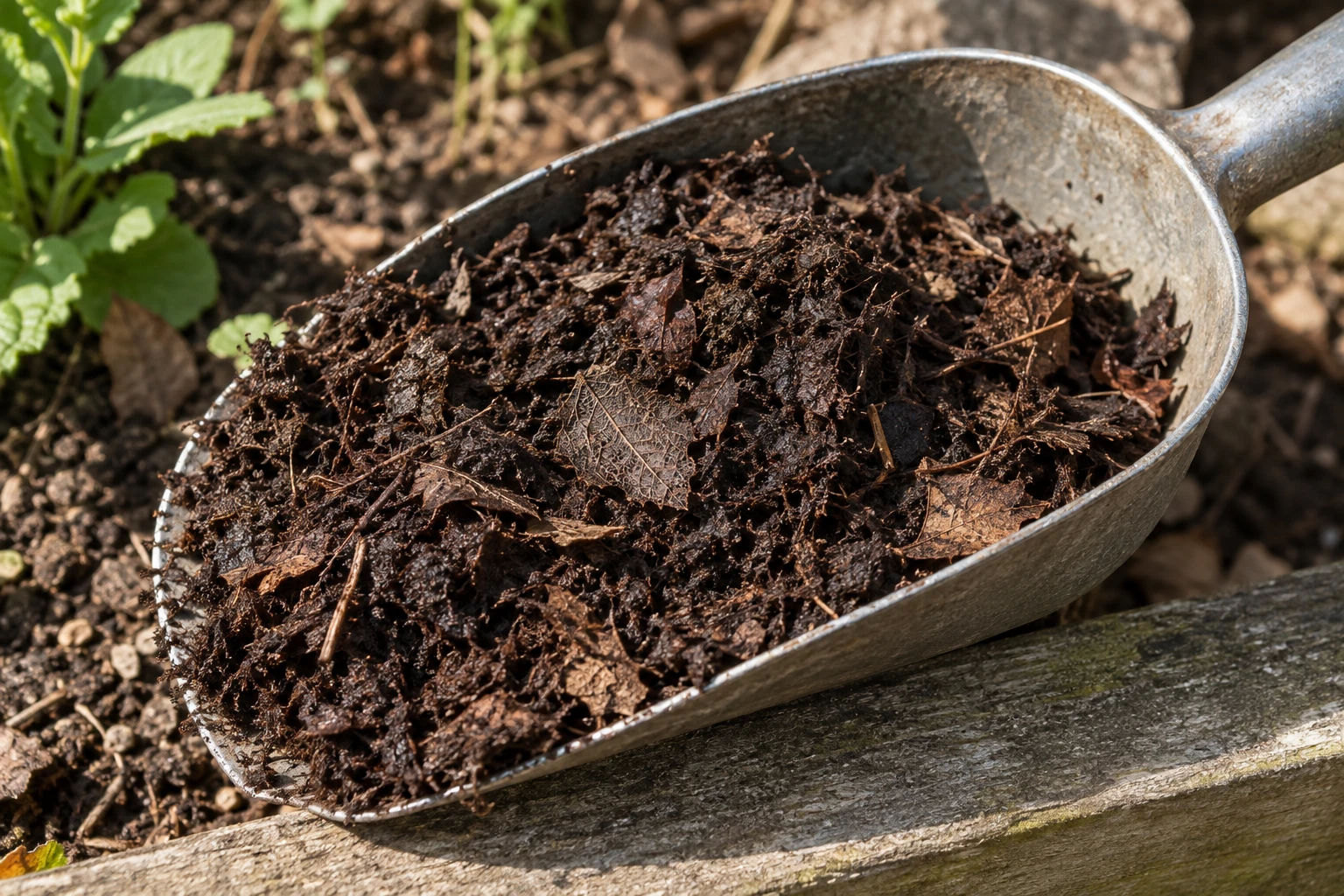
Garden Organic's guide to using leafmould distinguishes its soil-conditioning role from richer composts and manure. Treat it as a way to add organic matter and improve soil structure, rather than a complete plant feed. Fine aged material can also be an ingredient in a suitable potting mix; it is not automatically the right growing medium for every container.
If you are reconsidering the planting around this working area, Gardenly can help you explore its broad appearance from a photo. Keep the leaf bags and their dates on your practical garden notes. A generated image cannot assess decomposition or tell you which batch is ready to spread.