


Choose a garden fork for digging by comparing the head with the patch you need to work, then trying the whole tool for length, weight and balance. A compact border fork is worth handling beside a full-size digging fork. A bigger head gives you more tool to move, which is little help if the space is narrow or the fork feels awkward.
Start with a job already waiting. Perhaps you need to lift a perennial clump or loosen a small bare patch. Write that down before browsing. The fork for that task may be quite different from one intended mainly to shift loose compost.
Decide whether the job needs a digging fork
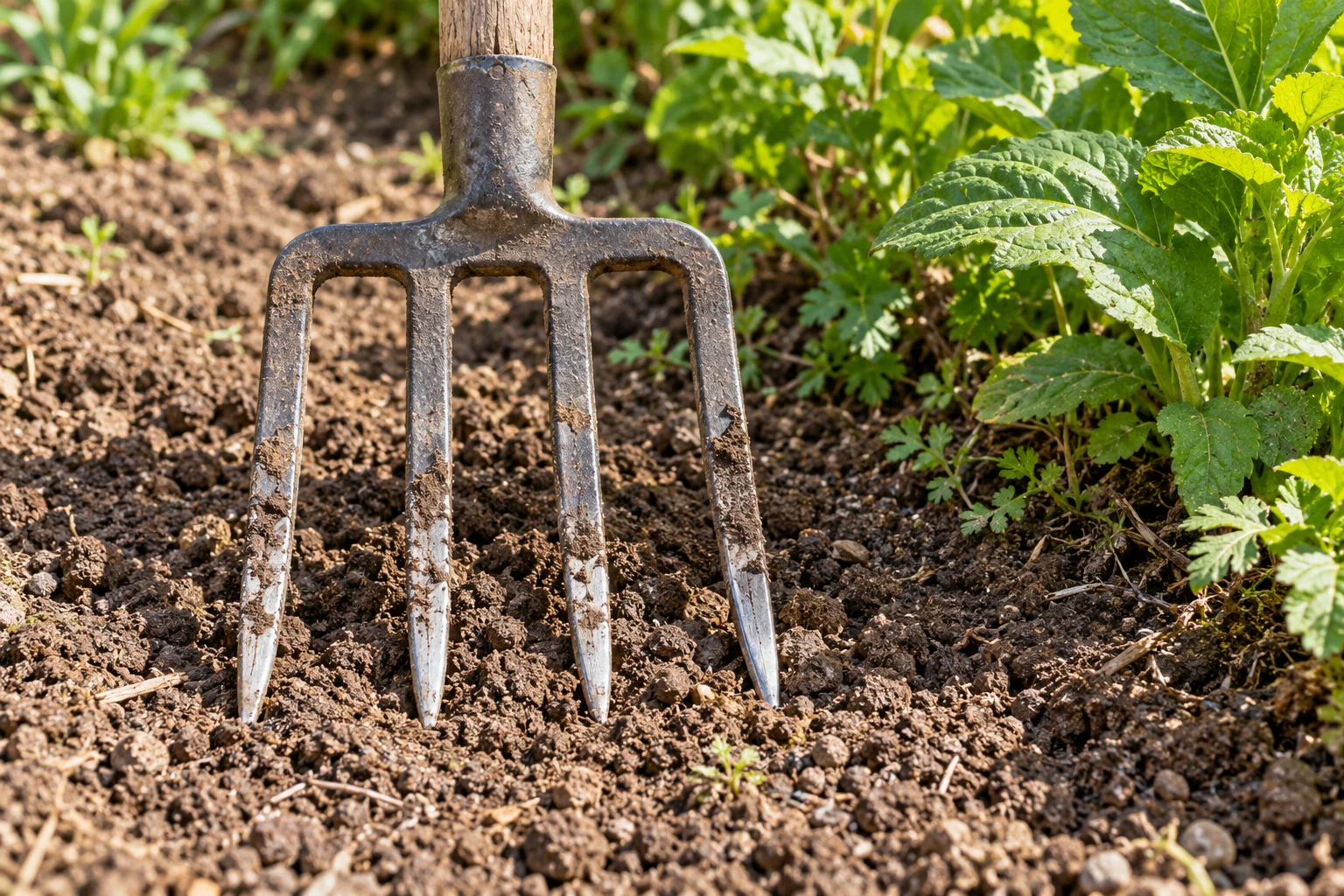
A digging fork has substantial tines intended to enter soil. The MOT tool museum's description records the familiar form with usually four broad, flat or triangular-section tines. Check the maker's intended use, because a long handle and pointed ends alone do not identify the right tool.
For tiny planting holes and pot work, a hand trowel may already cover the job. For one unwanted plant among established flowers, our hand-weeding guide deals with local root removal. Neither situation automatically calls for a full-length fork.
Buying a fork also creates no obligation to turn over every border. The RHS cultivation guide advises keeping cultivation minimal and avoiding digging around established plants because roots can be damaged. It also excludes waterlogged or frozen ground. Keep the shopping decision separate from whether the soil is ready to work.
Compare the head with the actual working gap
Look at head width and tine length together. A narrow head can be easier to position in a confined patch, but it still needs a clear place to enter and move. Note the gap between the plants or the width of bare ground, rather than relying on the word "small" in a listing.
Burgon & Ball's border fork is described as a smaller, lighter alternative to its digging fork for confined spaces. That is a useful comparison within one maker's range. Other brands may use different dimensions under the same names, so read the measurements for each exact model.
Ask to place the candidates side by side. Notice the size of the head relative to the shaft and the space between the tines. If you are shopping online, make a paper outline from the listed head dimensions and compare it with the available ground. This checks scale without poking a tool into a planted bed.
Try the whole tool while standing
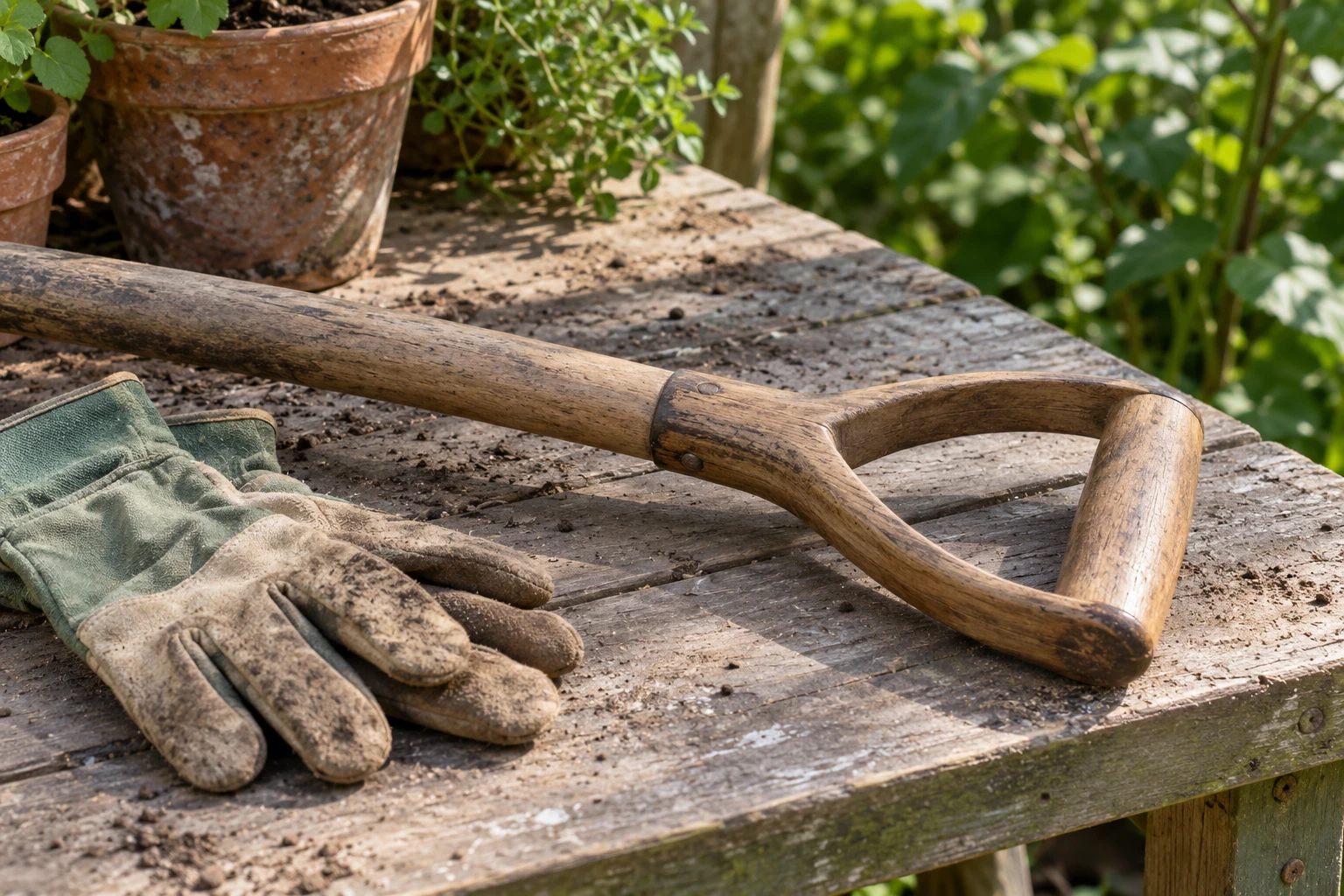
Hold the fork in your usual gardening gloves, with the head safely supported as the shop permits. Try the top grip, then your lower hand position along the shaft. Check whether you can hold it comfortably without reaching up or bending deeply just to grasp it.
Thrive's tool-buying advice recommends checking weight, grip size, balance and handle length against your posture. A lighter fork can still feel wrong if its weight sits awkwardly in your hands. Compare the complete tools rather than deciding from a handle material alone.
Try lifting the empty fork a short distance under the seller's guidance. Leave forceful digging demonstrations for an appropriate trial area. If ordering unseen, ask for the complete weight and return terms. A photograph cannot show how the handle presses against your palm.
Inspect the tines and plan for upkeep
Look along the head for a bent or damaged tine. Examine the shaft and its connection for splitting, cracks or unexpected movement. Ask about anything uncertain before buying, especially with a used tool. Do not try to prove strength by bending it against the shop floor.
Read the exact model's instructions and ask whether the handle can be replaced. Keep any stated test load in context. A manufacturer's strength test does not tell you how much soil you can comfortably lift, or authorize using the fork to wrench out a stump.
Leave space to clean and dry it after work. The RHS hand-tool guidance recommends removing soil and drying washed cultivation tools before storage. Our tool-cleaning routine covers that separate job. Check the chosen fork's material-specific care notes too.
If the wider planting is also changing, Gardenly's styles can help you explore its appearance from a photo. Choose the working fork with the real gap and the tool in front of you.
