


Useful autumn landscaping ideas begin with a walk, not a shopping list. Visit the garden as summer flowering starts to fade and note what still earns its place: a clear route, a useful evergreen shape, a good patch of open ground or a group of standing stems. Protect those parts, then choose one late-season gap to work on.
This is a seasonal edit, not a promise to solve the whole garden before the leaves fall. You are looking for evidence about broad texture, visual weight and material balance. Exact plants, construction, drainage and dimensions still need checks in the real garden.
Notice what still works
Start from the door or gate and follow the route you actually use. Check whether fallen growth leans into the path, whether a bed edge is still easy to read and which planted forms remain visible after the brightest flowers have gone. Take one photo from the view that matters most, then another a week or two later if the garden is changing quickly.
Do not treat every quiet patch as a failure. Some open ground gives stronger foliage and stems room to register. A faded border may still have a useful outline. The RHS guide to creating a border recommends taking photographs when borders are in full growth so later decisions are based on what was really there. Put those summer photos beside what you see now.
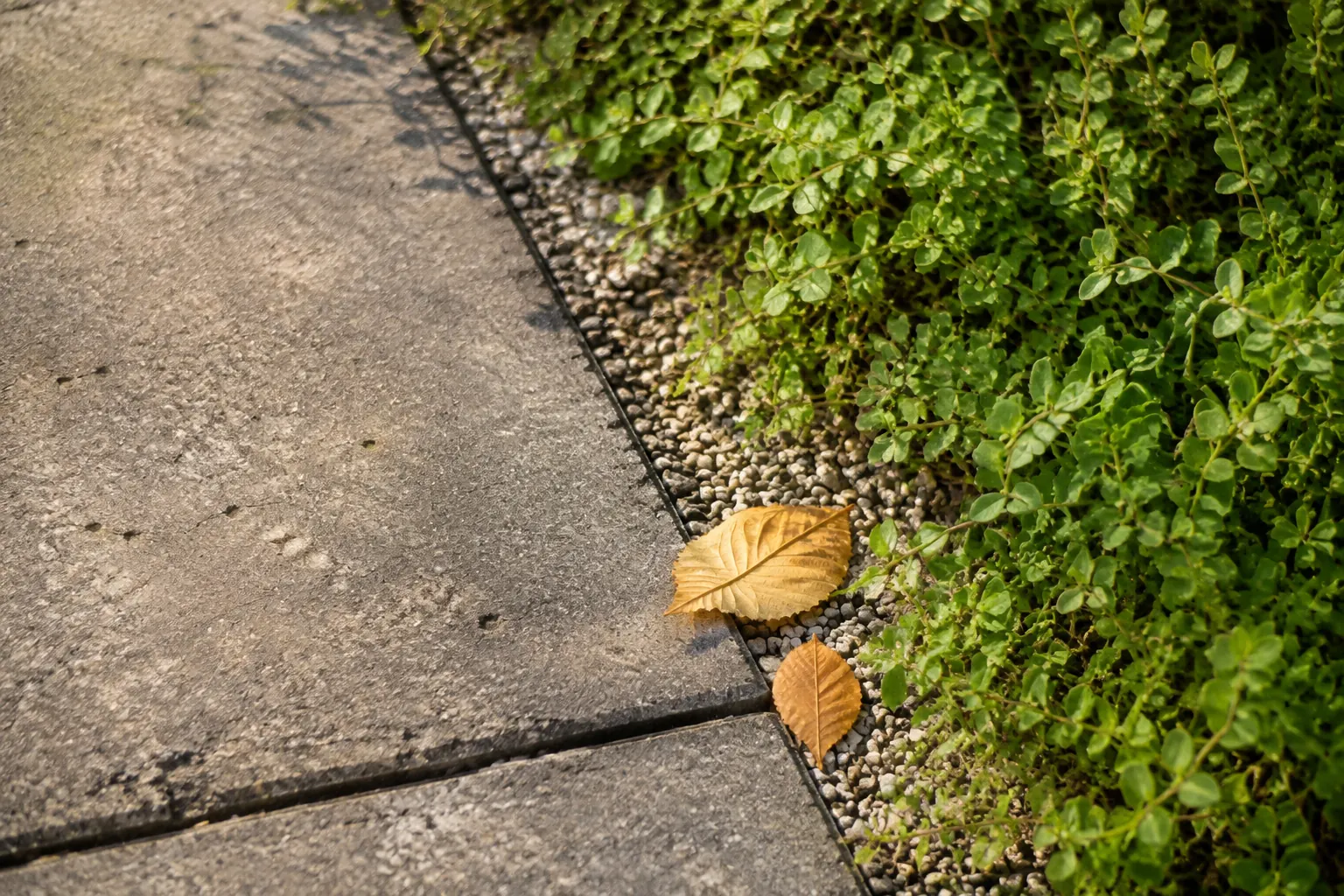
Keep the scope narrow. If the bed outline itself is wrong, use the guide to testing flower bed ideas. For year-round planting at the entrance, start with front yard planting structure. Those are bigger jobs than this early-autumn check.
Find one late-season gap
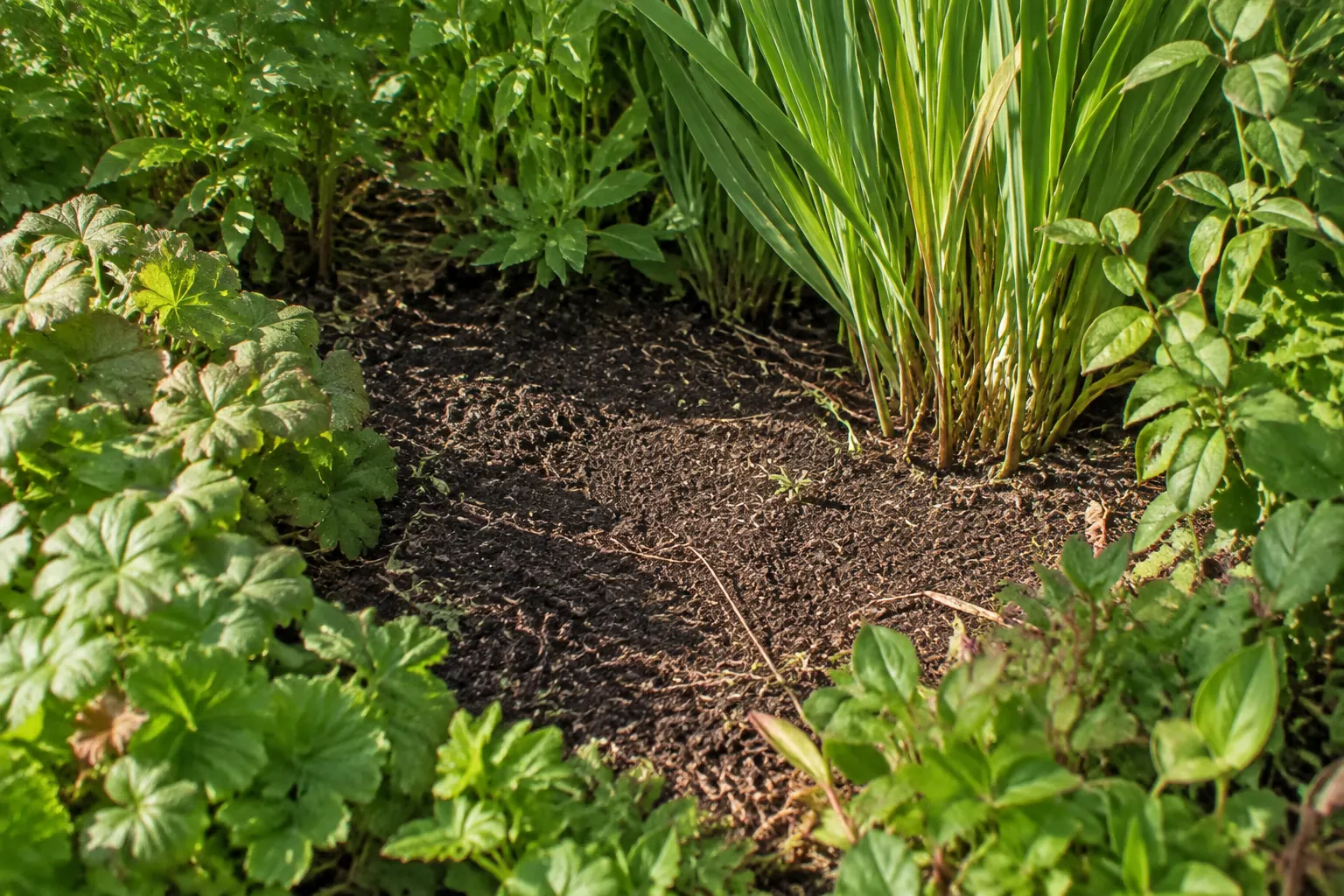
Return to the main view and look for the spot that loses all visual weight once one flowering group fades. It might be a bare pocket between two stronger masses, or a long strip where every plant has the same soft outline. Mark one gap, rather than scattering fixes through the whole garden.
Describe what the gap needs before naming a plant. Perhaps it needs a low mound, an upright texture or a darker background that helps pale stems show. Record the light, soil, moisture and available space, but leave species selection to a local nursery, garden designer or landscaper who can assess the site and mature growth.
If the real aim is to reduce repeated pruning, watering or sweeping, switch to the low-maintenance landscaping audit. If routes and use areas are still unsettled, plan the complete garden layout before filling a seasonal gap.
Keep worthwhile standing growth
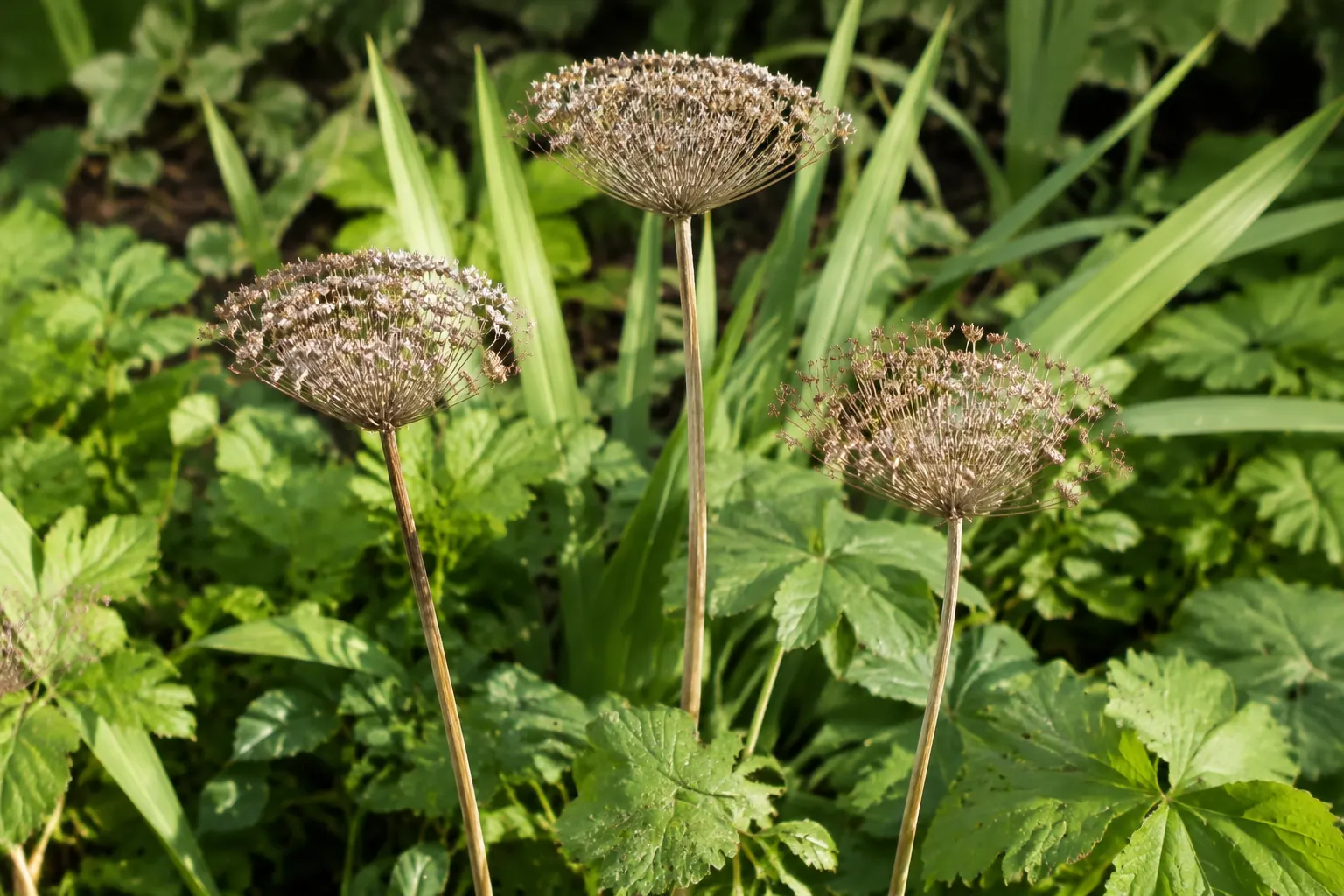
Do not cut everything merely because it has turned brown. The RHS account of sustainability in its gardens says that many perennials there are left standing through autumn and winter. Their seedheads can provide structure and seasonal interest, as well as food and shelter for wildlife.
That does not make every dead stem worth keeping. Remove growth that is diseased, collapsing across a route or unsuitable for the place. For the rest, look at the whole group from your chosen viewpoint. A few upright seedheads or grasses may hold the planting together better than a uniformly cleared bed.
Preview texture and material balance
Take a current photo that includes the protected route, the useful structure and the one gap. In Gardenly, choose a direction from the style gallery. The image model is instructed to keep the house, hardscape, camera position and lighting unchanged while it redraws planting and other garden elements. That is an instruction, not a guarantee, so compare the result with the source photo.
Ignore exact plant identities. Ask whether upright, rounded and fine textures feel balanced once flowers are less prominent. Check how foliage, paving, gravel, timber or mulch share the frame. A render can help you decide whether the gap needs more visual weight or whether the standing growth already does enough.
Do not use this exercise to place seasonal props. The guide to outdoor Halloween decorating handles removable accents while protecting everyday access. Here, the useful output is quieter: one preferred image, the original photo and a short note about what must stay.
Take that set to the person helping with the garden. Ask them to check plant suitability, mature size, soil, drainage, levels, construction and local requirements on site. Autumn has shown you where the picture weakens. The measured answer still belongs outdoors.