

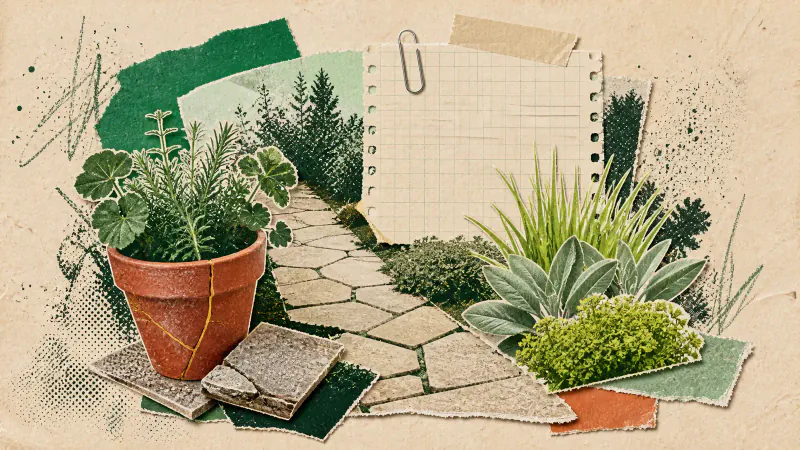
Useful cheap front yard landscaping ideas begin with an audit, not a shopping list. Keep sound paving and plants that suit the site. Spend first on the repair or planted area that improves the walk to the door. Put decorative extras and work that does not affect daily use on a later list.
Settle the entrance layout before making those choices. Our guide to a small front yard covers the route, sightlines, bins and bicycles. Once that plan works, a limited budget has a much clearer job.
Protect the daily route before you shop
Walk from the gate or pavement to the door with a bag in one hand. Move the bins and a bicycle as you normally would. Open every gate, cupboard and meter box. Mark the space those movements need and keep it out of the planting budget.
A loose paver, a gate that catches or a dark step deserves attention before a new pot. These small faults affect the entrance every day. Decoration may disguise one in a photograph, but it will not make the route safer or less annoying.
Check local rules before changing a boundary, driveway edge or anything tall near the street. If a repair affects drainage, levels or a shared structure, ask a suitable professional to inspect it. A cheap fix is expensive when it has to be removed.
Keep what is sound, even if it looks tired
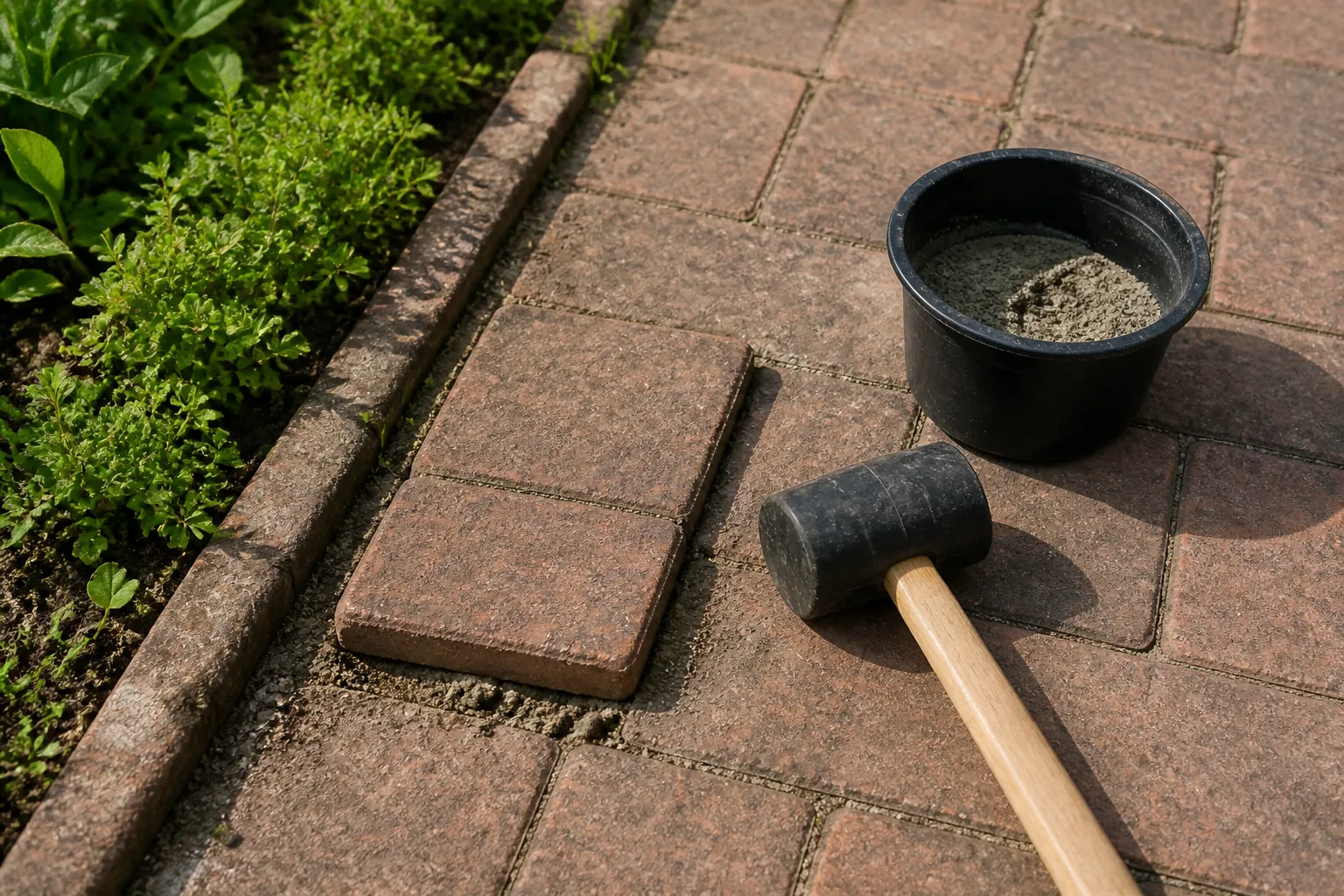
Wash a small test area of paving before deciding it needs replacement. Check whether a planter is stable, whether a shrub is healthy and whether an existing edge still holds the soil. Weathering and failure are not the same thing.
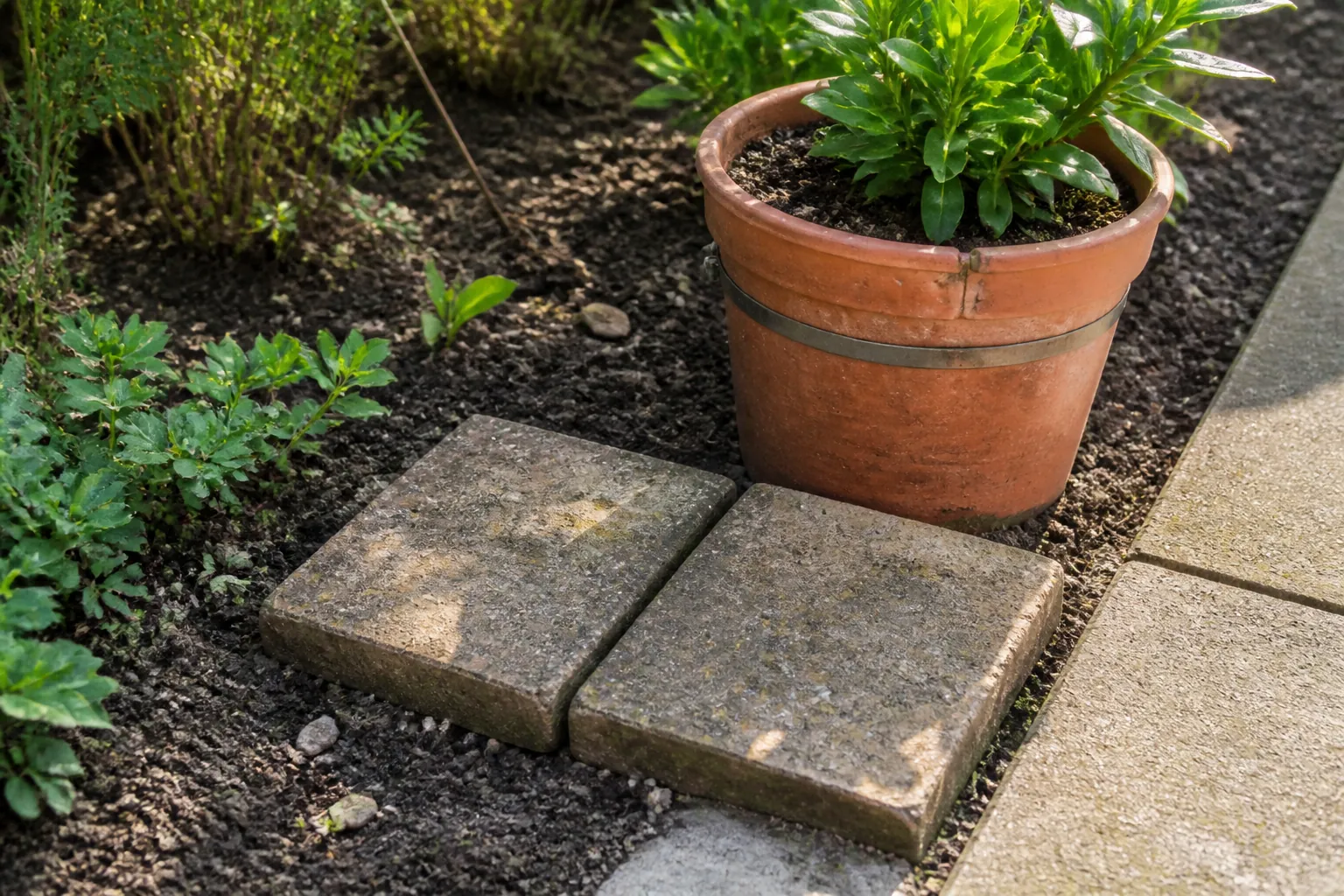
Make a short inventory. Sound pavers can remain in the main route. Spare matching pieces may repair a damaged edge. A healthy plant can move only if the season and species allow it; otherwise, design around it. Grouping two serviceable containers often looks more deliberate than buying a third unrelated one.
Do not keep an item only because it is already there. A cracked pot that leaks soil onto the path or a shrub that blocks the house number has stopped earning its space. Repair it, move it when safe or remove it from the plan.
Spend on one street-facing improvement
Choose the part that affects both arrival and the view from the street. It may be a repaired path edge, one generous planted bed or a simple screen around the bins. Finish that area instead of sprinkling small purchases across the whole frontage.
For planting, put the site before the bargain shelf. Note the light, moisture, soil and mature space, then ask a local nursery for suitable choices. A smaller number of plants that can grow well is better value than a trolley of discounted plants with nowhere sensible to go.
Repeat one plant form or container material already present. Repetition helps old and new pieces read as one decision. Leave room for plants to mature and for you to reach them. Filling every gap on day one only creates pruning work later.
Phase the rest without undoing it
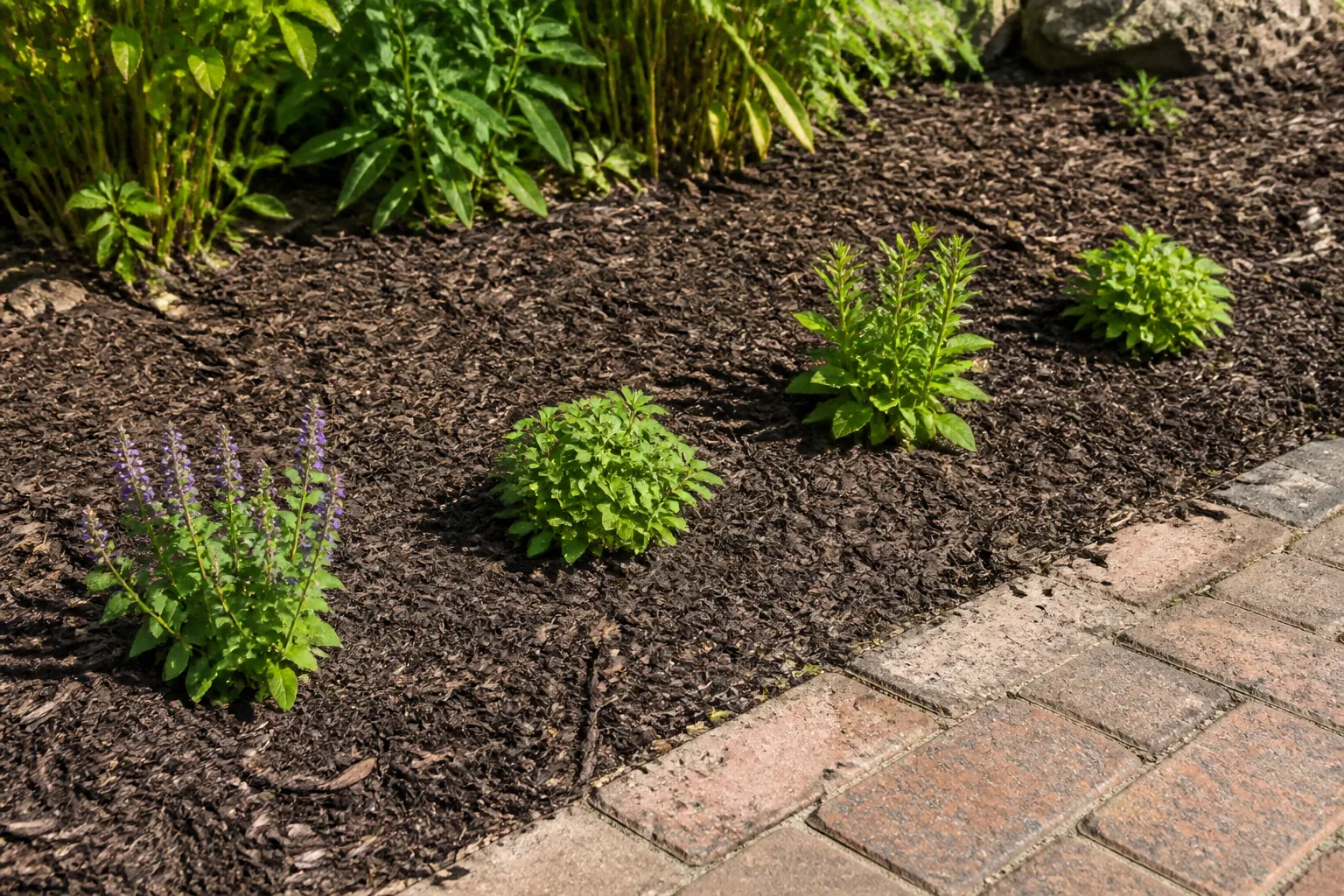
Put drainage, stable surfaces and boundary repairs before finishes that sit over or beside them. Keep permanent routes clear before planting their edges. If a later job would require lifting today's work, change the order.
Your later list can hold extra pots, lighting, decorative gravel or a second planting area. Give each item a reason and a trigger, such as replacing it when the old one fails or adding it after the first bed has grown in. "Later" is a plan. "Maybe, because it was reduced" is how front gardens collect clutter.
If the project will involve quotes, the landscaping budget brief shows how to separate must-haves from flexible choices and later phases.
Preview one direction before buying
Gardenly can place a selected style over one photo of your front garden. The image model is instructed to keep the house, hardscape, camera position and lighting unchanged while it redraws planting and other garden elements. That instruction is not a guarantee, and the result is not a measured plan or plant list.
Use the image to compare the balance of what stays and what changes. Does the repaired route still read clearly? Would one planted group do more than several little pots? Browse the Gardenly style gallery, test one direction, then write three columns: keep, buy now and postpone. The useful list is usually shorter than the first one.