


Useful front yard planting ideas begin with structure, not a shopping list. After you settle the route, bin space and sightlines, choose a small plant group that can hold the view through the year. Repeat its forms and leave room for mature growth.
This work follows the layout. If the route needs attention, start with our guide to planning a small front yard. Planting cannot rescue a narrow path or a gate that hits a shrub every morning.
Read the site before choosing plants
Stand in the front garden at several times of day. Note which beds get direct sun, which stay shaded by the house, and where rainwater sits or runs away. Check whether the soil feels dry and loose or stays wet after rain. A bed beside a warm wall can behave differently from one near the pavement.
Wind and street exposure matter too. An open corner may dry faster than a sheltered bed. Beside a public pavement, plants may meet road salt, dog traffic or people brushing past. Mark these conditions on a plan. A local nursery can then suggest species for your light, soil, climate and space.
Do not begin with a favourite plant and hunt for somewhere to put it. That is how a tidy plan turns into a waiting room full of unrelated pots.
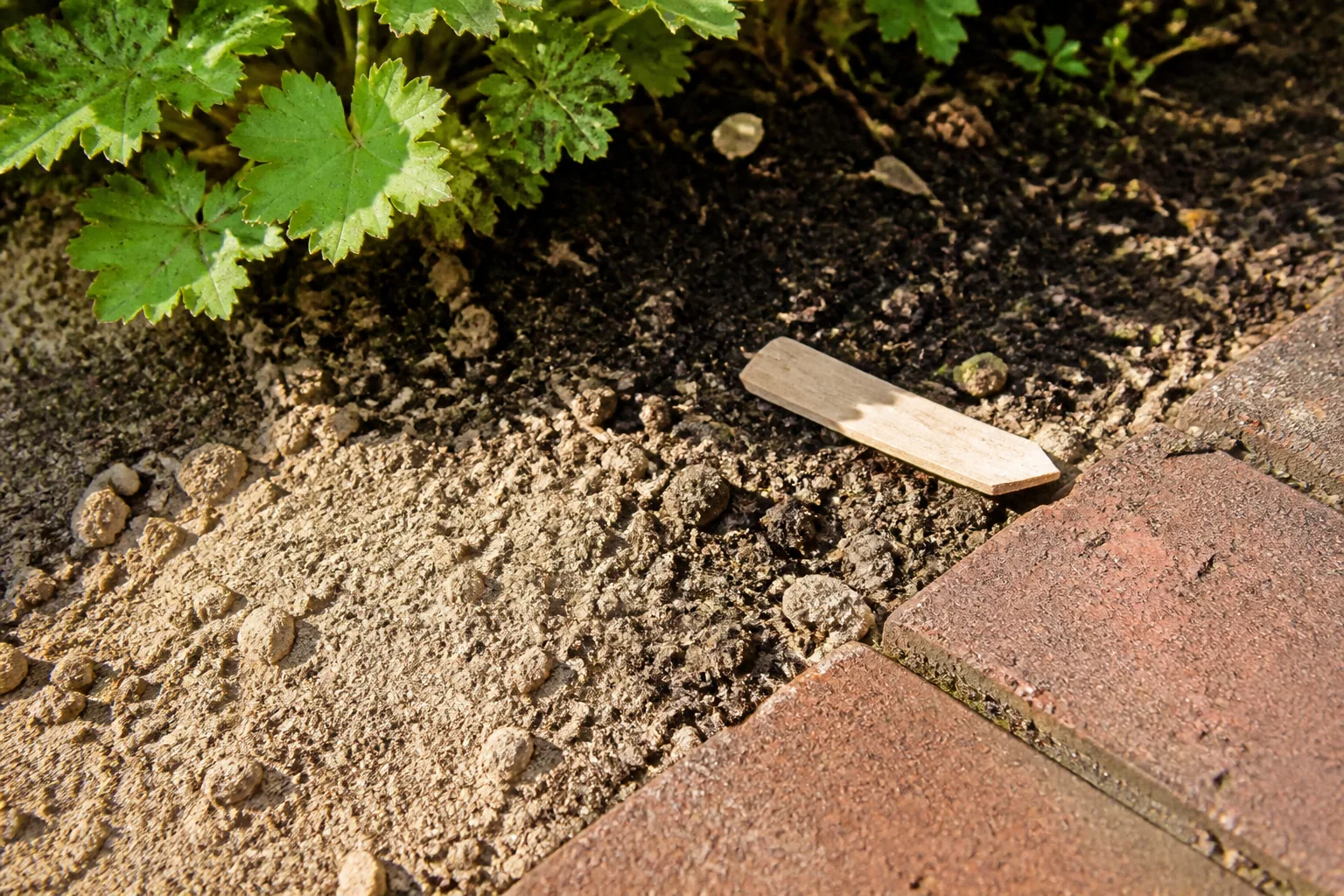
Build a base that stays legible
A front garden needs enough permanent shape to look deliberate when little is flowering. That base might come from a compact evergreen, a clipped hedge, repeated grasses or the visible stems of a small shrub. The right choice depends on the site, but the job is the same: give the bed a shape that remains readable in quieter months.
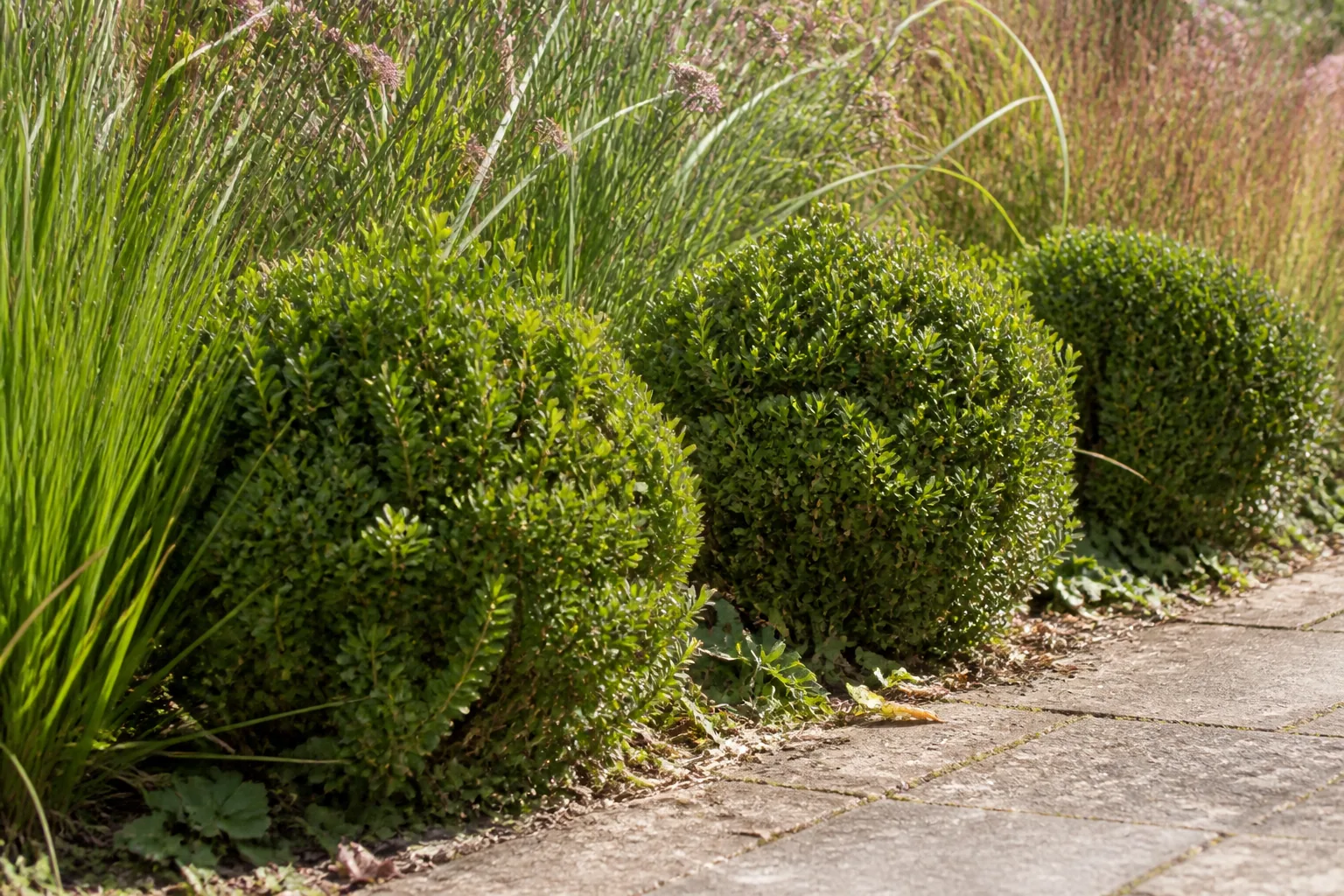
Repeat one or two plant forms instead of placing a different plant in every gap. A rhythm of rounded shrubs along a path can connect separate beds. The same grass used in two corners can make the whole space feel related. Repetition also makes later changes easier because you can replace one struggling plant without redesigning the border.
Keep taller growth away from windows, house numbers and the usual view of the door. Near the pavement or driveway, preserve the sightlines that the layout established. The planting should support the arrival, not slowly conceal it.
Add seasonal change in layers
After the permanent base is clear, add plants that take turns. Spring bulbs can appear through low groundcover. Flowering perennials can carry the middle of the year. Grasses, seed heads or bark can provide texture after flowers have gone. You do not need every plant to perform in every season. You need the group to avoid disappearing all at once.
Think in patches rather than isolated specimens. A repeated patch is easier to see from the street and less likely to look accidental. It also gives small plants enough visual weight beside the house. Limit the colour range if the frontage already has strong brick, painted wood or paving tones. More varieties do not automatically create more interest. They often create more labels to lose.
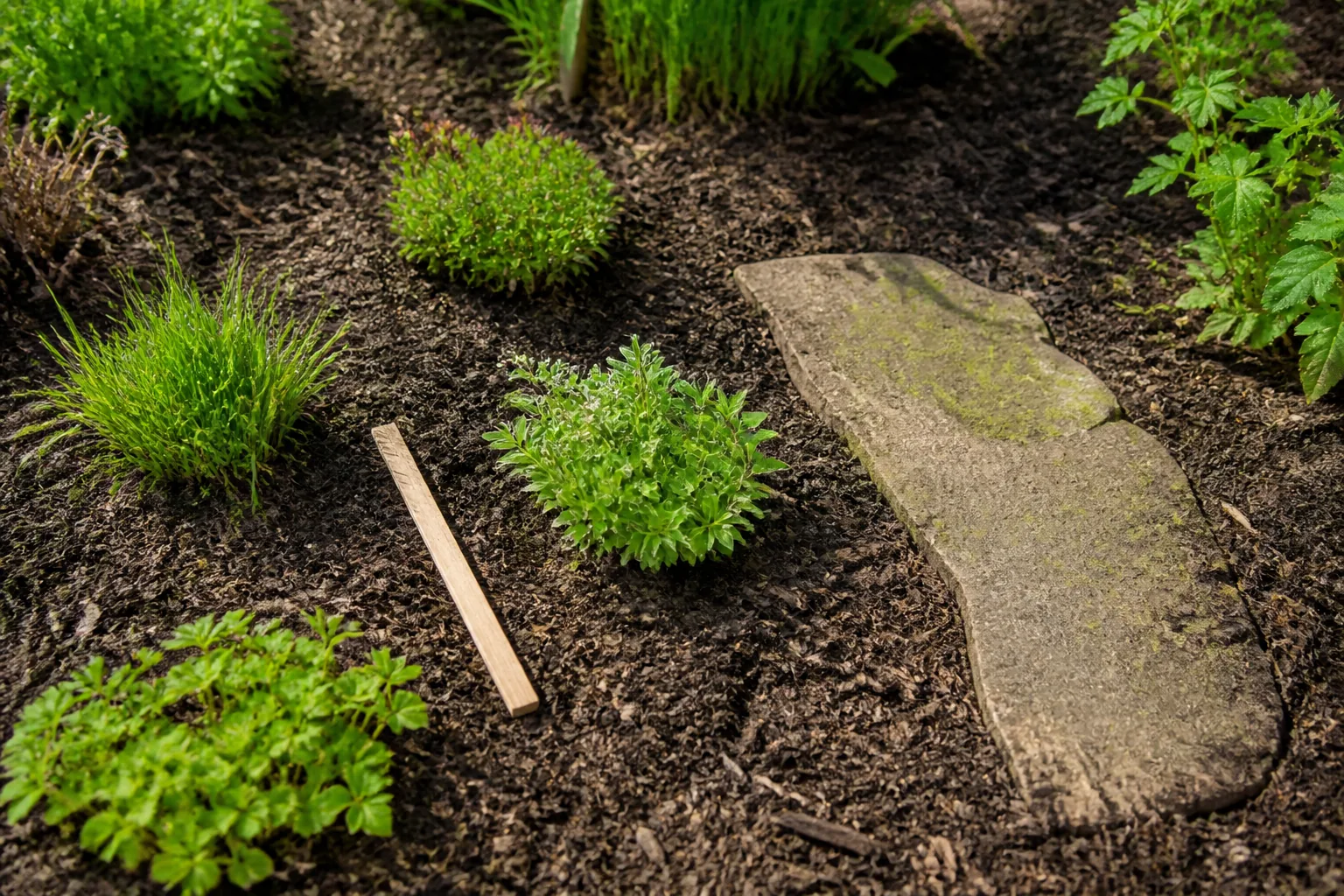
Leave visible ground between new plants according to their expected mature spread. A newly planted bed can look sparse, but filling every space on day one creates crowding later. Use mulch or a suitable low groundcover where bare soil needs protection while the main plants grow.
Plan access and maintenance now
You will need to weed, prune and reach utilities without stepping on the planting. Keep a narrow access point into a deep bed, and do not place thorny or spreading plants where people carry bags, move bins or open car doors. Check that branches will not cover vents, meters or exterior lights as they grow.
Match the maintenance to the time you will really give it. A short repeated palette is usually simpler to learn than a collection of plants with different pruning and watering needs. If one part of the garden is difficult to reach, use fewer plant groups there and keep the more demanding choices close to the path.
Preview the massing, not the species
Gardenly can place a selected style over one photo of a front garden. The image model is instructed to keep the house, hardscape, camera position and lighting unchanged while it redraws the planting and other garden elements. That instruction is not a guarantee, and the render is not a planting plan.
Use it to compare broad questions instead. Does a taller planted edge make the entrance feel hidden? Does one large group look calmer than several small patches? Is the front garden still recognisable in winter if the flowers are mentally removed? Browse the Gardenly style gallery, make one or two visual directions, then take the preferred image and your site notes to a nursery, garden designer or landscaper. The picture can settle the mood. The real place must decide the plants.