

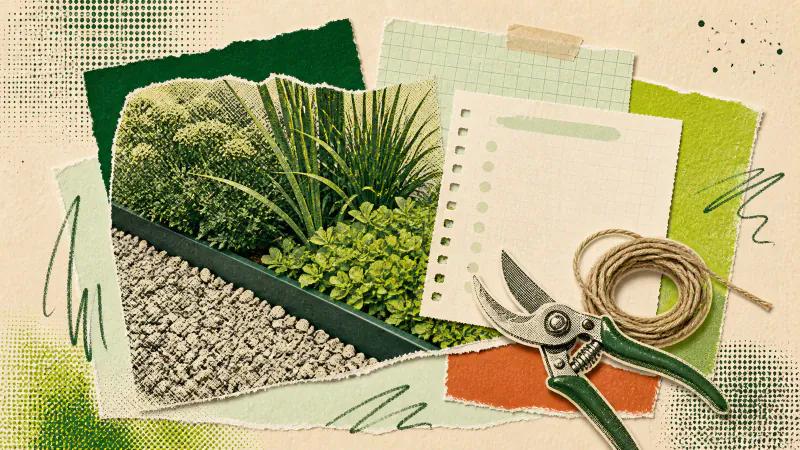
Useful low maintenance landscaping ideas begin with the jobs you repeat, not with a promise that the garden will look after itself. Write down what you mow, water, prune, sweep, move and repair. Then change the layout so fewer of those jobs fight for attention at the same time.
No garden is maintenance free. Plants grow, surfaces weather and leaves land where they please. The realistic aim is a garden whose regular work fits the time and access you actually have.
Audit the jobs by frequency
Walk through a normal week in the growing season. Note the jobs that recur often, then add the seasonal work and occasional repairs. Keep the list tied to places: the lawn edge that needs trimming, the distant pots that dry out first, the hedge that blocks the path when it grows, or the gravel that escapes onto paving.
This is different from making a shopping list. A new tool may make one task quicker, but it does not remove the awkward route between the tap and the far border. Mark the irritating repetitions first. They are usually better design clues than the jobs you do once a year.
Keep access before you add density
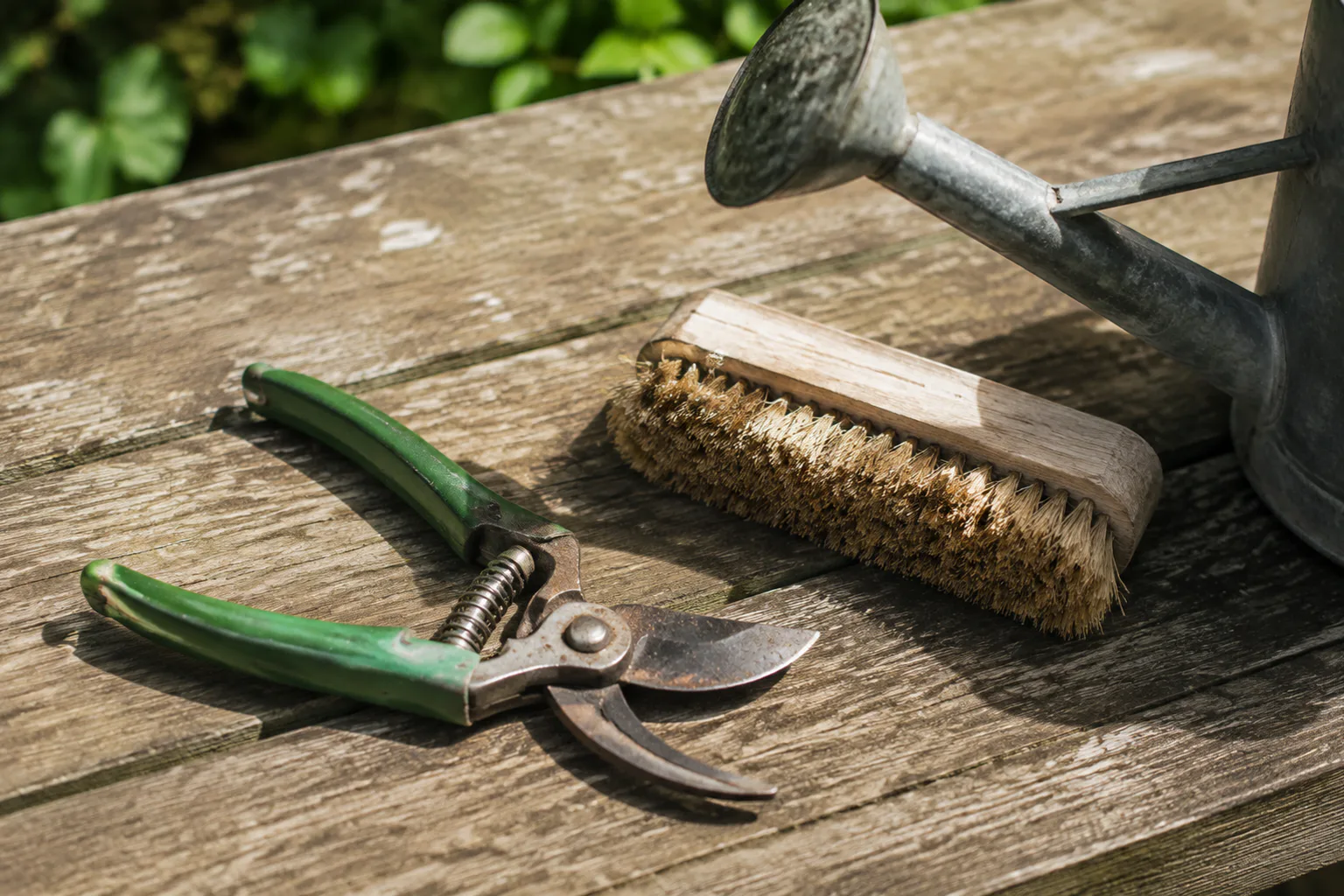
Maintenance needs working room. Check whether you can reach the back of each bed, carry a watering can without brushing through plants and move a bin or barrow along the main route. Leave a stepping point in a deep border where it is useful. Keep taps, drains, fence fixings and storage doors reachable.
Do this before adding more planting. A full border can look generous in a picture while hiding the soil and boundary you still need to inspect. If the garden's routes and broad use zones are not settled, start with planning a garden layout and add the maintenance layer afterwards.
Use fewer care patterns
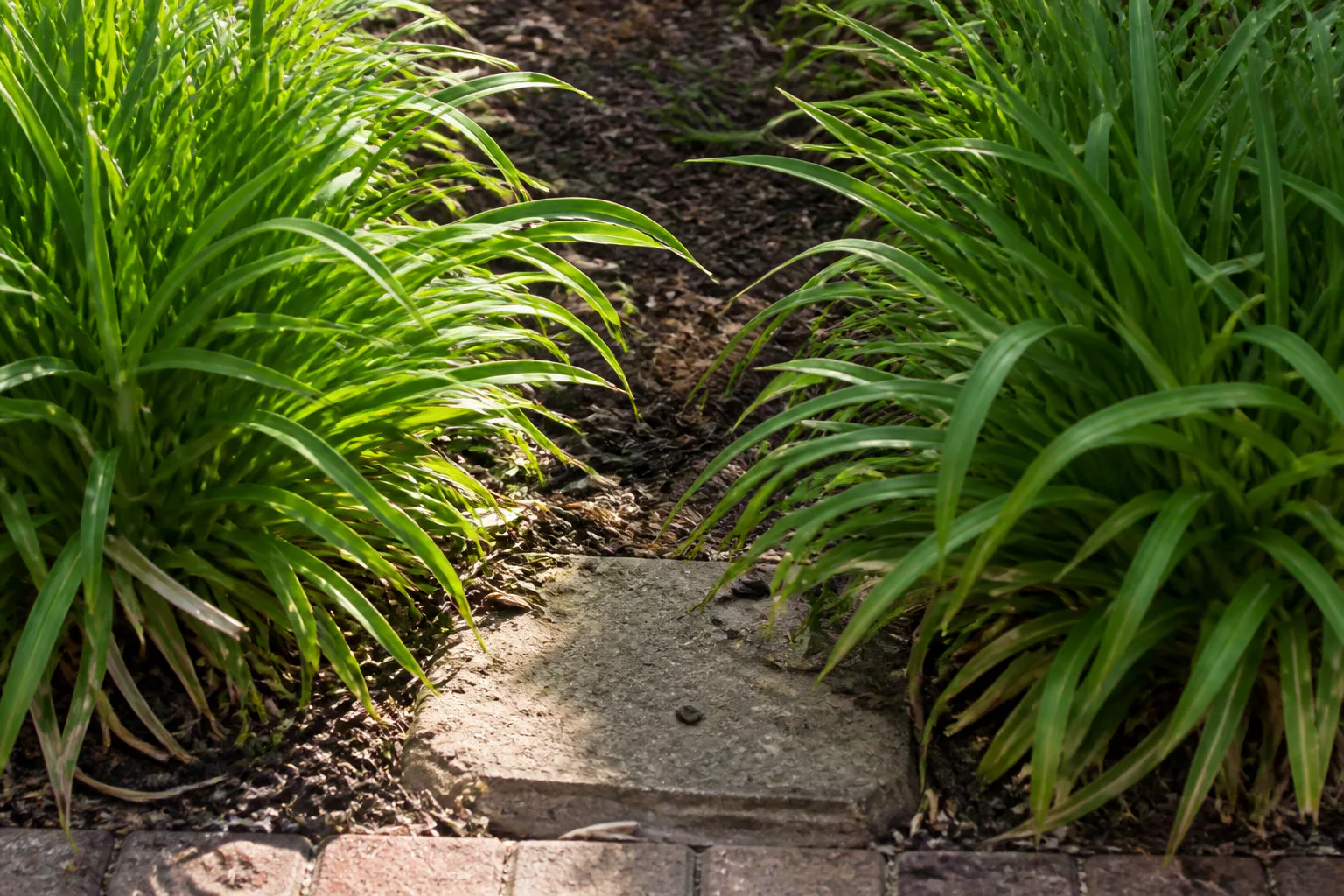
Count the different routines the garden asks from you. Several small pots may need separate watering checks. A row of unrelated plants can bring several pruning times and different responses to the same patch of soil. Crisp clipped shapes also ask for a different routine from loose planting.
Group plants that suit the same light, soil, local climate and care pattern. Repeat a small number of forms instead of giving each gap its own specimen. Keep plants that need closer attention near a route you already use, and place simpler groups in the awkward reaches. A local nursery or garden professional can help choose species for the real conditions and their mature size.
The aim is not to make planting dull. It is to stop one border behaving like six separate appointments.
Choose edges you can inspect and repair
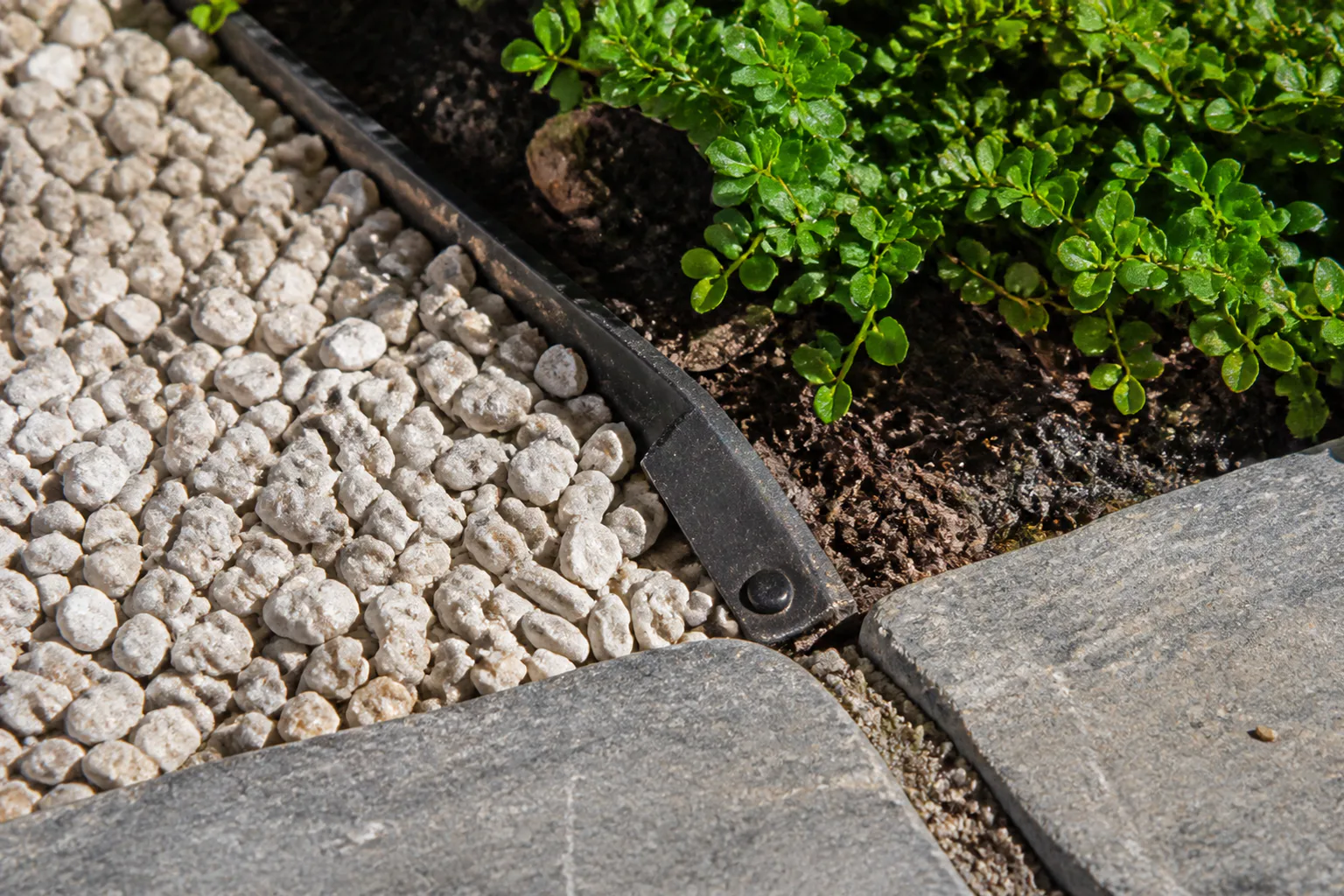
Every change of material creates a maintenance point. Look closely at where lawn meets planting, gravel meets paving, or mulch meets a path. Decide what the edge has to hold, how you will clean both sides and whether one damaged part can be replaced without lifting the whole run.
Keep the number of surface changes modest. Repeating one sound junction is easier to understand than using a new detail at every bed. Check drainage, levels and installation with someone who can inspect the site. A convincing photograph cannot answer those questions.
Preview the massing, then keep the audit
Gardenly can apply one of its garden styles to a current photo. The image model is instructed to keep the house, hardscape, camera position and lighting unchanged while it redraws planting, beds, lawn and furniture. That is an instruction, not a guarantee.
Use the render to compare broad relationships: fewer larger planting groups instead of scattered patches, open ground that still has a job, and clear access beside the busiest edges. Do not use it to predict weeds, growth, drainage or how often a plant needs care. Compare every fixed edge with the source photo.
Keep the chore audit beside the preferred image. If a direction looks calm but adds another clipped hedge, three distant pots and an edge you cannot reach, it has added work rather than reduced it. The useful design is the one whose recurring jobs still make sense on an ordinary Tuesday.