

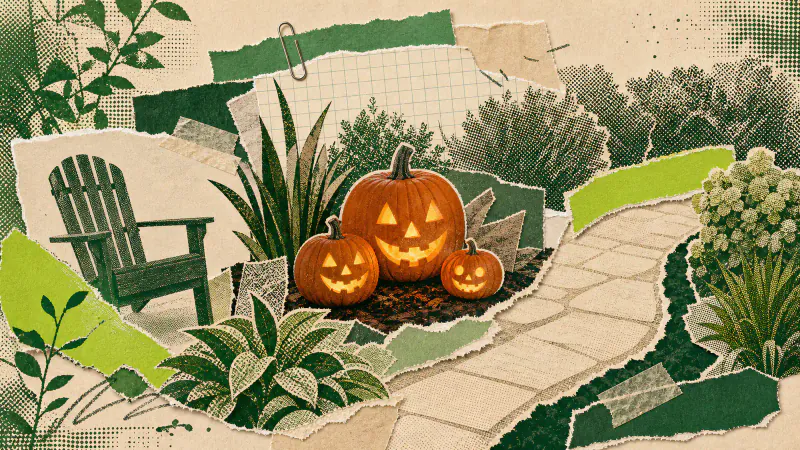
The most useful outdoor Halloween decorating ideas start with the yard you already use. Keep the route to the door open, leave the entrance easy to read and protect the seat and planting that work on an ordinary day. Then choose one view, build a small glowing-pumpkin group there and repeat only a few removable accents.
This gives the decoration a centre without turning every edge into an obstacle. It also makes the whole setup quicker to check, adjust and remove when the season is over.
Protect the everyday garden first
Walk through the garden before bringing anything outside. Open the gate and door fully. Carry a bag to the entrance, pull a chair back from the table and reach any storage you still need. Decorations belong outside those movements, even when a dark corner looks temptingly empty.
Choose the one place from which the display matters most. It might be the pavement, the front gate or the seat used on autumn evenings. A single viewpoint gives you a better test than trying to make the decoration equally noticeable from every window.
If the route itself needs work, settle that with the garden path guide before decorating around it. If you are still deciding where people should sit, the garden seating ideas article starts with the useful view and occupied footprint. Halloween pieces can wait until those everyday decisions are sound.
Make a small pumpkin group the anchor
Use a compact group of glowing pumpkins as the focal point. Place them on stable ground beside the route rather than on it, and vary their size or height enough to read as one group. Three pumpkins can hold attention more calmly than a thin line of objects stretched across the whole garden.
Check the group from your chosen viewpoint and from close range. It should still leave access to plants, taps, doors and furniture. Keep carved pumpkins away from foliage that will be crushed when you lift them, and do not hide a change in level behind the display.
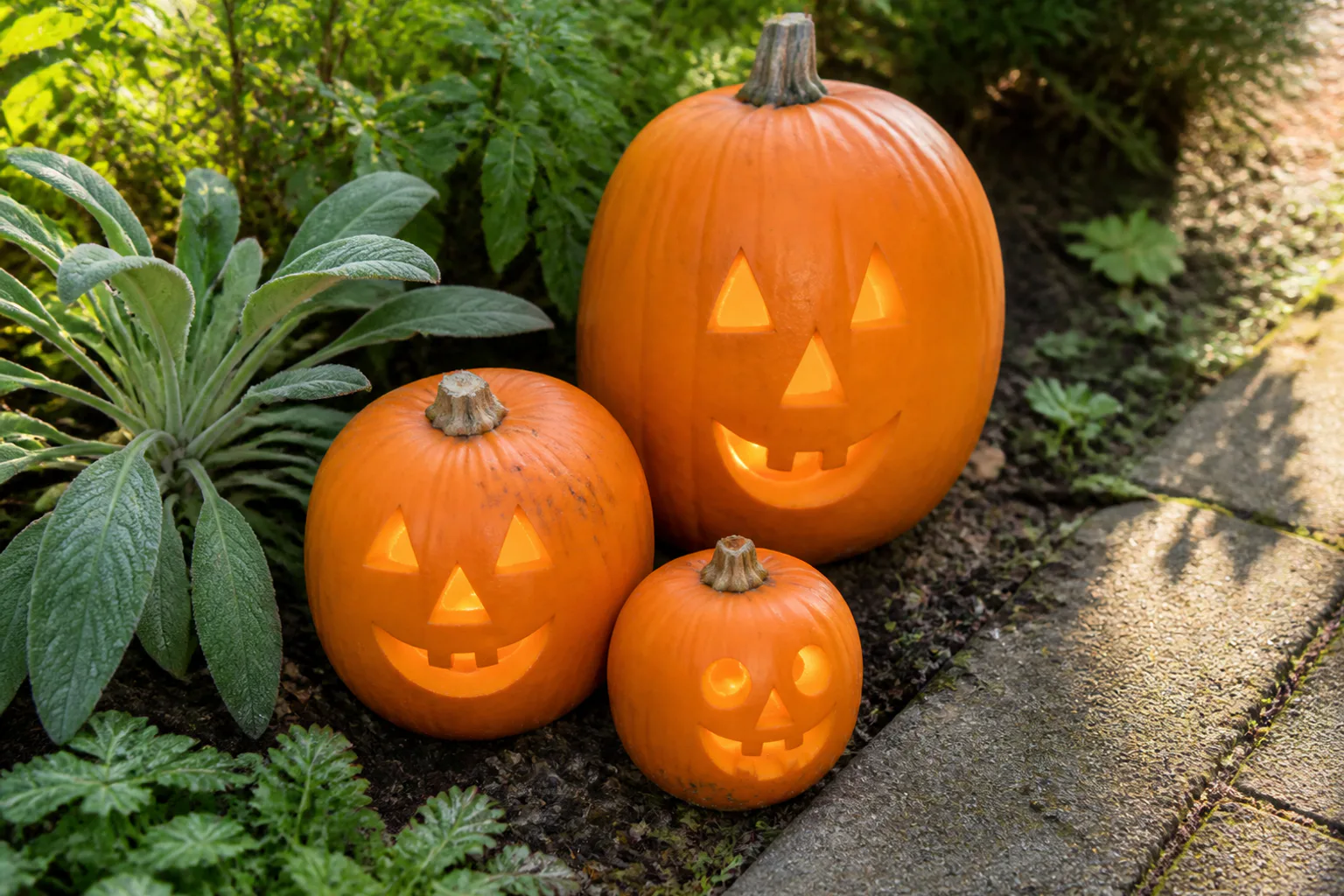
The glow is part of the composition, so test it after sunset too. Use lights intended for the conditions where you place them and follow their instructions. A photograph taken in daylight cannot tell you whether glare, shadow or a dim step will become a problem at night.
Repeat a few removable accents
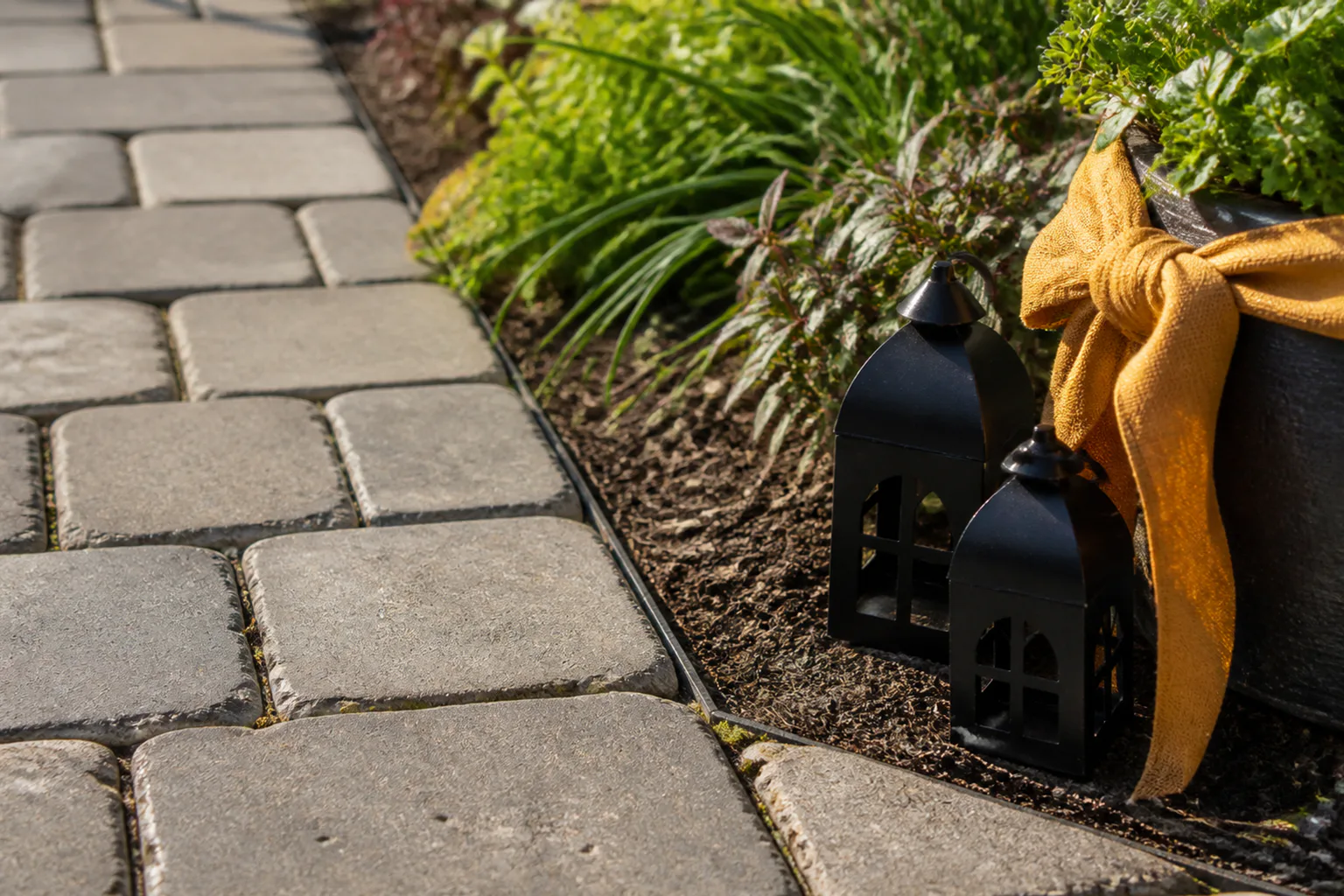
Once the anchor works, repeat one or two small cues elsewhere. A pair of plain lanterns, a piece of ochre fabric or another weather-suitable accent can connect the focal group to the entrance or seating edge. Keep the family short. Repeating the same shape or colour is enough; every object does not need a face, cobweb or character.
Set each accent down without fastening it to living growth or blocking maintenance access. Containers, hooks and freestanding objects are easier to remove than anything woven through a hedge. They also make it simpler to restore the garden without leaving ties, wire or tired decorations behind.
Look for accidental clutter from the main viewpoint. Bins, hoses and stored furniture still exist in October. Either let them stay honestly in the scene or move the decoration so the focal group carries the view. Do not add more props to conceal practical objects.
Use a Halloween render for atmosphere, not placement
Gardenly lists Halloween in its Seasonal collection and describes it exactly as "Spooky vibes with glowing pumpkins." Open the style gallery, choose Halloween and use a photo from the viewpoint you picked. The render can help you compare broad atmosphere, the apparent scale of the focal group and whether it remains visible against the planting.
The image model is instructed to keep the house, hardscape, camera position, lighting and property boundaries unchanged. That is an instruction, not a guarantee. Compare the result with the source photo and disregard any object, plant detail or changed edge you cannot verify in the real garden.
Do not copy precise placement from the render. It cannot measure a path, check how far a door swings or know which chair moves after dinner. Use it to decide whether the glowing focal point should feel quieter, larger or more isolated. Then make those changes with the real objects in daylight.
Check clearances and lighting on site
Finish with one slow walk in daylight and another after dark. Check the entrance from both directions, look for cords across walking surfaces and make sure the decoration does not conceal a step, low edge or change of material. Sit in every chair that stays in use and confirm that people can stand up without meeting a lantern or pumpkin.
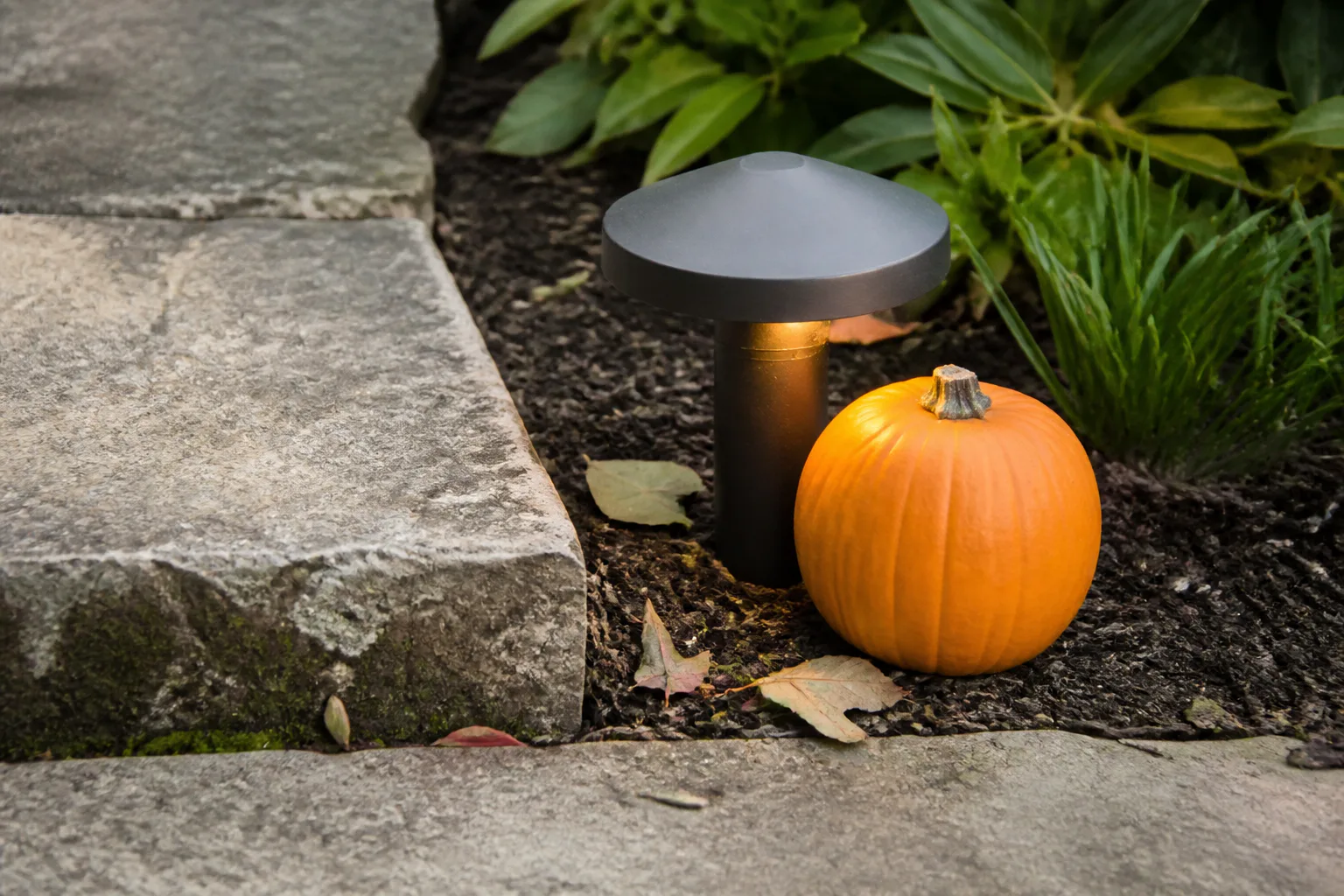
Weather can change a harmless setup. Recheck lightweight pieces, wet fabric and soft pumpkins after wind or rain, and remove anything that no longer sits securely. The render is the picture you use to settle the mood. The real garden decides the clearances, lighting and safety.