

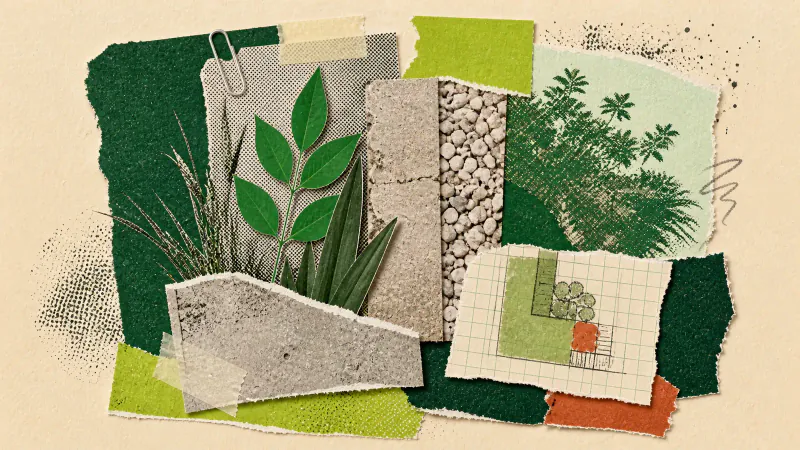
Useful modern garden ideas start with a clear shape, then soften it with plants and materials that show some texture. Keep the main route easy to read. Let paving, timber, gravel or planting meet at deliberate edges. Repeat a few plant forms so the garden feels connected without turning it into a strict grid.
That is the useful difference between modern and merely sparse. A modern garden can be full of leaves, weathered timber and rough stone. The order comes from where those elements sit and how they meet, not from removing most of them.
Find one strong line that already exists
Look at the door, the longest edge of the patio and the route to the gate or shed. One of those lines will usually make a sensible starting point. Extend it into the garden as the edge of a bed, a path or a change in surface. This gives the eye a connection between the house and the outdoor space without redrawing the whole plot.
Do not copy every wall, window and fence line. That can produce a stack of narrow strips that are hard to use. Choose one leading line and let the other parts answer it. A path can run straight towards a destination, while a planted edge steps away to make room for a chair or a useful patch of open ground.
Test the route with real movement. Carry a bin or watering can along it and open the gate fully. A line that looks crisp on paper is not useful if a handle catches on a shrub or a chair must move each time someone passes.
Make each material joint look intentional
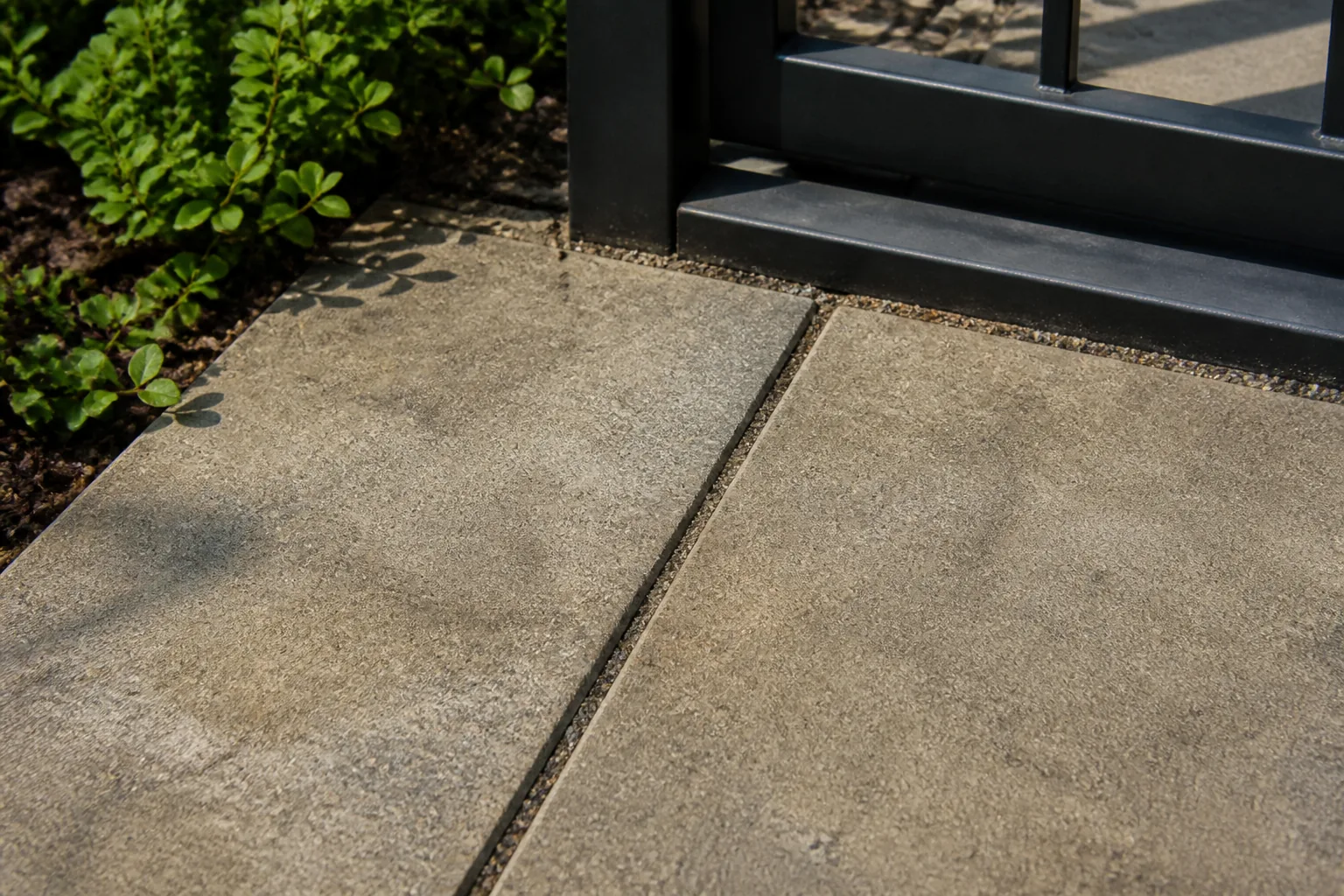
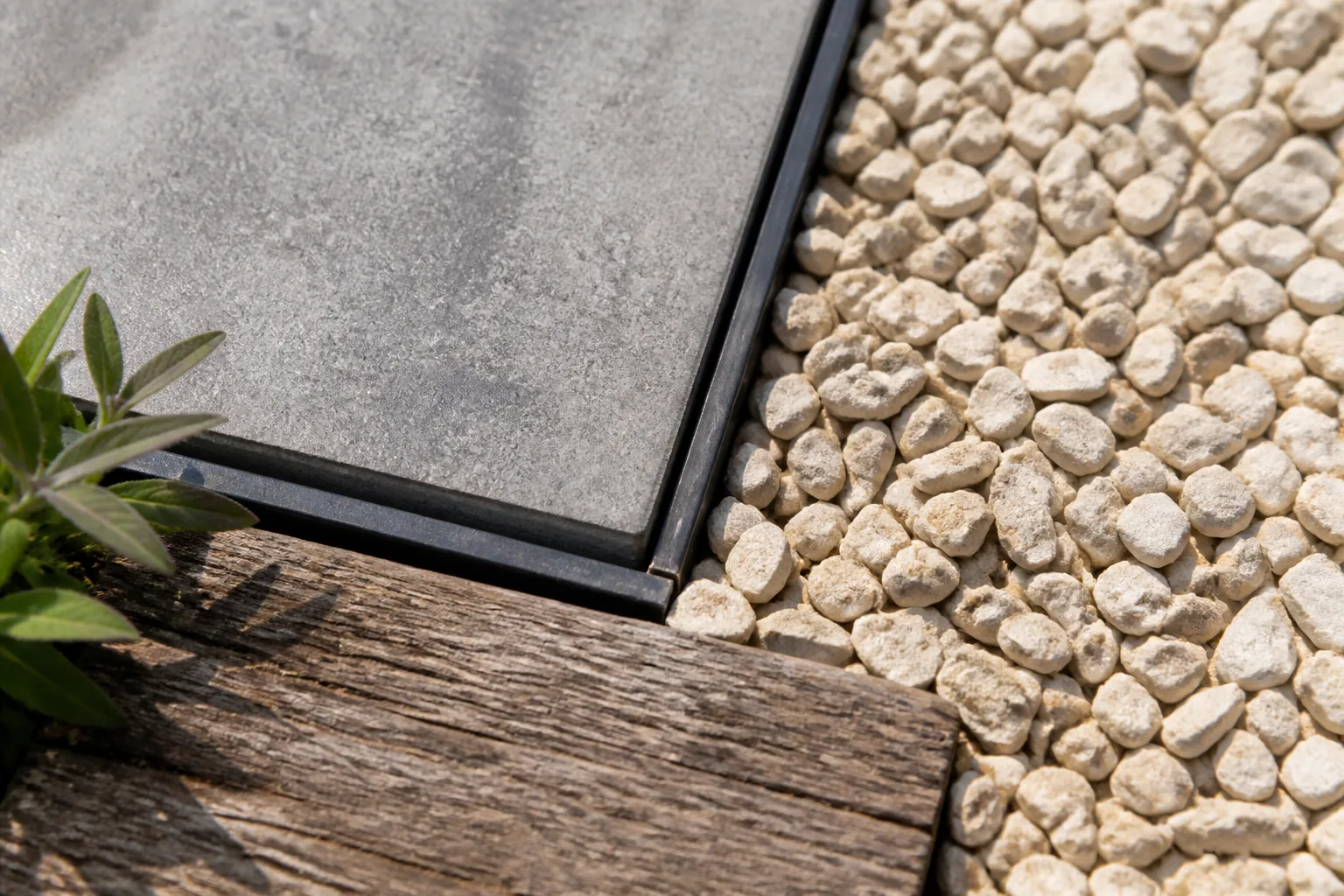
Modern gardens often get their character from contrast: a precise edge beside loose planting, a smooth surface beside visible grain, or dark metal against pale aggregate. The catalogue describes Gardenly's Modern style as "Clean lines with natural materials." The clean line and the natural material need each other. Use only the first and the result can feel hard; use only the second and the layout can lose definition.
Draw every material change on the plan before choosing colours. Mark where paving meets soil, where gravel stops at a gate and where timber sits near wet ground. Decide which side needs support and how you will reach the joint for cleaning or repair. These small boundaries are more convincing than an extra decorative object placed nearby.
Keep the set of joints short. If one dark edge already separates the main path from planting, repeat that detail where the same job appears again. A different border at every bed makes the garden read as a collection of samples.
Use planting to soften the geometry
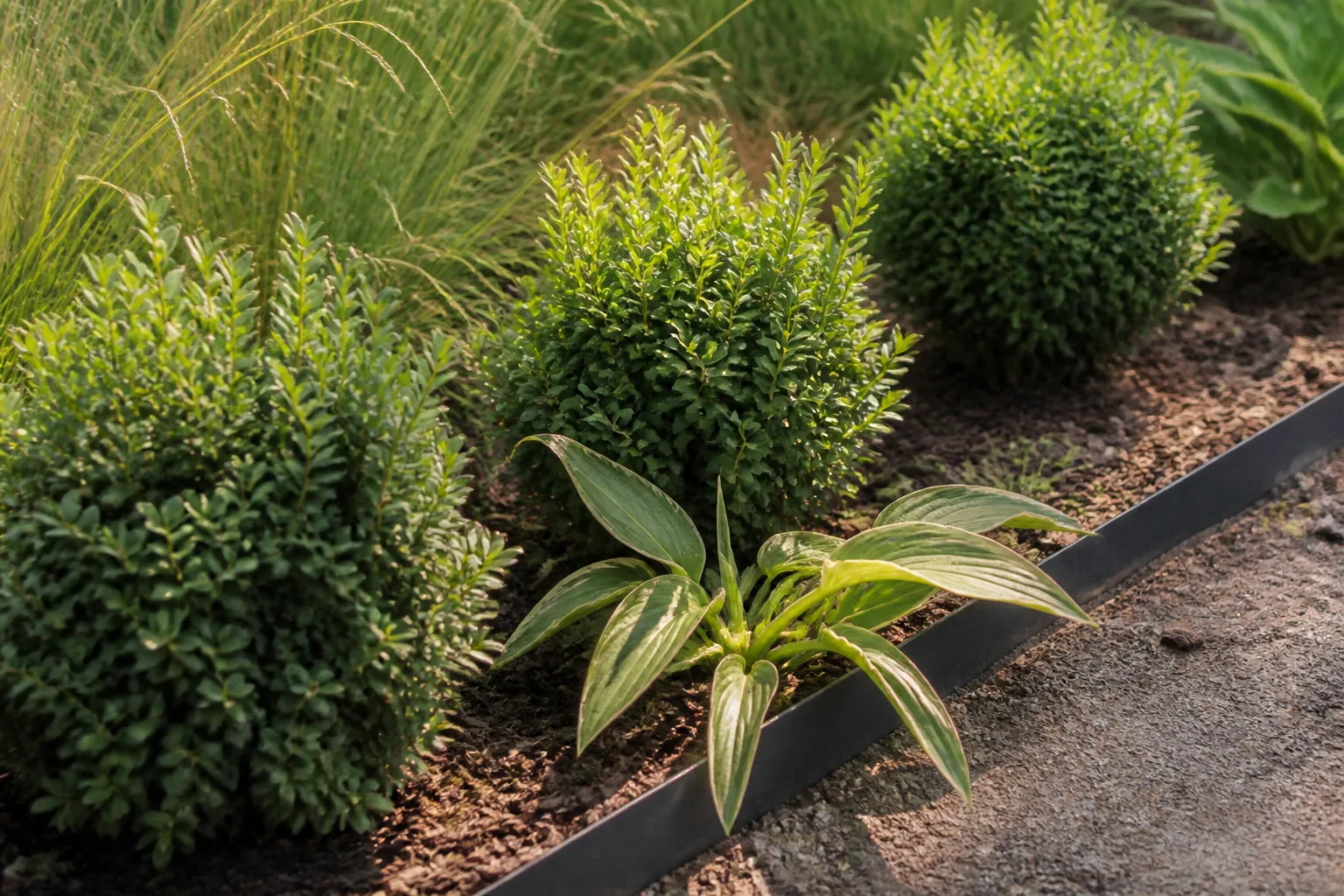
Planting does not need to follow every hard line. Repeat a few broad forms across the garden, then let some leaves cross the edge. A low layer can link separate beds, while one taller form can return near the seat and at the far end of the route. The repetition carries the modern rhythm; the uneven growth keeps it from feeling mechanical.
Choose the actual plants for the light, soil, climate, mature size and maintenance you can provide. Keep enough access to reach a wall, clean a surface and prune without standing in a bed. A render can show the balance between hard geometry and loose foliage, but it cannot tell you which species will thrive on the site.
Colour can stay quiet while texture does the work. Fine leaves next to a broad leaf, or a clipped form near a looser grass, can create a visible change without adding another flower colour. Leave enough space for each group to reach its intended size. Crowded planting hides the clear structure as it fills out.
Compare Modern with Minimalist on your own photo
Modern and Minimalist sit in the same Gardenly collection, but they answer different questions. Minimalist landscape ideas reduce visual noise and establish a clear hierarchy. Modern design can keep more contrast. Its job is to connect clean forms with natural materials and planting so that the joins feel deliberate.
Apply Modern to a photo taken from the viewpoint you use most. The app asks the image model to redraw planting, beds, lawn and garden furniture while leaving the house, hardscape, camera angle and lighting unchanged. This is an instruction, not a guarantee. Compare the result with the original, especially along doors, paving edges and boundaries.
Use the image to choose a line, a material contrast and a planting rhythm. Then check dimensions, drainage, construction and plant choices in the real garden or with a professional. The Gardenly style gallery lets you compare Modern with nearby directions. Treat the result as the picture you take to a landscaper, not as a plan to build from.