

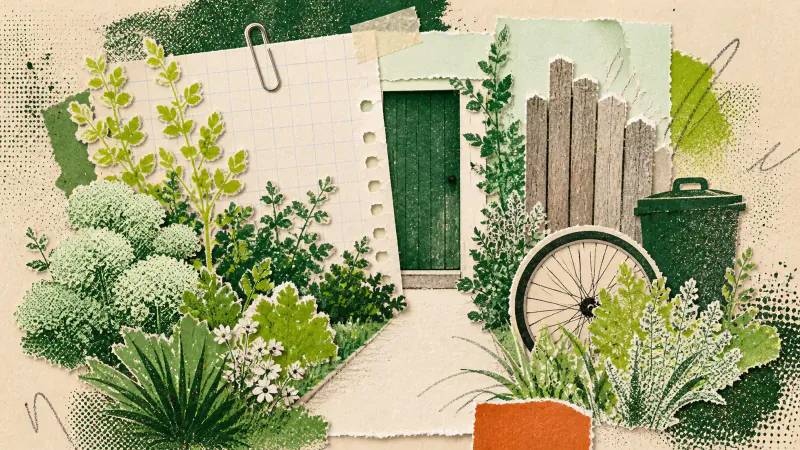
For a front yard, the most useful country garden ideas start with a clear way to the door. Keep that route generous, give everyday clutter a planned place, then soften the edges with repeated planting and a small set of natural materials. You do not need to squeeze a rustic object into every gap.
This is a style layer, not a new entrance plan. If the route, bins and view from the street are still unresolved, begin with the practical layout for a small front yard. Once those jobs are settled, the details below can make the space feel warmer without making arrival harder.
Keep the route simple and let planting soften it
A front path has to work when someone carries shopping, pushes a bicycle or walks beside another person. Do not narrow it with a pot that looked small at the shop. Mark the usable width first and keep gates, steps and meter boxes easy to reach.
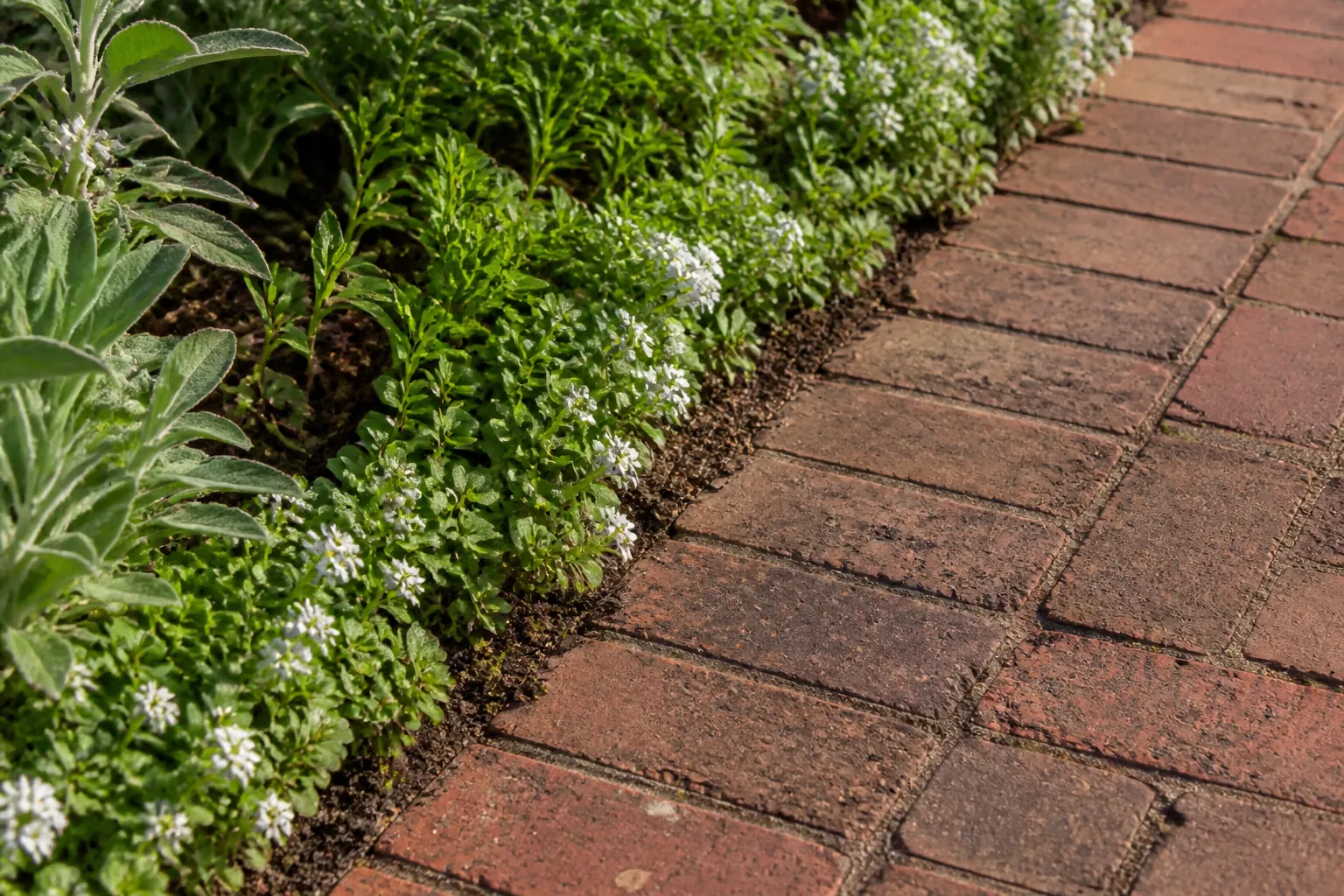
Then make the route feel less rigid at its edges. Let low planting overlap the visual line of the path without spilling onto the walking surface. A slightly uneven border can look relaxed, but the path itself should remain obvious from the gate. Informal planting is charming. An entrance that makes visitors guess is not.
For a compact plot, one bend or one widened pause near the door is usually enough. Several little turns can make the garden feel busy before anyone has even found the bell.
Repeat one loose planting family
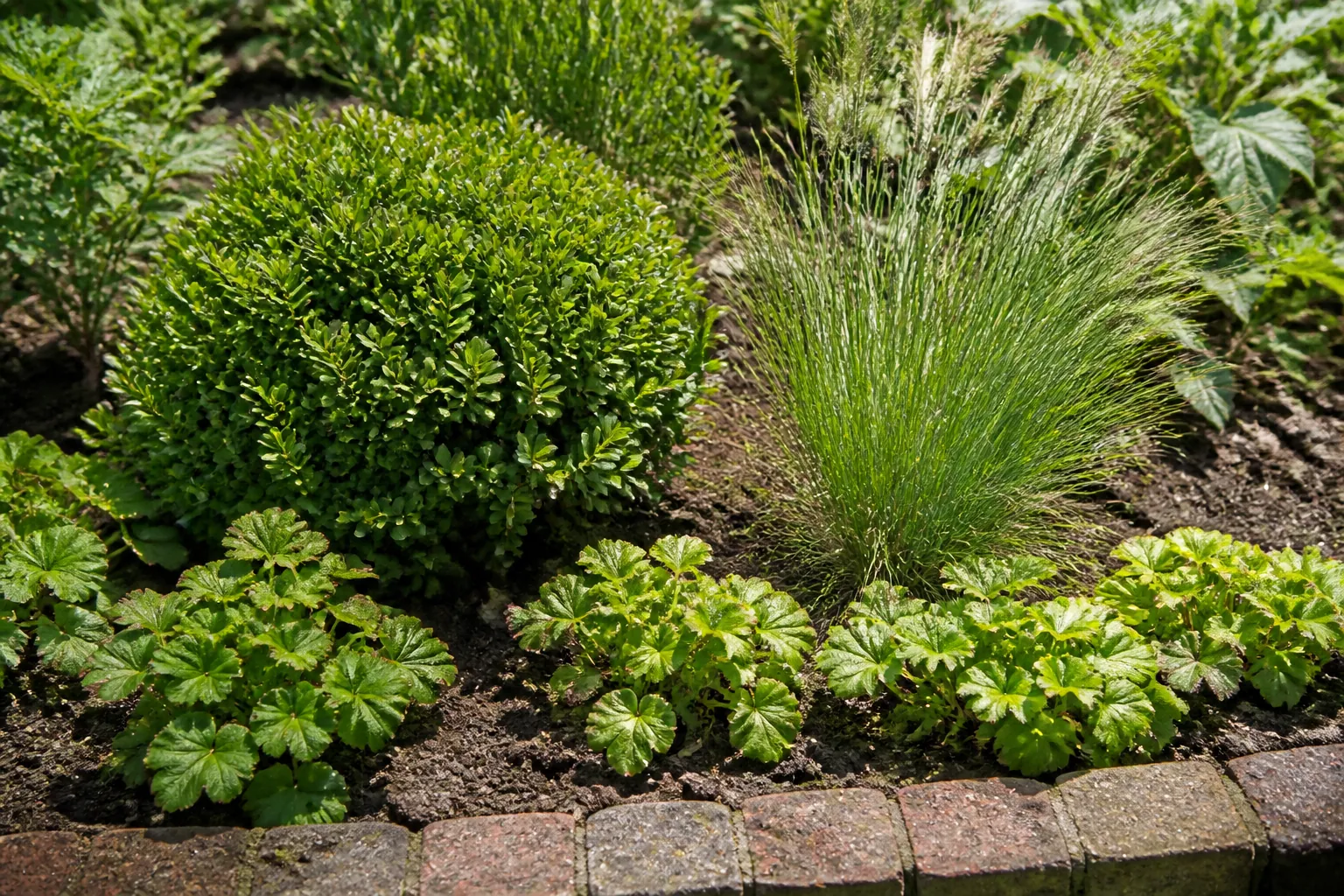
Country style can look abundant without using a different plant in every opening. Choose a small family of forms and repeat it. One rounded shrub shape, an airy vertical plant and a low edge can create a loose rhythm without looking random.
Start with conditions, not a shopping list. Note the hours of sun, whether the soil stays wet, how exposed the entrance is and how much mature spread the bed can hold. A plant that suits the photograph but not the site will not rescue the style. The front yard planting guide explains how to turn those conditions into a year-round structure.
Keep the lowest growth beside sightlines and path edges. Place taller shapes where they will not hide a person leaving the drive or block light from a ground-floor window. Leave enough open soil for plants to reach their mature size; bare patches in the first season are cheaper than constant cutting later.
Use fewer natural materials
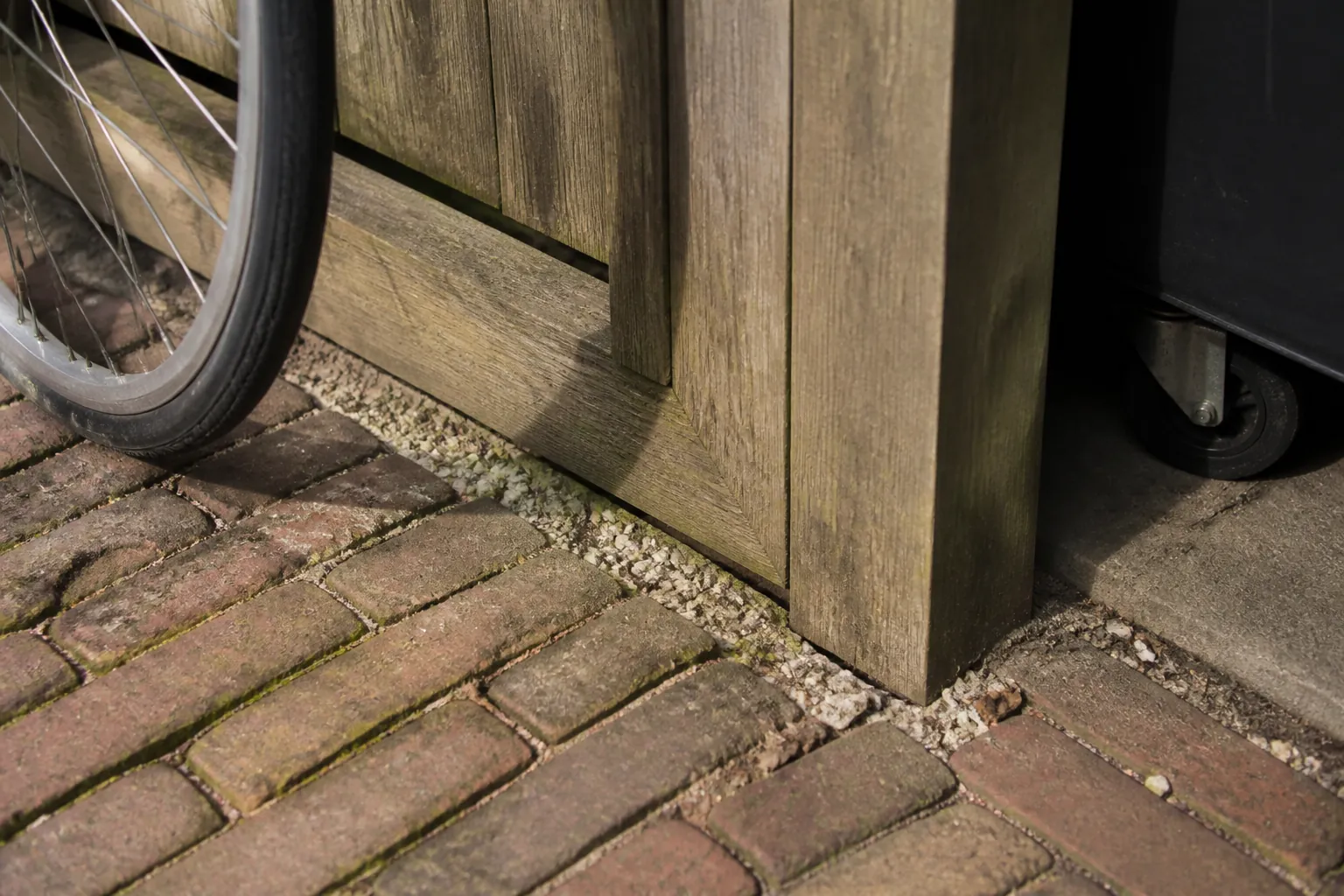
Warm, weathered surfaces help a front yard feel established, but too many finishes turn it into a sample board. Pick one main paving material and one secondary material for an edge, gate or small storage screen. Brick, gravel, timber and natural stone can all suit the mood. They do not all need to appear together.
Look closely at the junctions. A tidy gravel edge, a gate post that meets the paving cleanly and a bin screen aligned with an existing wall will do more than a decorative sign. These details make the practical parts seem intentional. They also give a landscaper something clear to price and build.
If an existing path is sound, keep it. A country-style garden does not depend on replacing new-looking materials with artificially old ones. Repeated planting at the edge and one compatible finish elsewhere can change the balance without creating unnecessary work.
Give bins and bicycles a deliberate place
Front gardens collect the things that move in and out of the house. Measure bins with their lids open and bicycles at their widest point, then protect the route needed to use them. A storage screen that hides a bin but prevents it from turning is not a solution; it is a small daily argument with timber.
Place storage beside an existing boundary when possible and repeat a material already used at the gate or house. Leave ventilation around bins, drainage below them and a direct route to the street. For bicycles, allow room for handlebars and the movement needed to lock or lift them.
Planting can soften the outside of a screen, but it should not block hinges or maintenance access. One robust shrub shape nearby often works better than a thin row that needs constant clipping.
Preview the Farmhouse direction on your own yard
Gardenly includes a Farmhouse style in its Nature collection, described in the app as country charm with a barn-door influence. You can compare the available styles and place that direction over a photo of your front garden. The model is instructed to keep the house, hardscape, camera and lighting unchanged, but that is an instruction rather than a guarantee.
Use the render to compare broad choices: Does the path still read clearly? Is the planting mass calm enough? Does the storage area disappear without becoming awkward to use? Do not treat the image as a plant list, dimensioned plan or construction drawing. Keep the original photo beside it, mark the parts worth carrying forward and take both to the person who will check the site and build the work.