


The best small tropical garden ideas make the space feel leafy without making it difficult to cross. Keep one direct route and a usable seat, then build the tropical character with a few strong leaf shapes, layered planting and one or two natural-looking materials.
Do not start with a list of palms. A compact garden needs its open ground settled before the planting becomes dense. The aim is a clear, sheltered mood, not a collection of every plant and object that looks vaguely tropical.
Keep one route easy to read
Walk from the door to the seat, gate, shed or tap. That daily line needs enough room for a bag, watering can or chair being moved. Mark it on the ground before placing pots or widening a bed. A leaf that brushes an ankle in a photograph may become a wet obstacle after a summer of growth.
Let planting come close at one or two deliberate points instead of narrowing the whole route. A broad leaf beside a turn can make the garden feel immersive. Keep lower plants beside the tightest section, and place taller forms farther back where they will not lean into the path.
If the garden is mostly paved, treat the seat and route as one usable piece of open floor. The practical checks in our small patio garden ideas guide help settle that layout before a style is added.
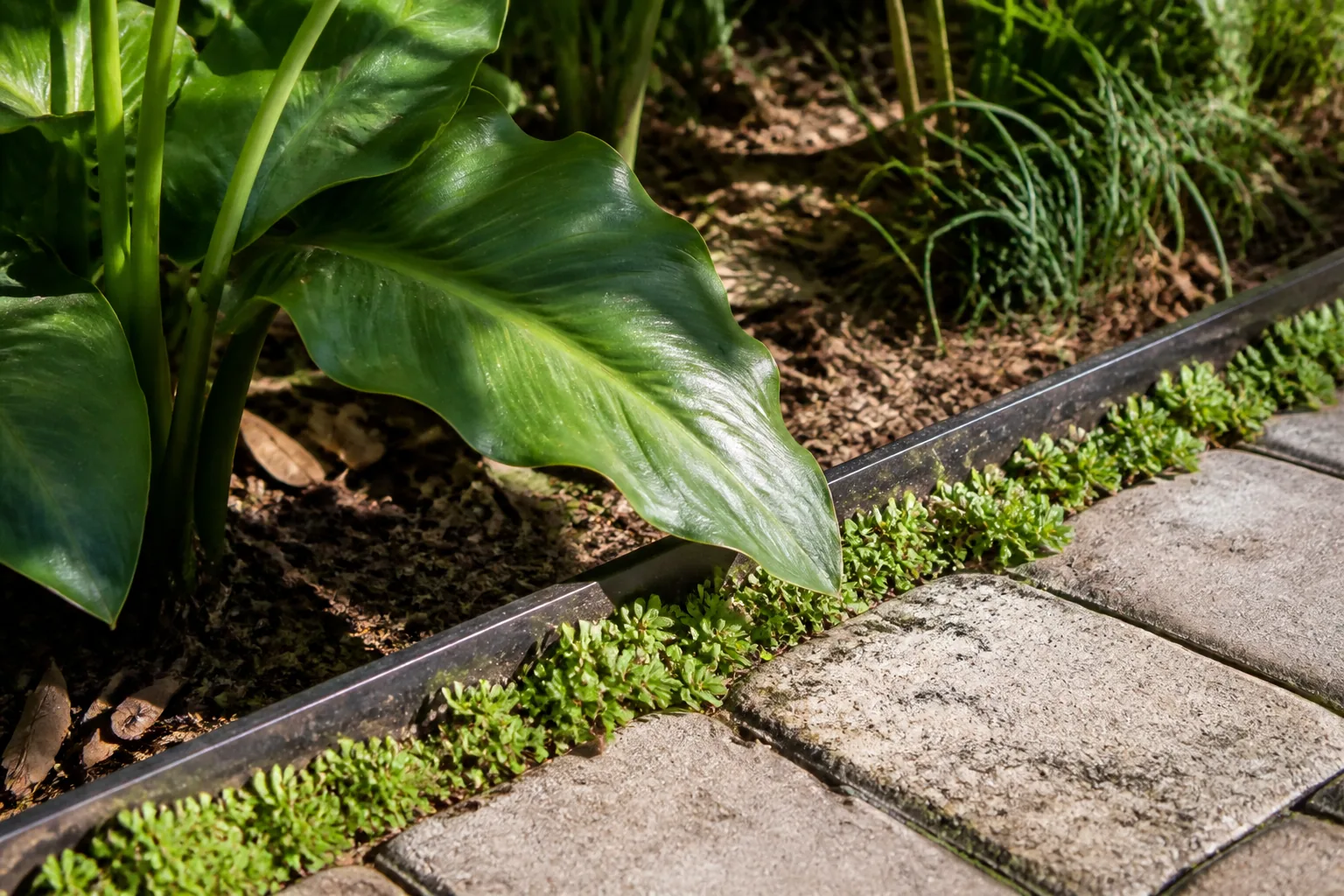
Create lushness with layers, not plant count
Choose one structural plant or strong upright shape, then repeat a middle layer and soften the ground with lower foliage. The contrast between large, medium and fine leaves creates depth. Buying one of everything usually produces labels, gaps and maintenance rather than a convincing planting group.
Check the real site before choosing species. Record the hours of sun, winter cold, wind, soil moisture and the mature width of each plant. A tropical-looking plant that suits local conditions is more useful than a literal palm that needs constant protection. Ask a local nursery which plants can provide the leaf scale and habit you want in your climate.
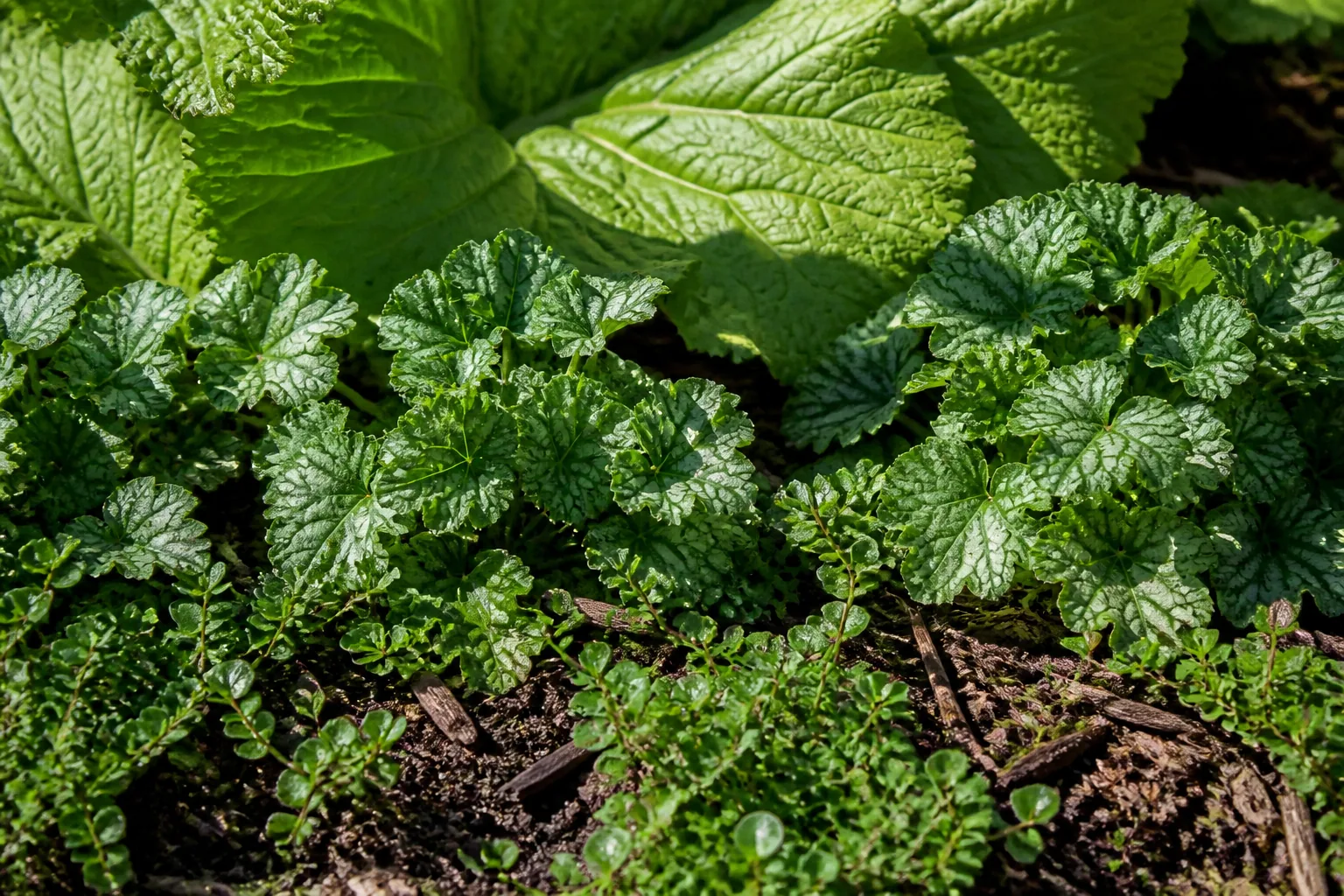
Leave access to the soil and enough room for growth. Young plants do not need to touch on the first day. Mulch or low groundcover can hold the visual gap while the taller plants settle in. The same site checks apply in our guide to front yard planting ideas, even though the finished character is different.
Use bamboo and rattan as accents
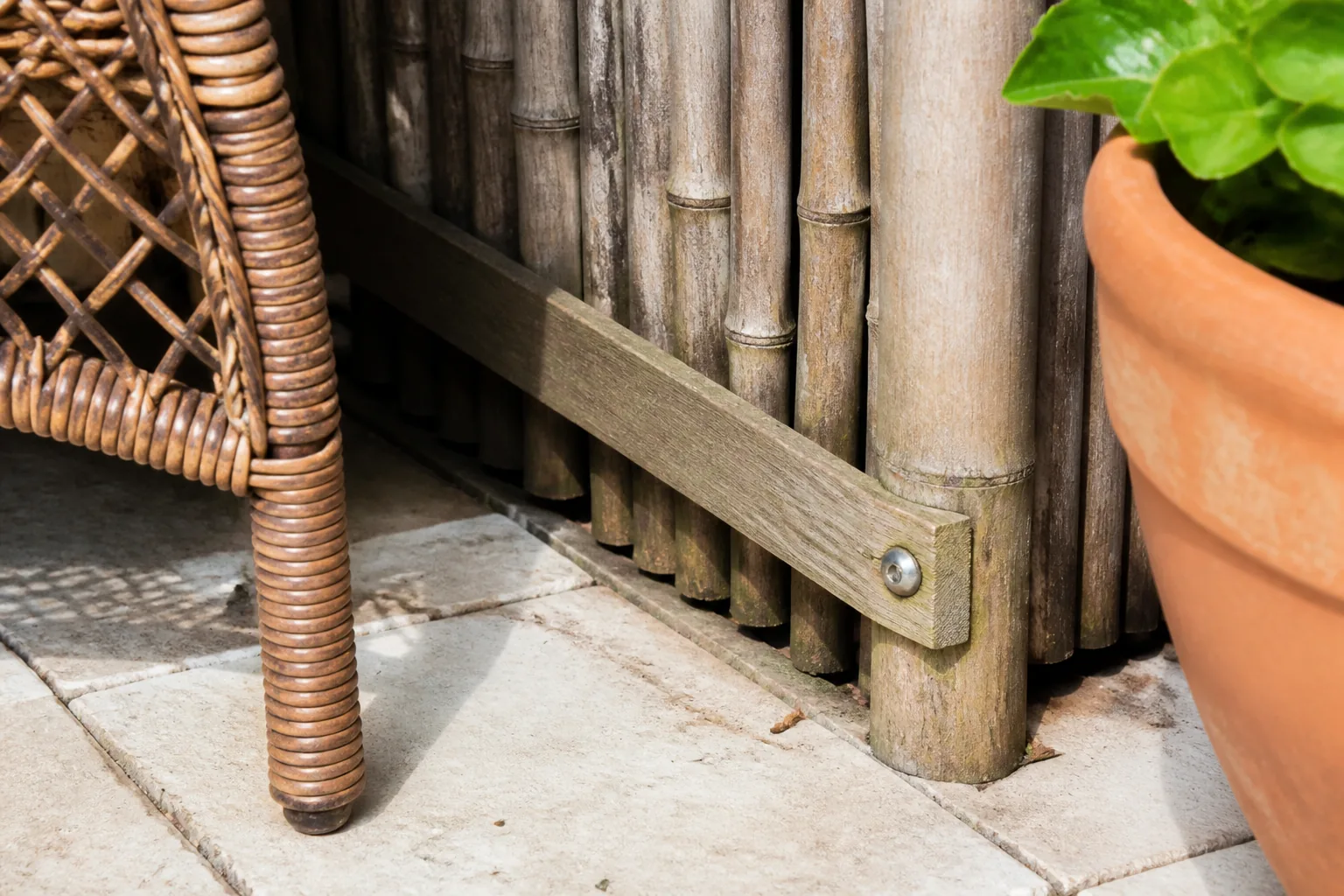
Gardenly describes its Tropical style as "Lush palms with rattan and bamboo." Treat that as a visual direction, not a shopping list. One woven chair, a bamboo screen panel or a weathered timber pot can carry the material note. Using all of them around a small plot can turn the style into a theme display.
Repeat one finish where it has a job. A screen can soften a boundary, provided it does not block useful light or hide a maintenance problem. A woven chair belongs where it can stay dry or be stored easily. A planter should be large enough for its plant and stable on the surface below it.
Keep existing paving if it works. Tropical character can come from the planting edge, foliage and a single warm material without replacing every hard surface. Fewer material changes also make a compact garden look calmer and easier to maintain.
Preview proportion, then choose real plants
Photograph the garden from the door or seat you use most. Keep the route, boundaries and fixed features visible. In the Gardenly style gallery, the Tropical preview gives you a reference for its broad direction before you apply it to your own photo.
The image model is instructed to leave the house, hardscape, camera position and lighting unchanged while it redraws planting and garden elements. That is an instruction, not a guarantee. The render cannot know your soil, climate, drainage or which plants will survive a local winter.
Compare the original and render for decisions you can describe. Perhaps the far corner needs one taller shape, the seat needs a deeper planted edge, or three scattered pots should become one group. Take those relationships into the real garden, measure the available space and choose suitable plants with local advice.
A useful tropical render is not a planting plan. It is a quick way to test whether the route still reads, the foliage feels layered and the materials stay quiet before you buy anything.