


Good minimalist landscape ideas remove visual noise without stripping out everything that makes a garden pleasant. Give the space one obvious route and repeat a few strong plant shapes. A short material palette will do more than a collection of decorative features. The result should feel calm and usable, not like a courtyard waiting for furniture.
Minimalism is mostly about deciding what gets attention. Let one ground surface lead and repeat one planting shape, then give the remaining pieces quieter roles.
Decide what the garden needs to do
Begin with the daily jobs. Mark the route from the door to the gate or shed and the place where a chair actually fits. Leave sensible access for bins, bikes and tools. These are part of the plan, not compromises to hide later.
Choose one main ground plane around them. That could be an existing lawn, paving or gravel held within a firm edge. Avoid chopping a small plot into five materials just to make it interesting. A large, uninterrupted surface usually gives planting and furniture more presence.
Then name one focal point you can see from the house: a multi-stem tree, a simple bench, a large pot or a sculptural shrub. It does not need a matching companion in every corner. Repetition will come from the quieter parts of the design.
Repeat shapes instead of collecting features
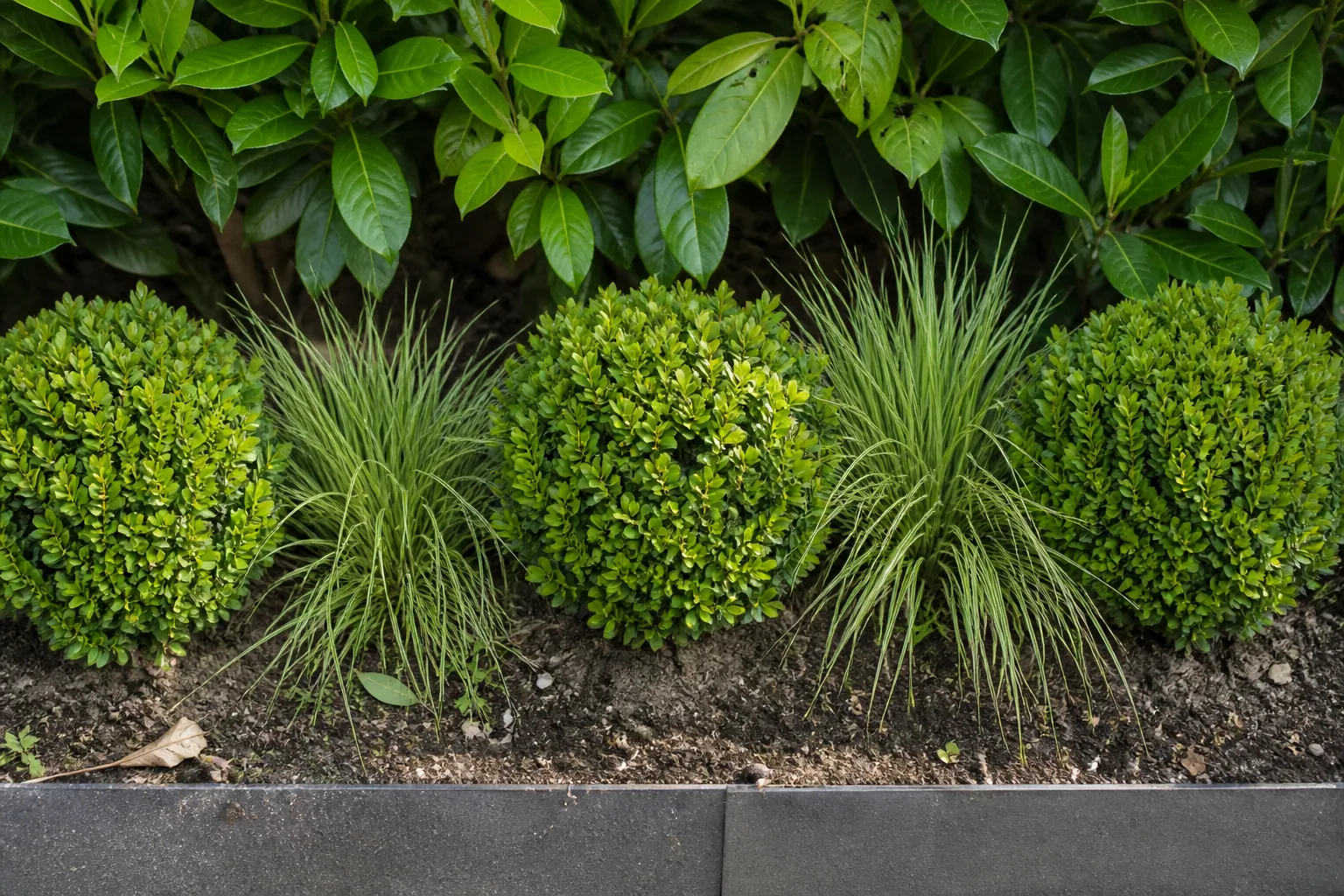
A minimalist garden can contain plenty of plants, but the planting reads in groups rather than as a catalogue. Repeat an upright form and a rounded or spreading one, with a low layer covering the soil. Use larger drifts where the space allows instead of dotting single specimens along a fence.
Keep the colour range similarly disciplined. Several greens, one restrained flower colour and the warm or cool tone of the hardscape are enough to build depth. Texture stops the result becoming flat: broad leaves beside fine grasses can create contrast even when the colours are close.
Select actual plants for the garden's light, soil, climate and mature size. A render can suggest the rhythm of low and tall planting, but it cannot decide which species will thrive there. Repeating the wrong plant only produces a very orderly failure.
Keep the material palette short
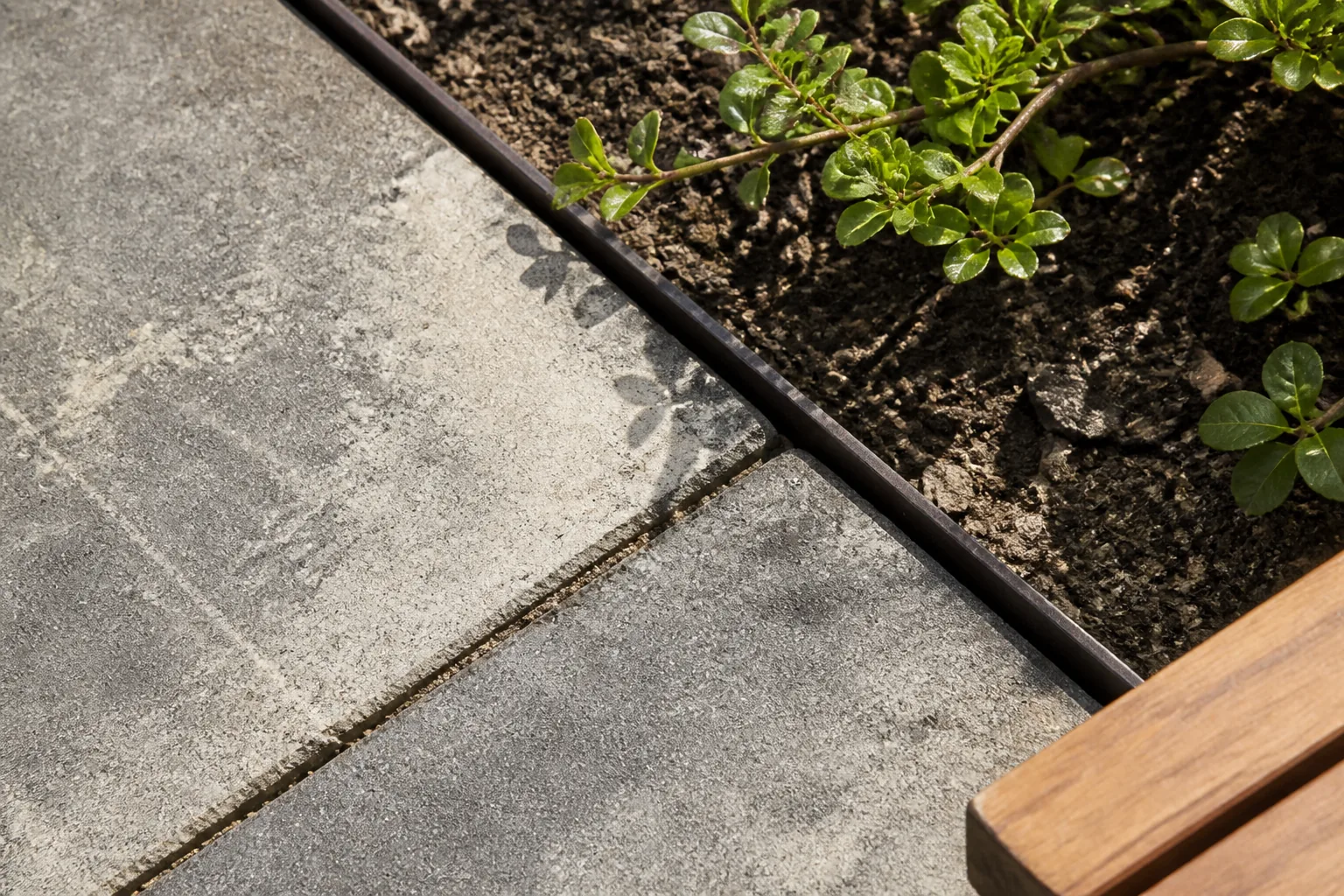
Pick two or three materials already connected to the house and existing hardscape. If the patio is grey concrete, for example, timber furniture and dark metal edging may be enough. Add pale gravel, red brick, glazed pots and decorative stone on top and the garden starts speaking in several voices at once.
Details matter more when there are fewer of them. Align an edge with a door or window, keep joints and borders deliberate, and choose one family of pots rather than a row of near-matches. This is where minimalism differs from simply owning less: the relationships between the remaining pieces have to be clear.
Do not replace sound paving for the sake of a cleaner image. A narrow repeated edge, a more consistent set of containers or one planted strip may be enough to pull mismatched existing elements together.
Give empty space a practical job
Open ground can make a compact garden feel generous, but each gap should earn its place. It may keep a path comfortable, leave room to move a chair or make a tree visible from indoors. It can also separate planting from a damp wall. Space with a job feels intentional; a bare corner with no use feels unfinished.
This overlaps with a Zen-inspired backyard, but the promise is different. Zen uses restraint to build a contemplative composition. A minimalist landscape is more concerned with visual order: repeated geometry, fewer material changes and a clear hierarchy of forms.
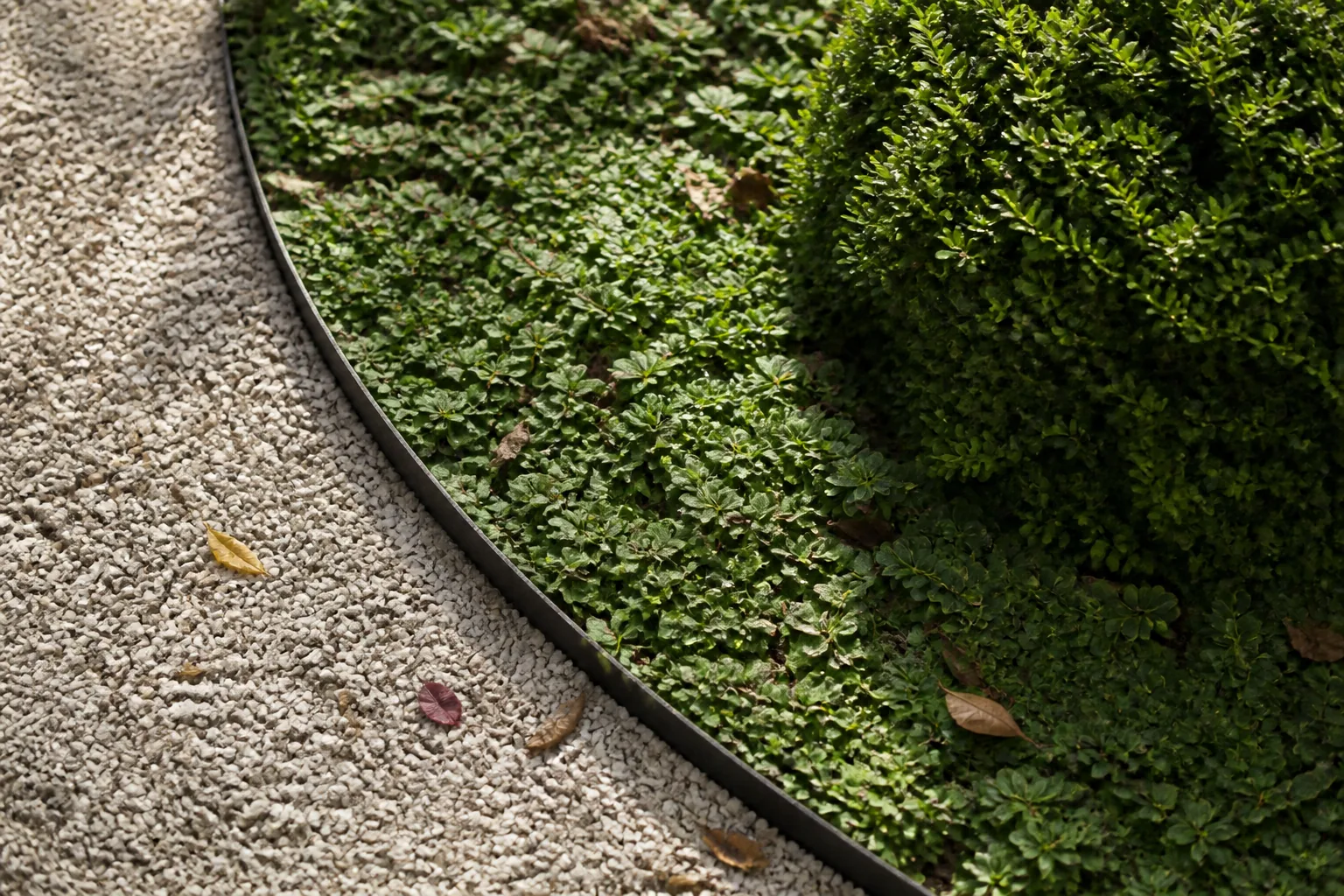
Allow for upkeep before choosing crisp details. Loose pale gravel below a shedding tree, clipped hedges and perfect exposed edges all demand attention. If that routine sounds tiresome, use a living ground layer, naturally compact shrubs and slightly softer planting masses. Minimal maintenance and minimalist appearance are not automatically the same thing.
Preview the hierarchy, not the plant list
Gardenly includes Minimalist in its Modern collection, described in the catalogue as "Less is more with essential elements." Apply the style to a photo from the viewpoint you use most, then judge the big relationships: how much ground stays open, which planting forms repeat and whether too many materials are still competing.
The app asks the image model to redraw planting, beds, lawn and garden furniture while leaving the house, hardscape, camera angle and lighting unchanged. That is an instruction, not a guarantee. Compare the render with the original and treat it as the picture you take to a landscaper, not as a planting plan or construction drawing.
Pull three or four decisions from the image, then verify drainage, dimensions and plant choices in the real garden. You can compare Minimalist with the other directions in the Gardenly style gallery. Keep the version with the clearest order, not necessarily the emptiest one.