


Biophilic landscape design makes everyday contact with nature part of the garden's layout. Start with the views, routes and seats you use most, then bring planting, shade, water and natural texture close to them. You do not need to fill every gap with foliage. A good result gives you more chances to notice weather, movement, scent and seasonal change during an ordinary day.
In practice, the idea is quite simple: put living detail where you will actually meet it. A fashionable object in a forgotten corner will not get you there.
Start with the places you already use
Stand at the kitchen door, the main window and your usual seat. These are the contact points that deserve the strongest planting. A deep border hidden behind a shed may be good for the plot, but it will not change what you experience over breakfast.
Bring a planted edge beside a route without making the route cramped. Let foliage reach near a bench while keeping wet leaves and thorny growth away from passing legs. Frame a view with a shrub or small tree instead of trying to hide every fence at once. One well-placed layer can do more than ten pots scattered wherever there was space.
Keep the main route obvious. A garden can feel leafy without becoming a small obstacle course. If the path is narrow, use low planting at the edge and let taller forms sit farther back.
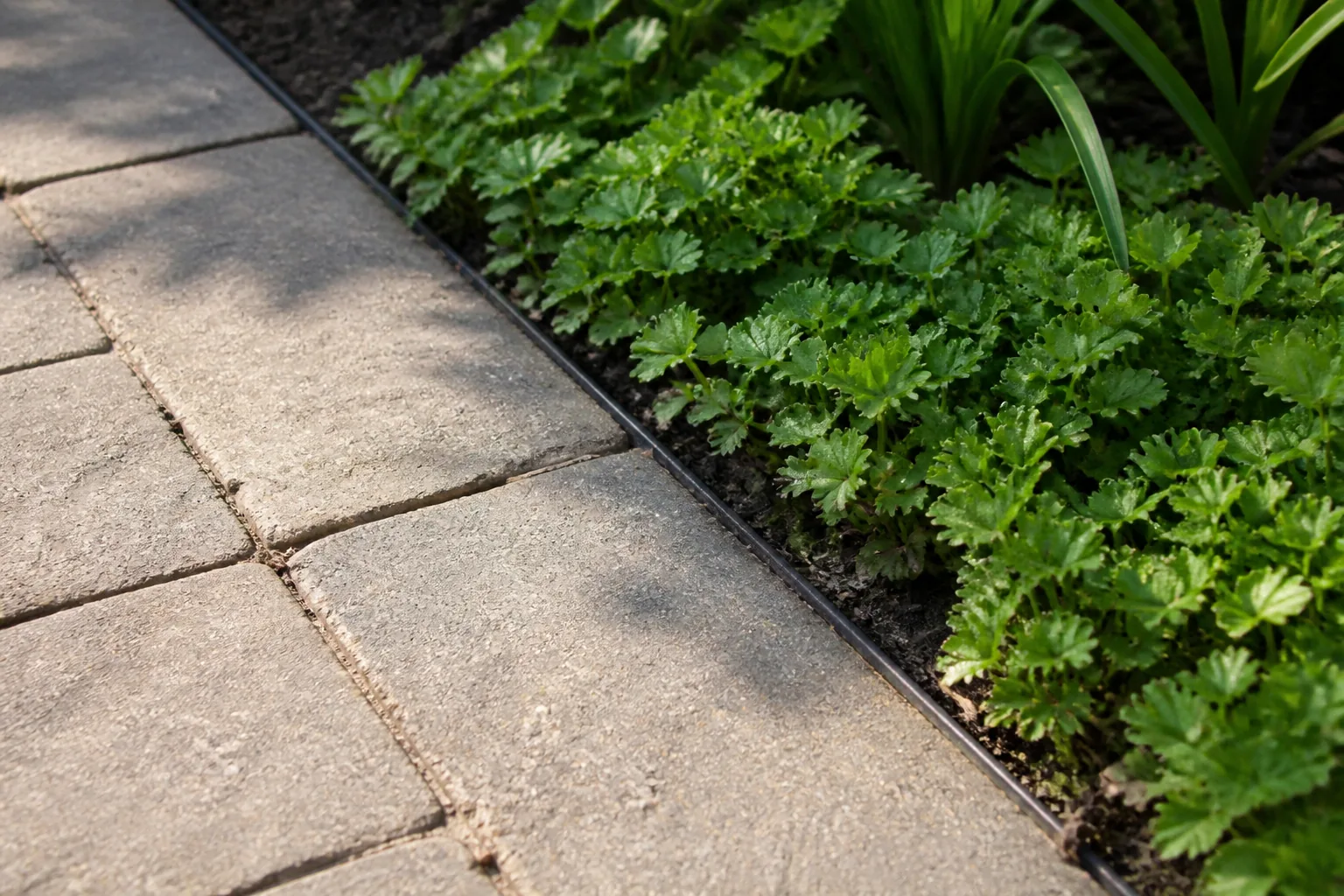
Build planting in layers, not as a green wall
Use several heights within the same bed: a higher canopy where the space permits, shrubs or tall perennials through the middle, and a lower layer over open soil. The depth between those layers creates more visual interest than one flat row along a boundary.
Repeat a few plants or leaf shapes so the result still reads as one garden. Contrast can come from broad leaves beside fine foliage, or from upright forms above a spreading ground layer. It does not need a new species every half metre. That usually turns a planting plan into a collection.
Choose the actual plants for the light, soil, local climate and their mature size. A dense reference image can be useful for direction, but it does not show how much room young plants need or what will cope with a difficult winter.
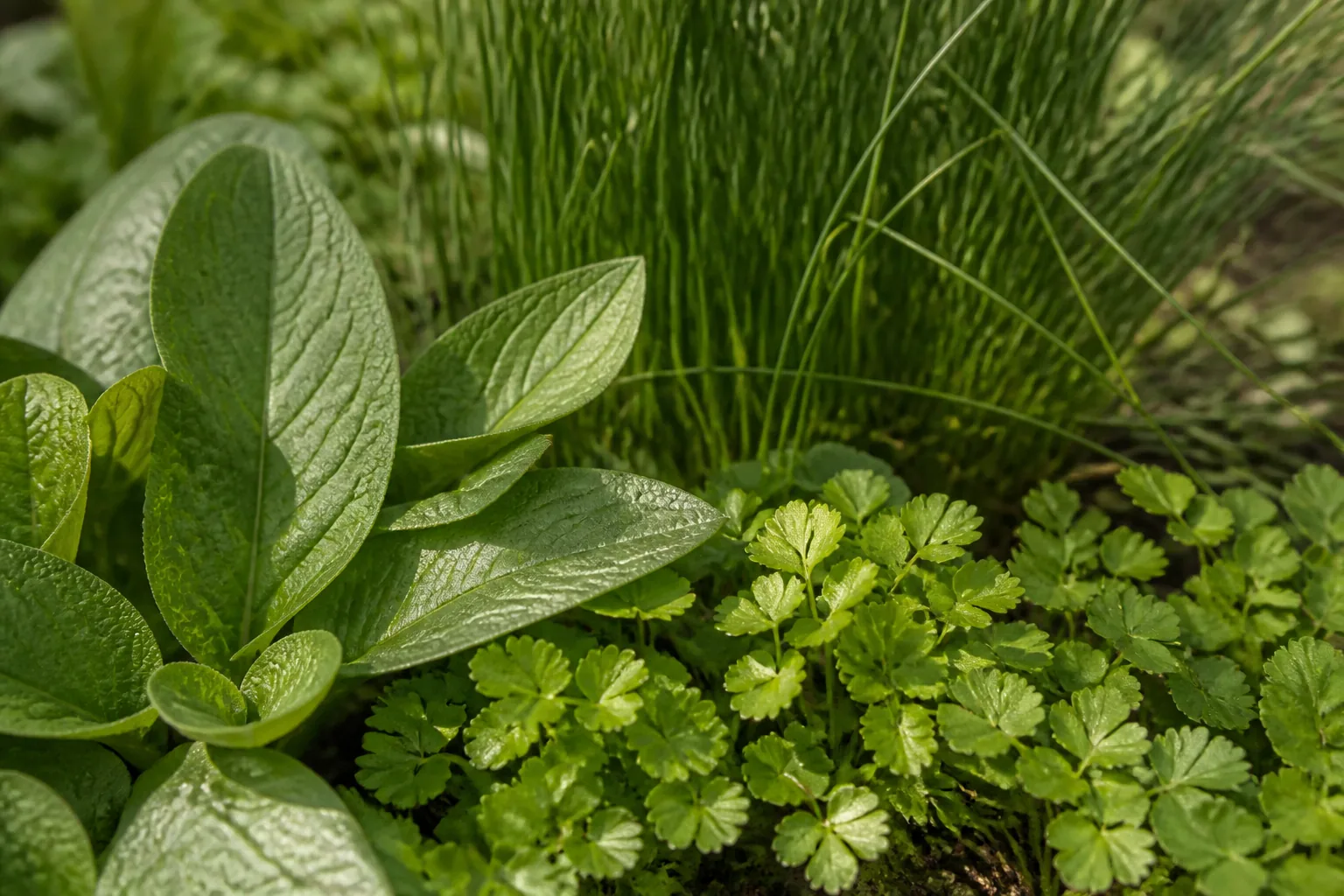
Add shade, water and texture with a job to do
Sight is only one part of it. A small tree can put moving shade over a seat. Gravel sounds different from paving underfoot, though it needs a firm edge and may not suit every route. A shallow water bowl can reflect light near a viewing point, provided you can keep it clean and place it safely.
Use materials that age without demanding perfection. Timber, stone, brick, gravel and terracotta can carry small marks and weathering well. Connect a material to something already in the garden instead of adding one example of each. You want texture, not a sample display.
If maintenance time is short, make the sensory moments concentrated. Put scented planting near the door, shade over the seat and one changing view outside the window. A smaller area that you can look after is more useful than a lush concept that becomes a weekly argument with yourself.

Preview the feeling, then check the living parts
Gardenly includes Biophilic in its Nature collection, described in the catalogue as "Nature-inspired with organic shapes." Apply it to a photo from the viewpoint you use most and look at the large relationships: where planting comes close, how the edges soften and whether shade or open ground feels balanced.
The app instructs the image model to redraw planting, beds, lawn and garden furniture while leaving the house, hardscape, camera angle and lighting unchanged. That instruction is not a guarantee. Compare the render with the original, and use it as the picture you take to a landscaper rather than as a planting or construction plan.
Do not copy every plant-like shape in the image. Note which view needs more green, where one extra layer would help and which material could connect the route to the planting. Then verify plant choices, drainage, levels and dimensions in the real garden.
Biophilic design and minimalist landscape ideas can work together. One builds contact with nature; the other controls visual noise. Browse the Gardenly style gallery to compare those directions on the same kind of photo, then keep the parts that support how you use the space.