


A credible sustainable garden design separates what you can judge in a picture from what you must prove in the real garden. Use a visual direction to compare layout, material balance and planting mass. Then check whether the timber is genuinely reclaimed, a surface handles water on your site, and the planting suits the conditions where it will grow.
A green-looking image is not evidence of a green garden. It is a useful hypothesis. The work begins when you turn each attractive detail into a question that a supplier, installer, nursery or site inspection can answer.
Decide what the image is allowed to tell you
Gardenly includes an Eco-friendly style in its Nature collection, described in the catalogue as "Sustainable living with reclaimed wood." That description gives the image model a visible direction. It can suggest weathered timber, natural-looking textures, generous planting and a calmer material palette.
The render cannot know where a board came from, how a paving base was built or whether a plant will cope with your soil. Keep those claims out of the image. Instead, use it to decide whether a timber edge belongs near the path, whether a gravel area overwhelms the planting, or whether one repeated material could replace several unrelated finishes.
Start with a current photo and keep the original beside the result. If the proposed direction only works because the image moved a wall, changed a level or invented extra space, it has not solved the garden you have.
Make reclaimed material a specification
Weathered wood can look reclaimed even when it is new. Dark metal can look durable while hiding a finish or fixing that is wrong for the location. A render shows appearance, not origin or performance.
For each material you want to keep from the image, write down its job first. Is the timber an edge, a seat or a screen? Does it touch soil? Must one damaged part be replaceable without dismantling the rest? Then ask for the source, dimensions, finish, fixings and expected care of the real product. If you plan to reuse something already in the garden, inspect its condition before designing around it.
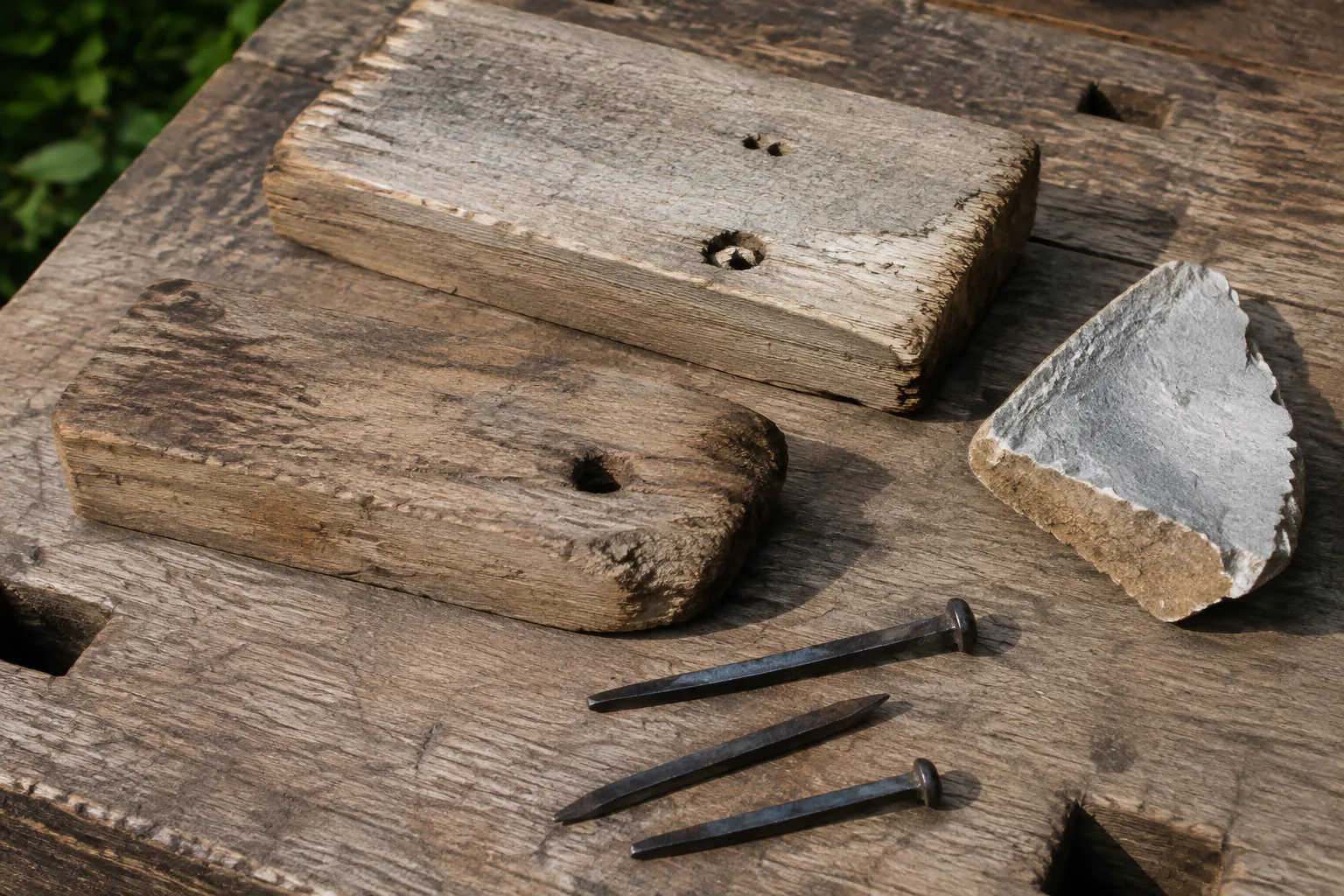
This is where sustainable direction becomes specific. "Use reclaimed timber" is still a mood until you know which timber, where it goes and whether it can do that job safely. Keep uncertain materials out of structural or safety-critical roles until someone qualified has checked them.
Inspect the ground beneath the surface
Gravel, planting and open joints may suggest a surface that lets water through. The picture cannot show the layers below it, the actual falls, compacted soil or where water goes after it leaves the frame.
Look at the garden during and after ordinary rain. Mark low spots, damp edges, downpipe outlets and places where loose material already travels onto paving. Check the real levels before choosing a surface from the render. Drainage, load-bearing layers and local requirements need site-specific advice where the answer is not obvious.
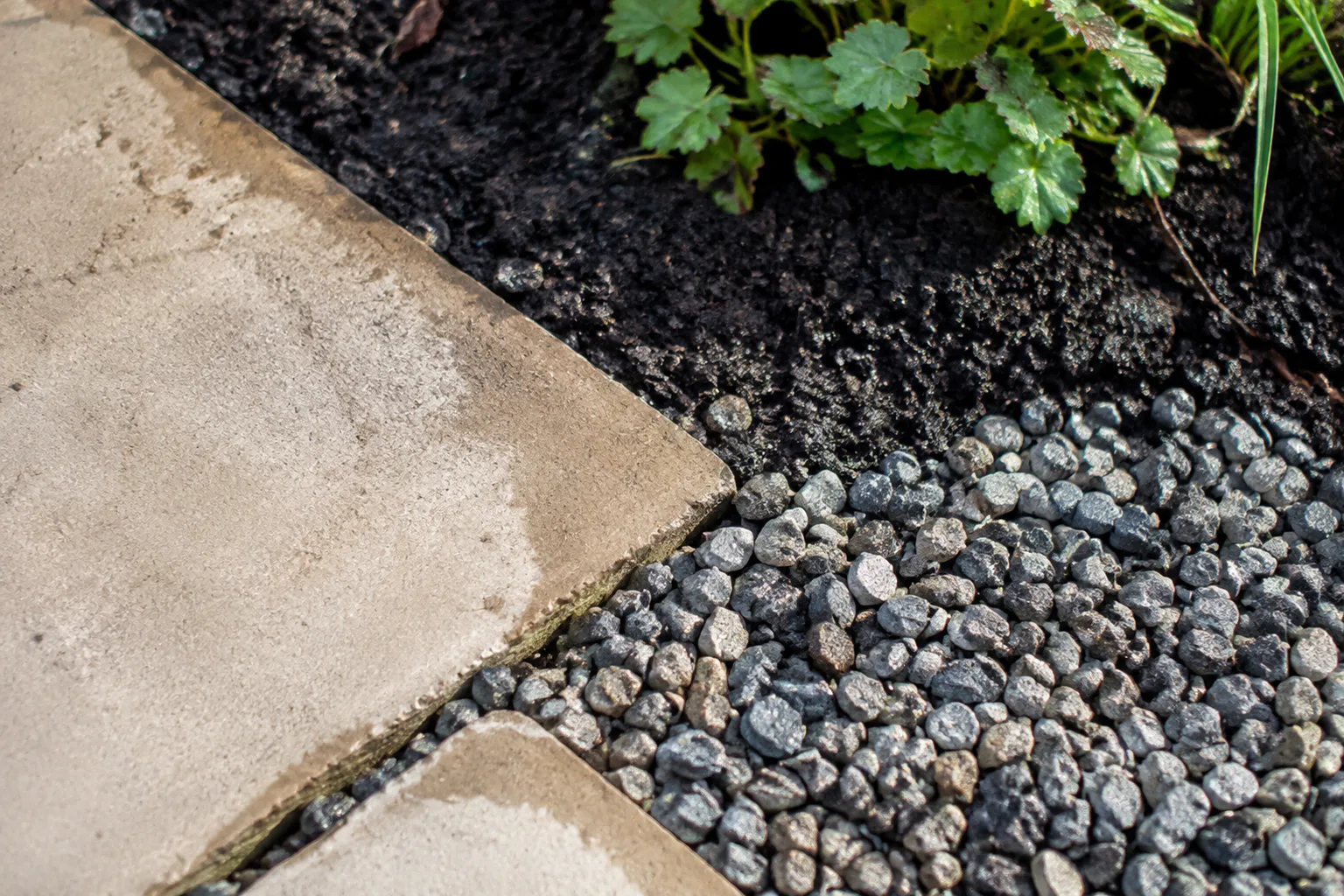
Keep the visual decision modest: perhaps one surface should continue, one edge should disappear, or a planted area should become broader. Leave the technical solution to measurements and an on-site check. A convincing texture is not a drainage detail.
Choose planting from the site, not the colour grade
An Eco-friendly render may show dense green planting, but it does not identify species or prove that every plant shares the same needs. Record the light, soil, moisture, exposure and maintenance you can provide. Then choose plants for those conditions and their mature size, with help from a local nursery or garden professional where useful.
Group plants with compatible care rather than copying every shape in the image. Leave access to soil, boundaries and drains. If reducing recurring work matters too, the guide to low maintenance landscaping ideas starts with the jobs the garden already creates.
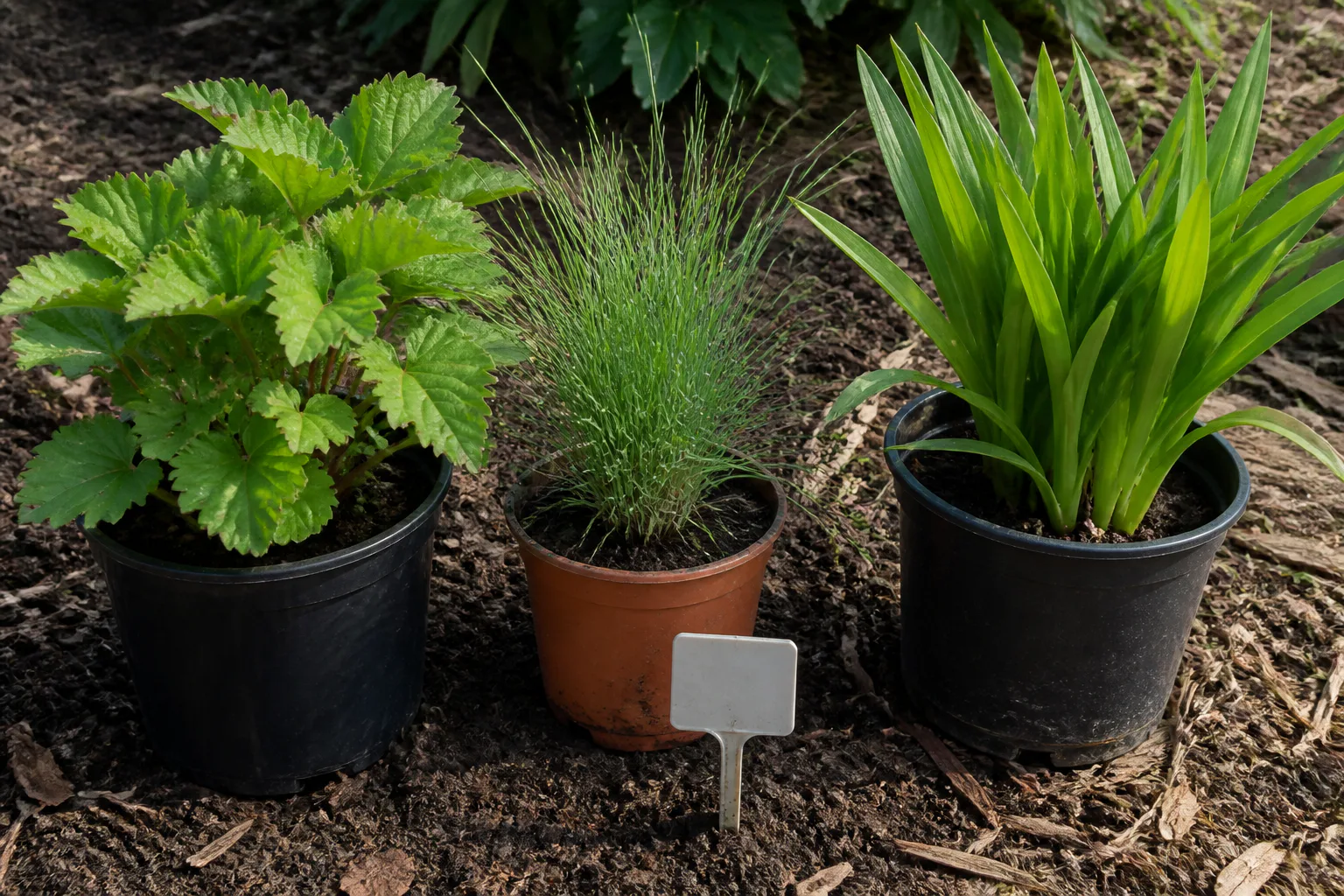
Use the render to discuss broad height, density and repetition. Use the real site to settle the plants.
Turn the preferred render into a check list
The image model is instructed to leave the house, hardscape, camera position and lighting unchanged while it redraws planting, beds, lawn and garden furniture. That instruction is not a guarantee. Compare every fixed edge with the original photo before carrying an idea forward.
Choose no more than a few relationships from the preferred image: a wider planted strip, one repeated material, or a clearer balance between open ground and foliage. Beside each one, note what still needs proof. Material origin, condition, construction, drainage, plant suitability, dimensions and local rules all belong on that list.
If the existing garden has not been inspected yet, begin with the garden renovation scope guide before choosing a style. Once the facts are recorded, browse the Gardenly styles and use Eco-friendly as one visual test. Treat the result as the picture you take to a landscaper, not as a certificate that the finished garden will be sustainable.