

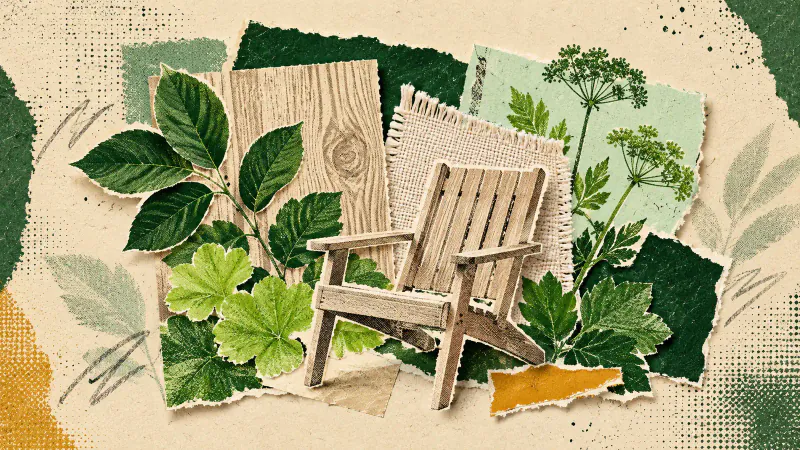
A Scandinavian garden can start with the chair and patio you already use. Bring light wood tones into the things close enough to touch, add a little softness you can carry indoors, and let foliage sit against the timber. The aim is a comfortable place for an ordinary evening, with a practical home for everything when you leave.
This is the stage after choosing where to sit. If that decision is still open, our garden seating ideas cover the view and daylight tests. Here, keep the seat where it works and concentrate on the armrest, the cushion and the planting beside you.
Let pale wood set the tone
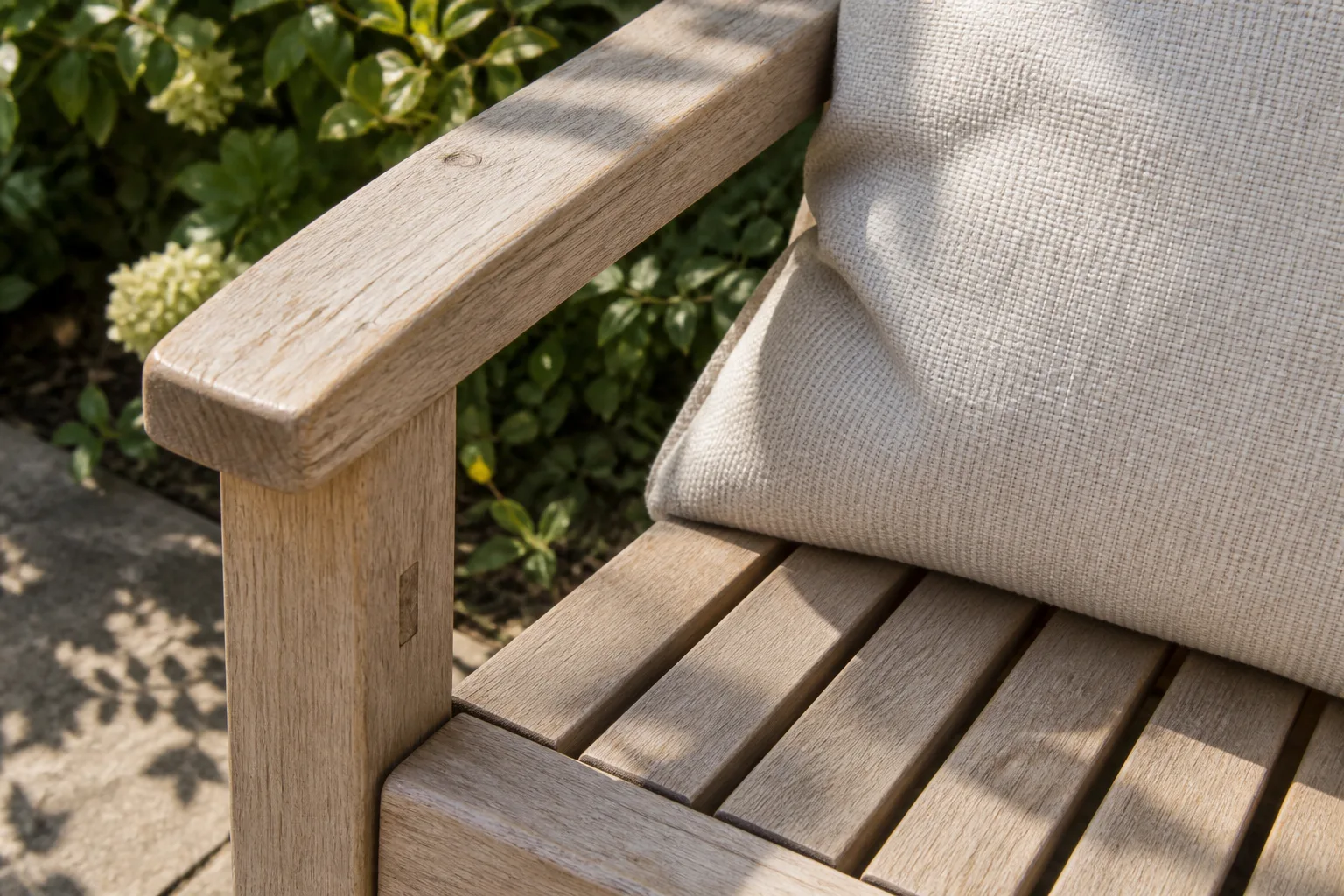
Gardenly's Scandinavian style is described as "Cozy hygge with light wood tones." Take that as a material cue. A pale chair arm, weathered table or timber planter can introduce the look without changing the paving. Leave some grain visible; it gives the surface texture as well as colour.
Start with one existing piece. Put a cream or oatmeal cushion beside it and look at the pair outdoors. A beige that seems quiet in a shop can look pink against grey wood; another may disappear into it. Use a towel or fabric sample for this first check. See one colour in your garden before ordering a whole matching set.
The timber does not need to look newly sanded. Decide whether you like the grey tone it already has before considering any treatment, then follow the maker's care advice for that particular piece. A pale finish is a colour choice, not evidence that a material suits outdoor use. Keep sound furniture even if its wood is darker; a lighter cushion can make the combination work.
Make softness easy to bring out and put away
Give each textile a job. A cushion can make the back of a chair more comfortable; a throw can come outside with you on a cool evening. Avoid piling cushions onto the seat until there is barely anywhere left to sit. Try the arrangement while reading or having a drink, then remove whatever you keep pushing aside.
Texture carries much of the interest here. A coarse weave beside smooth timber gives you a visible difference even if both are pale. One muted colour is enough to break up the neutrals if you find them dull. Use a cushion you like rather than adding a colour simply because a reference photograph contains it.
Plan the return trip indoors, too. Clear a shelf or basket space near the door before adding bulky cushions. Check care labels and let damp textiles dry before storing them. If putting everything away feels like packing up a campsite, keep fewer pieces outside. The comfortable version should be easy to use on a Tuesday.
Put loose foliage beside the timber
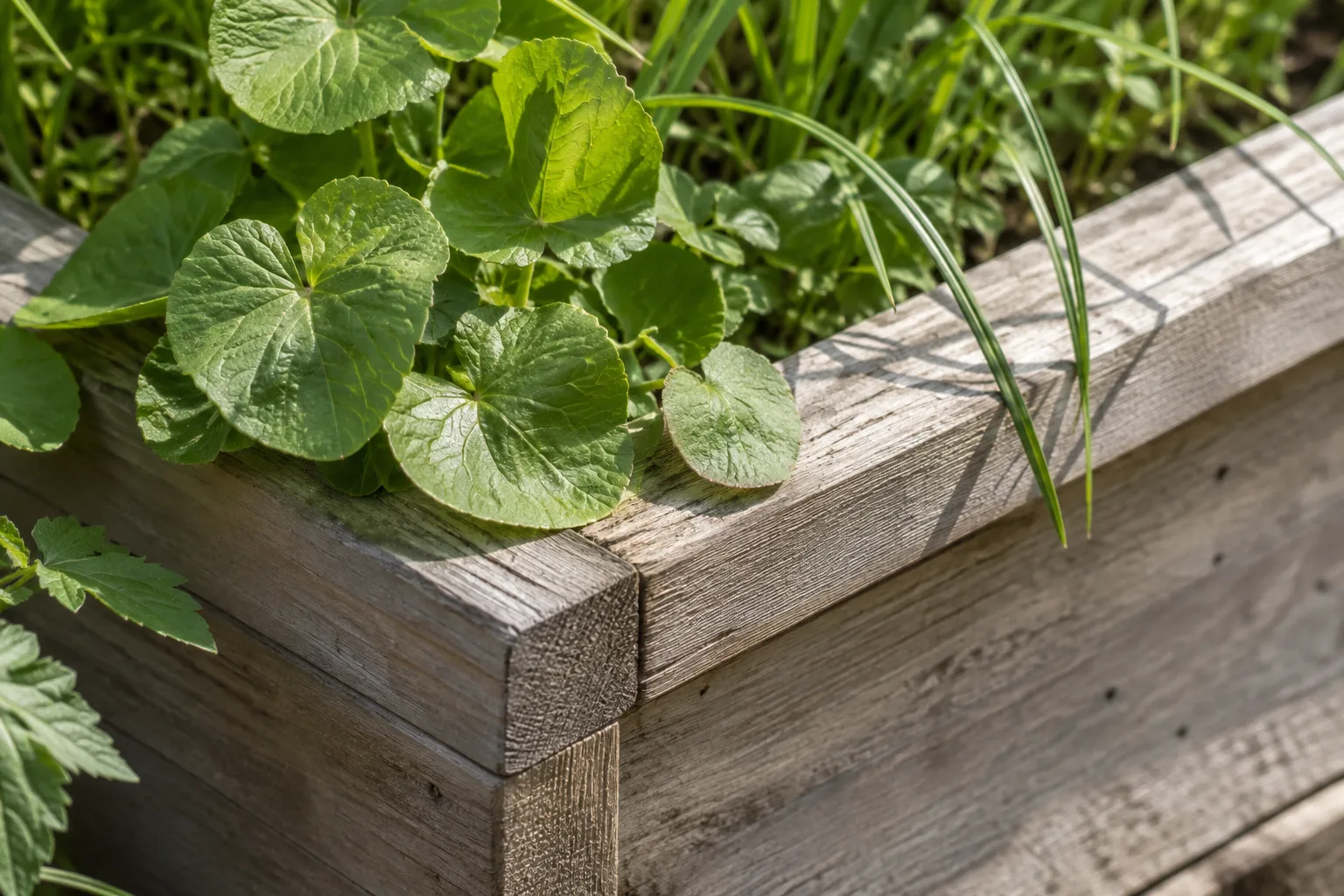
Look closely at the point where planting meets a wooden surface. Fine leaves can cross part of a planter's outline while enough timber remains visible to show its grain. A broader leaf nearby makes the finer texture easier to notice. This is a small composition you can work on without rearranging the garden.
Try the relationship with existing pots first. Put one beside the wood and inspect it from the chair. Move it a little further away if leaves brush your arm or hide the whole planter. Leave yourself enough space to water and clean around it. The photograph below shows the material relationship, rather than a plant combination to copy exactly.
Choose actual plants for your light, soil and climate, and check their mature size. A soft outline does not require a particular species. Tell a local nursery which leaf texture you want and describe the growing conditions; a plant chosen only for its appearance in a photo may disappoint.
Preview the feel, then check the details by hand
You can compare the Scandinavian direction in the Gardenly style gallery, then apply it to a photograph of your garden. Look for the balance of pale wood and foliage and whether the result suggests somewhere you would settle with a book.
The image model is instructed to leave the house, hardscape, camera angle and lighting unchanged. That is an instruction, not a guarantee. Check the result against your original photo before borrowing an idea. Gardenly does not supply a planting list or know which materials will suit your site.
Take one detail from the image and test it with what you have: a cushion against an existing chair, or a pot beside timber. Sit there for a while, then put the textile away. Both parts should feel easy.