

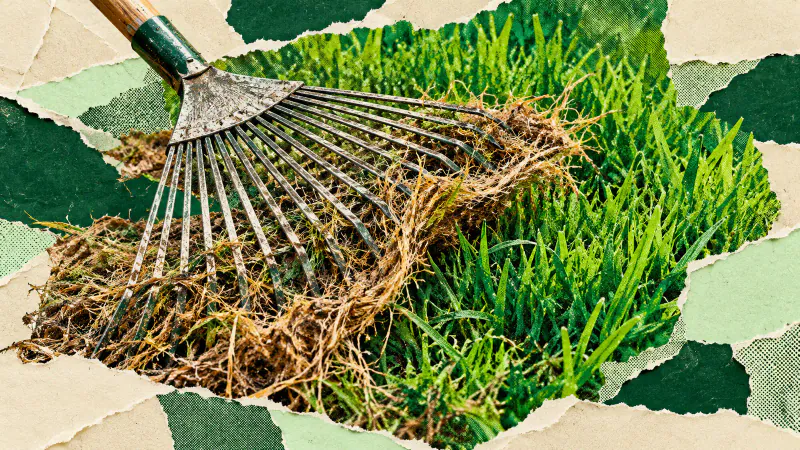
To decide how to scarify a lawn, first check whether it needs the disturbance and whether the grass can recover. On a small established lawn, hand raking can remove matted debris without hiring a machine. Work only while the grass is growing actively, with suitable weather ahead. By late October, waiting may be the better decision.
This guide covers a modest hand-raking job. A thick, tightly bound thatch layer or a large struggling lawn needs a more specific assessment. Scarifying is not a compulsory annual treatment, and the amount you pull out is a poor measure of success if healthy grass comes with it.
Check beneath the green leaves
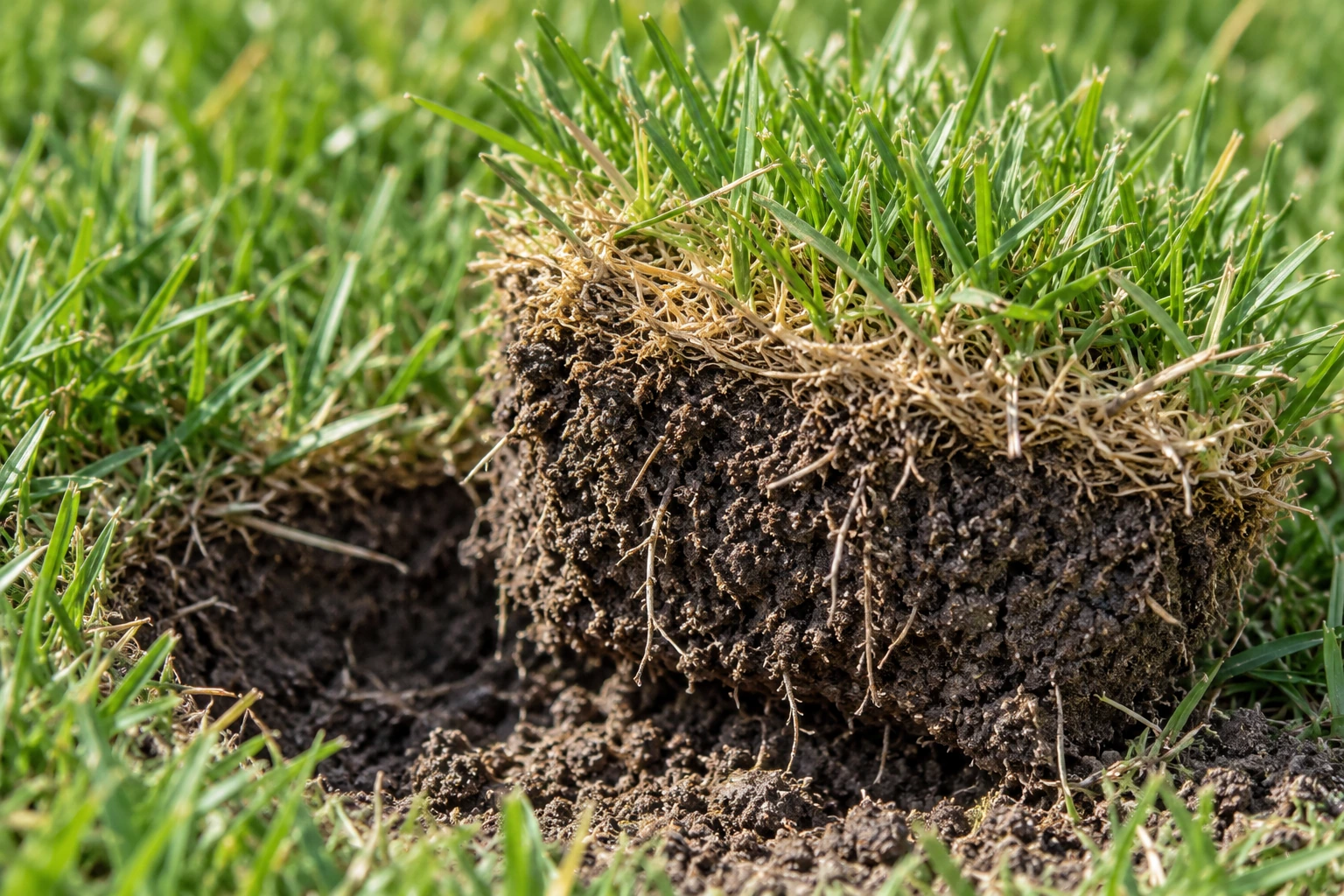
Thatch sits between the green growth and the soil. It contains interwoven stems, roots and other slowly decaying plant tissue; it is not simply the short clippings left by ordinary mowing. A thin layer can be useful.
University of Minnesota Extension suggests checking a small wedge of turf and measuring the layer above the soil. In its Minnesota guidance, around half an inch or less usually needs no intervention. Treat that as regional guidance, then check what is appropriate for your grass.
Look in more than one place. A worn route and a quiet corner may tell different stories. Replace the sample after inspection, and record where the dense material occurs rather than assuming the whole lawn needs identical work.
Choose growth, not a calendar date
The grass type changes the timing. Clemson Extension places dethatching of cool-season lawns in late summer or early autumn, while warm-season grasses need spring green-up or early-summer growth. Those are starting points for local advice, not a timetable for every garden.
The RHS October lawn guidance excludes waterlogged ground and very wet, very dry or frosty weather. Even on a pleasant afternoon, pause if growth has slowed and winter is close. One sunny day is not enough if the grass has little growing time left.
For Dutch readers, STIHL's local guidance favours spring or early autumn. A September recommendation should not quietly become an instruction to start at the end of October.
Match the tool to the job
For light raking, the RHS autumn-care guide uses a spring-tined rake. A dedicated hand dethatching rake has cutting blades; a powered scarifier is another step up. The names are often mixed together, so inspect the working head before following advice intended for a different tool.
University of Maryland Extension distinguishes hand removal on small areas from machines that slice through thatch or comb out loosened debris. If the material resists light raking, ask about the grass and treatment rather than simply pulling harder. This is also the point to decide whether the area is manageable by hand.
Try a short strip first
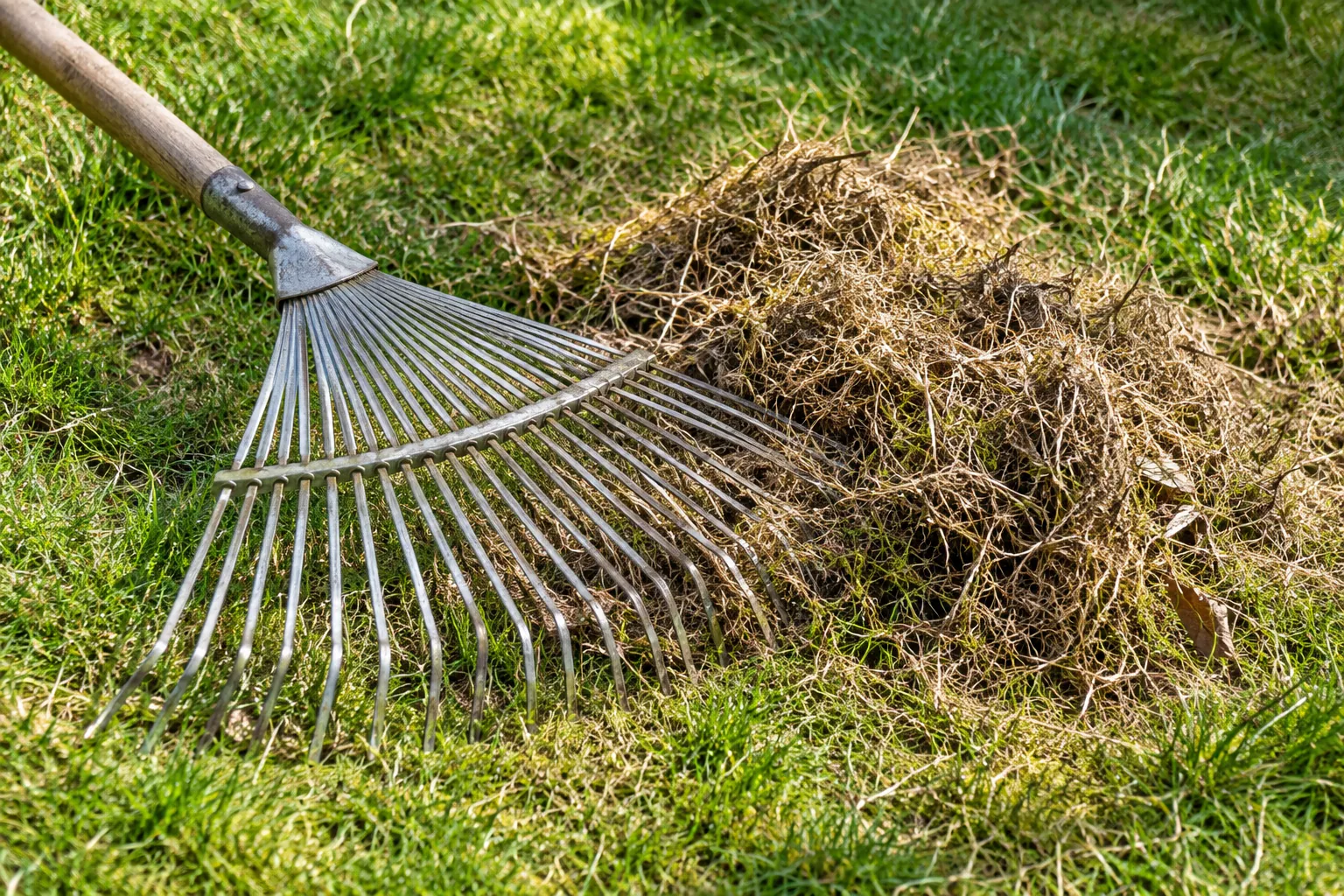
Choose a small patch you can inspect closely. Pull the spring-tined rake through the matted surface, collect what comes free and check that the grass remains rooted. The RHS recommends working in two directions without uprooting the grass; make a second pass only when the first patch tolerates it.
Work across a manageable section and clear the loosened material as you go. Stop if rooted plants lift or the surface starts tearing. The aim is a controlled removal, not bare earth. A photograph of the test strip and its collected debris is more useful for asking advice than an enthusiastic account of how hard you raked.
Leave room for recovery
Expect a temporarily rougher surface. Maryland Extension warns that dethatching can cause visible damage for several weeks. Check moisture afterwards and follow grass-specific local advice about watering, any reseeding and feeding; avoid adding every treatment just because the tools are out.
Keep this job separate from the broader autumn garden observation. If the same patch continually struggles because the site does not suit grass, revisit the options in our no-grass backyard guide before repeating a disruptive routine.
Gardenly's style gallery can help explore how a different planting balance might look. A generated image cannot diagnose thatch, show root health or confirm recovery. Take the real turf sample and your notes to a local lawn specialist when the physical evidence is unclear.
