

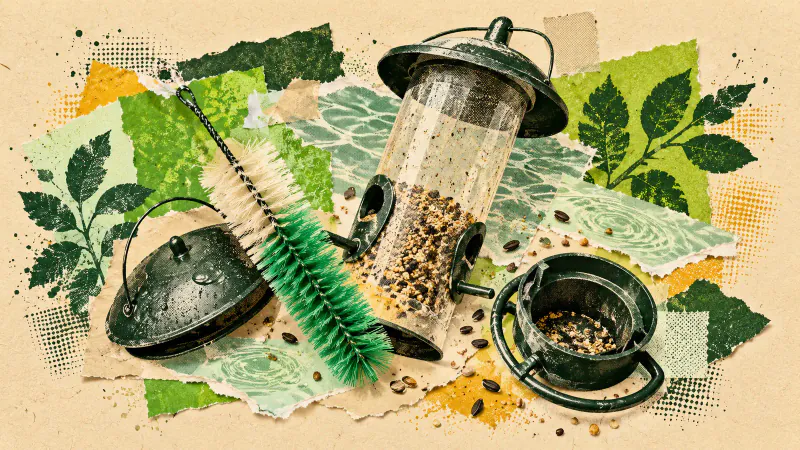
Start cleaning bird feeders by emptying them completely, taking apart the removable sections and washing away old seed and droppings. Follow local bird-health guidance for disinfection, rinse thoroughly and let every part dry before refilling. Keep the feeder empty during any recommended disease or seasonal feeding pause.
This routine is for an existing seed feeder. Nectar feeders need different care, so use Cornell's separate hummingbird instructions for those. Keep the feeder's own care instructions beside you, especially before applying heat or cleaning products.
Check whether feeding should pause
Look at the birds before reaching for more seed. If you notice sick or dead visitors, stop feeding and contact your local wildlife authority or a qualified wildlife rehabilitator for advice. Project FeederWatch recommends removing affected feeders temporarily and cleaning the feeding area. Washing does not make immediate refilling appropriate.
Seasonal guidance also differs by region. In the UK, the RSPB's current advice is to pause seeds and peanuts from May 1 through October 31, even with daily cleaning. It also advises against flat feeders and bird tables. These recommendations address disease transmission, particularly trichomonosis affecting finches, and should not be presented as a worldwide calendar.
In the US, check your state wildlife agency's current notices before restarting. Use the pause and restart instructions for your location and situation rather than choosing a fixed number of days from a general article.
Empty the feeder at an outdoor cleaning spot
Set out a dedicated bucket, brush and waterproof gloves outside, away from food preparation. Keep this kit separate from the washing-up brush. The BTO's hygiene guidance recommends outdoor-only cleaning equipment and washing your hands and forearms afterward.
Put leftover seed in the waste bin where wildlife cannot reach it. Do not scatter it beneath the feeder or tip it onto an accessible compost heap. Fresh seed added on top would leave the oldest material sitting at the bottom again.
Clear spilled seed and droppings beneath the hanging point too. That patch is part of the job, even when the feeder itself looks reasonably clean.
Open the parts that trap old food
Follow the manufacturer's dismantling instructions. Remove the lid and base where designed to detach, then lay out the pieces so you can see what needs cleaning. A quick phone photo beforehand can save some puzzling over the assembly later.
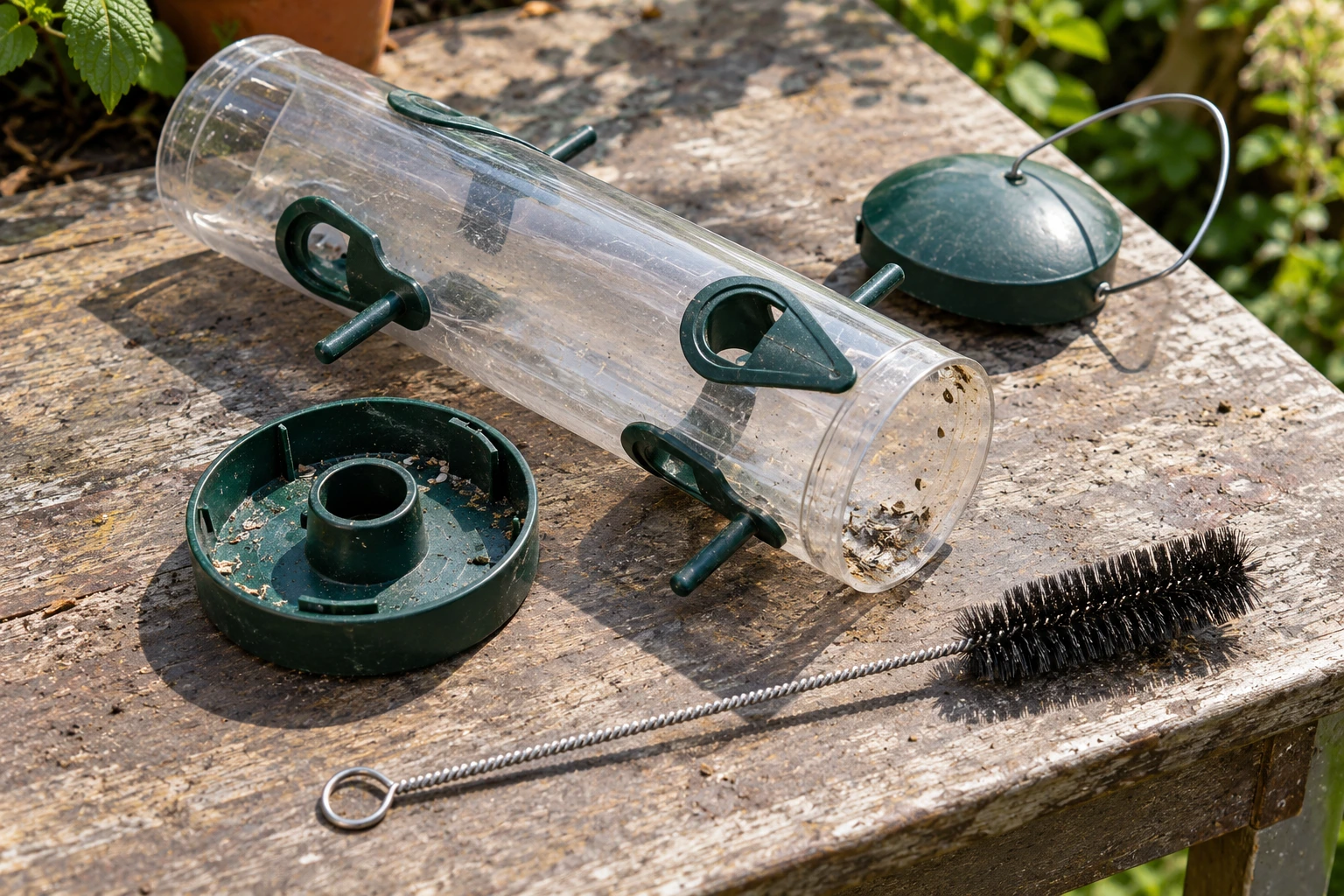
Dampen dirty surfaces before brushing to reduce airborne dust. If the feeder's care instructions permit warm soapy water, use that to wash away debris with a dedicated brush. Reach inside the tube and around feeding openings and the base seam. Check the underside of perches too. Look over each surface once the seed husks have gone.
The RSPB's cleaning guide describes dismantling feeders for access. Use water temperatures and washing methods the exact model permits. Only put parts in a dishwasher if its instructions allow it; a general cleaning tip cannot establish compatibility.
Disinfect as directed, then rinse and dry
Cleaning off visible dirt and disinfecting are separate stages. Garden Wildlife Health's hygiene guidance explains that debris can reduce a disinfectant's effectiveness, so remove it first.
Choose a treatment consistent with local bird-health advice and suitable for the feeder material. Follow the exact product label for dilution, contact time and precautions. Advice for one formulation does not establish a recipe for another bottle. If the label does not cover the intended use, ask the manufacturer or local wildlife adviser before proceeding.
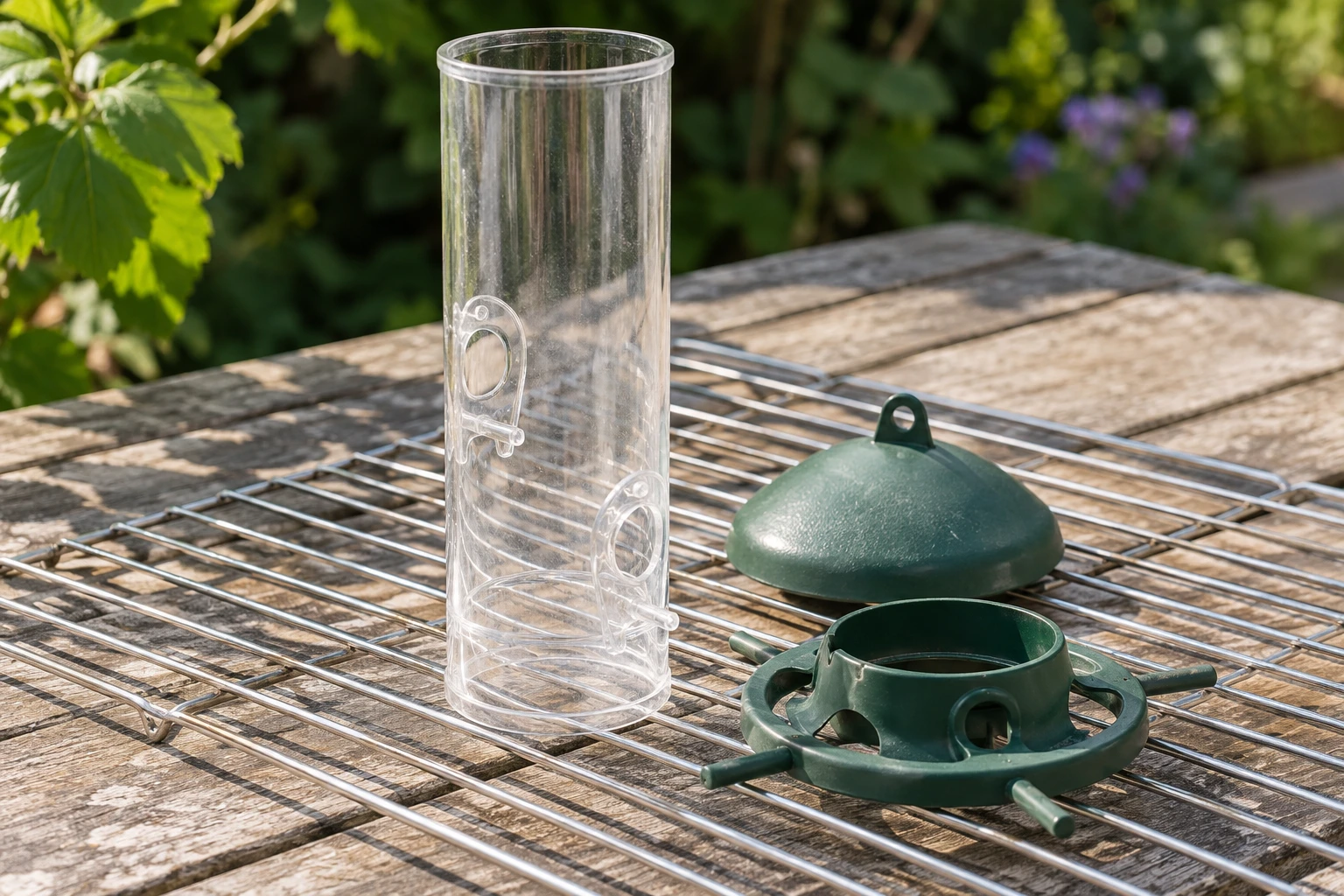
Rinse all treated parts thoroughly with fresh water and leave them apart to air-dry. Check the inside of the base and any recessed joins before reassembly. Allow enough time for drying instead of filling a damp tube because the outside feels dry.
Refill modestly and check between cleans
When local guidance permits feeding again, use fresh seed and adjust the quantity to what visiting birds eat. Check for damp clumps and accumulating waste between full cleans. Cornell suggests cleaning seed feeders about every two weeks, more often with heavy use or wet weather; UK RSPB guidance calls for weekly cleaning. Follow stricter local outbreak advice when issued.
For the planting around this routine, our wildlife garden guide covers shelter and natural food. Gardenly can offer broad planting inspiration from a garden photo. Settle bird-health decisions using local guidance, and keep the feeder accessible for its next clean.