

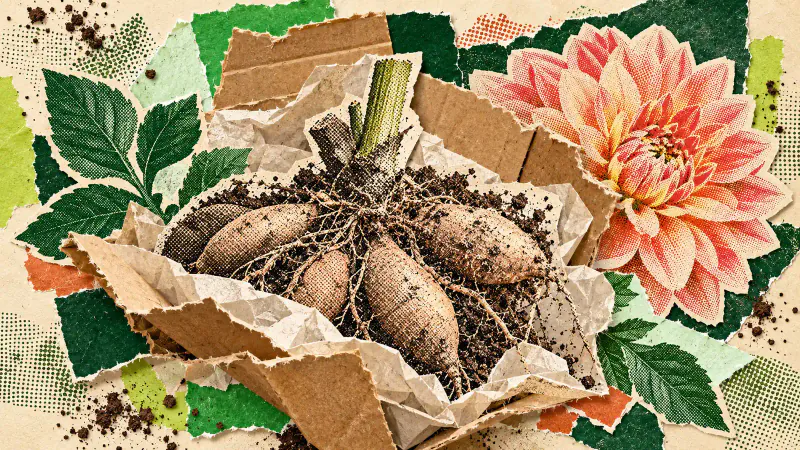
For overwintering dahlias in a cold or wet garden, lift the tubers, dry them and store the healthy clumps somewhere cool and frost-free. Keep them intact until spring and inspect them during winter. Leave the box somewhere you can reach easily for those checks.
The RHS dahlia guide allows for leaving tubers outdoors in milder areas with free-draining soil, but warns that a harsh or very wet winter can cause losses. This routine is for existing, identified dahlias where indoor storage is the more suitable choice.
Watch the weather and label each plant
Use local forecasts and the condition of the foliage to choose your moment. Wisconsin Extension advises lifting dahlias before a hard freeze, allowing a light frost to kill the tops. A calendar date cannot tell you whether the ground in your garden is about to freeze.
Label each clump with its cultivar name before you lose track of the plants. If the name is unknown, record the flower colour and its position in the border rather than guessing a variety. Keep that label with the clump through drying and packing. A quick photograph can back up your written notes.
For other plants facing an approaching cold night, use our guide to protecting plants from frost. Dahlia storage needs a place prepared for the whole winter.
Loosen the soil around the whole clump
Have a fork, secateurs and a tray ready before you start. Cut back the dead stems, leaving a short section attached. Work the fork into the soil well away from the base, loosen around the plant and ease the clump up with its surrounding soil. Support it from underneath instead of pulling on the stem.
Work slowly where the fork meets resistance. Wisconsin Extension warns that cuts, bruises and damage to the tubers' skin can allow rot into stored material. Shake loose soil away gently. Missouri Botanical Garden's lifting advice includes removing soil by hand; ease remaining clods away without scraping the skin.
Let the clumps dry before packing
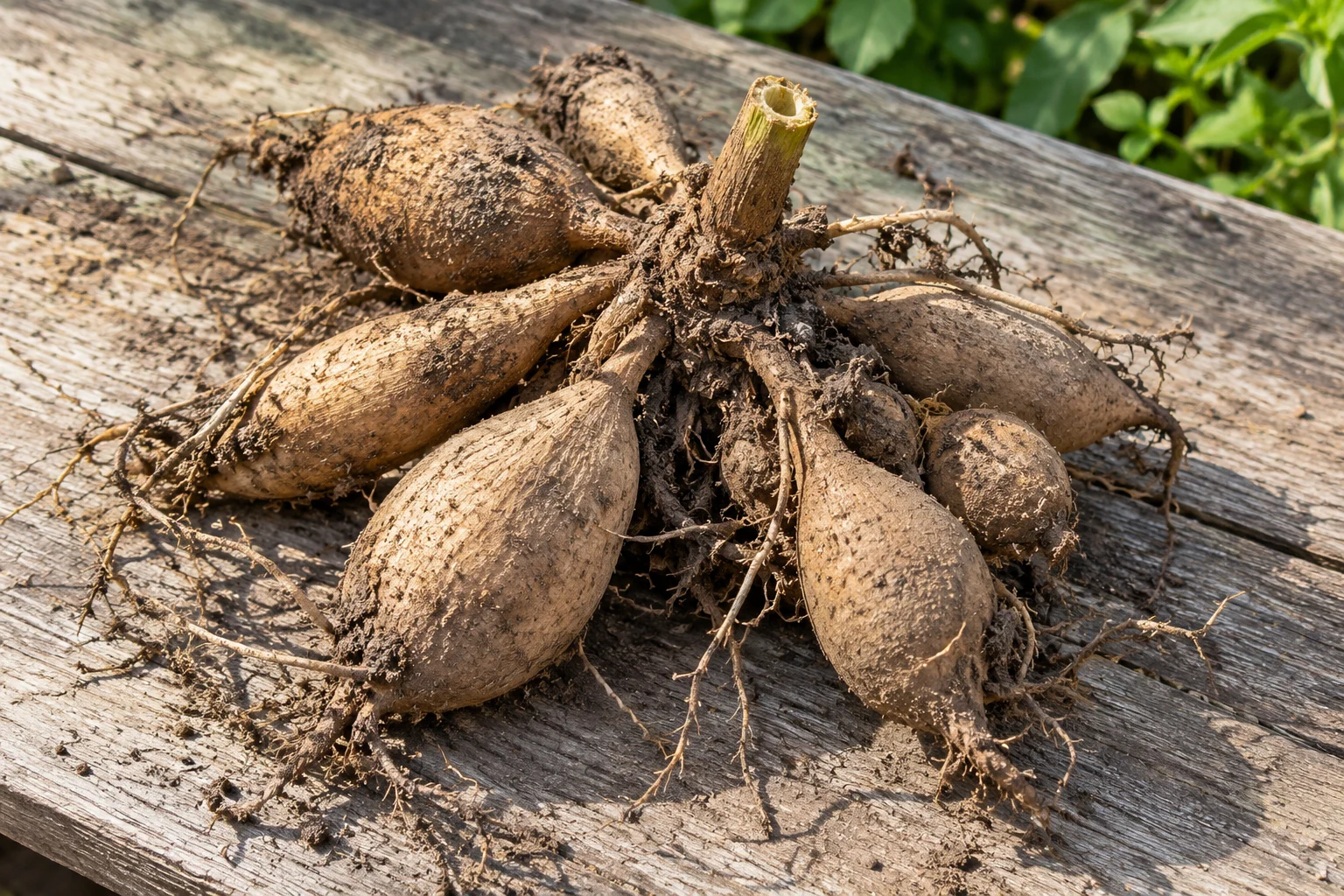
Inspect what you have lifted. Remove damaged tubers and keep obviously diseased material out of the storage batch. Leave the sound clump together. Iowa State Extension recommends postponing division until spring because wounds made before storage increase the chance of rot.
Set the clumps upside down so moisture can drain from the hollow stems. The RHS lifting guide uses a cool drying place before packing. Keep the clumps sheltered from rain and frost, with air around them. Check the underside and stem bases as well as the exposed surfaces before deciding they are ready.
Drying time varies between published methods and conditions. Follow the preparation method you have chosen, checking that surfaces and stem bases are dry before packing. Damp soil or moisture still draining from a stem means the clump needs more time under cover.
Pack loosely and check the storage place
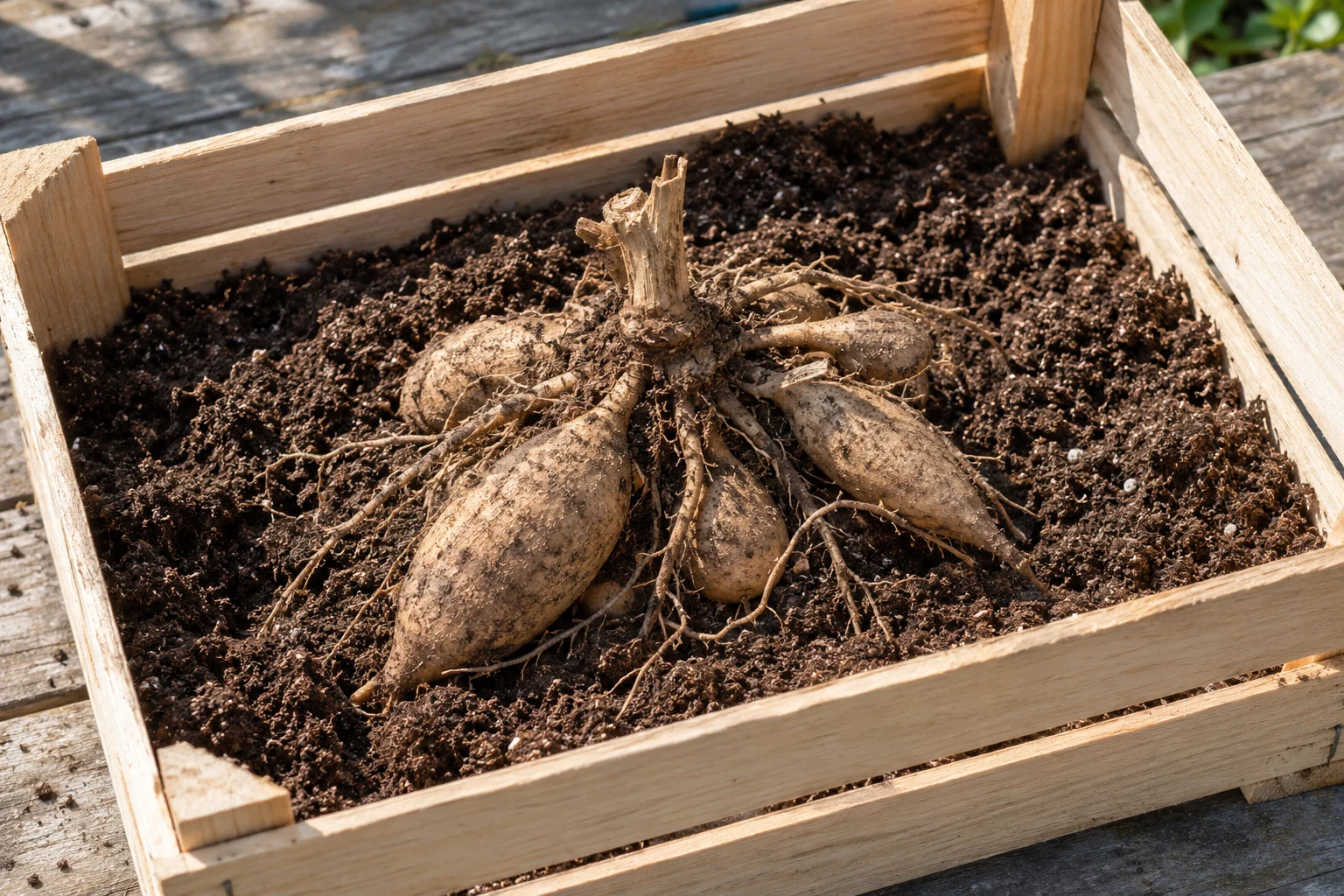
Use a shallow crate or an open ventilated box. Arrange the dry clumps with loose, dry potting compost around the tubers, keeping the old stems visible. The RHS guides describe dry compost as one packing option. Leave space to lift each clump out for inspection, and put its label where it will stay with the plant.
Choose a cool, dark place that stays above freezing. Check the actual conditions there with a thermometer, especially during cold spells. Iowa State cautions that even an attached garage can freeze in extreme weather. A shed's roof keeps rain out; it does not establish a suitable winter temperature.
Revisit the box through winter
Set a monthly reminder and inspect sooner if storage conditions change. The American Dahlia Society recommends monthly checks and removing rotting tubers. Look for softness as well as visible decay; check the tubers underneath, not just the stems above the packing.
Shrivelling needs a different response from rot. Wisconsin Extension's storage advice recommends lightly moistening the packing medium if tubers dehydrate. If the contents are too moist, take them out to air-dry before repacking in dry material. Adjust to what you find rather than watering the box on a schedule.
Keep the labels for spring, when you can assess the clumps before starting them into growth. For later border appearance, Gardenly's styles can help you explore a visual direction on a garden photo. Use horticultural guidance for the tubers' storage and care.