

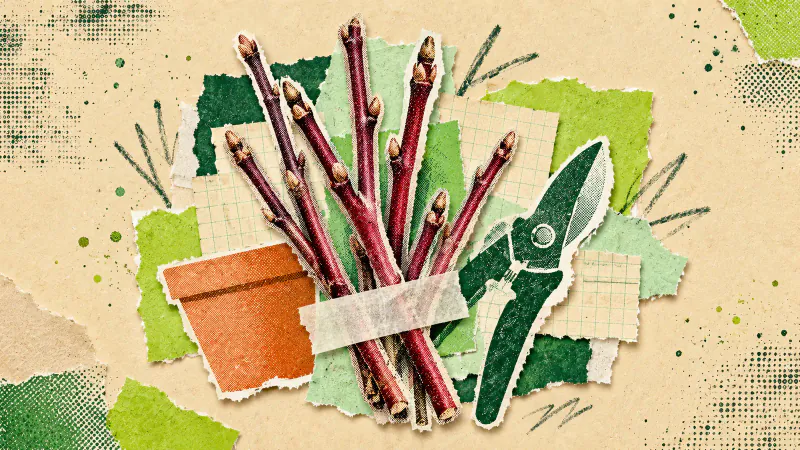
Take hardwood cuttings from suitable deciduous shrubs while they are dormant: select healthy wood from the past growing season, cut it into sections with buds, and insert the base of each section into a moist rooting medium. Keep the pot sheltered and check it through winter and the following growing season. Allow time for rooting and further growth before you expect a shrub that fills a border.
Start with one identified shrub already growing in your garden, such as a dogwood grown for its coloured winter stems. Check its propagation guidance first. This method grows roots on pieces of stem. If you want to put an established nursery plant straight into a border, use our guide to planting shrubs instead.
Check the plant and wait for dormancy
Find the plant's name on its original label or confirm it with a nursery. A winter-stem dogwood and a flowering dogwood are different starting points, so look beyond the common name. The RHS winter-stem dogwood guide specifically describes hardwood propagation for that group.
Look for leaf fall and closed buds, then check local advice. In a temperate northern garden, autumn is a useful time to prepare, but an October date does not make a leafy shrub dormant. The RHS hardwood cuttings guide recommends working after leaf fall and before spring bud burst, avoiding severe frost.
Colder regions can need a different schedule. Iowa State Extension favours late February or early March for collecting material in Iowa and describes cold storage for earlier collections. Follow the method appropriate to your climate rather than moving autumn cuttings into a heated room.
Select a small batch of healthy stems
Prepare clean, sharp secateurs, a deep pot with drainage holes and a label. Set the pot up before cutting so the stems can go into their rooting medium promptly. Begin with a few cuttings you have space to look after.
For winter-stem dogwoods, the RHS recommends straight, healthy stems about pencil thickness. Choose shoots made during the past growing season that have become woody, and leave damaged or diseased material on the reject pile. Keep different plants in separate batches, with the name beside them from the start.
Cut with the top and bottom clearly marked
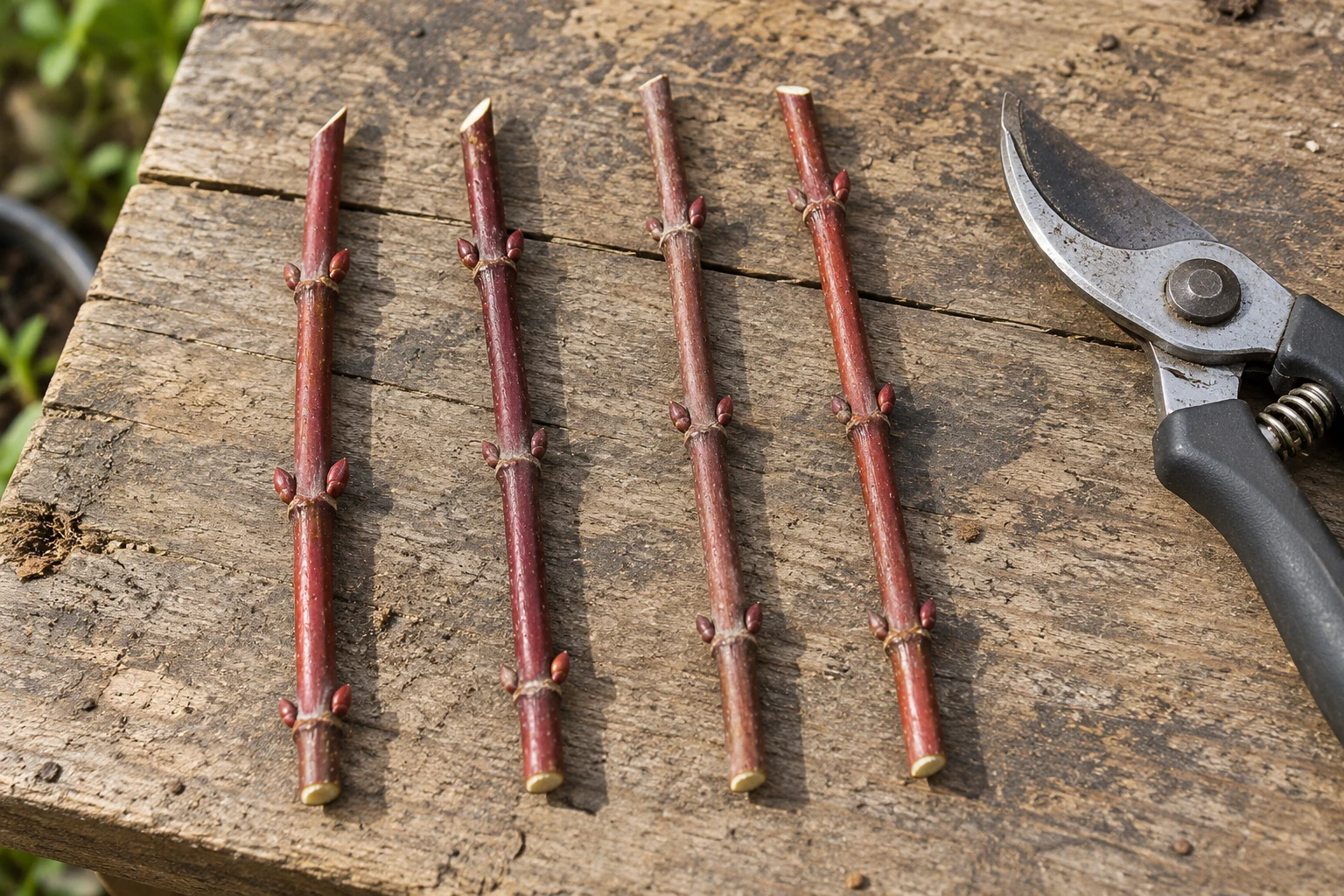
Remove the soft tip. For the winter-stem dogwood example, the RHS recommends sections about 20 to 30 cm long. Other shrubs can need different lengths, so keep the species instructions beside your work.
Make a straight cut below a bud or pair of buds at the base. Cut the top on a slope above a bud. The different cuts help you keep the original direction of growth clear when several bare sticks are lying together. Keep the buds intact and arrange the sections with their bases pointing the same way.
Some plants need a different preparation, such as a heel of older wood. Do not add bark scraping or splitting just because another shrub's instructions show it. Check the named plant's method before making an extra wound.
Insert into a deep, freely draining pot
For a small container batch, the RHS suggests a gritty potting medium, for example equal parts coarse grit and multi-purpose potting compost. Use a pot deep enough to accommodate the cuttings. Moisten the mix and let excess water drain away before inserting them.
Put the straight-cut base down, with roughly two-thirds of the cutting beneath the surface and buds remaining above it, following the RHS method. Firm the mix around each stem and water gently. Empty any water collected underneath; the pot should not stand in a puddle.
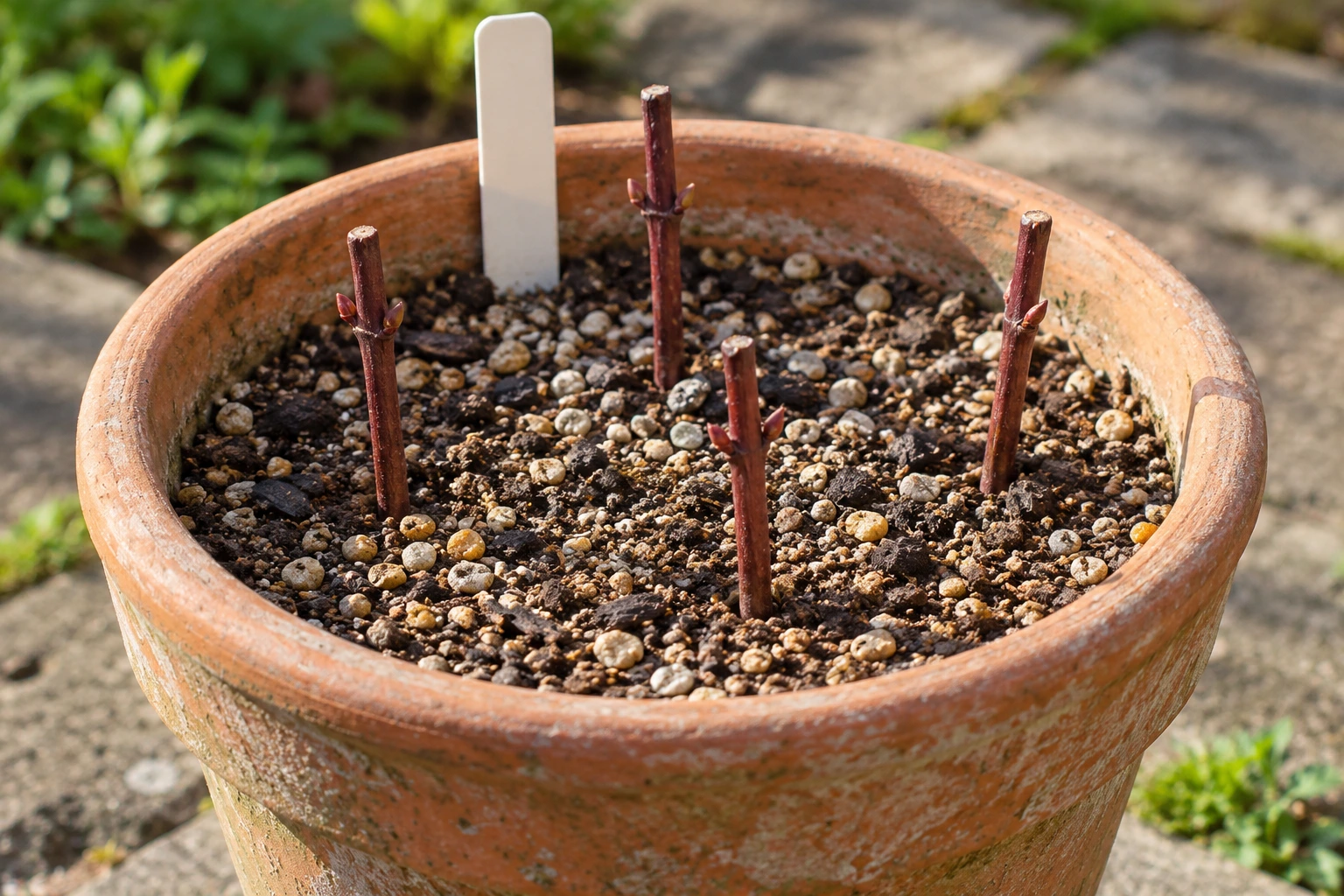
Label the pot with the plant name and date. Keep it in a sheltered cold frame or unheated greenhouse, as the RHS recommends for this container method. Check what extra winter protection your local conditions require.
Keep checking while roots develop
Feel the medium regularly and water when it starts to dry, allowing it to drain each time. Iowa State warns that saturated medium limits oxygen and encourages rot. Winter rain or a closed frame does not remove the need to inspect the pot.
Keep caring for the batch as spring shoots appear. Let the roots develop rather than treating the first leaves as permission to plant out. The RHS winter-stem dogwood method keeps cuttings growing until the following autumn; check that each has rooted before potting it on or planting it.
For the eventual border's appearance, Gardenly can help explore planting shapes from a garden photograph. Keep the real plant names and growing requirements in your notes. A render cannot identify your cuttings or show whether roots have formed.