

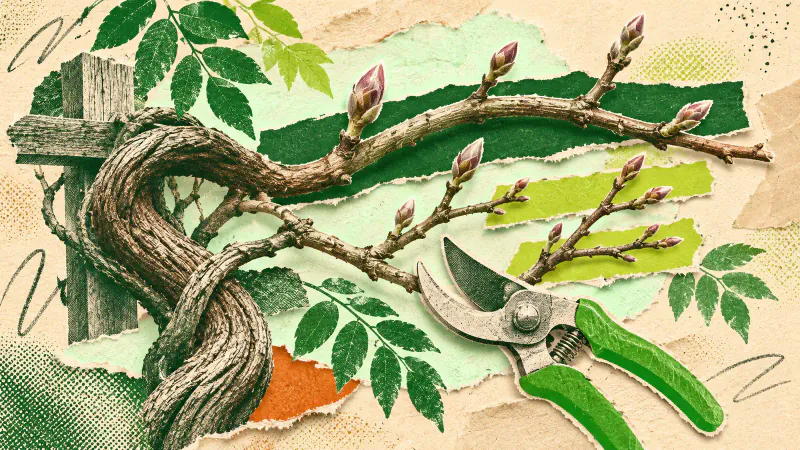
Winter pruning wisteria starts with finding the permanent branches. Keep those branches, then shorten the appropriate side shoots during the plant's dormant, leafless period. For established Chinese and Japanese wisterias in a UK-like climate, the usual winter pruning period is January or February. November is a good time to identify the plant and plan the work; it is not an instruction to start cutting.
This guide covers routine care of an established climber with a framework already in place. A young plant still filling its support, a neglected tangle and an American wisteria need their own guidance. Check the species and local timing before using a bud count on the plant in front of you.
Check the plant and the working position
Find the nursery label or planting record. If you cannot confirm the plant, take clear photographs to a local nursery or gardening adviser. A bare climbing stem alone is a poor basis for choosing a pruning method.
Look at the whole working area before opening the shears. Keep this a job you can reach from firm ground. Growth above a doorway, across a roof or behind unstable supports needs an assessment by someone equipped for the work. Pulling on an overhead tangle can move more than the stem you intended to remove.
Use clean, sharp hand pruners for shoots within the maker's stated capacity. Our hand-pruner guide explains fit and cutting limits. If a thick branch will not fit, stop and reconsider whether it needs removing.
Trace the branches you will keep
Follow a main stem into its older branches. These make the framework that occupies the wall or support. The thinner growth attached to them includes the side shoots you will shorten. Trace each shoot back to its origin before deciding where to cut, especially where several stems cross.
The RHS growing guide separates young framework building from regular pruning. Keep growth that is still needed to fill an intended gap. Do not apply a short spur cut indiscriminately to every thin stem.
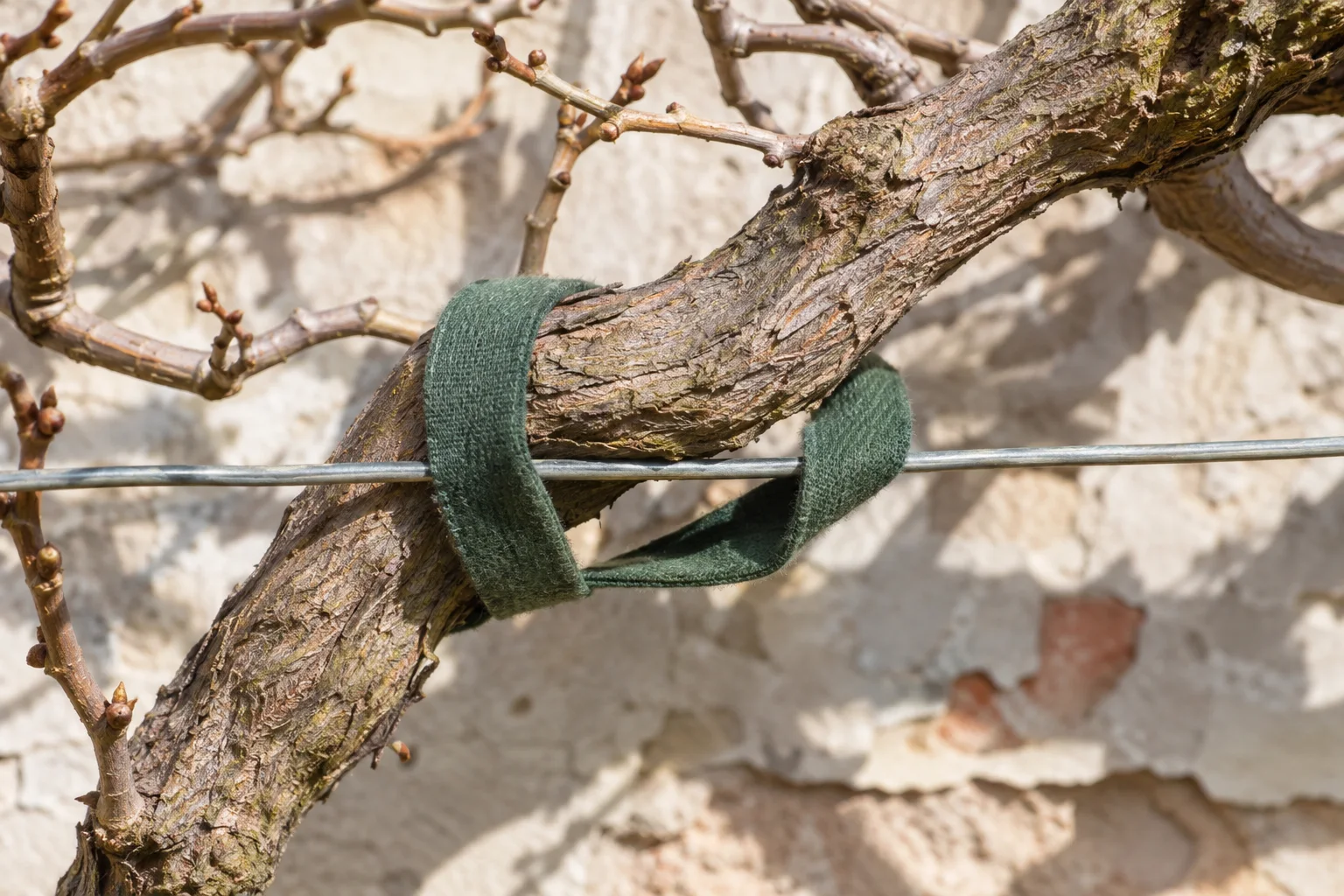
Check the ties while the branches are visible. They should hold the wood without biting into it. The RHS tying-in guide recommends stronger ties for heavy woody stems, space for thickening and regular checks. Use a soft tie rather than wrapping metal wire around the stem. Do not release a load-bearing tie until the branch has adequate support. If the support itself needs attention, our climber-support guide covers the checks before replacement.
Shorten the summer-pruned side shoots
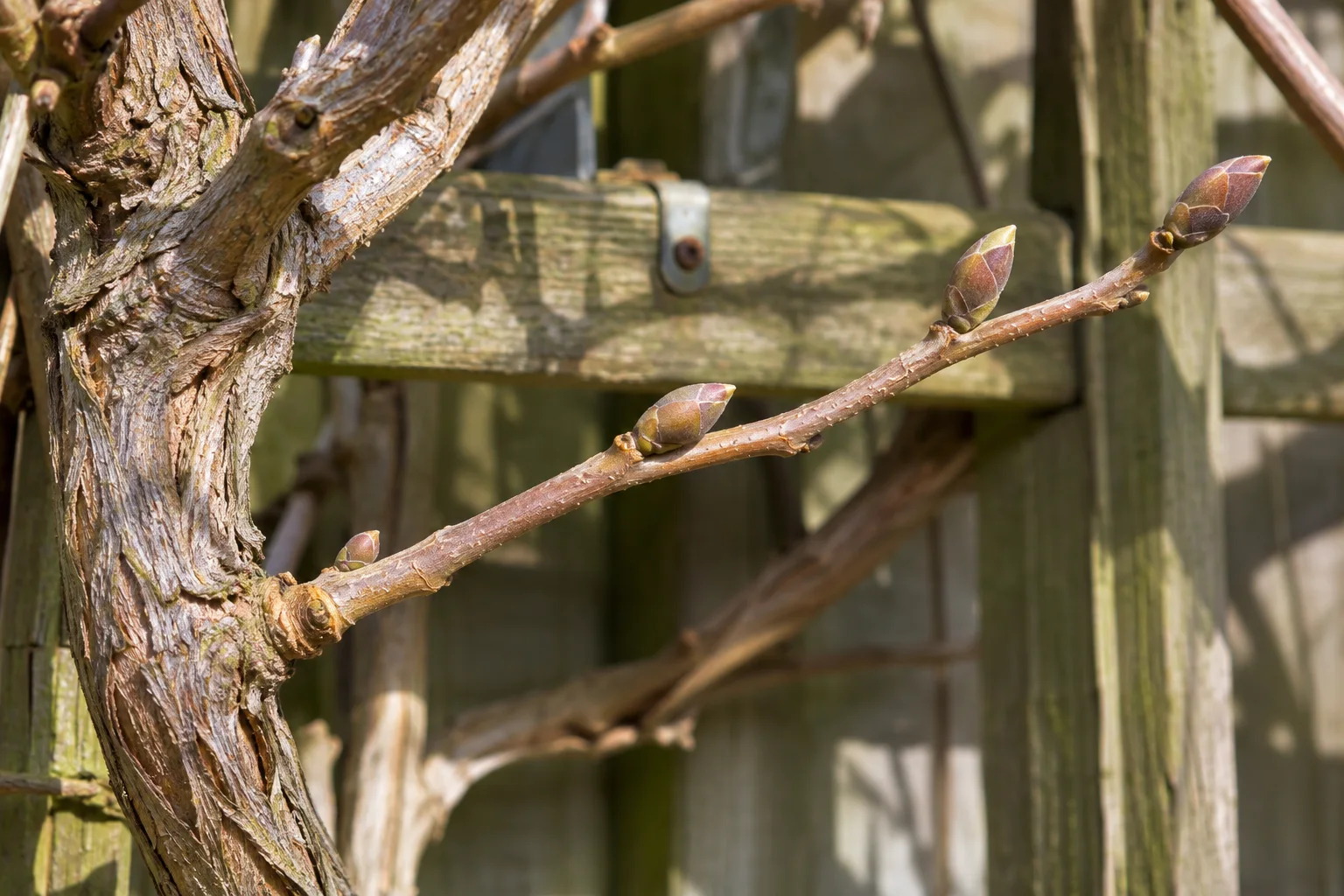
Wait for the appropriate dormant winter period. Find the side shoots shortened during the previous summer, then count from their junction with the older branch. Retain two or three buds and make the cut just above the last retained bud. Work on one shoot at a time so that a crossing branch does not get cut by mistake.
That is the routine in the RHS wisteria pruning guide. Its separate summer cut leaves five or six leaves on the current season's whippy growth, usually in July or August after flowering. The winter cut further shortens those summer-pruned shoots. The two operations have different purposes and should not be combined into a single November trim.
If the summer pruning was missed, or you cannot distinguish the shoots, get plant-specific help before cutting the tangle back. Renovation can involve large old branches and is a different job. A short maintenance guide cannot tell you which of those branches your plant can lose.
Record the result and the next check
Photograph the retained framework from the same position and note the work date. Keep the plant's identity with that record. It makes the next summer visit easier when leaves hide the junctions you can see now.
Pruning also cannot explain every missing flower. The RHS wisteria problems guide identifies plant maturity, summer dryness, shade and spring frost among the possible causes. Avoid repeating a hard cut each time flowering disappoints.
If you later want to explore the appearance of planting around the climber, Gardenly can help compare a visual direction. Use the real plant and its growing conditions to decide pruning and support work. An image does not identify the buds you should retain.
